לשירותי תחבורה מתקדמים ביותר

12 יוני 2018
לשירותי תחבורה מתקדמים ביותר

התפתחויות טכנולוגיות בתחום הרכב כגון נהיגה אוטונומית ויישום שיטות הנעה אלטרנטיביות נקיות, מובילות למהפכה בתחום התחבורה. מגמה זאת מתווספת להתפתחויות משמעותיות מהשנים האחרונות בתחום הנתונים. מקורות מידע חדשניים כגון מערכות כרטוס חכמות, אפליקציות סלולריות, מערכות ספירת נוסעים אוטומטיות ומערכות מיקום אוטומטיות מספקים מידע רב ועשיר. כל אלה פותחים צוהר לפיתוח ויישום שירותי תחבורה מתקדמים המותאמים באופן מיטבי לצרכי הנוסעים ולמטרות ספקי השירות. ליישום שירותים אלה השלכות כלכליות וסביבתיות רבות, כדוגמת הפחתה בבעלות רכב פרטי, הפחתה בעומסי תנועה, הפחתת זיהום אוויר וכו'.


המעבדה לאנליטיקה של מערכות תחבורה עירוניות

המעבדה לאנליטיקה של מערכות תחבורה עירוניות (AUTO Lab) הינה מעבדה חדשה המוקמת בימים אלה במחלקה להנדסת תעשייה באוניברסיטת תל-אביב, בראשה עומד ד"ר מור כספי. המחקר במעבדה מתמקד בפיתוח מודלים ושיטות חקר ביצועים עבור תכנון ותפעול מערכות תחבורה מתקדמות. אופי המחקר הינו יישומי ברובו, אחת ממטרותיו העיקריות הינה פיתוח כלים תומכי החלטה שישפרו את תהליכי קבלת ההחלטות בשלבי התכנון השונים. כלומר, תכנון אסטרטגי (לדוגמה מבנה הרשת), תכנון טקטי (לדוגמה מאפייני הצי) ותכנון אופרטיבי (לדוגמה לוח הזמנים).

המחקרים במעבדה יעשו בשיתוף פעולה עם מערכות תחבורה קיימות, בהתבסס על מידע אמיתי המתקבל ממערכות אלה ומתוך מטרה לבחון וליישם בשטח את תוצרי המחקר. דוגמאות ליישומיי תחבורה בהם יתמקד המחקר במעבדה כוללים מערכות הסעה המונית, שירותי הסעה גמישים למחצה, מערכות שיתוף כלי רכב, מערכות שיתוף נסיעות ושירותי הסעה לפי דרישה (on-demand Transportation).  


גיוס סטודנטים

המעבדה מגייסת סטודנטים לתארים מתקדמים (מאסטר ודוקטורט) וכן משתלמי בתר-דוקטורט. למידע נוסף:  morkaspi@post.tau.ac.il  

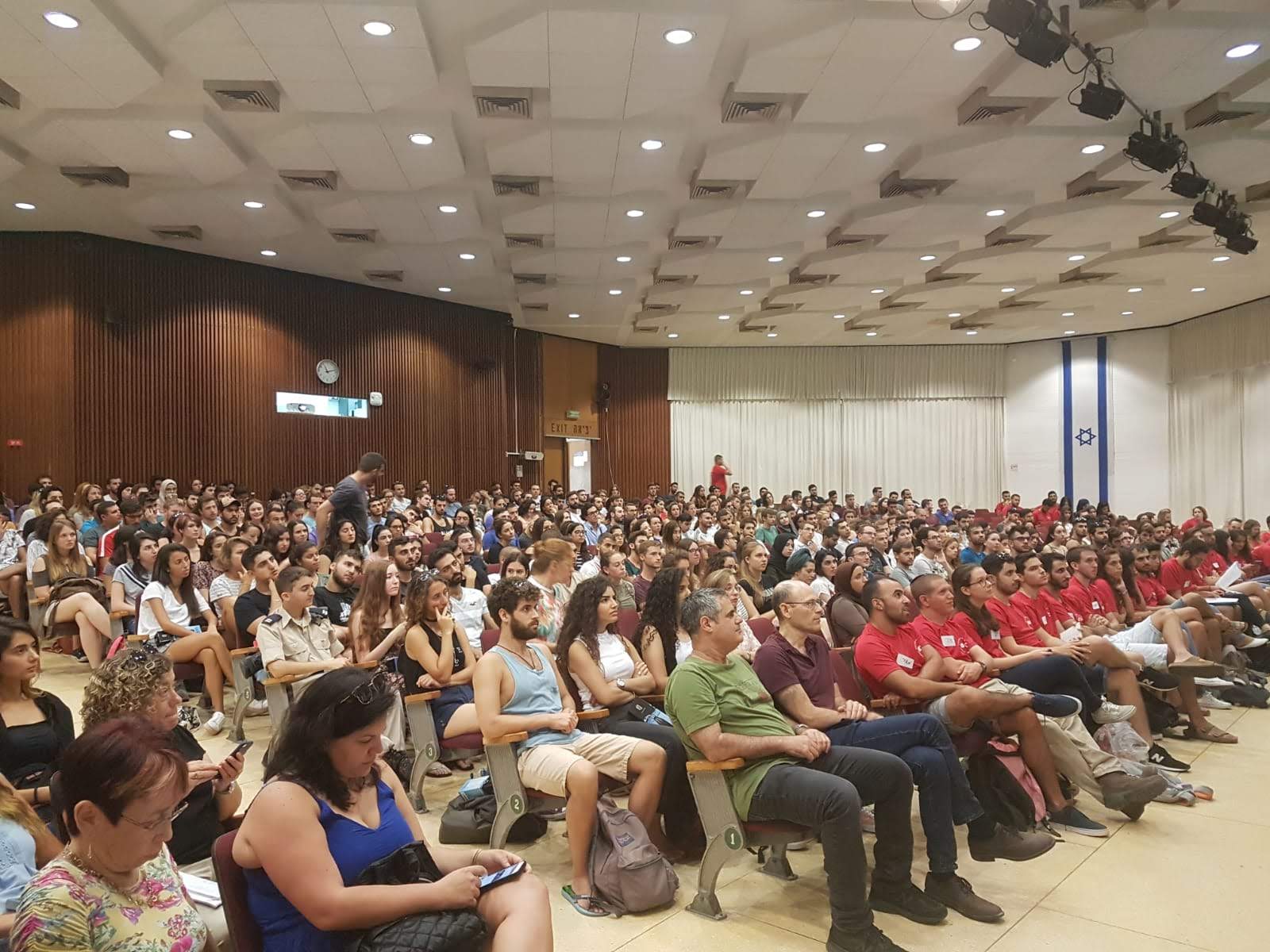
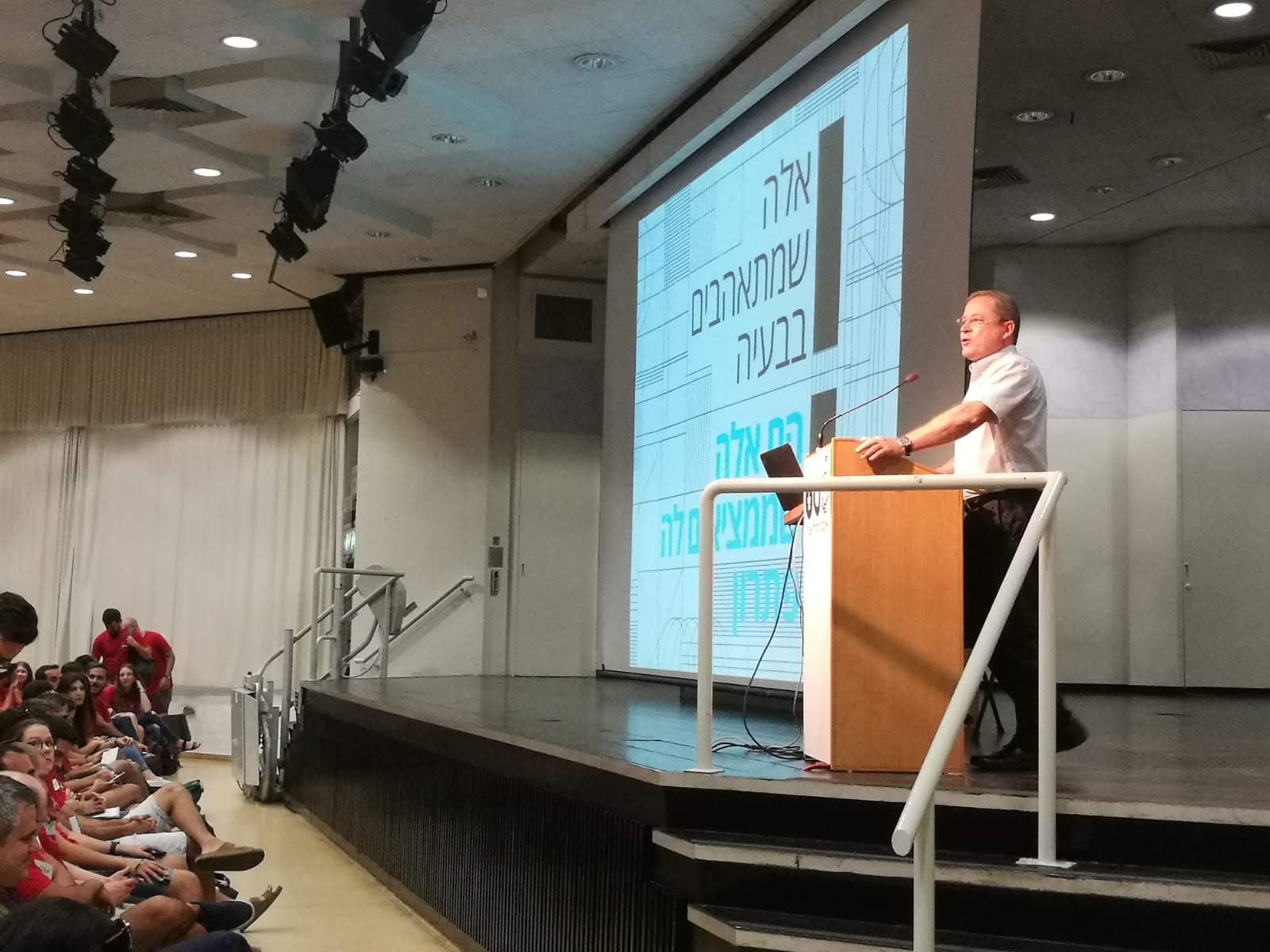
ביום רביעי 27.06.18 הפקולטה להנדסה של אוניברסיטת תל-אביב משיקה את המיזם הראשון מסוגו באקדמיה אשר משלב תחת קורת גג אחת מחקר ולימודים, חינוך ותמיכה בתעשייה בכל התחומים הקשורים להנדסת מערכות. המיזם, בראשו עומד פרופ' יורם רייך, הוקם ע"י אנשי מקצוע בעלי ניסיון תעשייתי ומחקרי, עם רצון לקדם ולפתח את התחום במטרה לתת פתרונות לדרישות משתנות וגוברות של התעשייה, המגזר הציבורי, והאקדמיה.


EE Seminar: Generative Low-Shot Network Expansion

17 ביוני 2018, 15:30 
חדר 206, בניין וולפסון הנדסת מכונות  


Speaker: Adi Hayat

M.Sc. student under the supervision of Prof. Daniel Cohen-Or


Sunday, June 17th, 2018 at 15:30

Room 206, Wolfson Mechanical Bldg., Faculty of Engineering


Generative Low-Shot Network Expansion​


Conventional deep learning classifiers are static in the sense that they are trained on a predefined set of classes and learning to classify a novel class typically requires re-training. In our work, we address the problem of Low-Shot network-expansion learning. We introduce a learning framework which enables expanding a pre-trained (base) deep network to classify novel classes when the number of examples for the novel classes is particularly small. We present a simple yet powerful distillation method where the base network is augmented with additional weights to classify the novel classes, while keeping the weights of the base network unchanged. We term this learning hard distillation, since we preserve the response of the network  on the old classes to be equal in both the base and the expanded network. We show that since only a small number of weights needs to be trained, the hard distillation excels for low-shot training scenarios. Furthermore, hard distillation avoids detriment to classification performance on the base classes. Finally, we show that low-shot network expansion can be done with a very small memory footprint by using a compact generative model of the base classes training data with only a negligible degradation relative to learning with the full training set.

EE Seminar: Structured GANs

17 ביוני 2018, 15:00 
חדר 206, בניין וולפסון הנדסת מכונות  


Speaker: Irad Peleg

M.Sc. student under the supervision of Prof. Lior Wolf


Sunday, June 17th, 2018 at 15:00

Room 206, Wolfson Mechanical Bldg., Faculty of Engineering


Structured GANs


We present Generative Adversarial Networks (GANs), in which the symmetric property of the generated images is controlled. This is obtained through the generator network’s architecture, while the training procedure and the loss remain the same. The symmetric GANs are applied to face image synthesis in order to generate novel faces with a varying amount of symmetry. We also present an unsupervised face rotation capability, which is based on the novel notion of one-shot fine tuning.

EE Seminar: Networks of ribosome flow models for modeling and analyzing intracellular traffic

13 ביוני 2018, 15:30 
חדר 011, בניין כיתות-חשמל  


Speaker: Itzik Nanikashvili

M.Sc. student under the supervision of Prof. Michael Margaliot


Wednesday, June 13th 2018 at 15:30

Room 011, Kitot Bldg., Faculty of Engineering


Networks of ribosome flow models for modeling and analyzing intracellular traffic


Abstract


The ribosome flow model with input and output (RFMIO) is a deterministic dynamical system that has been used to study the flow of ribosomes during mRNA translation. The input of the RFMIO controls its initiation rate and the output represents the ribosome exit rate (and thus the protein production rate) at the 3' end of the mRNA molecule. The RFMIO and its variants can be used for studying additional intracellular processes such as transcription, transport, and more.

Here we consider networks of interconnected RFMIOs as a fundamental tool for modeling, analyzing and re-engineering the complex mechanisms of protein production. In these networks, the output of each RFMIO may be divided between several inputs of other RFMIOs. For the specific case of feed-forward network of RFMIOs we prove three important properties. First, the entire network converges to a steady-state that depends on all the translation rates in all the RFMIOs, but not on the initial conditions in the network. Second, there exists a spectral expression for the steady-state, and thus it can be determined without any numerical simulations of the dynamics. Third, the problem of dividing the output of an RFMIO between the inputs of other RFMIOs in a way that maximizes the total steady-state production rate of the network is a convex optimization problem. Hence, this problem is tractable even for very large networks. We describe the implications of these results to several fundamental biological phenomena and biotechnological objectives.

EE Seminar: Over-Parameterized Models for Vector Fields with Application to Phase-Contrast MRI Data

13 ביוני 2018, 15:00 
חדר 011, בניין כיתות-חשמל  

Speaker: Keren Rotker

M.Sc. student under the supervision of Prof. Alex Bronstein and Prof. Dafna Ben-Bashat


Wednesday, June 13th, 2018 at 15:00

Room 011, Kitot Bldg., Faculty of Engineering


Over-Parameterized Models for Vector Fields with Application to Phase-Contrast MRI Data


Abstract


Vector fields arise in a variety of quantity measure and visualization techniques such as fluid flow imaging, motion estimation, deformation measures and color imaging, leading to a better understanding of physical phenomena. Recent progress in vector field imaging technologies has emphasized the need for efficient noise removal and reconstruction algorithms. A key ingredient in the success of extracting signals from noisy measurements is prior information. This prior knowledge can often be represented as a parameterized model. In this work, we extend the over-parameterization variational framework in order to perform model-based noise removal of vector fields. The over-parameterization methodology combines local modeling of the data with global model parameter regularization. By considering the vector field as a linear combination of basis vector fields and appropriate scale and rotation coefficients, the denoising problem reduces to a simpler form of coefficient recovery. We introduce two versions of the over-parameterization framework: total variation-based method and sparsity-based method, relying on the cosparse analysis model. We first demonstrate the efficiency of the proposed frameworks for two-

and three-dimensional vector fields with linear over-parameterization models. We then consider color images as vector fields and illustrate denoising via the new techniques. Finally, we address the problem of denoising magnetic resonance imaging (MRI) vector field data. Advances in medical imaging technologies have led to new modalities such as flow-sensitive magnetic resonance imaging (phase-contrast MRI) which allows the acquisition of blood flow velocities with a volumetric coverage in a time-resolved fashion. We adjust our model to suit several blood flow patterns and demonstrate the algorithm’s efficiency on two- and three-dimensional simulations.

EE Seminar: Teechain: Scalable Blockchain Payments using Trusted Environments

11 ביוני 2018, 15:00 
חדר 011, בניין כיתות-חשמל  

(The talk will be given in English)


Speaker:     Dr. Ittay Eyal
                        Faculty of Electrical Engineering, Technion


Monday, June 11th, 2018
15:00 - 16:00

Room 011, Kitot Bldg., Faculty of Engineering


Teechain: Scalable Blockchain Payments using Trusted Environments

Abstract


Blockchain protocols such as Bitcoin and Ethereum exchange payments in a secure and decentralized manner, but their performance is limited due to their need to achieve consensus across a network. Cryptographic payment channels have been proposed as a second tier on top of the blockchain, allowing efficient direct payments between parties. Existing payment channel protocols, however, have two limitations: (i) Their security relies on synchronous access to the underlying blockchain, which an attacker may prevent; and (ii)~they suffer from long channel establishment times when placing collateral deposits on the blockchain.  We describe Teechain, a payment network that supports secure and scalable payments for blockchain-based cryptocurrencies using hardware trusted execution. Teechain creates chains of payment channels using multiple entangled trusted execution environments~(TEEs). Teechain is the first payment network that assumes asynchronous blockchain access and does not require bounded write-access to the blockchain. It also permits payment channels to be established near instantly by dynamically assigning deposits: deposits are not tied to a specific channel but can be moved between channels. To overcome TEE crash failures, Teechain uses a novel replication protocol between TEEs that may be of independent interest. We experimentally evaluate our Teechain implementation and show that it achieves orders of magnitude improvement in performance compared to existing solutions; with replicated Teechain nodes in a trans-atlantic deployment, we measure a throughput of between 33,000--135,000 transactions per second with 0.3 second latency, in comparison to the current state of the art which achieves 1,000 transactions per second. Moreover, Teechain payment channels place 25%--83% less transactions and data on the blockchain than existing payment solutions.

EE Seminar: Cloud Radio Access Networks, Distributed Information Bottleneck, and more: A Unified Information Theoretic View

03 ביולי 2018, 14:00 
אולם 020, בין בניין וולפסון לבניין מעבדות-חשמל  

(The talk will be given in English)


Speaker:     Prof. Shlomo Shamai
                  
  Distinguished Professor, Chair in Communications, Technion – Israel Institute of Technology

The Viterbi Faculty of Electrical Engineering, Technion-Israel Institute of Technology


Tuesday, July 3rd, 2018
14:00 - 15:00

Hall 020 (between Wolfson & Labs Builds.), Faculty of Engineering


Cloud Radio Access Networks, Distributed Information Bottleneck, and more: A Unified Information Theoretic View


Abstract

We consider transmission over a cloud radio access network (CRAN) focusing on the framework of oblivious processing at the relay nodes (radio units), i.e., the relays are not cognizant of the users' codebooks.

This approach is motivated by future wireless communications (5G and beyond) and the theoretical results connect to a variety of different information theoretic models and problems.

First it is shown that relaying a-la Cover-El Gamal, i.e., compress-and-forward with joint decompression and decoding, which reflects 'noisy network coding,' is optimal.

The penalty of obliviousness is also demonstrated to be at most a constant gap, when compared to cut-set bounds.

Naturally, due to the oblivious (nomadic) constraint the CRAN problem intimately comments to Chief Executive Officer (CEO) source(s) coding under a logarithmic loss distortion measure.

Furthermore, we identify and elaborate on some interesting connections with the distributed information bottleneck model for which we characterize optimal tradeoffs between rates (i.e., complexity) and information (i.e., accuracy) in the discrete and vector Gaussian frameworks.

Further connections to 'information combining' and 'common reconstruction' are also pointed out. In the concluding outlook, some interesting problems are mentioned such as the characterization of the optimal input distributions under users' power limitations and rate-constrained compression at the relay nodes,

---------------------------------------------------------------------------

Joint work with: I.E. Aguerri (Paris Research Center, Huawei France) A. Zaidi (Universite Paris-Est, Paris) and G. Caire (USC-LA and TUB, Berlin)

The research is supported by the European Union's Horizon 2020 Research And Innovation Programme: no. 694630.


EE Seminar: Estimation in low SNR environment and under group action with application to cryo-EM

18 ביוני 2018, 15:00 
חדר 234, בניין וולפסון הנדסה מכנית  

(The talk will be given in English)


Speaker:     Dr. Tamir Bendory
                        Applied and Computational Mathematics, Princeton University


Monday, June 18th, 2018
15:00 - 16:00

Room 234, Wolfson Mechanical Bldg., Faculty of Engineering


Estimation in low SNR environment and under group action with application to cryo-EM
 

Abstract

Cryo-electron microscopy (cryo-EM) is an imaging technology that is revolutionizing structural biology, enabling reconstruction of molecules at near-atomic resolution. 
Cryo-EM produces a large number of noisy two-dimensional tomographic projection images of a molecule, taken at unknown viewing directions.
The extreme levels of noise make classical tasks in statistics and signal processing, such as alignment, detection and clustering, very challenging.
I will start the talk by studying the multi-reference alignment problem, which can be interpreted as a simplified model for cryo-EM. In multi-reference alignment, we aim to estimate multiple signals from circularly-translated, unlabeled, noisy copies.
In high noise regimes, the measurements cannot be aligned or clustered. Nonetheless, accurate and efficient estimation can be achieved via group-invariant representations (invariant polynomials). Furthermore, such estimators achieve the optimal estimation rate.
Then, I will show how this framework can be applied to the problem of 2-D classification in cryo-EM. In the last part of the talk, I will introduce the analog invariants of the cryo-EM problem and discuss how they can be used for ab initio modeling.

פיתוח חדשני לציפוי שיניים הדומה לזו של גבישי המינרל הביולוגי הטבעי.

03 יוני 2018
ציפוי שיניים שיגרום לכם לחייך

שחיקת הציפוי המקובל

תרכובות פוספט הסידן הן מינרלים המהווים את המרכיב האנאורגני העיקרי של העצם  ושל האמייל של השיניים. מאז שנות ה- 80 של המאה הקודמת, תרכובות כאלה משמשות ברפואת שיניים ובאורתופדיה כציפויים, בלוקים או אבקות כדי להאיץ סתימת פגמים בעצם ובחניכיים וכן קיבוע של שתלים (לקריאה נוספת, ראה מאמר מסקר של פרופ' נעם אליעז ודוקטורנטית שלו לשעבר – נעה מתוקי, http://www.mdpi.com/1996-1944/10/4/334/htm). הטכנולוגיה המקובלת ליישום ציפויים של פוספט הסידן על שתלים מטיטניום (או מתכות אחרות) היא Plasma Spraying. אולם, לשיטה זו חסרונות משמעותיים, כולל טמפרטורת ייצור גבוהה שמובילה להתפתחות מאמצים תרמיים שיוריים בחומר, וכתוצאה מכך – להתקלפות הציפוי במהלך שירותו בגוף ולכשל השתל.


הפתרון להקטנת הסיכון לזיהום לאחר ניתוח

במעבדה של פרופ' נעם אליעז במחלקה למדע והנדסה של חומרים מפתחים מאז שנת 2001 ציפויים של CaP בשיטות אלקטרוכימיות. בתחילה, בוצע מחקר בסיסי להבנת התגובות האלקטרוכימיות המעורבות ומנגנון הציפוי. בהמשך, נחקרה האינטראקציה של הציפוי עם תאים בוני עצם ועם בקטריות, ונבדקו ביצועי השתלים המצופים בחיות – הן באוניברסיטת ת"א והן באוניברסיטת Harvard. הציפויים שפותחו באוניברסיטת תל-אביב נמצאו כבעלי מאפיינים טובים משל ציפויים תוצרת חברות מוכרות אחרות בשוק. בנוסף, אחד מדורות הציפויים שפותחו באוניברסיטת תל-אביב מיושם בתנאי גוף (טמפרטורה 37 °C ו- pH 7.4), ואיפשר שילוב תרופות, כגון אנטיביוטיקה או חומרים ביולוגיים אחרים - כלומר הציפוי על השתל יכיל אנטיביוטיקה  וישחרר אותה באופן מקומי להקטנת הסיכון לזיהום שלאחר ניתוח/השתלה. לאור המוניטין של הקבוצה בראשות פרופ' אליעז כאחת מהמובילות בעולם בתחום, רכשה חברת השתלים SGS Dental – Swiss Implant System את הידע על הדור השני של הציפויים מחברת היישום של האוניברסיטה, רמות.


הצגת הפיתוח ביריד השתלים הדנטליים

פרופ' אליעז, המכהן כיום כמדען ראשי של החברה, הוביל את תהליך הגימלון (scale-up) בישראל ואת הקמת קו הציפויים בבודפשט, הונגריה. לאחרונה, החלה חברת SGS Dental להציג את הציפויים החדשניים כאשר החודש הוצג ביריד השתלים הדנטליים במוסקבה, רוסיה. הציפוי החדש נבדל מיתר הציפויים האחרים בשוק בצורת המנסרה המשושה של גבישיו, צורה הדומה לזו של גבישי המינרל הביולוגי הטבעי. בימים אלו עוברים השתלים החדשים את הבדיקות הנדרשות לקבלת אישור FDA לשיווקם ולהשתלם בגוף האדם.

תמונה מיריד השתלים הדנטליים במוסקבה, רוסיה

עמודים

אוניברסיטת תל אביב עושה כל מאמץ לכבד זכויות יוצרים. אם בבעלותך זכויות יוצרים בתכנים שנמצאים פה ו/או השימוש שנעשה בתכנים אלה לדעתך מפר זכויות
שנעשה בתכנים אלה לדעתך מפר זכויות נא לפנות בהקדם לכתובת שכאן >>