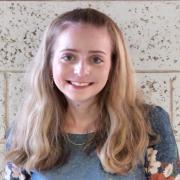
פרופ' שמואל [שי] אבידן

פרופ' שמואל אבידן


הנדסת חשמל/Electrical Engineering
מספר קורס/No.Course קןרס Course סמסטר/ Semester קורס
חובה/ בחירה
0509.2801 מבוא להסתברות וסטטיסטיקה- קבוצה אחת תינתן בשפה האנגלית Intr. to Probability and Statistics א' חובה
0509.2843 אנליזה הרמונית - קבוצה אחת תינתן בשפה האנגלית Harmonic Analysis א' חובה
0509.2844

פונקציות מרוכבות - קבוצה אחת תינתן בשפה האנגלית

Complex Functions

א' חובה
0512.2830

פיזיקה קוונטית ומצב מוצק - קבוצה אחת תינתן בשפה האנגלית

Quantum and Solid State Physics א' חובה
0512.2832 מעגלים ומערכות ליניאריות - קבוצה אחת תינתן בשפה האנגלית

Linear Circuits and Systems

א' חובה
0509.2846

משוואות דיפרנציאליות חלקיות - קבוצה אחת תינתן בשפה האנגלית

Partial Differential Equations

ב' חובה
0512.2508

התקנים אלקטרוניים - קבוצה אחת תינתן בשפה האנגלית

Electronic Devices

ב' חובה

0512.2510

מבני נתונים ואלגוריתמים - קבוצה אחת תינתן בשפה האנגלית

Data Structures and Algorithms

ב' חובה
0512.2525 שדות אלקטרומגנטיים - קבוצה אחת תינתן בשפה האנגלית Electromagnetic Fields ב' חובה
0512.3632 אותות אקראיים ורעש - קבוצה אחת תינתן בשפה האנגלית Random Signals and Noise א' חובה
0512.2835 אותות ומערכות - קבוצה אחת תינתן בשפה האנגלית Signals and Systems ב' חובה
0512.3513 מעגלים אלקטרוניים אנלוגיים - קבוצה אחת תינתן בשפה האנגלית Analog Electronic Circuits א' חובה
0512.3526 תמסורת גלים ומערכות מפולגות- קבוצה אחת תינתן בשפה האנגלית Wave Transmission and Distributed Systems א' חובה
0512.3571 המרת אנרגיה - קבוצה אחת תינתן בשפה האנגלית Energy Conversion א' חובה
0512.3591 אלקטרוניקה - מעבדה (1)- קבוצה אחת תינתן בשפה האנגלית Electronics - Laboratory א' חובה
0512.3514 מעגלים אלקטרוניים ספרתיים- קבוצה אחת תינתן בשפה האנגלית Digital Electronic Circuits ב' חובה
0512.3572 מעבדה בהמרת אנרגיה- קבוצה אחת תינתן בשפה האנגלית Energy Conversion Laboratory ב' חובה
0512.3592 אלקטרוניקה - מעבדה (2)- קבוצה אחת תינתן בשפה האנגלית Electronics - Laboratory (2) ב' חובה
0512.4138

ביואלקטרוניקה וממשק אדם מכונה

Bioelectronics and brain-machine interfaces

ב'  
0512.4264

מבוא ללמידת מכונה

Introduction to Machine Learning ב'  
0512.4161 תקשורת ספרתית

Digital Communications

א'  
0512.4702

מבוא למערכות מיקרו-אלקטרו-מכניות

Introduction to Micro-Electro-Mechanical Systems

ב' בחירה 
0512.4703

מבוא לתכנון מעגלי VLSI

Introduction to Vlsi Design

א' בחירה
0512.4860 מבוא לאנטנות ומעגלי RF

Rf Circuits & Antennas

ב' בחירה

EE Seminar: Regaining Lost Cycles with HotCalls: A Fast Interface for SGX Secure Enclaves

03 בינואר 2018, 15:00 
חדר 011, בניין כיתות-חשמל  

(The talk will be given in English)


Speaker:     Ofir Weisse
                   PhD student at the University of Michigan, USA


Wednesday, January 3rd, 2018
15:00 - 16:00

Room 011, Kitot Bldg., Faculty of Engineering


Regaining Lost Cycles with HotCalls: A Fast Interface for SGX Secure Enclaves


Abstract

Intel's SGX secure execution technology allows the running of computations on secret data using untrusted cloud servers. While recent work showed how to port applications and large scale computations to run under SGX, the performance implications of using the technology remains an open question. We present the first comprehensive quantitative study to evaluate the performance of SGX. We show that straightforward use of SGX library primitives for calling functions add between 8,200 - 17,000 cycles overhead, compared to 150 cycles of a typical system call. We quantify the performance impact of these library calls and show that in applications with high system calls frequency, such as memcached, openVPN, and lighttpd, which all have high bandwidth network requirements, the performance degradation may be as high as 79%. We investigate the sources of this performance degradation by leveraging a new set of micro-benchmarks for SGX-specific operations such as entry-calls and out-calls, and encrypted memory I/O accesses. We leverage the insights we gain from these analyses to design a new SGX interface framework, HotCalls: HotCalls provide a 13-27x speedup over the default interface. It can easily be integrated into existing code, making it a practical solution. Compared to a baseline SGX implementation of memcached, openVPN, and lighttpd - we show that using the new interface boosts the throughput by 2.6-3.7x, and reduce application response time by 62-74%.

EE Seminar: Secure computation in the presence of real-world attackers

31 בדצמבר 2017, 15:00 
חדר 011, בניין כיתות-חשמל  

 (The talk will be given in English)


Speaker:     Dr. Daniel Genkin
                   University of Pennsylvania and University of Maryland

Sunday, December 31st, 2017
15:00 - 16:00

Room 011, Kitot Bldg., Faculty of Engineering


Secure computation in the presence of real-world attackers


Abstract

The security of any system is only as good as its weakest link. Even if the system's security is theoretically proven under some set of assumptions, when faced with real-word adversaries, many of these assumptions become flaky, inaccurate and often completely incorrect.

In this talk I will present two cases for bringing this gap between security theory and security practice:

* Utilizing unintentional and abstraction-defying side-channel leakage from physical computing devices in order to extract secret cryptographic keys and the relation of these attacks to leakage resilient cryptography.

* Constructing and deploying secure computation schemes for arbitrary C programs.

The talk will discuss cryptographic techniques and will include live demonstrations.


EE Seminar: Breaking the spatial resolution limit of magnetic resonance imaging

04 בדצמבר 2017, 15:00 
חדר 011, בניין כיתות-חשמל  

(The talk will be given in English)


Speaker:     Dr. Dan Benjamini
                   Section on Quantitative Imaging and Tissue Sciences

National Institutes of Health, MD, USA


Monday, December 4th, 2017
15:00 - 16:00

Room 011, Kitot Bldg., Faculty of Engineering


Breaking the spatial resolution limit of magnetic resonance imaging


Abstract

Microscopic scale changes in brain tissue take place during normal and abnormal brain devel-opment, and following mild to severe traumatic brain injury (TBI). In addition, brain tissue is heterogeneous in nature; an imaging volume will contain an ensemble of different cells and ex-tracellular matrix components. At the microscopic level, these components would vastly differ in their molecular composition, as well as in their microstructure. As a result, the water that resides within the tissue will also interact with different chemical and physical microenviron-ments. By probing these water interactions using magnetic resonance imaging (MRI) one can, theoretically, overcome the limited spatial resolution (∼ 1mm3) and noninvasively detect and distinguish between the different microenvironments within a voxel. However, to date, com-putational instabilities and vast data requirements, leading to clinically infeasible scan times, have mostly relegated these type of measurements to nuclear magnetic resonance (NMR) ap-plications, and prevented them from being widely and successfully used in conjunction with imaging.


I have recently developed a novel experimental design, data acquisition, and signal processing framework, termed MADCO, which allows to combine various spectroscopic NMR experiments with imaging in reasonable scanning times and with excellent prospects for clinical applications. Using these tools one can measure, map, and render 3D images of the dynamics of water protons in a model-free and direct manner, making no assumptions about the underlying microstructure of the tissue. Here I will present two new, and complemen-tary, MADCO-based MR imaging framework: (1) Magnetic resonance microdynamic imaging (MRMI), which permits the simultaneous noninvasive and model-free quantification of the volume fraction of multiple subcellular, cellular, and interstitial tissue components within a voxel (e.g., axons, neurons, glia, interstitial space, and myelin in brain tissue). (2) Acceler-ated diffusion exchange spectroscopic imaging (ADEXSI), which is able to noninvasively map dynamic migration of water from one microenvironment to another (e.g., molecular exchange rate of water between intra- and extracellular spaces).


Apart from its known biological and clinical applications, MR is routinely used by chemists and biochemists to quantitatively describe materials with sub-molecular resolution; it is used by physicists to quantify flow and velocity in microscopic capillaries to measure mass transport; and it is used by geologists as logging tools for in situ oil, gas, and water underground reservoir evaluation. Integrating, migrating, and translating these approaches and methods from a broad range of scientific fields is what I believe can help us to better understand such a complex system as the human brain.

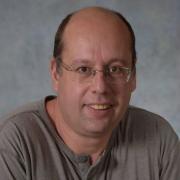
סמינר מחלקתי בהנדסה ביו רפואית -הרצאת אורח של פרופ' יוסי מנדל

19 בנובמבר 2017, 14:00 
 
ללא תשלום
סמינר מחלקתי בהנדסה ביו רפואית -הרצאת אורח של פרופ' יוסי מנדל

Hybrid Retinal Prosthesis: High-Resolution Electrode Array Integrated with Neurons for Restoration of Sight
Yossi Mandel, MD, PhD
Ophthalmic Science and Engineering Lab
Faculty of Life Sciences, School of Optometry and Visual Science and Institute for Nanotechnology and Advanced Materials (BINA), Bar-Ilan University, Ramat-Gan, Israel. 

Bio
Dr. Yossi Mandel is an assistant Professor in the School of Optometry and Visual Science and Institute for Nanotechnology and Advanced Materials (BINA), Bar-Ilan University, Israel. He is a medical doctor and ophthalmic surgeon and holds a PhD in bioengineering from the Hebrew University, Jerusalem. He did his post-doc with Daniel Palanker at Stanford University and he is now heading the Ophthalmic Science and Engineering Lab at Bar-Ilan University. His research is focused on various ophthalmic technologies aimed at restoration of sight, such as retinal prosthesis, stem cell and combination of these modalities.

Abstract
Vision restoration in patients with outer retinal degenerative diseases, such as Age-related Macular Degeneration and Retinitis Pigmentosa can be achieved by bypassing the degenerated photoreceptors and the electrical stimulation of the relatively well-preserved inner retina through electrode implants. Although current retinal prostheses have been shown to provide useful vision in blind patients, the obtained visual acuity and quality are still relatively low. Network mediated, rather than direct ganglion cell, activation can potentially facilitate the utilization of the complex computational processes performed by the inner retinal circuits. However, inherent limitations of current retinal prosthetic technologies, make it very challenging to mimic natural vision for better restoration of sight.
Firstly, increasing the electrode density for achieving high visual acuity is limited by the distance between the electrodes and the target neurons, which is currently a few tens to hundreds of microns. Secondly, the high electrode-neural distance results in relatively large activation charge thresholds, which raises the need for a pulsed as opposed to continuous current injection. Thus, the bipolar cells are operated in a pulsed rather than a graded potential fashion which provides the natural visual system with its unrivalled dynamic range and sensitivity. More importantly, the direct electrical stimulation of the bipolar cells fails to preserve selectivity of the specific retinal circuitry (such as ON and OFF pathways), resulting in distorted information being delivered to the brain.

We propose a paradigm shift toward sight restoration with a hybrid retinal prosthesis aimed at overcoming the aforementioned limitations by better mimicking natural vision. The hybrid implant is composed of a high-density electrode array (pixel distance down to the cellular size of 10- 15µm), where each individual electrode is coupled with a glutamatergic neuron to create a tight neuron-electrode coupling.  Following implantation of the hybrid prosthesis, the

glutamatergic neurons integrate and synapse with the host retinal circuits. Patterned electrical stimulation of these glutamatergic neurons by the electrodes modulates glutamate release onto the synapse with the host bipolar cells after which the remaining retinal circuitry is activated in an identical manner to natural vision. The ultimate electrode-neurons proximity and the low charge neural activation threshold allow for the significant reduction in electrode dimensions and an increase in pixel density as well as the continuous graded potential activation, thus mimicking the graded potential fashion of the bipolar and photoreceptor cells. Moreover, the indirect activation of the host retina by glutamatergic neurons (rather than direct electrical activation), can potentially preserve the natural visual circuits (e.g. ON and OFF).
In this talk I will present our results with generation of photoreceptor precursors from hESC. I will present the functional characterization of these cells by path-clamp and calcium imaging techniques, which demonstrated that the intracellular calcium of the cells can be electrically modified. I will further discuss the many challenges and approaches taken in device fabrication and tissue engineering toward the development of hybrid retinal prosthesis.
.

ההרצאה תתקיים ביום ראשון 19.11.17, בשעה 14:00
בחדר 315, הבניין הרב תחומי, אוניברסיטת תל אביב

EE Seminar: Inverse Problems and Unsupervised Learning with applications to Cryo-Electron Microscopy (cryo-EM)

03 בדצמבר 2017, 15:00 
חדר 011, בניין כיתות-חשמל  

(The talk will be given in English)


Speaker:  Dr. Roy Lederman
                   Applied & Computational Mathematics, Princeton University


Sunday, December 3rd, 2017
15:00 - 16:00

Room 011, Kitot Bldg., Faculty of Engineering


Inverse Problems and Unsupervised Learning with applications to Cryo-Electron Microscopy (cryo-EM)


Abstract


Cryo-EM is an imaging technology that is revolutionizing structural biology; the Nobel Prize in Chemistry 2017 was recently awarded to Jacques Dubochet, Joachim Frank and Richard Henderson “for developing cryo-electron microscopy for the high-resolution structure determination of biomolecules in solution".

Cryo-electron microscopes produce a large number of very noisy two-dimensional projection images of individual frozen molecules. Unlike related methods, such as computed tomography (CT), the viewing direction of each image is unknown. The unknown directions, together with extreme levels of noise and additional technical factors, make the determination of the structure of molecules challenging.

While other methods for structure determination, such as x-ray crystallography and nuclear magnetic resonance (NMR), measure ensembles of molecules together, cryo-EM produces measurements of individual molecules. Therefore, cryo-EM could potentially be used to study mixtures of different conformations of molecules. Indeed, current algorithms have been very successful at analyzing homogeneous samples, and can recover some distinct conformations mixed in solutions, but, the determination of multiple conformations, and in particular, continuums of similar conformations (continuous heterogeneity), remains one of the open problems in cryo-EM.

I will discuss a one-dimensional discrete model problem, Heterogeneous Multireference Alignment, which captures many of the properties of the cryo-EM problem. I will then discuss different components which we are introducing in order to address the problem of continuous heterogeneity in cryo-EM: 1. “hyper-molecules,” the first mathematical formulation of truly continuously heterogeneous molecules, 2. The optimal representation of objects that are highly concentrated in both the spatial domain and the frequency domain using high-dimensional Prolate spheroidal functions, and 3. Bayesian algorithms for inverse problems with an unsupervised-learning component for recovering such hyper-molecules in cryo-EM.


Short Bio

Roy Lederman is a postdoc at the Program in Applied and Computational Mathematics at Princeton University, working with Amit Singer. Before joining Princeton, he was a postdoc at Yale University, where he had completed his PhD in applied mathematics, working with Vladimir Rokhlin and Ronald Coifman. Roy holds a BSc in Electrical Engineering and a BSc in Physics from Tel Aviv University. 

EE Seminar: Simplified End-to-End MMI Training and Voting for ASR

22 בנובמבר 2017, 15:00 
חדר 011, בניין כיתות-חשמל  

Speaker: Lior Fritz,

M.Sc. student under the supervision of Prof. David Burshtein


Wednesday, November 22nd, 2017 at 15:00

Room 011, Kitot Bldg., Faculty of Engineering


Simplified End-to-End MMI Training and Voting for ASR


Abstract


A simplified speech recognition system that uses the maximum mutual information (MMI) criterion is considered. End-to-end training using gradient descent is suggested, similarly to the training of connectionist temporal classification (CTC). We use an MMI criterion with a simple language model in the training stage, and a standard HMM decoder. Our method compares favorably to CTC in terms of performance, robustness, decoding time, disk footprint and quality of alignments. The good alignments enable the use of a straightforward ensemble method, obtained by simply averaging the predictions of several neural network models, that were trained separately end-to-end. The ensemble method yields a considerable reduction in the word error rate.

כך הכריז מגזין TheMarker לגבי ד"ר בריאן רוזן

15 נובמבר 2017
ד"ר בריאן רוזן

הפקולטה להנדסה גאה לבשר כי ד"ר בריאן רוזן, חוקר בפקולטה נבחר ע"י מגזין TheMarker לאחד מ-40 הצעירים המבטיחים מתחת לגיל 40 של מגזין!

ד"ר רוזן, רק בן 31 ובעל רקורד עשיר, הקים את המעבדה לחומרי אנרגיה בפקולטה להנדסה, בעל תואר שני ודוקטורט בהנדסת כימיה מאוניברסיטת אילינוי ואת הפוסט־דוקטורט עשה בפקולטה להנדסה אוניברסיטת תל אביב. מחקריו עשויים לשמש לפיתוח סוגים שונים של אנרגיה חלופית ירוקה.


לכתבה המלאה במגזין TheMarker


עמודים

אוניברסיטת תל אביב עושה כל מאמץ לכבד זכויות יוצרים. אם בבעלותך זכויות יוצרים בתכנים שנמצאים פה ו/או השימוש שנעשה בתכנים אלה לדעתך מפר זכויות
שנעשה בתכנים אלה לדעתך מפר זכויות נא לפנות בהקדם לכתובת שכאן >>