EE Seminar: Sliding-Window Correlation Attacks Against Encryption Devices with an Unstable Clock

30 במאי 2018, 15:30 
חדר 011, בניין כיתות-חשמל  

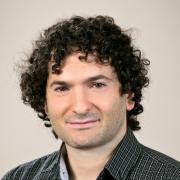
Speaker: Dor Fledel

M.Sc. student under the supervision of Prof. Avishai Wool


Wednesday, March 30th 2018 at 15:30

Room 011, Kitot Bldg., Faculty of Engineering


Sliding-Window Correlation Attacks Against Encryption Devices with an Unstable Clock


Abstract


Power analysis side channel attacks rely on aligned traces. As a counter-measure, devices can use a jittered clock to misalign the power traces. In this paper we suggest a way to overcome this counter-measure, using an old method of integrating samples over time followed by a correlation attack (Sliding Window CPA). We theoretically re-analyze this general method with characteristics of jittered clocks and show that it is stronger than previously believed. We show that integration of samples over a suitably chosen window size actually amplifies the correlation both with and without jitter – as long as multiple leakage points are present within the window. We then validate our analysis on a new data-set of traces measured on a board implementing a jittered clock. Our experiments show that the SW-CPA attack with a well-chosen window size is very successful against a jittered clock counter-measure and significantly outperforms previous suggestions, requiring a much smaller set of traces to correctly identify the crrect key.

EE Seminar: A New Weighted Energy Limitation Method for H infinity Control of Linear Deterministic Systems

30 במאי 2018, 15:00 
חדר 011, בניין כיתות חשמל  

Speaker:  Yoav Sklut

M.Sc. student under the supervision of Prof. Uri Shaked.


Wednesday, May 30th, 2018 at 15:00

Room 011, Kitot Bldg., Faculty of Engineering


A New Weighted Energy Limitation Method for H infinity Control of Linear Deterministic Systems


Abstract


In the H infinity control problem, one would like to achieve a minimum disturbance attenuation level for a given dynamic system. In many cases, the optimal H infinity state-feedback controller produces large gains that cannot be applied in practice, this mainly occurs near optimum. The common methods, currently in use, fail to address the significance of the controller's energy. In this talk, two methods are presented that address the controller energy problem. The first method provides a simple, yet effective, tool for energy limitation. The second method takes a different approach, allowing less conservative results. The two methods can be extended to weighted energy limitation, i.e. each state variable can have a different weight in the total energy of the controller. A weighted energy limitation can be applied to solve the static output-feedback problem, where a large weight is put on the direction orthogonal to the output of the system. The latter is most important in the case where the system encounters uncertainties. In this case, there is no known solution to the robust output-feedback control problem. Our solution provides not only simple static output-feedback in the uncertain case, but it also provides a means for limiting the energy of the control effort. The two methods have been developed for linear deterministic continuous systems, and are easily applied to various other problems, such as systems with state-multiplicative noise. Two numerical examples are presented that demonstrate the applicability of the theory developed.

EE Seminar: Moebius Geometry Processing

03 ביוני 2018, 15:00 
חדר 011, בניין כיתות חשמל  

(The talk will be given in English)


Speaker:     Prof. Amir Vaxman

Division Virtual Worlds at the Department of Information and Computing Sciences
            Utrecht University, The Netherlands


Sunday, June 3rd, 2018
15:00 - 16:00

Room 011, Kitot Bldg., Faculty of Engineering


Moebius Geometry Processing


Abstract

The mainstream approaches in digital geometry processing utilize triangular (simplicial) meshes, discretize differential quantities using finite-element function spaces, and describe transformations with piecewise affine maps. I will describe how Moebius geometry provides an original alternative to discrete differential geometry, by using circles as its basic elements, and describing quantities like conformality and regularity through the invariant cross-ratio. This theory allows for various applications, such as polygonal (non-triangular) mesh deformation, interpolation, and symmetric realization of unconventional mesh patterns.


Bio

Amir Vaxman is an universitair docent (assistant professor) in the Division Virtual Worlds at the Department of Information and Computing Sciences at Utrecht University, The Netherlands. Before his position in UU, he was a postdoctoral fellow in TU Wien (Vienna) at the Geometric Modeling and Industrial Geometry group, where he also received the Lise-Meitner fellowship. He earned his BSc in computer engineering, and his PhD in Computer science from the Technion-IIT. His research interests are geometry processing and discrete differential geometry, focusing on directional-field design, unconventional meshes, constrained shape spaces, architectural geometry, and medical applications.

להשתלמות באוניברסיטת נורת'ווסטרן בארה"ב

24 מאי 2018
זוכי מלגות פוסט דוקטורט לשנת 2018


רעות נוחם, דוקטורנטית במחלקה להנדסת תעשייה, הפקולטה להנדסה באוניברסיטת תל-אביב. בעלת תואר ראשון  (BSc) ושני MSc. בהצטיינות בהנדסת תעשייה, שניהם מאוניברסיטת תל אביב. המחקר של רעות, בהנחייתה של פרופ' מיכל צור, עוסק בלוגיסטיקה הומניטארית, ניהול שרשרת אספקה ותכן רשתות במערכות בריאות. המחקר מבוסס על בעיות מציאותיות וניתוח נתוני אמת לצד שימוש במודלים תיאורטים. המחקר כולל מידול מתמטי של בעיות בתחומי המחקר הנ"ל ופיתוח אלגוריתמים לפתרונן, תוך שימוש בשיטות אופטימיזציה מתקדמות מתחום חקר הביצועים. עבודת המחקר מומנה על ידי משרד המדע, הטכנולוגיה והחלל בישראל. רעות עתידה להתחיל פוסט-דוקטורט באוניברסיטת נורת'ווסטרן בהנחייתה של פרופ' קארן שמילוביץ.


ליאור מדינה בעל תואר ראשון (B.Sc) ו- M.Sc בהצטיינות בהנדסת מכונות מאוניברסיטת תל אביב. תיזת המאסטר של ליאור הייתה בנושא "שבירת סימטריה בקורות ממוזערות עקומות תחת הפעלה אלקטרוסטטית", בהנחיית פרופ' סלבה קרילוב וד"ר רבקה גילת. מחקר הדוקטורט, בהנחיית פרופ' סלבה קרילוב ופרופ' רבקה גילת, עסק במערכות מיקרו-אלקטרו-מכאניות (MEMS),  והוקדש לחקירת תכונות יציבות של מיקרו מבנים דו-יציבים המופעלים באמצעות כוח אלקטרוסטטי. עם סיום לימודיו, הוא עתיד להתחיל פוסט-דוקטורט באוניברסיטת נורת'ווסטרן, בהנחייתו של פרופ' הורציו אספינוזה.  

המחקר נתמך על ידי משרד המדע, הטכנולוגיה והחלל ועל ידי הקרן הלאומית למדע (מענק ISF מס' 1272/16).


School of Mechanical Engineering Adi Morani and Ben Cohen

31 באוקטובר 2018, 14:00 - 15:00 
בניין וולפסון חדר 206  
0
School of Mechanical Engineering Adi Morani and Ben Cohen


School of Mechanical Engineering Seminar
Wednesday, October 31, 2018 at 14:00
Wolfson Building of Mechanical Engineering, Room 206

Fluid-Structure Interaction using Coupled FE Structural Analysis with a Lattice Boltzmann Approach: Simulations of Aortic Valves and their Integration in a Full Heart Model


Adi Morany

M.Sc. student of Prof. Rami Haj-Ali and Prof. Shmuel Einav


The aortic valve (AV) is located between the left ventricle and the aorta. It is responsible for maintaining an outward unidirectional flow. An inherent abnormality associated with the AV is the bicuspid aortic valve (BAV) where two cusps are present instead of the normal three. Due to the anatomical abnormality (0.5-2% of the population), the cusps stresses and deformations are relatively high. This may lead to a calcific aortic valve disease (CAVD). The latter is a progressive disease characterized by calcification growth in the AV cusps leading to thickening and stiffening of the cusps' tissue. Many hemodynamic and structural aspects of the AV have been extensively studied, however, more sophisticated models are needed in order to better understand the AV bio-mechanical behavior.

The first part of this study introduces a new fluid-structure interaction (FSI) modeling approach using coupled FE structural analysis with a Lattice Boltzmann Method (LBM). The applied LBM is a mesh-less method based on the kinetic gas theory of particles used to simulate fluid flow. The combined FE-LBM FSI modeling approach is used to simulate both normal and BAV models. Towards that goal, three FSI models of AVs under physiological pressure are presented: TAV, BAV and moderate CAVD are studied. These models present, for the first time, a quantitative comparative study between FE-CFD (Navier-Stokes) and FE-LBM FSI-approaches, to flow simulations through compliant AVs. Different parameters have been examined, such as effective orifice area, hemodynamic metrics and stress magnitudes.

The second part of this study deals with integrating a new parametric AV structural model with the electro-mechanical Living Heart Human Model® (LHHM). The LHHM is a finite element robust and integrative model simulating human heart function capable of realistic electro-mechanical simulations. Different parametric geometries of AV configurations and associated pathologies have been examined. New integrated structural AV models within the LHHM better predict the local stresses during the cardiac cycle due to the realistic boundary condition derived from the LHHM.


A non-linear progressive damage numerical model for 2D woven composites 

Ben Cohen

 MSc. student of Prof. Rami Haj-Ali


Woven Carbon Fiber Reinforced Plastic (CFRP) composites are used in structural applications that demand superior strength to weight ratio such as in the aerospace, maritime and sporting industries. Woven composites advantage over unidirectional (UD) composites is due to their ease of draping which reduces the production cost.


In this study, a meso-mechanical non-linear progressive damage model is proposed for 2D woven composites. The model is based on an orthotropic material behavior in combination with the Ramberg-Osgood model to addresses material non-linearity in shear. The Tsai-Wu failure criterion is used to detect damage initiation in the laminate. A continuum damage degradation model is then used for stiffness update. The proposed model is implemented as a user material subroutine for 2D and shell elements in the ABAQUS commercial finite element program.


The experimental part of this study includes mechanical characterization experiments conducted according to the ASTM standards.  A Digital Image Correlation (DIC) method for strain field measurements is also employed.  The damage model is then compared to two cases: Four-point bending and an open hole tension experiments. A good correlation was demonstrated in both for stress-strain responses including ultimate failure prediction.


School of Mechanical Engineering Prof. Gal Shafirstein

06 ביוני 2018, 14:00 - 15:00 
בניין וולפסון חדר 206  
0
School of Mechanical Engineering Prof. Gal Shafirstein


School of Mechanical Engineering Seminar
Wednesday, June 6, 2018 at 14:00
Wolfson Building of Mechanical Engineering, Room 206


Finite Element Modeling Guided Laser Therapy ­ Improves Control of Locally Advanced Tumors


Prof. Gal Shafirstein

Professor of Oncology and full Member

Director of Photodynamic Therapy (PDT) Clinical Research

PDT Center at the Department of Cell Stress Biology

Roswell Park Comprehensive Cancer Center, Buffalo, NY, USA


Patients with locally advanced cancerous tumors who failed to respond to standard treatment have very limited treatment options. Several studies suggest that interstitial photodynamic therapy (I-PDT) is a promising treatment modality to control locally advanced cancer. The administration of laser light in I-PDT requires careful treatment planning to maximize tumor ablation while minimizing damage to normal tissue. To that end, we developed a customized finite element modeling (FEM) approach to guide laser light administration in I-PDT.

In this talk, a brief overview of I-PDT will be given. The rationale for the use of FEM will be presented and discussed. This talk will review the modeling approach, validation and translation from the clinic to the laboratory and back to the clinic. Examples of the FEM use to evaluate the feasibility of treating locally advanced head and neck and non-small cell lung cancer will be shown. Pretreatment planning of bone tumors in preclinical settings will be presented. The FEM successful implementation to improve local control and cure of locally advanced squamous cell carcinoma in animal models will be discussed. A clinical study using the FEM to guide I-PDT in the treatment of patients with locally advanced head neck cancer will be presented.

About the Lecturer

Prof. Shafirstein earned his B.Sc. in the department of materials science at the Ben-Gurion University (1986), his M.Sc. (1988) and D.Sc. (1992) in the department of materials science and engineering at the Technion. He then moved to England to work at the United Kingdom National Physical Laboratory (1992-1995), and to Israel and USA to work in industry (1995-2001). He returned to academia in 2001, and joined the department of otolaryngology-head and neck surgery at the University of AR for Medical Sciences, where he was an associated Prof. and the director of translational research. In 2012, he was recruited as a full Prof. of Oncology and member at the photodynamic therapy (PDT) center of Roswell Park Comprehensive Cancer Center, Buffalo, NY. The PDT center at Roswell Park is a world leader in the field of PDT. It is where the modern PDT was initiated in 1970s', and the first FDA approved PDT drug for cancer therapy was developed. Prof. Shafirstein serves as the director of PDT clinical research since 2015. He is responsible for developing and supporting multiple clinical studies in PDT. His research is supported, primarily, with competitive awards from the National Cancer Institute at the National Institute of Health, USA. His research focuses on developing laser therapies for patients with cancer that have no good treatment options.


School of Mechanical Engineering Asaf Ben Neriah

27 ביוני 2018, 14:00 - 15:00 
בניין וולפסון חדר 206  
0
School of Mechanical Engineering Asaf Ben Neriah


School of Mechanical Engineering Seminar
Wednesday, June 20, 2018 at 14:00
Wolfson Building of Mechanical Engineering, Room 206


Groundwater remediation by air sparging: improving efficiency by inducing mixing

Asaf Ben Neriah

 PhD. student of Dr. Amir Paster


Groundwater contamination due to leakage, designated or accidental releases of volatile organic compounds is a major problem worldwide. Remediating the contaminated water is crucial for maintaining groundwater as a drinking source, and preventing the expansion of the contaminant plume into clean water.

Air sparging is a relatively simple and inexpensive remediation technique, commonly applied for removing volatile organic compounds from the water. Since the 1980s, air sparging was successfully used at sites where the contaminants are located at the upper part of the aquifer and the soil is relatively permeable (i.e., sandy soils).

Air sparging is commonly applied for long time periods. One important observation, seen in laboratory and field conditions, is that as the system approaches steady state, the remediation efficiency decreases. The decrease in efficiency was linked to the nearly stagnant conditions in the aquifer and very limited mixing, which characterize prolonged operation. This research was aimed at improving the remediation efficiency by utilizing the transient stages of air sparging, in which mixing is significant.

Using a 2D laboratory model and a numerical code (T2VOC, TOUGH2), several approaches for enhancing the groundwater remediation process were studied. These approaches include periodically changing the air injection rate, applying short duration- high pressure- pulses to the injection system, and establishing a methodology for estimating the optimal system characteristic time. Results from the current study highlight the significance of mixing to the remediation process, and the importance of planning an injection scheme which fits the specific characteristics of the remediated site. They also show that the optimal frequency of periodic injection can be approximated by the characteristic time of the relaxation of a large pressure perturbation in the aquifer..

School of Mechanical Engineering John E. Dolbow

17 באוקטובר 2018, 14:00 - 15:00 
בניין וולפסון חדר 206  
0
School of Mechanical Engineering John E. Dolbow


School of Mechanical Engineering Seminar
Wednesday, October 17, 2018 at 14:00
Wolfson Building of Mechanical Engineering, Room 206


Models and Simulations of the Surfactant-Driven

Fracture of Particle Rafts


John E. Dolbow

Professor of Civil and Environmental Engineering,

Mechanical Engineering and Materials Science,

and Mathematics

Duke University


When a densely packed monolayer of hydrophobic particles is placed on a uid surface

the particles interact through capillary bridges, leading to the formation of a particle raft or

\praft" for short. Densely packed monolayers exhibit a two-dimensional elastic response, and

they are capable of supporting both tension and compression. The introduction of a controlled

amount of surfactant generates a surface tension gradient, producing Marangoni forces and

causing the surfactant to spread, fracturing the monolayer. These systems are of interest to

materials scientists and engineers because they provide an idealized setting for investigating the

interplay between uid ow and fracture. Previous studies of the surfactant-induced fracture

of prafts have examined the role of viscosity and the initial packing fraction on the temporal

and spatial evolution of the fractures. The potentially important role of di_erences in surface

tension between the surfactant and the underlying uid has not been explored.

This seminar will describe a new continuum-based model and simulations that account for

the interplay between the pressure exerted by a spreading surfactant and the elastic response

of the praft, including the fracture resistance. This is e_ected through the use of a surfactant

damage _eld that serves as both an indicator function for the surfactant concentration, as well

as the damage to the monolayer. Stochastic aspects of the particle packing are incorporated into

the model through a continuum mapping approach. The model gives rise to a coupled system

of nonlinear partial di_erential equations, with an irreversibility constraint. We recast the

model in variational form and discretize the system with an adaptive _nite element method. A

comparison between model-based simulations and existing experimental observations indicates

a qualitative match in both the fracture patterns and temporal scaling of the fracture process.

Based on the model, we determine a dimensionless parameter that characterizes the ratio

between this driving force and the fracture resistance of the praft. Interestingly, while our

results indicate that the stochastic aspects of the packing are important to the fracture process,

we _nd that regimes of fracture are largely governed by di_erences in surface tension. Finally,

we support our _ndings with newly designed experiments that validate the model and con_rm

the trends inferred from the simulations.


School of Mechanical Engineering Semion Greiserman

24 באוקטובר 2018, 14:00 - 15:00 
בניין וולפסון חדר 206  
0
 School of Mechanical Engineering Semion Greiserman


School of Mechanical Engineering Seminar
Wednesday, October 24, 2018 at 14:00
Wolfson Building of Mechanical Engineering, Room 206


 Solar hydrothermal deconstruction of green macroalgae biomass for biofuel production


Semion Greiserman

MSc. Student of Dr. Alex Golberg and Prof. Avi Kribus


Biomass deconstruction to fermentable sugars is a major challenge for biorefineries. Traditional methods either employ acid or enzymatic hydrolysis, which are expensive and could damage the environment. Thermal hydrolysis is a green technology for biomass deconstruction, carbonization, liquefaction, and gasification.  However, subcritical hydrolysis generates a wide range of products from a heterogeneous raw material such as biomass. In this work, Taguchi orthogonal arrays was used for the experimental design and investigation of comparative significance of subcritical water process’s temperature, treatment time, solid load and salinity on glucose, xylose, rhamnose, fructose and galactose release from green macroalgae an emerging biorefinery feedstock. We also investigated the impact of the process parameters on the production of 5-hydroxymethylfurfural (5-HMF), an important biofuel intermediate, which, however, is a major fermentation inhibitor. The optimum process parameters for maximum release of each monosaccharide and minimum production of 5-HMF was determined. The solid residue (hydrochar) heating value and chemical composition were also determined. Using the results from the experiments a simplified simulation of combined solar electricity generation and fuel (ethanol) production plant was analyzed and will be presented.


עמודים

אוניברסיטת תל אביב עושה כל מאמץ לכבד זכויות יוצרים. אם בבעלותך זכויות יוצרים בתכנים שנמצאים פה ו/או השימוש שנעשה בתכנים אלה לדעתך מפר זכויות
שנעשה בתכנים אלה לדעתך מפר זכויות נא לפנות בהקדם לכתובת שכאן >>