19/5/16


You are invited to attend a lecture

By:


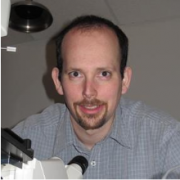
Prof. Guy Bartal

Faculty of Electrical Engineering, Technion


Nano Scale Shaping and Focusing of Light in 2D Short-wavelength Platforms


The ability to shape and focus optical waves to dimensions smaller than their wavelength has intrigued the scientific community both for its physical challenges and its potential applications. Resonant elements, , have provided deep-subwavelength control at long wavelength in the form of Metamaterials, while at optical frequencies light could be focused to specific points by nano-antenna and Nanofocusing elements, breaking the so-called diffraction limit. Alternatively,  achieving similar focusing dimensions by scaling the diffraction limit rather than breaking it allows flexible and dynamic control over the type and shape of the focusing without specifically patterning the medium, hence can provide super-resolution capabilities for bio-imaging, nanolithography and spectroscopy. We use the high refractive index of Silicon to scale the diffraction limit by  many-fold compression of the wavelength thereby achieving resolution at the order  of 10-s of nanometers at visible light. - Comparable to that of single-molecule microscopy techniques. Utilizing this scaled diffraction limit, we present phase-resolved near-field observations of propagating-waves bright and dark focusing below 70 nm at 671nm illumination (λ/10), and direct observation of short-wavelength Super-Oscillations in planar 2D Hybrid Silicon-plasmon waveguides.


Thursday, May 19, 2016, at 15:00

Room 011, Kitot Building


19 במאי 2016, 15:00 
011 Kitot  
19/5/16


סמינר מחלקתי - אנה סקלס ועדי מרקו

Modeling the Triad of User Behaviors in IT Security

|   |

​Effects of user characteristics and security alerts on cybersecurity behavior

24 במאי 2016, 14:00 
בניין וולפסון חדר 206  

Modeling the Triad of User Behaviors in IT Security

Adi Marko – M.Sc. student

In the past, IT security was considered a technical issue (good algorithms and well-designed 

systems will prevent security risks). Today, there is increasing awareness of the human as a key 

determinant of the safety of IT systems. Security systems often mainly provide alerts, and rely on 

the user to make decisions and to adjust system settings. Hence end-users’ behavior should be 

considered when developing security systems. 

An important aspect in this context are risk-related behaviors. These are not expressions of a 

single tendency to take risks, but rather the combination of a number of different behaviors that 

can change dynamically in response to changes in task requirements and the environment. One 

model of these multiple behaviors is the Triad of Risk-related behavior (Ben-Asher, 2011). The 

original study was empirical research in the context of a microworld. In this thesis I developed a 

quantitative model of the three security behaviors, analyzed the relations between them, and 

show how they effects on the security level of the system. In addition, I studied changes in the 

predicted behavior as a function of risk attitude and the weighting of information from alerts. 

The study provides some insights on the effects of different parameters on outcomes and on the 

effects of deviations from optimality.

This work was performed under the supervision of  Prof. Joachim Meyer


Effects of user characteristics and security alerts on cybersecurity behavior

Anna Morgenshtein-Sekeles


The rapid advances in computer technology cause organizations to depend on these 

technologies for practically all corporate activities. Information systems and networks 

process, store and transmit digital data. As organizations have come to depend on 

information technology, the likelihood of malicious interference with the functioning 

of these systems, unauthorized access to sensitive materials and other forms of 

malicious activities greatly increased. These can cause major damages, as well as 

indirect damage through the loss of reputation.

Threats are often introduced into systems as a result of user actions. Legitimate users 

might perform actions such as browsing a malicious site, downloading a file with 

malicious content from email or a website, connecting an infected external device to 

the computer, etc. The user performs these actions for some purpose, but they may 

result in undesirable outcomes, if hidden malware was unintentionally activated. In 

many cases, especially in organizations, various security systems can notify the user 

about potentially dangerous actions. System detection thresholds can be configured by 

the organization according to the organizational information security policy.


The study examines the effects of the user’s ability to distinguish between threat and 

no-threat events and the user’s risk aversion on users’ cyber security behavior with 

security systems with different threshold settings and on the results of these 

behaviors. A laboratory experiment was conducted in which participants had to 

classify stimuli as threats or no threats, based on information they received about the 

stimuli and on the output from an alerting system. The results were compared to the 

predictions of a simulation model of user behavior in this context. 

Results showed that user's knowledge significantly affects cyber security behavior. 

Better knowledge reduces the probability of security breaches and improves the 

quality of work. The availability of a security system reduces risky behavior, but less 

than predicted. People use the information they receive from the system, but they do 

not utilize it optimally and tend to give excessive weight to their own knowledge. 

This work was performed under the supervision of  Prof. Joachim Meyer

סמינר מחלקתי - נטע רגר וילנה פטריקינה

17 במאי 2016, 14:00 
בניין וולפסון חדר 206  

Department of Materials Science and Engineering - Special Seminar

Looking for Atoms at Complex Interfaces

Professor Michael Bedzyk

Department of Materials Science and Engineering, Northwestern University

23 במאי 2016, 14:00 
Room 130, Wolfson Mechanical Engineering Building  
Department of Materials Science and Engineering - Special Seminar

Farkash Elad סמינר מחלקתי ביה"ס להנדסה מכאנית

25 במאי 2016, 15:00 
וולפסון 206  
0
Farkash Elad   סמינר מחלקתי ביה"ס להנדסה מכאנית


School of Mechanical Engineering Seminar
Wednesday, May 25, 2016 at 15:00
Wolfson Building of Mechanical Engineering, Room 206


Reassessment of the Virtual Crack Closure Technique for Interface Cracks


Elad Farkash

Supervisor: Prof. Banks-Sills


The Virtual Crack Closure Technique (VCCT) was first presented in 1977 for cracks in linear elastic, homogeneous and isotropic material. It makes use of the Irwin crack closure integral to obtain values of the modes I, II and III energy release rates from finite element data. It can easily be extended to anisotropic material. In addition, it was extended to cracks along an interface between two dissimilar linear elastic, homogeneous and isotropic materials and two dissimilar anisotropic materials. In those cases, the energy release rates were seen to depend upon the size of the virtual crack extension usually taken as the size of the element adjacent to the crack tip. Some attempts have been made to remove this dependence. Nevertheless, in most cases, the accuracy of both the energy release rates and stress intensity factors was not consistently good.

In this work, the dependence of the energy release rates on the size of the virtual crack extension for interface cracks between two dissimilar isotropic and two dissimilar anisotropic materials is analytically accounted for so that the stress intensity factors may be accurately obtained when fine finite element meshes are used, together with a virtual crack extension consisting of more than one element. Results from some example problems will be presented.


לעמית גפן ולסטודנט יורם זאראי

15 מאי 2016
  • ברכות חמות לדוקטורנטית אינס צוקר (בהנחיית הדס ממן) שזכתה במלגה הנשיא היוקרתית לפוסט דוקטורט.  אינס גם אמורה ללדת כל יום אז בהצלחה !


  • ברכות לעמית גפן על צאתו לאור של ספרו החדש (בעריכה משותפת עם פרופ' יורם אפשטיין מהפקולטה לרפואה) בהוצאת ספרינגר:

The Mechanobiology and Mechanophysiology of Military-Related Injuries

הפרטים בקישור הבא: http://www.springer.com/gp/book/9783319330105


  • ברכות גם לסטודנט יורם זאראי (סטודנט של מיכאל מרגליות) בפרס ולגר על עבודתו : “Controlling mRNA translation"

EE Seminar: Full 3D Plant Reconstruction via Intrusive Acquisition

~~Speaker: Alexei Gaissinski,
M.Sc. student under the supervision of Prof. Andrei Sharf and Prof. Shai Avidan

Wednesday, May 18, 2016 at 15:00
Room 011, Kitot Bldg., Faculty of Engineering

Full 3D Plant Reconstruction via Intrusive Acquisition
Abstract
Digitally capturing vegetation using off-the-shelf scanners is a challenging problem. Plants typically consist of large self-occlusions and thin structures which cannot be properly scanned. Furthermore, plants are essentially dynamic, rendering small deformations in time, which yield additional difficulties in the scanning process.
In this thesis we present a novel technique for acquiring and modeling of plants and foliage. At the core of our method is an intrusive acquisition approach, which disassembles the plant into disjoint parts that can be accurately scanned and reconstructed offline. We use the reconstructed part meshes as 3D proxies for the reconstruction of the complete plant and devise a global-to-local non-rigid registration technique that preserves specific plant characteristics.
Our method is tested on plants of various styles, appearances, and characteristics. Results show successful reconstructions with high accuracy with respect to the acquired data.

18 במאי 2016, 15:00 
חדר 011, בניין כיתות-חשמל  

הכנס השנתי שך IAP

18 במאי 2016, 10:00 
 

כנס השנתי שלנו ב-18 במאי בבניין פורטר.  מחכות לכם 3 שעות מעניינות. הרשמה אצל יערית, על ידי שליחת אימייל ל-   yaaritr@tauex.tau.ac.il


ה


ברכות לסטודנט אייל תאומי (דוקטורנט של יאיר שוקף מהנדסה מכנית) על זכייה במלגת דן-דויד היוקרתית. 2 סטודנטים מהפקולטה (גם רועי רמז) הם בין 7 הזוכים מכל העולם.

05 מאי 2016

ברכות לסטודנט אייל תאומי (דוקטורנט של יאיר שוקף מהנדסה מכנית) על זכייה במלגת דן-דויד היוקרתית.  2 סטודנטים מהפקולטה (גם רועי רמז) הם בין 7 הזוכים מכל העולם.

עמודים

אוניברסיטת תל אביב עושה כל מאמץ לכבד זכויות יוצרים. אם בבעלותך זכויות יוצרים בתכנים שנמצאים פה ו/או השימוש שנעשה בתכנים אלה לדעתך מפר זכויות
שנעשה בתכנים אלה לדעתך מפר זכויות נא לפנות בהקדם לכתובת שכאן >>