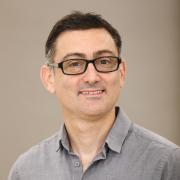
EE Seminar: Puncturing, Expurgating and Expanding the q-ary BCH Based Robust Codes

~~
Speaker: Nir Admaty
M.Sc. student under the supervision of Prof. Simon Litsyn

Wednesday, June 1st, 2016 at 15:30
Room 011, Kitot Bldg., Faculty of Engineering

Puncturing, Expurgating and Expanding the q-ary BCH Based Robust Codes

Abstract

A code that can detect errors with high probability is called a security oriented code. A security oriented code that can detect any non-zero error is called robust. A BCH based robust code is a code that is based on the columns of the check matrix of a linear BCH code. The non-binary BCH based robust code is derived from the one-error-correcting BCH code. The binary BCH based robust code is derived from the two-error-correcting BCH code. The undetected error probability Q(e) of an error e is determined by the set of codewords that mask e. The maximal error masking probability is denoted by Q ̅. A robust code is said to be optimum if there is no other code with a larger number of codewords with the same length and the same Q ̅.

The thesis presents four constructions for optimum and nearly optimum robust codes that are based on modifications of the BCH based robust codes. In particular, they generalize, puncture, expurgate, and expand the codes while preserving their robustness.

The generalized codes are a class of codes from which the BCH based code is derived. When puncturing, u redundancy symbols are deleted from the code. When expurgating, codewords which have the same value in u predefined redundancy symbol positions are grouped together and these u redundancy symbols are deleted. When expanding, a new robust code is constructed by fusing two robust codes.

The generalized and punctured codes have Q ̅ which is a power of q (the field alphabet size), and the expurgated and expanded code have Q ̅ which is not a power of q. The generalized code has a fixed code rate which is half. However, the other three constructions can increase the robust BCH based code rate while preserving its robustness.

01 ביוני 2016, 15:30 
חדר 011, בניין כיתות-חשמל  

Raphael Stuhlmeier סמינר מחלקתי ביה"ס להנדסה מכאנית

16 במאי 2016, 15:00 
וולפסון 206  
0
Raphael Stuhlmeier סמינר מחלקתי ביה"ס להנדסה מכאנית


School of Mechanical Engineering Seminar
Monday, May 16, 2016 at 15:00
Wolfson Building of Mechanical Engineering, Room 206


Havelock's theory for acoustic-gravity waves in deep water


Raphael Stuhlmeier

PhD in Mathematics at the University of Vienna


In this talk, we will investigate the linearized theorey of waves generated by a wave-maker in compressible flow. In addition to the propagating and evanescent waves found in the incompressible case, new modes then appear which incorporate both the effects of gravity and compressibility - called acoustic-gravity waves. The treatment of this problem in infinite depth is an exercise in classical analysis, and leads to a version of Havelock's wave-maker theorem for compressible flows. We shall discuss the asymptotic behavior of these new waves, give some simple examples for line wave-makers, and look briefly at some related problems and open questions.


Short Bio:
 

Raphael Stuhlmeier completed a PhD in Mathematics at the University of Vienna, Austria in 2014, treating primarily nonlinear water waves with vorticity, including extensions of Gerstner waves and solitary waves on shear flows. Since then, he has been a Postdoctoral Fellow at the Faculty of Civil & Environmental Engineering, Technion - Israel Institute of Technology, working primarily on the theoretical basis for wave-power harvesting in the open seas, and occasionally on other topics in water waves.


--


EE Seminar: Control Theoretic Challenges in Theoretical Neuroscience: Combining Estimation and Control

~~ (The talk will be given in English)

Speaker:   Prof. Ron Meir
                        Department of Electrical Engineering, Technion

Monday, May 16th, 2016
15:00 - 16:00
Room 011, Kitot Bldg., Faculty of Engineering

Control Theoretic Challenges in Theoretical Neuroscience: Combining Estimation and Control

Abstract
Biology discovered feedback and control long before the first control engineers appeared on the planet, and developed sophisticated control policies operating at multiple levels from molecules to cells to organisms to populations. The vast multi-scale complexity of biological systems, the highly effective control solutions provided in biology, and the limited, yet sophisticated, toolkit available to control engineers, suggests that there is much space for interaction between biological control and engineering, where both sides stand to gain. In this talk I will focus on the interaction of sensory adaptation and control in the context of a simple partially observable sensorimotor task. I will describe an approximate analytic approach to the intractable estimation/control problem, and will show that it suggests an optimal control based explanation of observed biological phenomena. I will conclude with some of the many open problems facing the reverse engineering of biological control systems.

Short Bio: 
Ron Meir is a Professor in the department of Electrical Engineering at the Technion. He completed his PhD in Physics at the Weizmann Institute in Statistical Physics, and worked for many years in the field of Machine Learning. One of his main current interests is in control and learning in natural and artificial systems.


16 במאי 2016, 15:00 
חדר 011, בניין כיתות-חשמל  

EE Seminar: Adaptive Focus Estimation in Shape from Focus

~~Speaker: Yuval Frommer
M.Sc. student under the supervision of Prof. Nahum Kiryati and Dr. Rami Ben Ari

Wednesday, June 1st, 2016 at 15:00
Room 011, Kitot Bldg., Faculty of Engineering

Adaptive Focus Estimation in Shape from Focus

Abstract

Shape from Focus (SFF) methods frequently use a single focus measure to obtain a depth map. Common focus measures are fixed and spatially invariant. In this paper we present a framework to create an adaptive focus measure based on ensemble of basis focus operators. Using the proposed framework, we derive a new spatially variant focus measure obtained from a linear combination of image derivatives. This approach effectively generalizes some of the existing measures. We introduce a new focus measure which combines high order derivatives to produce robust and accurate focus measurement. We rely on the focus curve standard deviation (CSTD) to determine the linear coefficients in our model. The proposed focus measure copes effectively with texture variation, as well as depth discontinuities. Using CSTD we further suggest a new approach for aggregating the focus volume, succeeded by reconstruction based on the focus curve centroid. This different approach of aggregation and reconstruction yields improved depth maps, respecting shape smoothness and depth discontinuities for diversity of textured images.
We assess the performance of our new approach by extensive experiments with highly realistic synthetic
images and real images including two unique cases captured in the wild. In terms of focus measure, we significantly outperform the state-of-the-art. Considering the complete SFF pipeline, we present superior results comparing to two previously published alternatives.

01 ביוני 2016, 15:00 
חדר 011, בניין כיתות-חשמל  

EE Seminar: RNN Fisher Vectors for action recognition

~~
Speaker: Gil Sadeh
M.Sc. student under the supervision of Prof. Lior Wolf and Dr. Benny Applebaum 

Wednesday, May 18th, 2016 at 15:30
Room 011, Kitot Bldg., Faculty of Engineering

RNN Fisher Vectors for action recognition
Abstract

Recently, Recurrent Neural Networks (RNNs) have had considerable success in classifying and predicting sequences. Additionally, the Fisher Vector (FV) encoding has been widely used for pooling local features. We present the RNN-FV, which is a novel pooling method designed especially for sequential features. The methodology we use is based on FVs, where the RNNs are the generative probabilistic models, instead of the commonly used Gaussian Mixture Model (GMM), and the partial derivatives are computed using backpropagation. This proposed method is applied on sequential feature representation of videos, to achieve a new, fixed-length, discriminative video representation. We also explore different sequential feature representations of videos on which we apply our proposed method. Using our new RNN-FV based video representations, state of the art results are obtained in the task of video action recognition on two challenging datasets, UCF101 and HMDB51. We also demonstrate how to exploit the fact that the RNN is trained in an unsupervised manner in terms of the action labels, and show that training the RNN on one dataset and testing on another does not reduce performance significantly, and state-of-the-art results are achieved while using this transfer learning approach as well. We also show another surprising transfer learning result, from the task of image annotation to the task of video action recognition, which additionally improved our results.

18 במאי 2016, 15:30 
חדר 011, בניין כיתות-חשמל  

כתבה מידיעות אחרונות על מחקרו של ד"ר ארז שמואלי, מהמחלקה להנדסת תעשייה.

02 מאי 2016

אז כמה חברים יש לכם באמת? מחקר חדש ומפתיע מראה שיותר ממחצית מהאנשים שאנו מגדירים חברים - ולא רק ברשתות החברתיות, אלא גם בעולם האמיתי - הם ממש לא. דודי גולדמן שוחח עם חוקרים מובילים, שמע מהם איך הפייסבוק שינה לגמרי את החברוּת ומהי הדרך הטובה ביותר לזהות מיהו חבר אמיתי

קישור לכתבה שפורסמה בידיעות אחרונות

EE Seminar: Yeast response to multiple carbon sources: a case study of combinatorial signal integration

~~(The talk will be given in English)

Speaker:   Dr. Yonatan Savir
                       Faculty of Medicine, Technion

Sunday, May 8th, 2016
15:00 - 16:00
Room 011, Kitot Bldg., Faculty of Engineering

Yeast response to multiple carbon sources: a case study of combinatorial signal integration

Abstract
A major determinant of the fitness of biological systems is their ability to integrate multiple cues from the environment and coordinate their metabolism and regulatory networks accordingly. While much is known about the response to a single stimulus, our understating of combinatorial integration of multiple inputs is still limited. As a model system, we studied how yeast responds to hundreds of mixtures of preferred carbon source, glucose, and a less preferred one, galactose. Many of the components of this response, known as catabolite repression, are conserved from yeast to human. We found that, in contrast to the textbook view, instead of simply inhibiting galactose utilization when glucose is above a threshold concentration, individual cells respond to the ratio of glucose and galactose, and based on this ratio determine whether to induce genes involved in galactose metabolism. We investigate the genetic architectures that can result in a ratio sensing and how these architectures provide a fitness advantage which could have shaped the evolution of this property.

Bio: Dr. Yonatan Savir received his Bachelor’s degree from the Technion in Electrical Engineering and Physics and his PhD from the Dept. of physics of Complex Systems at the Weizmann Institute. He did his postdoctoral training at the Dept. of Systems Biology at Harvard Medical School. Dr. Savir joined the Faculty of Medicine at the Technion as a principal investigator in October 2015. His lab focuses on studying, both experimentally and theoretically, the signal processing that links nutrient sensing, uptake, growth rate and understating its system level failure in disease and in aged cells.


08 במאי 2016, 15:00 
חדר 011, בניין כיתות-חשמל  

Material Sciences and Engineering: Departmental Seminar

Nano Bio Mimetic; Nature's Gift

Prof. Oded Shoseyov

Protein Engineering and Nano-Biotechnology

The Robert H. Smith Institute of Plant Science and Genetic

The Robert H. Smith Faculty of Agriculture, Food and Environment, Rehovot 

04 במאי 2016, 16:00 
Room 103, Engineering Class (Kitot) Building  
Material Sciences and Engineering: Departmental Seminar

ביום ד' ה-19.4 התקיים טקס חלוקת מלגות לסטודנטים שנבחרו להשתתף בתכנית המצוינות של ביה"ס לחשמל.

21 אפריל 2016

ביום ד' ה-19.4 התקיים טקס חלוקת מלגות לסטודנטים שנבחרו להשתתף בתכנית המצוינות של ביה"ס לחשמל.

תכנית המצוינות, שהושקה בשנה הזו בפקולטה להנדסה, נועדה לעודד ולטפח את ערך המצוינות בקרב הסטודנטים הלומדים בפקולטה.

התכנית זכתה לחסותה של חברת KLA Tencor, אשר העניקה מלגות לסטודנטים המצטיינים מביה"ס לחשמל. נשיא ומנכ"ל חברת KLA Tencor, דר' עמי אפלבאום, דיבר בטקס ואף חילק תעודות הוקרה לכל אחד מהסטודנטים המצטיינים.

ברכו את הסטודנטים פרופ' עדי אריה, ראש תכנית המצוינות, פרופ' יוסי רוזנוקס, דקאן הפקולטה להנדסה, ודוד מנדלוביץ, סגן הדקאן ויו"ר התכנית לקשרי תעשייה. אריאל רז, דוקטורנט בפקולטה, סיפר על דרכו להפיכת עבודת הדוקטורט שלו לחברה ששמה Unispectral, העוסקת בפיתוח הדור הבא של המצלמות הדיגיטליות.

1/5/16

You are invited to attend a lecture

By


Electroactive Polymer Microactuators

Leeya Engel

Ph.D. student of

Professor Yosi Shacham-Diamand of Electrical Engineering, Physical Electronics Department and Professor Slava Krylov, of Mechanical Engineering, Tel Aviv University


The biomedical applications of electroactive polymer (EAP) actuators, also known as "artificial muscles", have the potential to vastly improve human life in tools for less invasive surgery, active prosthetics, and lab-on-a-chip devices. In this talk, I will present the emerging field of EAP micro-actuator systems, highlighting the actuation mechanisms of ionic and field-activated polymeric materials, while noting the importance of device scale. The main challenges inherent in developing these polymer microsystems lie in the integration of unconventional materials with silicon-based microsystems and the creation polymer-electrode interfacing that allows for chemically and mechanically stable operation. The goal of my work was to design and fabricate polymer microelectromechanical systems (MEMS) using novel EAP materials, which required actuator architectures and developing new microfabrication methodologies.

The main focus of the research was to explore the suitability of a promising relaxor ferroelectric polymer P(VDF-TrFE-CFE) for microsystems. This required developing custom micro/nanofabrication methodologies for patterning the smart material, such as thermoplastic nanoimprint lithography and developing an understanding of how processing conditions effect the material's electromechanical response. We demonstrated use of the material in two actuator configurations (1) A transparent buckling membrane actuator and (2) a self-sensing electroactive polymer bimorph actuator, which served as a platform for studying the frequency dependence of this EAP. In addition, we characterized the electromechanical response of a novel Pluronic-based biocompatible hydrogel developed for cardiovascular occlusion, shedding light on the role of current in the diffusion mechanisms behind electrically induced deformation of polymer hydrogels in salt solution.

Investigating the downscaled electromechanical and structural properties of smart polymers in actuator test structures contributes to the ”toolbox” of EAP actuator technologies by demonstrating feasibility and providing a scientific basis for understanding EAPs at small scales. These materials have the ability to exhibit property changes much beyond what is achievable with inorganic materials and, combined with their light weight, low-cost processing, flexibility and biocompatibility, present an attractive alternative material for device design. Recent advances in polymer microfabrication (i.e. imprint lithography, laser micromachining, and 3D printing), together with breakthroughs in materials science, and understanding of EAP behavior at these small scales will serve to overcome the technological barriers to full integration with microsystems and usher in a new paradigm of medical microsystems.

Sunday, May 1, 2016, at 11:10

Room 011, Kitot Building


01 במאי 2016, 11:10 
 
1/5/16


עמודים

אוניברסיטת תל אביב עושה כל מאמץ לכבד זכויות יוצרים. אם בבעלותך זכויות יוצרים בתכנים שנמצאים פה ו/או השימוש שנעשה בתכנים אלה לדעתך מפר זכויות
שנעשה בתכנים אלה לדעתך מפר זכויות נא לפנות בהקדם לכתובת שכאן >>