School of Mechanical Engineering Prof. Adrian J. Lew1

15 באוקטובר 2018, 14:00 - 15:00 
בניין וולפסון חדר 206  
0
School of Mechanical Engineering Prof. Adrian J. Lew1


School of Mechanical Engineering Seminar
Monday, May 15, 2018 at 14:00
Wolfson Building of Mechanical Engineering, Room 206


HIGH-FIDELITY SIMULATION OF BRITTLE FRACTURE PROBLEMS

WITH UNIVERSAL MESHES


Prof. Adrian J. Lew1

1 Department of Mechanical Engineering, Stanford University

Durand 207, Stanford, USA

e-mail: lewa@stanford.edu


We describe our approach to simulating curvilinear brittle fractures in two-dimensions based on the use of Universal Meshes. A Universal Mesh is one that can be used to mesh a class of geometries by slightly perturbing some nodes in the mesh, and hence the name universal. In this way, as the crack evolves, the Universal Mesh is always deformed so as to exactly mesh the crack surface. The advantages of such an approach are: (a) no elements are cut by the crack, (b) new meshes are automatically obtained as the crack evolves, (c) the crack faces are exactly meshed with a conforming mesh at all times, and the quality of the surface meshing guaranteed to be good, and (d) apart from duplicating degrees of freedom when the crack grows, the connectivity of the mesh and the sparsity of the associated stiffness matrix remains unaltered. In addition to the mesh, we are now able to compute stress intensity factors with any order of convergence, which gives us unprecedented accuracy in computing the crack evolution. As a result, we observe first-order convergence of the crack path as well as the tangent to the crack path in a number of different examples. In the presentation I will introduce the notion of a Universal Mesh, illustrate the progress we have made so far with some examples, and then focus on the simulation of curvilinear fractures, and on the tools we created to compute stress intensity factors. In particular, showing examples in which the computed crack path converges to the exact crack path, regardless of the mesh. If time permits, simulation of thermally induced fracture and hydraulic fractures will be discussed.


Adrian J. Lew is an Associate Professor of Mechanical Engineering at Stanford University, and the Lee Otterson Faculty Scholar. He graduated with the degree of Nuclear Engineer from the Instituto Balseiro in Argentina and received his M.Sc. and doctoral degrees in Aeronautics from the CalTech. He has been awarded Young Investigator Award by the International Association for Computational Mechanics, the ONR Young Investigator Award, the NSF Career Award, and the Ferdinand P. Beer & Russel Johnston, Jr., Outstanding New Mechanics Educator Award from the American Society of Engineering Education. He has also received an honorable mention by the Federal Communication Commission for the creation of the Virtual Braille Keyboard. He served as the North-American co-chair of the XII Pan American Congress in Applied Mechanics, which took place in January 2012, and in the organizing committee of the first Pan American Congress on Computational Mechanics, which took place in Buenos Aires in April 2015. He has also co-founded iBrailler, which produces iBrailler Notes, an app to type Braille in an iPad.



ארגון עמיתי התעשייה מהדק את הקשר עם החברות המובילות בשוק

09 אוקטובר 2018
כנס משאבי אנוש

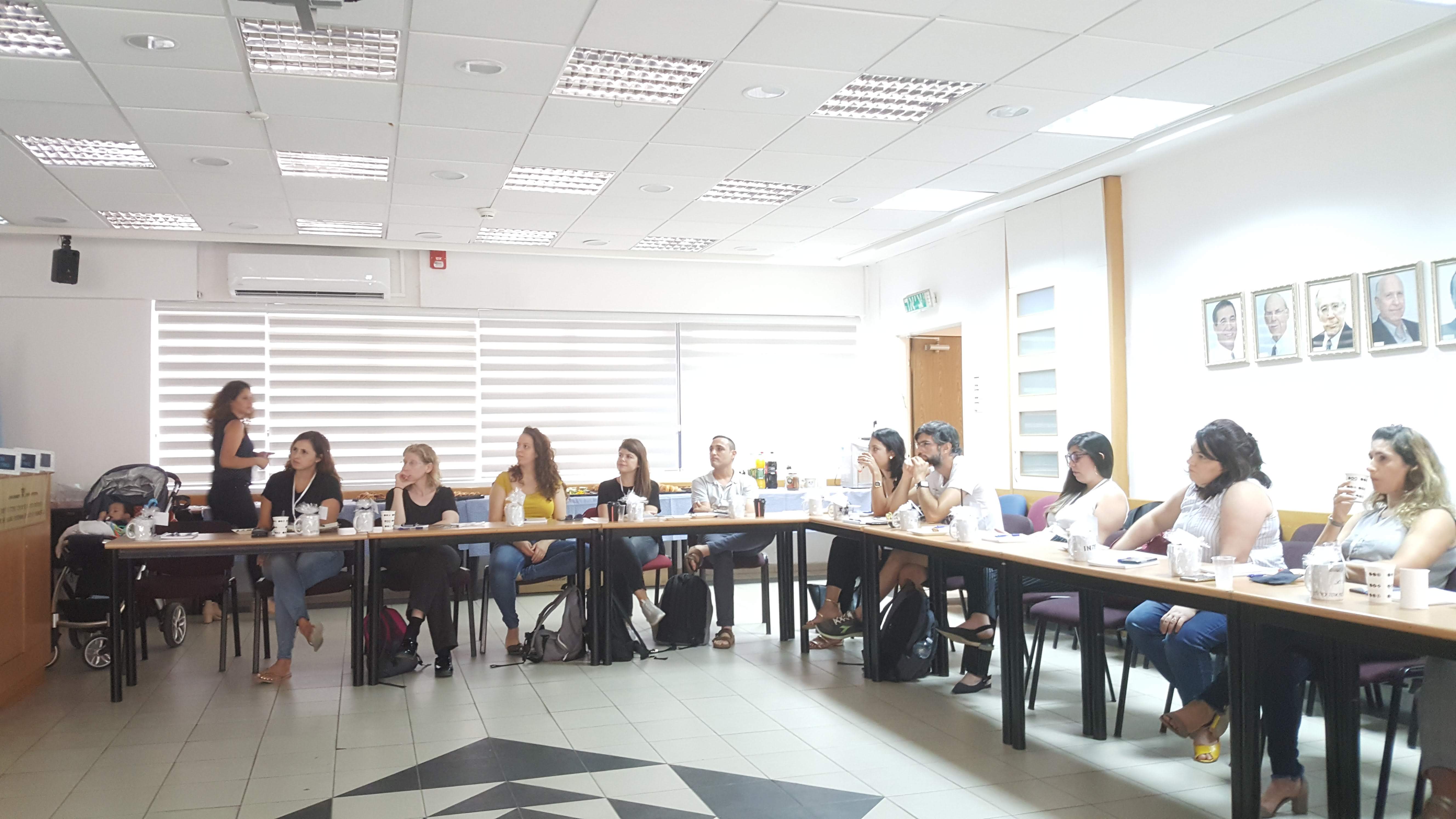
כבר שש שנים שארגון עמיתי התעשיה (IAP – Industrial Affiliates Program) פועל לטיפוח והעצמת הקשר שבין האקדמיה לתעשייה. פן משמעותי בשיתוף הפעולה הנו קשרי HR, שתכליתו גיוס והשמת הסטודנטים והבוגרים של הפקולטה. במהלך העבודה המשותפת נבנו עם השנים פעילויות שונות בתחום הגיוס, ההדרכה, המחקר והפנאי, ומחלקות משאבי אנוש היו הכוח המניע.

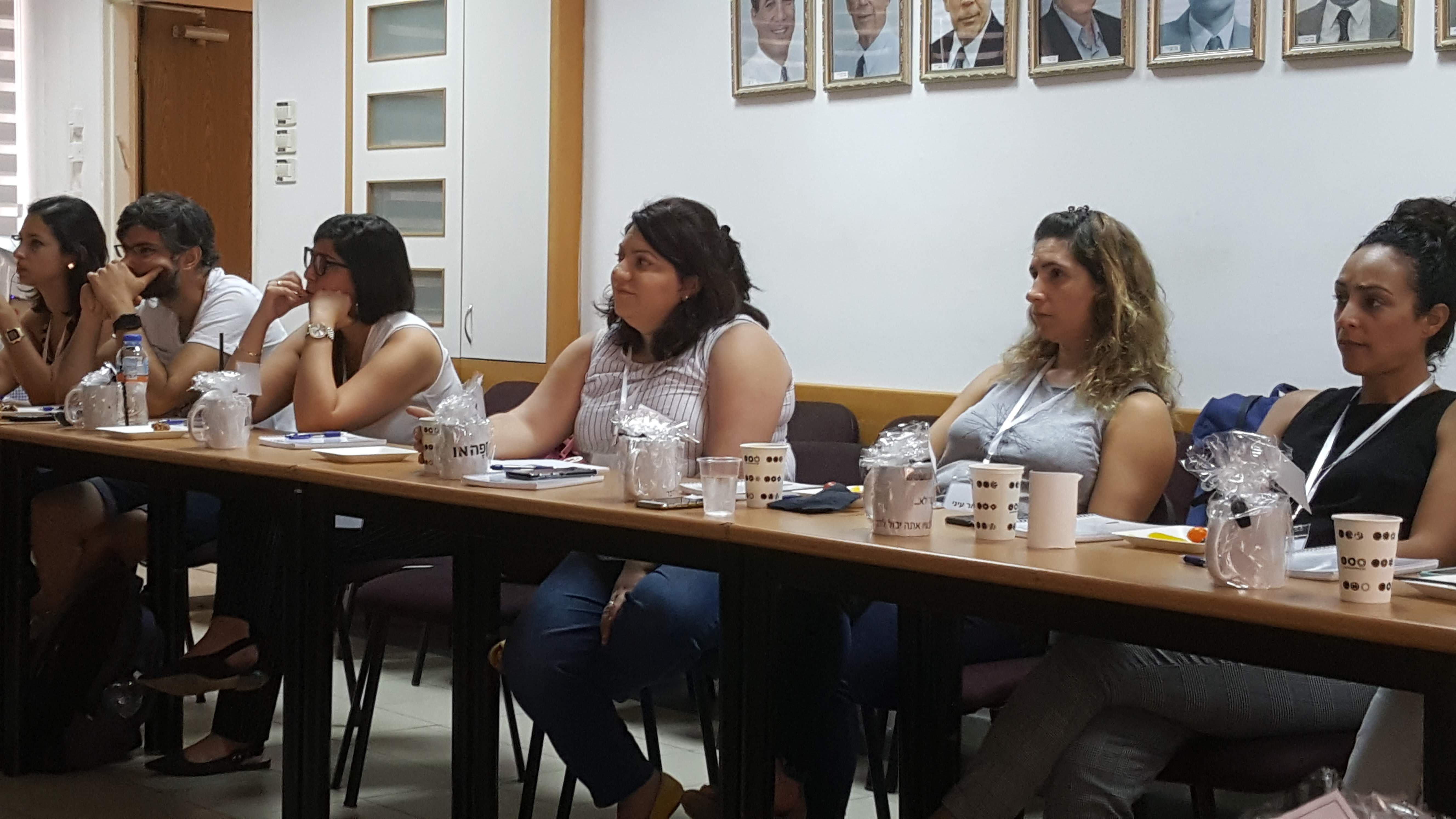
עם שוך תלאות החגים ורגע לפני שהסטודנטים חוזרים אל ספסל הלימודים ועבודת הגיוס תופסת שוב תאוצה, שמחנו לנצל את רגעי המנוחה כדי להזמין את נציגות ונציגי HR לבוקר של כיף בפקולטה.


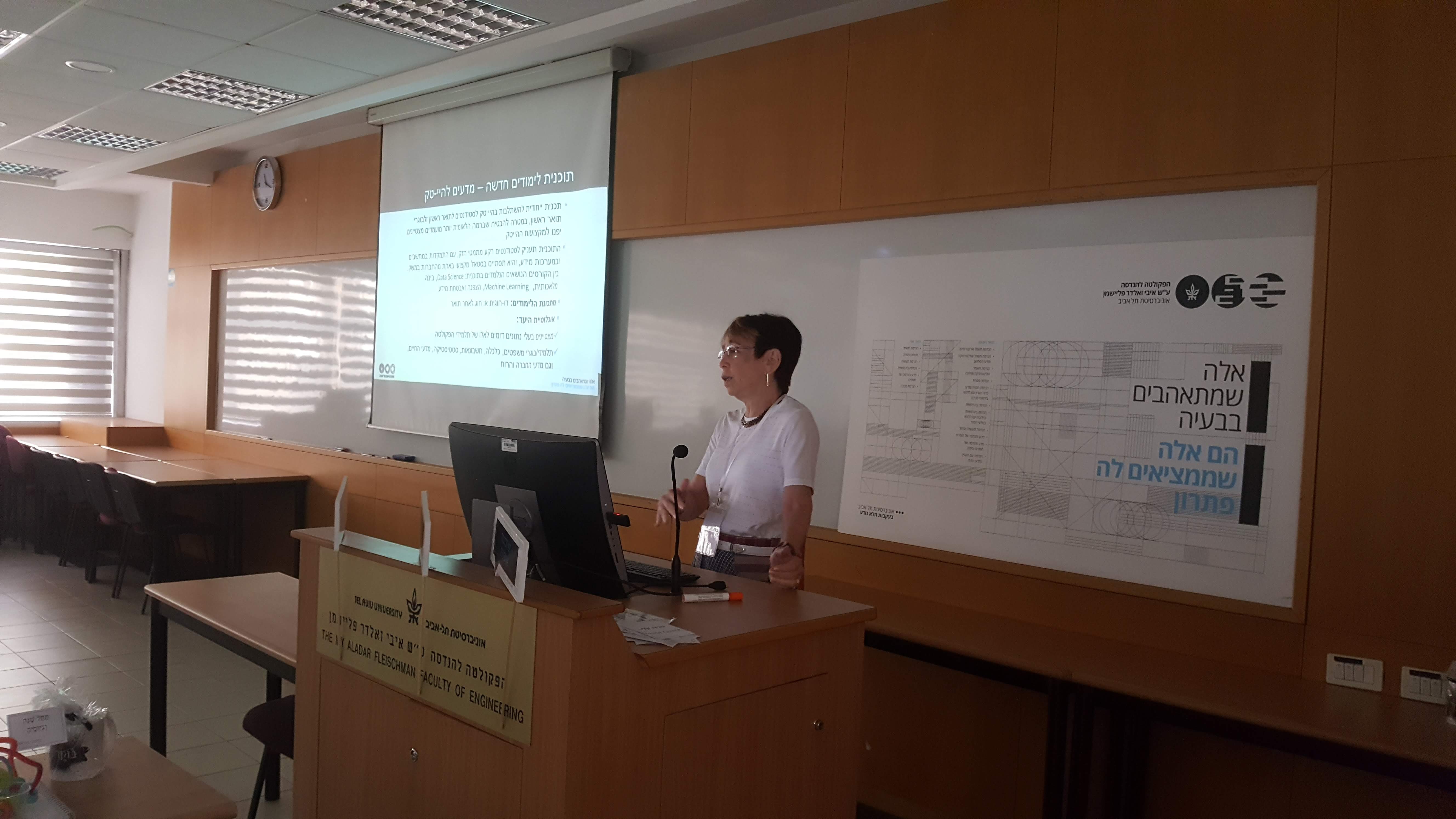
המפגש, שמתקיים זו השנה השנייה ברציפות, נפתח עם היכרות וארוחת בוקר קלילה עם מנהלות ומנהלי משאבי אנוש של החברות המובילות בתעשייה. פרופ' דוד מנדלוביץ, יו"ר IAP, הציג את הארגון ומטרותיו. הגברת פנינה אפרתי, משנה מנהלי לדקאן, הציגה את "פרופיל הסטודנטים והבוגרים שלנו". סיגלית בן חיון, מנהלת ארגון בוגרי אוניברסיטת תל אביב, ציינה את היתרונות לקשר הרציף עם בוגרי הפקולטה ובכלל.


בהמשך התקיים שיח פתוח ופורה בו נשאלו שאלות רבות לגבי שיתופי הפעולה ועלו רעיונות חדשים ומקוריים שבעתיד הקרוב נראה יוצאים לפועל. לקינוח נהנינו מההרצאה המרתקת של ד"ר רג'א ג'יריס על אחד מהמושגים החמים ביותר ב-2018 בעולם ההיי-טק - "למידה עמוקה על קצה המזלג".

לתמונות נוספות מהמפגש

EE Seminar: Co- Occurring Clusters Denoising

24 באוקטובר 2018, 15:30 
חדר 011, בניין כיתות-חשמל  

Speaker: Yair Shefi

M.Sc. student under the supervision of Prof. Shai Avidan and Yacov Hel-Or


Wednesday, October 24th 2018 at 15:30

Room 011, Kitot Bldg., Faculty of Engineering


Co- Occurring Clusters Denoising


Abstract


We suggest a method called Co- Occurring Context (CoC) denoising which applies a new prior to natural images, sparse labels Co-Occurrence matrix.

 We suggest achieving high image restoration by decreasing the elements count in the

Co-Occurrence matrix. Our Co-Occurrence matrix is a statistical representation of the pixels labels created by a clustering algorithm, exposing the statistical connection of two labels been assigned in nearby spatial window. We implement context clustering by using this prior to regularize our clustering objective function.

Context clustering prefer labels that can blend in their spatial neighborhood hence preserve context. Our denoising method takes advantage of the sub-problem and creates a restoration to each cluster separately using simple yet very effective method.

EE S3eminar: Learn Stereo, Infer Mono: Siamese Networks for Unsupervised, Monocular, Depth Estimation

17 באוקטובר 2018, 16:00 
חדר 206, בניין וולפסון הנדסת מכונות  


Speaker: Matan Goldman

M.Sc. student under the supervision of Prof. Tal Hassner and Prof. Shai Avidan


Wednesday, Oct 17th 2018 at 15:30

Room 206, Wolfson Mechanical Eng. Bldg., Faculty of Engineering


Learn Stereo, Infer Mono: Siamese Networks for Unsupervised, Monocular, Depth Estimation


Abstract

The field of unsupervised monocular depth estimation has seen huge advancements in recent years. Most methods assume stereo data is available during training but usually under-utilize it and only treat it as a reference signal. We propose a novel unsupervised approach which uses both left and right images equally during training, but can still be used with a single input image input at test time, for monocular depth estimation. Our Siamese network architecture consists of two, twin networks, each learns to predict a disparity map from a single image. At test time, however, only one of these networks is used in order to infer depth. We show state-of-the-art results on the standard KITTI Eigen split benchmark as well as being the highest scoring unsupervised method on the new KITTI single view benchmark. To demonstrate the ability of our method to generalize to new data sets, we further provide results on the Make3D benchmark, which was not used during training.

EE Seminar: Comparison of Single Sensor Emitter Localization Techniques

17 באוקטובר 2018, 15:30 
חדר 206, בניין וולפסון הנדסת מכונות  

Speaker: Nadav Shitrit

M.Sc. student under the supervision of Prof. Anthony J. Weiss.


Wednesday, October 17th, 2018 at 15:00

Room 206, Wolfson Mechanical Eng. Bldg., Faculty of Engineering


Comparison of Single Sensor Emitter Localization Techniques


Abstract


Direct Position Determination (DPD) is a novel method for the geolocation of trans-mitters. The DPD method uses the same data as common methods, except that the location estimation is based on exact maximum likelihood. We present and evaluate an algorithm for the DPD approach, assuming a single moving receiver collecting samples of continuous wave signals produced by a static emitter.

Our approach to the geolocation problem is based on time domain DPD using the complex envelope of the received signal. Similar problems are often solved by the phase unwrapping (PU) procedure. As shown in previous works, the PU method can achieve accurate results; however, its accuracy decreases in the face of errors such as cycle slips.

We compare the performance of the DPD and PU algorithms by computing an expression for the well-known Cramér-Rao Lower Bound (CRLB). Furthermore, we simplify the obtained expression based on flight trajectory restrictions up to compact form. This enables us to analyze the relationship between familiar properties (such as the carrier wavelength and signal-to-noise ratio) and the geolocation accuracy. Perfor-mance is evaluated by Small Error Analysis (SEA).

Monte Carlo simulations are used to corroborate the analytical results. Our analysis shows that both methods converge at a high signal-to-noise ratio (SNR). However, a significant advantage is obtained using DPD over the PU at low SNR.


EE Seminar: two lectures by Jordan Hashemi & Anish Simhal from Duke University

15 באוקטובר 2018, 15:00 
חדר 206, בניין וולפסון הנדסת מכונות  

(The talk will be given in English)


Speaker:     Dr. Jordan Hashemi and Dr. Anish Simhal
                   Duke University


Monday, October 15th, 2018
15:00 - 16:00

Room 206, Wolfson Mechanical Eng. Bldg., Faculty of Engineering


Each lecture will be 30 min.


The first (15:00-15:30) will be given by Jordan Hashemi

Computer Vision and Machine Learning for Computational Psychiatry

Observational assessments are critical for screening, diagnosing, and monitoring developmental disorders. However, current tools for objectively measuring young children’s observed behaviors are expensive, time-consuming, and require extensive training and professional administration. This lack of scalable, reliable, and validated tools impacts access to evidence-based knowledge and limits our capacity to collect population-level data in non-clinical, naturalistic settings. To address this gap, we developed a mobile paradigm to collect videos of young children while they watched movies designed to elicit autism-related behaviors and then used computer vision to automatically code behavioral responses of these videos. This mobile paradigm has allowed for one of the largest video data collections for autism and the discovery of novel biomarkers. In this talk, we will go into detail about our paradigm and demonstrate its impact towards scalable, objective behavioral coding for screening and monitoring children's development.


The second (15:30-16:00) will be given by Anish Simhal

A Computational Synaptic Antibody Characterization Tool for Array Tomography

Application-specific validation of antibodies is a critical prerequisite for their successful use. Here we introduce an automated framework for characterization and screening of antibodies against synaptic molecules for high-resolution immunofluorescence array tomography (AT). The proposed Synaptic Antibody Characterization Tool (SACT) is designed to provide an automatic, robust, flexible, and efficient tool for antibody characterization at scale. SACT automatically detects puncta of immunofluorescence labeling from candidate antibodies and determines whether a punctum belongs to a synapse. The molecular composition and size of the target synapses expected to contain the antigen is determined by the user, based on biological knowledge. Operationally, the presence of a synapse is defined by the colocalization or adjacency of the candidate antibody punctum to one or more reference antibody puncta. The outputs of SACT are automatically computed measurements such as target synapse density and target specificity ratio that reflect the sensitivity and specificity of immunolabeling with a given candidate antibody. These measurements provide an objective way to characterize and compare the performance of different antibodies against the same target, and can be used to objectively select the antibodies best suited for AT and potentially for other immunolabeling applications.

Moving Hairs: Towards adaptive, homeostatic materials

08 באוקטובר 2018, 16:00 
הפקולטה להנדסה אוניברסיטת תל-אביב  
0

מכון שלמה שמלצר לתחבורה חכמה באוניברסיטת תל אביב שם לו למטרה לקדם מחקר יישומי ולעודד שיתופי פעולה עם התעשייה בעולם התחבורה החכמה. אנו מזמינים תלמידי מחקר, העוסקים בפיתוח כלים וידע הנדרשים לקידום תחום זה, להגיש בקשה למלגת הצטיינות. 

קישור לקול קורא


כנס הטכנולוגיה המתקדמת של SAE International, ארגון הטכנולוגיה והתקינה המוביל בתעשיית האוטומוטיב, המונה 128,000 חברים מכל העולם, מגיע לישראל (16,17 לינואר 2019) בשיתוף עם לוגטלמכון שלמה שמלצר לתחבורה חכמה באונ' ת"א וספוטם.

הכנס מהווה הזדמנות לאנשי מקצוע, חוקרים וסטודנטים לפרסם ולהציג תחת כנפי ה SAE, תוך חשיפה של התכנים לגורמי אוטומוטיב בעולם כולו.

מצ"ב קול קורא להגשת הצעות להרצאות וניירות עבודה לכנס, המפרט את נושאי הכנס ומספק לינק למערכת הגשת ההצעות. שימו לב:

  •     הגשת הצעות תבוצע דרך מערכת My Tech Zone של ה SAE. לצורך הגשת הצעה יש להירשם במערכת ולקבל שם משתמש וסיסמא.
  •     ניתן להגיש הצעות לאחד משלושת סוגי ההגשה הבאים:
    •      Paper & presentation – נייר עבודה שעל בסיסו תוצג מצגת בכנס
    •    Presentation only – מצגת שתוצג בכנס (Power Point).
    •      only Paper- נייר עבודה שיפורסם בספריות הטכניות של ה SAE ללא צורך בהצגה בכנס.

קישור לקול קורא


אירוע פתיחת שנה עם מר חמי פרס

31 באוקטובר 2018, 18:00 
במוזיאון הטבע ע"ש שטיינהרדט - אוניברסיטת תל אביב  
אירוע פתיחת שנה עם מר חמי פרס

אירוע פתיחת שנה עם מר חמי פרס 31.10.18

במוזיאון הטבע ע"ש שטיינהרדט - אוניברסיטת תל אביב

כמה מילים על ההרצאה

להנדס את העתיד: על חדשנות, חלומות והגשמתם.

חמי פרס, בוגר הפקולטה, מבכירי תעשיית ההון סיכון בישראל, שותף–מייסד בקרן הון סיכון "פיטנגו ויו"ר מרכז פרס לשלום ולחדשנות",

ישתף אותנו מניסיונו כיצד מקבלים החלטות על השקעה במיזם זה או אחר, האם אנחנו בתחילתו של שינוי מגמה במעבר מאקזיטים לטובת צמיחה ובניית חברות גדולות

ואיך כל זה קשור לערכים ולציונות אותם ספג משחר נעוריו, בבית משפחת פרס.

מספר המקומות מוגבל! 

עמודים

אוניברסיטת תל אביב עושה כל מאמץ לכבד זכויות יוצרים. אם בבעלותך זכויות יוצרים בתכנים שנמצאים פה ו/או השימוש שנעשה בתכנים אלה לדעתך מפר זכויות
שנעשה בתכנים אלה לדעתך מפר זכויות נא לפנות בהקדם לכתובת שכאן >>