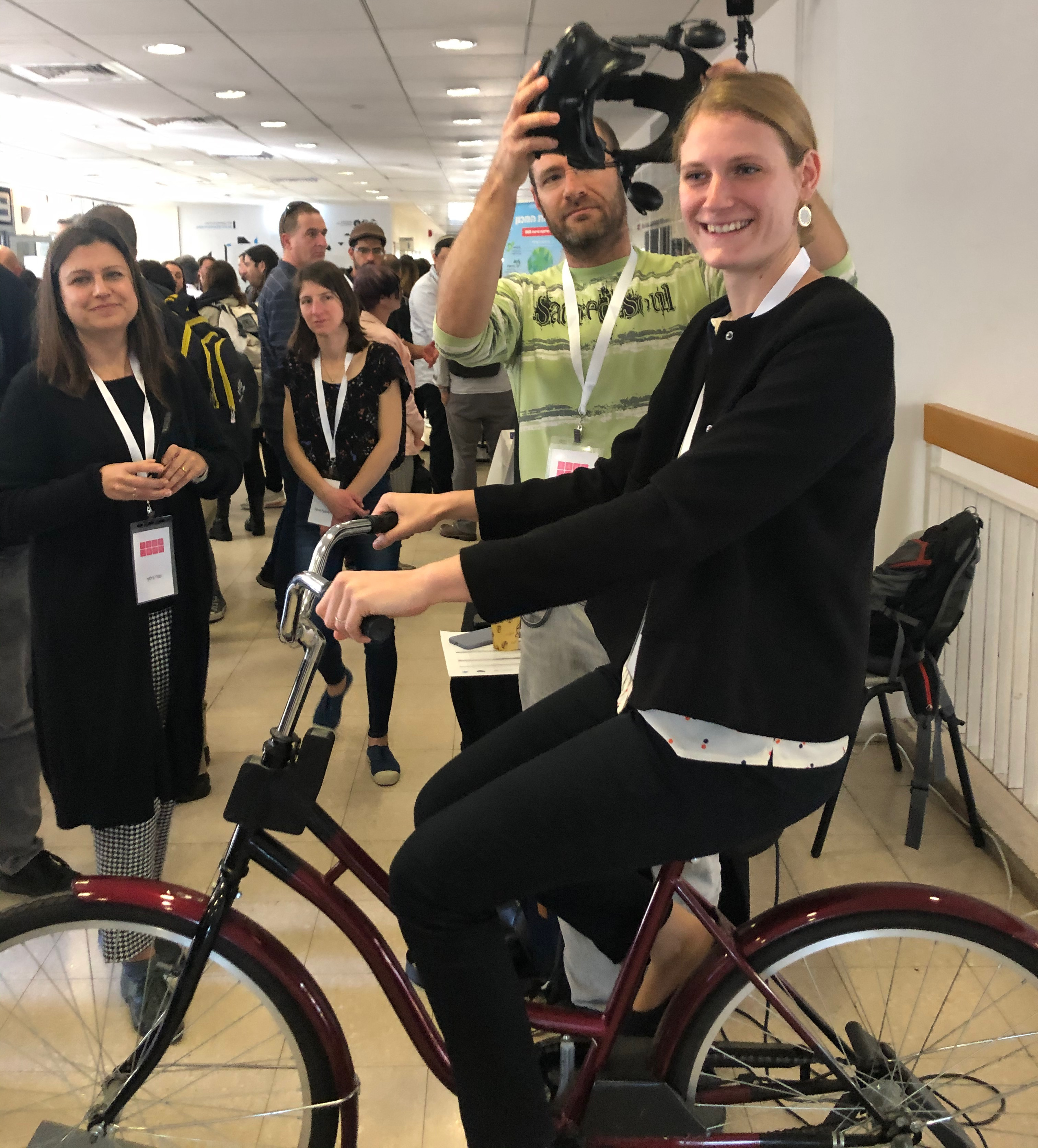
הצטרפו אלינו כדי לגלות את הדבר הגדול הבא

אוניברסיטת תל אביב רואה חשיבות רבה בהידוק הקשר עם התעשייה במסגרת פעילות של המרכז לקשרי תעשייה.

האקדמיה מהווה כמעיין הידע של העת החדשה, וככזו עליה להביט קדימה, ולשמר את הרלוונטיות לצורכי התעשייה. בשל כך, השיח הפתוח והפורה שאנו דואגים לשמר בין האקדמיה לתעשייה יחזק משמעותית את הקשר וישרת אפוא את כולם מכיוון שזה מסע המשותף של כולנו - אקדמיה ותעשיה.


בתחום הגיוס והרווחה

  • ימי זרקור- מיועד לחברות המעוניינות לפגוש את סטודנטים שלנו למטרות גיוס. הארגון דואג לתיאום האירוע בהתאם לזמינות הסטודנטים, פרסום האירוע וסיוע משלב התכנון ועד לסיום היום.
  • מפגש עם סטודנטים לתארים מתקדמים – מפגש בין כשעתיים שמתקיים לרוב בשעות אחה"צ בהתאם למערכת השעות. המטרה: איסוף קו"ח ומתן הסבר אודות החברה ואפשרויות הגיוס. בדר"כ שיח קצר לפני השיעור/ בהפסקה על קפה ומאפה.
  • פרסום משרות- הפרסום יעשה באמצעות דיוור לסטודנטים, פרסום ברשתות החברתיות ובאתר המשרות.
  • ימי גיוס- יום גיוס ייעודי לפי צורכי החברה, אשר כולל הרצאה וראיונות אישיים של סטודנטים שקורות חייהם נבדקו מראש.
  • אירועי פנאי, מפגשים טכנולוגיים וטקסים – אירועים ייחודיים שנבנים בהתאם למטרה שהוגדרה מראש, ובכלל זה אירועי ומסיבות סטודנטים, Meet Up, כנסים טכנולוגיים, מתן חסות לטקסי מצטיינים ועוד.


בתחום האקדמי

  • הרצאות אורח- העברת שיעור על ידי נציג מהתעשייה בקורס הנלמד בפקולטה להנדסה, והשיעור מהווה חלק אינטגרלי מסילבוס הקורס.
  • שומעים אורחים- עובדי החברה נוטלים חלק פעיל בקורסים אשר מועברים על ידי מרצי הפקולטה להנדסה, ללא ביצוע מטלות סטודנטיאליות. ישלח מייל ייעודי בנושא.
  • הרצאות העשרה- העברת הרצאת העשרה על ידי נציג מהתעשייה.
  • השפעה על תוכניות לימוד- כחלק משיתוף הפעולה בין האקדמיה לתעשייה, כאשר עולה צורך בהתאמת תכנים הנלמדים בפקולטה לצורכי התעשייה, מקיימים פגישה משותפת ובוחנים שינוי/ הוספת תכנים לסילבוס.
  • פרויקטי גמר בתעשייה- ביצוע פרויקט גמר לתואר ראשון או שני בתעשייה.


בתחום המחקרי

  • שולחן עגול מדעי לאיתור נושאי מחקר משותפים
  • חיבור לפרויקטים של המדען הראשי
  • חיבור לפרוייקטים במסגרת מכון זימין
  • שותפות מחקרית במסגרת מעבדות החדשנות

קורס מרוכז של מרצה אורח פרופ' פאבל בדריקובצקי - זרימה במאגרי גז ונפט: יסודות ההפקה

10 בנובמבר 2019, 15:00 
הפקולטה להנדסה אוניברסיטת תל-אביב  
קורס מרוכז של מרצה אורח פרופ' פאבל בדריקובצקי - זרימה במאגרי גז ונפט: יסודות ההפקה

בית הספר להנדסה מכנית אוניברסיטת תל אביב מזמין תלמידי תארים מתקדמים או אנשי מקצוע מהתעשייה להתארח בקורס "זרימה במאגרי גז ונפט: יסודות ההפקה". את הקורס יעביר מרצה אורח מחו"ל פרופ' פאבל בדריקובצקי. הקורס יעסוק במגוון נושאים בזרימה במאגרים בשלב המיגרציה הטבעית, בזמן הקידוח ובעת ההפקה על מגוון סוגיה (כולל החדרת מים והפקה מוגברת).  הקורס ינתן במהלך 10 ימים במשך 4 שעות ביום. תלמידי תואר ראשון יוכלו להשתתף באישור פרטני.


תאריכים

21.11.2019 - 10.11.2019


שעות

15:00-19:00


מיקום

ביניין וולפסון להנדסה מכנית, קומה 2, חדר 234


רישום

אורית גוטרמן

oritg@tauex.tau.ac.il


פרטי התקשרות 

לשאלות ניתן ליצור קשר עם ד"ר אבינועם רבינוביץ  avinoamr@post.tau.ac.il


קצת על המרצה

Professor Pavel Bedrikovetsky is an author of a seminal book in reservoir engineering and 230 technical papers in international journals and SPE. His research covers formation damage, waterflooding and EOR. He holds MSc in Applied Mathematics, PhD in Fluid Mechanics and DSc in Reservoir Engineering from Moscow Oil-Gas Gubkin University. In 1991-1994 he was a Visiting Professor at Delft University of Technology and at Imperial College of Science and Technology. From 1994 and until now Pavel is Petrobras Staff Consultant. He has 40-years of industrial experience in Russia, Europe, Brazil and Australia. Currently he holds Chair in Petroleum Engineering at Australian School of Petroleum at the University of Adelaide. He served as Section Chairman, short course instructor, key speaker and Steering Committee member at many SPE Conferences. He was 2008-2009 and 2016-2017 SPE Distinguished Lecturer

מסיבת תחילת שנה בחסות התעשייה האווירית לישראל

מסיבת תחילת שנה בחסות התעשייה האווירית לישראל

05 בנובמבר 2019, 12:00 - 14:00 
הפקולטה להנדסה אוניברסיטת תל-אביב  
מסיבת תחילת שנה בחסות התעשייה האווירית לישראל

מוכנים לקפוץ אל העתיד?


סטודנטיות וסטודנטים של הפקולטה להנדסה אוניברסיטת תל אביב מוזמנים לפתוח את השנה החדשה באירוע שעוד לא נראה כמותו בשיתוף התעשייה האווירית, ארגון עמיתי התעשייה וועד הנדסה


מחכים לכם ביום שלישי 5.11.2019 בין השעות 12:00-14:00 בשדרת הדקלים 

ד"ר גילי ביסקר הוזמנה לדבר על מחקרה, על ההישגים והאתגרים שלה בתחומי STEM

30 אוקטובר 2019
ד"ר גילי ביסקר הוזמנה לדבר על מחקרה, על ההישגים והאתגרים שלה בתחומי STEM

כמידי שנה מתקיים סימפוזיון בתחומי STEM על שם צוקרמן בארה"ב-ישראל. תכנית מנהיגות STEM של צוקרמן תומכת בדורות הבאים של מנהיגים בתחום המדע, טכנולוגיה, הנדסה ומתמטיקה בארצות הברית ובישראל. התכנית מקדמת שיתוף פעולה רב בין מרכזי המחקר המדעיים המתקדמים בעולם.


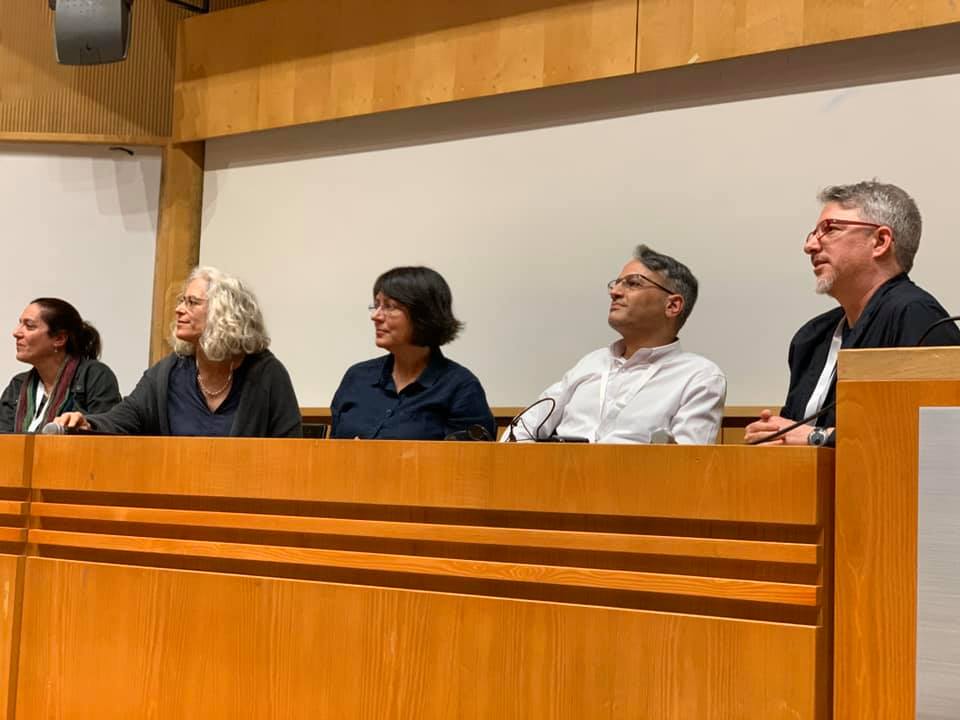
הסימפוזיון השנה יציג את הנשים בתכנית, ויבחן את ההישגים והאתגרים של נשים בתחומי .STEM הדוברות יעלו לדיון פתרונות אמיתיים שיכולים לקדם נשים ב- STEM הן באקדמיה והן בתעשייה.


אנחנו שמחים וגאים על בחירת ד"ר ביסקר כעמיתת צוקרמן וכדוברת מרכזית בכנס לצד דוברות מוערכות ומכובדות כגון פרופ' עדה יונת - כלת פרס נובל בכימיה לשנת 2009.


ד"ר ביסקר הנה חברת סגל במחלקה להנדסה ביו-רפואית באוניברסיטת תל אביב העובדת על ננו-טכנולוגיות ויישומים הקשורים לביורפואה. במעבדה שלה היא מפתחת ננו-חיישנים פלורסנטיים לגילוי ביומולקולות באמצעות התכונות האופטיות שלהם. מטרתה להשתמש בננו-חלקיקים פעילים אופטית כדי לחקור מערכות חיות בסקאלה ננומטרית, במטרה לעקוב בזמן אמת אחרי הדינמיקה של ביו-סמנים תוך התמקדות בחקר הסרטן. הכלים שלה יכולים לאפשר מעקב לאורך זמן, ולפתוח הזדמנויות חדשות לאבחון וטיפול במחלה.

לינק להרשמה לכנס

EE Seminar: Towards mm-Wave radar and communications: Rejoining cousins that were never removed

06 בנובמבר 2019, 15:00 
Room 011, Kitot Building  

(The talk will be given in English)


Speaker:     Dr. Kumar Vijay Mishra
                     ARL (United States Army Research Laboratory) & University of Iowa.


Wednesday, November 6th, 2019
15:00 - 16:00

Room 011, Kitot Bldg., Faculty of Engineering


Towards mm-Wave radar and communications: Rejoining cousins that were never removed


Abstract

Synergistic design of communications and radar systems with common spectral and hardware resources is heralding a new era of efficiently utilizing a limited radio-frequency (RF) spectrum. Such a joint radar communications (JRC) model has advantages of low cost, compact size, less power consumption, spectrum sharing, improved performance, and safety due to enhanced information sharing. Today, millimeter-wave (mm-Wave) communications have emerged as the preferred technology for short-distance wireless links because they provide transmission bandwidth that is several gigahertz wide. This band is also promising for short-range automotive radar applications, which benefit from the high-range resolution arising from large transmit signal bandwidths. Major challenges are joint waveform design and performance criteria that would optimally trade-off between communications and radar functionalities. In this talk, we present our recent works on mm-Wave JRC, with a focus on automotive applications.

Short Bio
Dr. Kumar Vijay Mishra obtained a Ph.D. in electrical engineering and M.S. in mathematics from The University of Iowa in 2015, and M.S. in electrical engineering from Colorado State University in 2012, while working on NASA’s Global Precipitation Mission Ground Validation (GPM-GV) weather radars. He received his B. Tech. summa cum laude (Gold Medal, Honors) in electronics and communication engineering from the National Institute of Technology, Hamirpur (NITH), India in 2003. He is currently U. S. National Academies Diamond Distinguished Fellow at United States Army Research Laboratory (ARL), Adelphi; Technical Adviser to Singapore-based automotive radar start-up Hertzwell; and honorary Research Fellow at SnT - Interdisciplinary Centre for Security, Reliability and Trust, University of Luxembourg. Previously, he had research appointments at Electronics and Radar Development Establishment (LRDE), Defence Research and Development Organisation (DRDO) Bengaluru; IIHR - Hydroscience & Engineering, Iowa City, IA; Mitsubishi Electric Research Labs, Cambridge, MA; Qualcomm, San Jose; and Technion - Israel Institute of Technology. He is the recipient of Royal Meteorological Society Quarterly Journal Editors Prize (2017), Viterbi Postdoctoral Fellowship (2015, 2016), Lady Davis Postdoctoral Fellowship (2017), Technion EE Excellent Undergraduate Adviser Award (2017), DRDO LRDE Scientist of the Year Award (2006), NITH Director’s Gold Medal (2003), and NITH Best Student Award (2003). His research interests include radar systems, signal processing, remote sensing, and electromagnetics.

קורס מרוכז של מרצה אורח פרופ' פאבל בדריקובצקי

29 אוקטובר 2019
קורס מרוכז של מרצה אורח מחו"ל

בית הספר להנדסה מכנית אוניברסיטת תל אביב מזמין תלמידי תארים מתקדמים או אנשי מקצוע מהתעשייה להתארח בקורס "זרימה במאגרי גז ונפט: יסודות ההפקה". את הקורס יעביר מרצה אורח מחו"ל פרופ' פאבל בדריקובצקי.


הקורס יעסוק במגוון נושאים בזרימה במאגרים בשלב המיגרציה הטבעית, בזמן הקידוח ובעת ההפקה על מגוון סוגיה (כולל החדרת מים והפקה מוגברת).  

הקורס ינתן במהלך 10 ימים במשך 4 שעות ביום. תלמידי תואר ראשון יוכלו להשתתף באישור פרטני.


תאריכים

21.11.2019 - 10.11.2019


שעות

15:00-19:00


מיקום

ביניין וולפסון להנדסה מכנית, קומה 2, חדר 234


רישום

אורית גוטרמן

oritg@tauex.tau.ac.il


פרטי התקשרות 

לשאלות ניתן ליצור קשר עם ד"ר אבינועם רבינוביץ  avinoamr@post.tau.ac.il


קצת על המרצה

Professor Pavel Bedrikovetsky is an author of a seminal book in reservoir engineering and 230 technical papers in international journals and SPE. His research covers formation damage, waterflooding and EOR. He holds MSc in Applied Mathematics, PhD in Fluid Mechanics and DSc in Reservoir Engineering from Moscow Oil-Gas Gubkin University. In 1991-1994 he was a Visiting Professor at Delft University of Technology and at Imperial College of Science and Technology. From 1994 and until now Pavel is Petrobras Staff Consultant. He has 40-years of industrial experience in Russia, Europe, Brazil and Australia. Currently he holds Chair in Petroleum Engineering at Australian School of Petroleum at the University of Adelaide. He served as Section Chairman, short course instructor, key speaker and Steering Committee member at many SPE Conferences. He was 2008-2009 and 2016-2017 SPE Distinguished Lecturer

EE SEminar: A Generalization of Linear Positive Systems with Applications to Nonlinear Systems: Invariant Sets and the Poincare–Bendixon Property

25 בנובמבר 2019, 15:00 
Kitot Building, Room 011  

(The talk will be given in English)


Speaker:     Prof. Michael Margaliot
                     EE, Tel Aviv University


Monday, November 25th, 2019
15:00 - 16:00

Room 011, Kitot Bldg., Faculty of Engineering


A Generalization of Linear Positive Systems with Applications to Nonlinear Systems: Invariant Sets and the Poincare–Bendixon Property
Abstract

The dynamics of linear positive systems maps the positive orthant to itself. In other words, it maps a set of vectors with zero sign variations to itself. This raises the following question: what linear systems map the set of vectors with k sign variations to itself? We address this question using tools from the theory of cooperative dynamical systems and the theory of totally positive matrices. This yields a generalization of positive linear systems called kpositive linear systems, that reduces to positive systems for k = 1. We describe applications of this new type of systems to the analysis of nonlinear dynamical systems. In particular, we show that such systems admit certain explicit invariant sets, and for the case k = 2 establish the Poincare-Bendixon property for certain trajectories. 
This is joint work with Eyal Weiss.

Short Bio
Michael Margaliot received the BSc (cum laude) and MSc degrees in Elec. Eng. from the Technion—Israel Institute of Technology in 1992 and 1995, respectively, and the PhD degree (summa cum laude) from Tel Aviv University in 1999. He was a post-doctoral fellow in the Dept. of Theoretical Math. at the Weizmann Institute of Science. In 2000, he joined the Dept. of Elec. Eng.–Systems, Tel Aviv University, where he is currently a Professor. His research interests include the stability analysis of differential inclusions and switched systems, optimal control theory, computation with words, Boolean control networks, contraction theory, and systems biology. He served as an Associate Editor for IEEE Transactions on Automatic Control during 2015–2017.


EE Seminar: Rain Detection and Estimation Using Recurrent Neural Network and Commercial Microwave Links

13 בנובמבר 2019, 15:30 
Kitot Building, Room 011  

Speaker: Hai Victor Habi

M.Sc. student under the supervision of Prof. Hagit Messer-Yaron


Wednesday, November 13th, 2019 at 15:30

Room 011, Kitot Bldg., Faculty of Engineering


Rain Detection and Estimation Using Recurrent Neural Network and Commercial Microwave Links


Abstract

A novel method for environmental monitoring suggested by Messer et al. in 2006, involving existing commercial microwave links used in the backhaul communication links, for the sake of precipitation monitoring. This method is founded on traditional signal processing and the Power-Law approximation.


In this work, we introduce a rain detection (wet-dry classification) and estimation method based on recurrent neural network using commercial microwave links. We analyze three aspects of rain estimation algorithms: performance, robustness and complexity, and compare between a Power-Law based method and RNN methods.

Using actual measurements, we show that the power-law based methods are more robust while the RNN methods are more accurate, when properly trained. Also, we introduce a Time Normalization (TN) layer for controlling the trade-off between performance and robustness of RNN methods. We analyzed and draw conclusions based on actual measurements from CMLs.

School of Mechanical Engineering:Tomer Markovich

04 בדצמבר 2019, 14:00 - 15:00 
בניין וולפסון 206  
School of Mechanical Engineering:Tomer Markovich

~~

SCHOOL OF MECHANICAL ENGINEERING SEMINAR
Wednesday, December 4, 2019 at 14:00
Wolfson Building of Mechanical Engineering, Room 206

Active Matter: `active thermodynamics’ and the dynamics of biopolymer gels

Tomer Markovich
CTBP, Rice University and DAMTP, University of Cambridge

Active materials are composed of many components that can convert energy from its environment (usually in the form of chemical energy) into directed mechanical motion. Time reversal symmetry is thus locally broken, leading to a variety of novel phenomena such as motility induced phase separation, reversal of the Ostwald process and flocking. Examples of active matter are abundant and range from living matter such as bacteria, actomyosin networks and bird flocks to Janus particles, colloidal rollers and macroscale driven chiral rods. Nevertheless, in many cases experiments on active materials exhibit equilibrium like properties (e.g., sedimentation of bacteria). In the first part of the talk I will try to answer the important question: how do we know a system is `active’? And if it is, can we have generic observables as in equilibrium thermodynamics? Can we measure how far it is from equilibrium? In the second part of the talk I will focus on examples of activity in biopolymer gels, such as the cytoskeleton of living cells. I will show some of the effects of active motors with emphasis on chiral motors. The latter does not have a unique hydrodynamic description, which one can utilize to gain access to the microscopic details of the complex motors using macroscopic measurements. I will also discuss non-motor activity and demonstrate how it can result in contractility, e.g., in the process of cell division.

Bio
Dr. Tomer Markovich is Postdoctoral Research Associate in the Center for Theoretical and Biological Physics (CTBP) at Rice University working with Professor Fred MacKintosh. He obtained his PhD in Physics at Tel Aviv University under the supervision of Professor David Andelman in 2017. Prior to his current appointment, Tomer was a Blavtanik Postdoctoral Fellow in the Department of Applied Mathematics and Theoretical Physics (DAMTP) at the University of Cambridge working with Professor Michael Cates.


School of Mechanical Engineering: Lea Belkin

25 בנובמבר 2019, 14:00 - 15:00 
בניין וולפסון 206  
0
School of Mechanical Engineering: Lea Belkin

~~

SCHOOL OF MECHANICAL ENGINEERING SEMINAR
Monday, November 25, 2019 at 14:00
Wolfson Building of Mechanical Engineering, Room 206

Feedback-based topological mechanical metamaterials - designing unconventional wave propagation in real-time

Lea Beilkin

Controlling wave propagation in mechanical/acoustic systems is an essential requirement in advanced engineering applications, such as acoustic imaging, acoustic signature cloaking, noise cancellation, vibration suppression and more. Recently, there was introduced an idea to exploit an originally quantum phenomenon, denoted by topological insulation, to achieve unconventional wave behavior in classical materials and structures. The topological phenomenon supports wave propagation along interfaces or boundaries that is immune to back-scattering in the presence of localized imperfections and sharp corners. The spotlight of the current research in modern physics and engineering includes the design of artificial structures (or metamaterials), which accommodate topological properties through the collective behavior of their unit cells.
To date, most of the research has considered passive structures with unit cells of fixed geometry. However, it becomes more and more evident that the full potential of topological metamaterials cannot be realized with purely passive designs, due to the following reasons: (i) once a passive structure is fabricated it has fixed dynamic properties at a given frequency, and (ii) a variety of topological phenomena can be obtained only with active involvement.
In the talk I am going to present the concept of active topological metamaterials whose underlying mechanism is based on real-time feedback control. I will show how embedding electronic transducers in a plain panel and operating them in real-time according to targeted control algorithms, can generate various topological effects at an adjustable frequency range. The algorithms can be switched to a different functionality upon request. I will demonstrate how this concept lends itself to the new direction of programmable feedback-based materials for general wave guiding purposes.

Bio
Lea Beilkin is a postdoctoral fellow at the Physics of Complex Systems Lab, School of Physics and Astronomy (Department of Condensed Matter Physics), TAU, since February 2019. Her research interests include application of feedback control theory to the design of advanced wave propagation in acoustic/mechanical structures. During 2016-2018, Lea was a postdoctoral associate at the Active-Adaptive Control Lab, Department of Mechanical Engineering, MIT, via the MIT-Technion program. She completed her PhD in 2016 at the Faculty of Mechanical Engineering, Technion - I.I.T.

עמודים

אוניברסיטת תל אביב עושה כל מאמץ לכבד זכויות יוצרים. אם בבעלותך זכויות יוצרים בתכנים שנמצאים פה ו/או השימוש שנעשה בתכנים אלה לדעתך מפר זכויות
שנעשה בתכנים אלה לדעתך מפר זכויות נא לפנות בהקדם לכתובת שכאן >>