סמינר מחלקתי

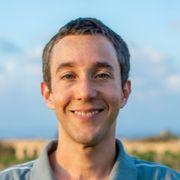
Hadar  Or

26 בנובמבר 2014, 15:00 
וולפסון 206  
0
סמינר מחלקתי


School of Mechanical Engineering Seminar
Wednesday, November 26, 2014 at 15:00
Wolfson Building of Mechanical Engineering, Room 206


Crack-arresting voided periodic materials

Or Hadar

MSc Student of Prof. Shmuel Ryvkin


Evaluation of the stress field around the tip of a semi-infinite crack embedded in a material with periodic microstructure is very difficult because it is necessary to carry out a large volume of calculations. This work presents and implements a novel method to perform this calculation. The conditions at the boundaries of a rectangular domain around the tip are formulated by the use of K-field for the homogeneous material possessing effective elastic properties and then the finite discrete Fourier transform is applied. This allows to replace standard analysis of a large periodic domain with many cells by the analysis of a single repetitive cell in the transform space which can be carried out by any numerical method. Consequently, the volume of calculations in comparison with the standard approach is reduced and the problem of a macrocrack embedded in a material with fine microstructure can be addressed without simplifying assumptions. The accuracy of the proposed approach is verified by a comparison with the analytical solution for a crack embedded in a homogeneous plane and with the known results for low-density voided material.

Application of the suggested method is given for a crack in a two-dimensional periodically voided material with triangular isotropic layout. The representative cell problem is resolved by the finite element method. It was assumed that the parent material is brittle and fracture toughness of the voided material is determined by the stress criterion for crack propagation, i.e. the crack will propagate when the maximal tensile stress around the tip will reach the tensile strength of the parent material. The dependence of the fracture toughness upon the material relative density is investigated for circular and hexagon voids, as well as its dependence on the shape of the voids for high density material. A comparison of the fracture toughnesses of the solid and voided materials has shown for which parameter combinations voided ones will provide better crack resistance. Results are given for materials commonly used: alumina 99.9%, silicon nitride, sapphire, boron nitride and mullite.

הנדסת חשמל - סמינר - ד"ר אבנר פליישר


03 בנובמבר 2014, 15:00 
וולפסון מכונות חדר 118  
0

~~You are invited to attend a lecture
By

Dr. Avner Fleischer
Department of Physics and Optical Engineering, ORT Braude College, P.O. Box 78, Karmiel 21982, Israel
Solid State Institute and Physics Department, Technion-Israel Institute of Technology, Haifa 32000, Israel.
 
Filming an electron as it flows inside an atom using a time-resolved laser STM (Scanning Tunneling Microscope)
Atoms and Molecules subjected to intense infrared laser fields may ionize by one of the most fundamental quantum processes: tunnel ionization. Depending on the release time of the electron into the continuum, one of two scenarios might take place. In the first, the electron simply flies towards the detector. I will show that this electron carries significant fingerprints of the electronic orbital from which it was torn. By analyzing its properties (momentum, energy) in a COLTRIM (cold target recoil ion momentum) spectrometer, we essentially constructed a "laser-STM" – an analogue to the conventional STM - capable of studying electron dynamics with ultrafast temporal resolution. I will show how this machinery can be used to take femtosecond-resolution snapshots of  an evolving electronic wavepacket density inside several atoms and molecules [1]. This work paves the way towards imaging of more complex electronic processes, such as charge transfer in molecules and semiconductor devices. In the second scenario the electron might return to the vicinity of the ion and recollide with it-  giving rise to the emission of high energy photons by high harmonic generation (HHG). I will present our recent solution to a problem which existed nearly 20 years in the field of HHG: how does one control the polarization state of the emitted harmonics [2].
[1]  A. Fleischer, H. J. Wӧrner, L. Arissian, L. Liu, M. Meckel, A. Rippert, R. Dӧrner, D. M. Villeneuve, P. B. Corkum and A. Staudte, "Probing Angular Correlations In Sequential Double Ionization", Phys. Rev. Lett. 107 113003 (2011).
 
[2] A. Fleischer, O. Kfir, T. Diskin, P. Sidorenko and O. Cohen,"Spin angular momentum and tunable polarization in high-harmonic generation", Nature Photonics 8 543 (2014).


לנוחותכם קבצי הידיעון להורדה והדפסה בפורמט Pdf
(לא כולל סילבוסים, מערכת השעות ולוח הבחינות)
מבוא
מוסדות הפקולטה
הספרייה למדעים מדויקים והנדסה
דקנאט הסטודנטים
מבנה הלימודים
תנאי רישום וקבלה - תואר ראשון
תקנון הלימודים לתואר ראשון
תכניות הלימודים לתואר ראשון
המגמה להנדסת חשמל ואלקטרוניקה
הנדסת חשמל ואלקטרוניקה ומדעי המחשב
הנדסת חשמל ואלקטרוניקה ופיזיקה (תואר כפול)
המגמה להנדסה מכנית
המגמה להנדסה ביו-רפואית
המגמה להנדסת תעשייה
לימודי התואר השני והשלישי - כללי
תקנון הלימודים לתואר שני
תכניות הלימודים - חטיבת לימודי ניהול
בית הספר להנדסת חשמל
לימודי תואר שני
תוכניות לימודים
תוכניות לימודים מומלצות לתואר שני
תוכניות לימודים מומלצות המשך
בית הספר להנדסה מכנית
התכנית להנדסת סביבה
המחלקה להנדסה ביו-רפואית
המחלקה להנדסת תעשייה
התכנית למדע והנדסת חומרים
קורסי בחירה כלליים
מערכת שעות תואר ראשון
מערכת שעות תארים מתקדמים
לוח בחינות- תואר ראשון סמסטר א'
לוח בחינות- תואר ראשון סמסטר ב'
לוח בחינות- תארים מתקדמים סמסטר א'
לוח בחינות- תארים מתקדמים סמסטר ב'


לנוחותכם קבצי הידיעון להורדה והדפסה בפורמט Pdf
(לא כולל סילבוסים, מערכת השעות ולוח הבחינות)
מבוא
מוסדות הפקולטה
הספרייה למדעים מדויקים והנדסה
דקנאט הסטודנטים
מבנה הלימודים
תנאי רישום וקבלה - תואר ראשון
תקנון הלימודים לתואר ראשון
תכניות הלימודים לתואר ראשון
המגמה להנדסת חשמל ואלקטרוניקה
הנדסת חשמל ואלקטרוניקה ומדעי המחשב
הנדסת חשמל ואלקטרוניקה ופיזיקה (תואר כפול)
המגמה להנדסה מכנית
המגמה להנדסה ביו-רפואית
המגמה להנדסת תעשייה
לימודי התואר השני והשלישי - כללי
תקנון הלימודים לתואר שני
תכניות הלימודים - חטיבת לימודי ניהול
בית הספר להנדסת חשמל
לימודי תואר שני
בית הספר להנדסת חשמל - תוכניות לימודים
בית הספר להנדסת חשמל-תוכניות לימודים מומלצות לתואר שני
בית הספר להנדסת חשמל-תוכניות לימודים מומלצות המשך
בית הספר להנדסה מכנית
התכנית להנדסת סביבה
המחלקה להנדסה ביו-רפואית
המחלקה להנדסת תעשייה
תכנית לחומרים וננו טכנולוגיות


סמינר מחלקתי

Gal Kaminka

12 בנובמבר 2014, 15:00 
וולפסון 206  
סמינר מחלקתי


School of Mechanical Engineering Seminar
Wednesday, November 12, 2014 at 15:00
Wolfson Building of Mechanical Engineering, Room 206


No robot is an island, no team an archipelago


Prof. Gal A. Kaminka

Computer Science Department & Gonda Brain Research Center

Bar Ilan University, Israel


We live in opportune times. The centuries-old dreams of creating intelligent, programmable automatons—robots—are becoming reality. Recent years are seeing dramatically growing interest in robotics, by scientists and practitioners alike. Robots—from the molecular scale to tank-size—seem to appear everywhere: in production lines, in the battlefield, in hospitals, in warehouses, in homes, in fields; on the ground, on water, and in the air.

In this talk, I argue that to accelerate and maximize the impact of robotics, robots should operate in teams, rather than in isolation. Moreover, I argue that effective robot teams must dynamically adjust their teamwork, instead of relying on rigid pre-planned coordination schemes. This is not a mere philosophical argument: I will present algorithms, data structures, and computational techniques for facilitating such teamwork, and discuss analytical guarantees and empirical results that demonstrate the effectiveness of these contributions in a variety of cooperative robot teams, from the molecular to the vehicle scale; robot teams which move in formations, explore urban areas, play soccer, and patrol Israel's borders.

As a final note, I will also argue that what is true for robots, is true for roboticists. Accelerating the impact of robotics requires leaving behind rigid disciplinary bounds and pre-established division of labor within academic circles and in practice. Instead, roboticists should embrace multi-discplinary collaborations, opening up to biology, psychology, economics, and sociology as sources of inspiration and targets of influence.


About the speaker:

Gal A. Kaminka is a professor at the computer science department and the brain sciences research center, at Bar Ilan University (Israel), where he chairs the Bar Ilan University Robotics Consortium, and his MAVERICK research group. His research expertise includes multi-agent and multi-robot systems, teamwork and coordination, behavior and plan recognition, and modeling social behavior. He received his PhD from the University of Southern California (2000), spent time as a post-doctorate fellow at Carnegie Mellon University (until 2002), and a year as a Radcliffe Fellow at Harvard University's Radcliffe Institute for Advanced Study (2012).  Prof. Kaminka was awarded an IBM faculty award and top places at international robotics competitions. He served as the program chair of the 2008 Israeli Conference on Robotics, and the program co-chair of the 2010 Int'l Joint Conference on Autonomous Agents and Multi-Agent Systems (AAMAS). He has served on the international executive bodies of IFAAMAS (International Foundation of Autonomous Agents and Multi-Agent Systems), the RoboCup Federation, and AAAI (Association for Advancement of Artificial Intelligence). He is the author or co-author of over 150 publications and 7 patents. He is the 2013 recipient of the Israeli national Landau Prize in exact sciences.


לנוחותכם קבצי הידיעון להורדה והדפסה בפורמט Pdf
(לא כולל סילבוסים, מערכת השעות ולוח הבחינות)
מבוא
מוסדות הפקולטה
הספרייה למדעים מדויקים והנדסה
דקנאט הסטודנטים
מבנה הלימודים
תנאי רישום וקבלה - תואר ראשון
תקנון הלימודים לתואר ראשון
תכניות הלימודים לתואר ראשון
המגמה להנדסת חשמל ואלקטרוניקה
הנדסת חשמל ואלקטרוניקה ומדעי המחשב
הנדסת חשמל ואלקטרוניקה ופיזיקה (תואר כפול)
המגמה להנדסה מכנית
המגמה להנדסה ביו-רפואית
המגמה להנדסת תעשייה
לימודי התואר השני והשלישי - כללי
תקנון הלימודים לתואר שני
תכניות הלימודים - חטיבת לימודי ניהול
בית הספר להנדסת חשמל
לימודי תואר שני
בית הספר להנדסת חשמל - תוכניות לימודים
בית הספר להנדסת חשמל-תוכניות לימודים מומלצות לתואר שני
בית הספר להנדסת חשמל-תוכניות לימודים מומלצות המשך
בית הספר להנדסה מכנית
התכנית להנדסת סביבה
המחלקה להנדסה ביו-רפואית
המחלקה להנדסת תעשייה
תכנית לחומרים וננו טכנולוגיות
לימודי חוץ - תארים מתקדמים
קורסי בחירה כלליים
מערכת שעות תואר ראשון
מערכת שעות תארים מתקדמים
לוח בחינות- תואר ראשון סמסטר א'
לוח בחינות- תואר ראשון סמסטר ב'
לוח בחינות- תארים מתקדמים סמסטר א'
לוח בחינות- תארים מתקדמים סמסטר ב'


לנוחותכם קבצי הידיעון להורדה והדפסה בפורמט Pdf
(לא כולל סילבוסים, מערכת השעות ולוח הבחינות)
מבוא
מוסדות הפקולטה
הספרייה למדעים מדויקים והנדסה
דקנאט הסטודנטים
מבנה הלימודים
תנאי רישום וקבלה - תואר ראשון
תקנון הלימודים לתואר ראשון
תכניות הלימודים לתואר ראשון
המגמה להנדסת חשמל ואלקטרוניקה
הנדסת חשמל ואלקטרוניקה ומדעי המחשב
הנדסת חשמל ואלקטרוניקה ופיזיקה (תואר כפול)
המגמה להנדסה מכנית
המגמה להנדסה ביו-רפואית
המגמה להנדסת תעשייה
לימודי התואר השני והשלישי - כללי
תקנון הלימודים לתואר שני
תכניות הלימודים - חטיבת לימודי ניהול
בית הספר להנדסת חשמל
לימודי תואר שני
בית הספר להנדסת חשמל - תוכניות לימודים
בית הספר להנדסת חשמל-תוכניות לימודים מומלצות לתואר שני
בית הספר להנדסה מכנית
התכנית להנדסת סביבה
המחלקה להנדסה ביו-רפואית
המחלקה להנדסת תעשייה
תכנית לחומרים וננו טכנולוגיות
לימודי חוץ - תארים מתקדמים
קורסי בחירה כלליים
מערכת שעות תואר ראשון
מערכת שעות תארים מתקדמים
לוח בחינות- תואר ראשון סמסטר א'
לוח בחינות- תואר ראשון סמסטר ב'
לוח בחינות- תארים מתקדמים


סמינר מחלקתי

Ami Moshiov

29 בדצמבר 2014, 15:00 
וולפסון 206  
0
סמינר מחלקתי


School of Mechanical Engineering Seminar
Monday, December 29, 2014 at 15:00
Wolfson Building of Mechanical Engineering, Room 206


Family Bootstrapping: a Genetic Transfer Learning Approach for Onsetting the Evolution for a Set of Related Robotic Tasks


Amiram Moshaiov

School of Mechanical Engineering, Faculty of Engineering

Tel Aviv University, Israel


Studies on the bootstrap problem in evolutionary robotics help lifting the barrier from the way to evolve robots for complex tasks. It remains an open question, though, how to reduce the need for designer knowledge when devising a bootstrapping approach for any particular complex task. Recent developments in the field of transfer learning may help reducing this need and support the evolution of solutions to complex tasks, through task relatedness. Relying on the commonalities of similar tasks, we introduce a new concept of Family Bootstrapping (FB). FB refers to the creation of biased ancestors that are expected to onset the evolution of "a family" of solutions not just for one task, but for a set of related robot tasks. A general FB paradigm is outlined and the unique potential of the proposed concept is discussed. To highlight the validity of the FB concept, a simple demonstration case, concerning the evolution of neuro-controllers for a set of robot navigation tasks, is provided. The FB concept resulted from an earlier work on bootstrapping the co-evolution of soccer-like players, which is also briefly reported.  The presentation is concluded with some suggestions for future research.


הנדסת חשמל - סמינר - אלכס יופיט

~~Electrical Engineering-Systems Department

*** SEMINAR ***

Alex Yufit
M.Sc. student under the supervision of Prof. Yair Be’ery

on the subject:

On Efficient Linear Programming Decoding of HDPC codes

      In our work we propose improved LP decoding techniques for HDPC codes. Our enhanced LP decoder generates several variants of the fundamental polytope for eliminating pseudocodewords and improving decoding performance. On top of the enhanced performance, our decoder reduces the complexity by removing all inactive LP constraints at each iteration. We compare the performance and the complexity of our enhanced decoded to the New Separation Algorithm (NSA) for several BCH codes using AWGN channel. From simulation results we observe that our enhanced LP decoder achieves significant performance gain over the NSA with similar decoding complexity.
      Inspired by the above results we propose three enhanced ADMM message passing decoders and discuss the tradeoffs between them. Our enhancements make the ADMM decoder suitable for HDPC codes. In simulation results our decoders show near-ML performance for BCH and Hamming codes that we’ve tested. Analysis of the decoding complexity implies that in high SNR regime our decoders have negligible overhead of the average complexity relative to the original ADMM decoder.
      Decoding complexity is a very important factor for any practical use. We propose a framework for detailed analysis of the complexity of ADMM message passing decoder. Computational complexity of ADMM decoding algorithm is expressed by the number of arithmetic operations. First, we derive an upper bound on the complexity of a single ADMM message passing iteration. Our upper bound depends linearly on the number of edges in the Tanner graph of a code. Then, relying on simulation results we count the average number of required message passing iterations to get an estimate of the computational complexity of decoding one codeword. We observe that in high SNR regime the most dominant factor affecting total decoder complexity is the complexity of a single ADMM message passing iteration. We extend the analysis to our enhanced ADMM decoders.

12 בנובמבר 2014, 15:00 
בניין כיתות-חשמל חדר 011  

סמינר מחלקתי Jane O'nill

10 בנובמבר 2014, 15:00 
וולפסון 206  
0
סמינר מחלקתי Jane O'nill


School of Mechanical Engineering Seminar
Monday, November 10, 2014 at 15:00
Wolfson Building of Mechanical Engineering, Room 206


ACTIVE CLOAKING OF INCLUSIONS
FOR FLEXURAL WAVES IN KIRCHHOFF PLATES


Miss Jane ONeill

University of Liverpool


Abstract text.

We present a new method to create an active cloak for a single inclusion in a Kirchhoff plate in the presence of flexural waves. We consider both clamped and free edge boundary conditions. To build an effective cloak, we place control sources exterior to the scatterer and choose their intensities to eliminate propagating components of the scattered wave. Our initial discussion is on the canonical problem of active cloaking of a circular cylinder for which a closed form analytic solution is derived, and exemplified in a number of illustrative cases. We then consider a clamped scatterer of arbitrary shape with a smooth boundary and describe a method for solving the active cloaking problem. Further details can be found at

http://arxiv.org/abs/1403.0816.


Short Bio: Miss Jane O'Neill finished her integrated masters programme in mathematics at the University of Liverpool in June 2013. She is currently a second year PhD student at the same department.


עמודים

אוניברסיטת תל אביב עושה כל מאמץ לכבד זכויות יוצרים. אם בבעלותך זכויות יוצרים בתכנים שנמצאים פה ו/או השימוש שנעשה בתכנים אלה לדעתך מפר זכויות
שנעשה בתכנים אלה לדעתך מפר זכויות נא לפנות בהקדם לכתובת שכאן >>