סמינר מחלקה של עדי מורני - ביומכניקה של תיקונים בריאים, חולים ותותבות של מסתמי אבי העורקים באמצעות CFD סריג בולצמן בשילוב עם שיטות FE מרובות קנה מידה

31 במאי 2023, 14:00 - 15:00 
פקולטה להנדסה  
0
סמינר מחלקה של עדי מורני - ביומכניקה של תיקונים בריאים, חולים ותותבות של מסתמי אבי העורקים באמצעות CFD סריג בולצמן בשילוב עם שיטות FE מרובות קנה מידה


School of Mechanical Engineering Seminar
Wednesday 31.05.2023 at 14:00

Wolfson Building of Mechanical Engineering, Room 206

Biomechanics of Healthy, Diseased, and Prosthetic-Repairs of Aortic Valves using the Lattice Boltzmann CFD Coupled with Multiscale FE Methods

Adi Morany

PhD student under the supervision of Prof. Rami Haj-Ali

School of Mechanical Engineering, Tel Aviv University, Tel Aviv, Israel


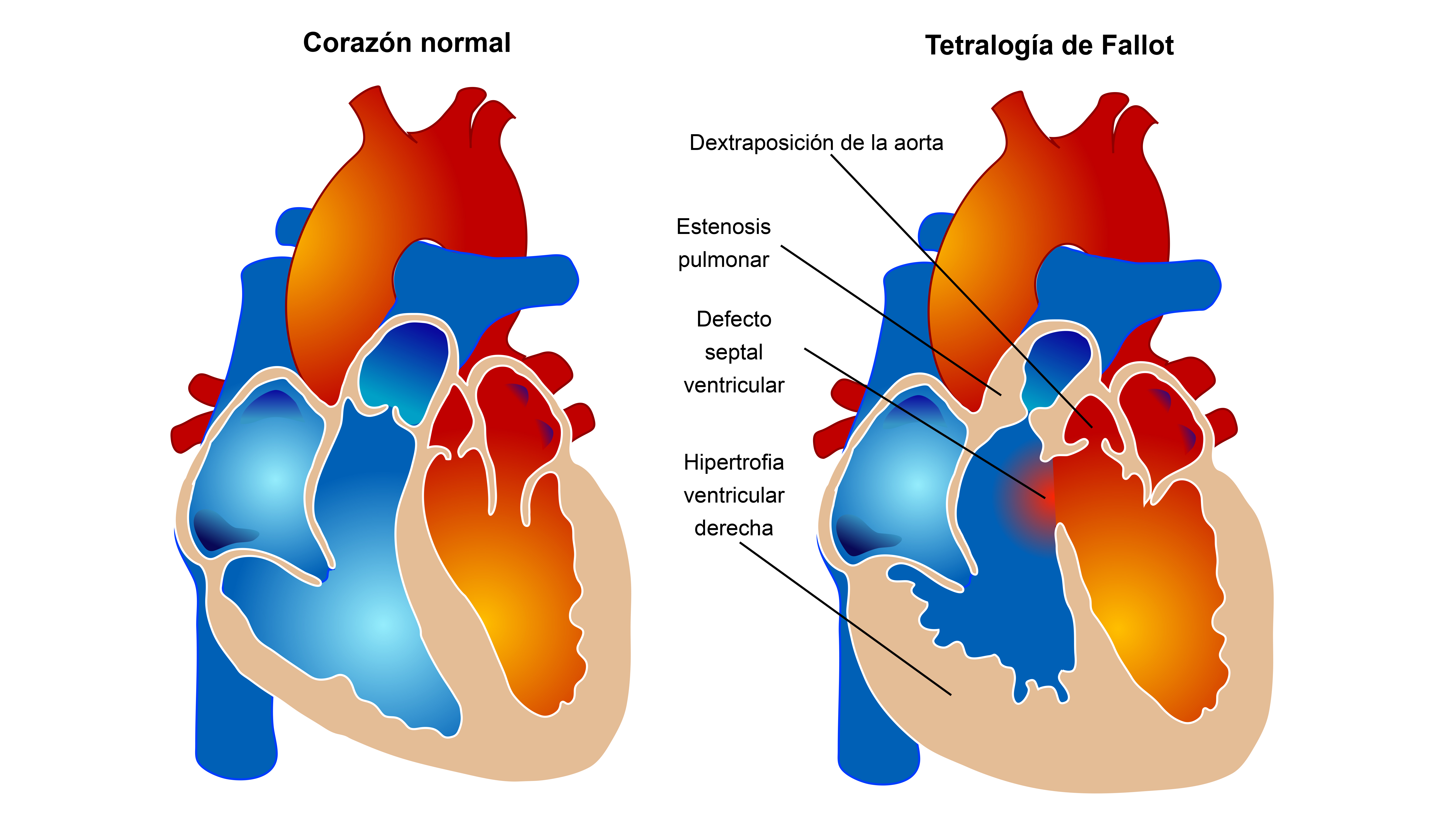
The aortic valve (AV) between the left ventricle and the aorta maintains an outward unidirectional flow. A common AV congenital disease is the form of a bicuspid aortic valve (BAV). This anatomical abnormality (~2% of the population) elevates leaflet stress that can lead to aortic stenosis (AS), one of the most common valvular heart diseases in the developed world. AS usually affects about 5% of people who are over 65 years of age. The latter is a progressive disease based on calcification (CAS) or fibrosis (FAS), ultimately leading to valve repair and replacement. Currently, a balloon aortic valvuloplasty procedure precedes surgical aortic valve replacement. In the last decade, a new transcatheter aortic valve replacement (TAVR) procedure has matured and gained recognition due to its positive long-term outcomes, partly due to the prevention of open heart surgery.

This study examines a new hemodynamic-structural co-modeling approach using Lattice-Boltzmann (LBM) and multiscale-tissue Finite-Element (FE) methods of compliant aortic valves independently and in a full electro-mechanical heart model. The applied LBM, a grid-based mesh-less method, uses the kinetic gas theory of particles to simulate fluid flow. Four parametric AV models were introduced and investigated: pathology-free models of tri-and-bi cuspid AVs with healthy collagen fiber network (CFN) and without calcification deposits embedded within the tissue. A FAS model includes thickened CFN with small calcification volumes, and the last CAS model employs healthy CFN with embedded high calcification volumes based on a representative CT scan taken from pre-TAVR patients. In addition, a multiscale FE structural approach has been employed to explicitly recognize the heterogeneous leaflet tissues as CFN constituents embedded within the elastin matrix of the leaflets. The proposed LBM-FE fluid-structure interaction (FSI) framework is examined in its ability to resolve local hemodynamic and structural responses. In particular, the diastolic fluctuating velocity phenomenon near the leaflets is explicitly predicted, providing vital information on the flow transient nature. The full closure of the contacting leaflet forces in BAV is also demonstrated. Accordingly, good structural kinematics and deformations are captured for the entire cardiac cycle and correlate well with those reported in the literature. Moreover, the results from these models point to the interplay between calcium bulks with the surrounding tissue and fibers, where the dominancy of the fibers in the FAS, was demonstrated. Next, simulation of the TAVR procedure and its post-outcomes were examined for both CAS and FAS. TAVR-CAS has a higher maximum pressure and smaller contact area than TAVR-FAS, making it prone to aortic tissue damage. Finally, the paravalvular leakage was predicted to be higher in TAVR-CAS despite its larger opening area and may be attributed to a similar thrombogenicity potential that characterizes both models.

The clinical part of this study focuses on the calcification evolution and routes of type-1 BAVs based on CT scans and the effect of the unique geometrical shapes of calcium deposits on their fragmentation under balloon valvuloplasty procedures. Subsequently, calcification fragmentation biomechanical models of six representative stenotic BAVs of different calcification patterns were introduced. Towards this goal, the novel Reverse Calcification Technique (RCT), which can predict the calcification progression leading to the current state based on CT scans, is utilized. Two main calcification patterns of type-1 bicuspid aortic valves were identified; asymmetric and symmetric with partial or complete arcs and circles. It was found that the distinct geometrical shape of the calcium deposits had a significant effect on the cracks' initiations.


The proposed computational framework highlights the importance of biomechanical simulations and the need to generate refined multiscale modeling, which can serve as a platform for designing and implementing new prosthetic valves to improve treatment approaches in stenotic aortic valve patients.

Join Zoom Meeting https://tau-ac-il.zoom.us/j/86497933118

סמינר מחלקה של אביעד גלר - תגובה מכנית פסיבית ואקטיבית של עורקי יונק פנימיים אנושיים

03 באפריל 2023, 14:00 - 15:00 
פקולטה להנדסה  
0
סמינר מחלקה של אביעד גלר - תגובה מכנית פסיבית ואקטיבית של עורקי יונק פנימיים אנושיים


School of Mechanical Engineering Seminar
Monday April 3.4.2023 at 14:00

Wolfson Building of Mechanical Engineering, Room 206


PASSIVE AND ACTIVE MECHANICAL RESPONSE OF HUMAN INTERNAL MAMMARY ARTERIES


Aviad Galler

M.Sc. research under the supervision of Prof. Zohar Yosibash

Computational Mechanics & Experimental Biomechanics Lab

School of Mechanical Engineering, Tel Aviv University, Israel


Coronary artery disease (CAD) is the most common cardiovascular disease resulting in more than 365,000 deaths in the US in 2017. A coronary artery bypass graft (CABG), a bypass sutured to the constricted coronary artery, is a common clinical procedure to overcome CAD. The most common artery used as a CABG is the internal mammary arteries (IMA). Therefore, the study of the mechanical behavior of the IMA arterial wall is highly important. We investigated experimentally the biomechanical response of such arteries. These are characterized by a passive response related to the collagen fibers and elastin fibrils and an active response due to smooth muscle cells (SMCs) contraction. Such experiments on human IMAs are scarce and are mandatory to verify and validate constitutive models that may predict the passive and mainly their active responses.

We present a series of eighteen experiments on the passive response of human IMAs, harvested during CABG surgeries. The preconditioning protocol is studied as well as a new method for determining the physiological axial stretch. Lastly, experimental results on the passive response while inflating the arteries from 20 to 200mmHg are presented.

A second study of five experiments was conducted aiming at stimulating the smooth muscle cells to investigate the active response. We were unable to measure properly the active response so a series of five ring-tests were performed to focus on the reaction of the artery to vasoconstrictors. The active response recorded was significant although counterintuitive.


Join Zoom Meeting

https://tau-ac-il.zoom.us/j/86497933118


סמינר מחלקה של איבגני בויקו -זרימות ויסקו-אלסטיות בגיאומטריות צרות ולא אחידות

24 באפריל 2023, 14:00 - 15:00 
פקולטה להנדסה  
0
סמינר מחלקה של איבגני בויקו - זרימות ויסקו-אלסטיות בגיאומטריות צרות ולא אחידות


School of Mechanical Engineering Seminar
Monday April 24.04.2023 at 14:00

Wolfson Building of Mechanical Engineering, Room 206


Viscoelastic flows in slowly varying geometries

Evgeniy Boyko

Assistant Professor of Mechanical Engineering

Technion – Israel Institute of Technology

Email: evgboyko@technion.ac.il  


Pressure-driven flows of viscoelastic in narrow non-uniform geometries are ubiquitous in nature and various technological applications. The complex rheological behavior of non-Newtonian fluids affects their hydrodynamic features, including the flow rate–pressure drop relation. Despite many measurements and simulations of the flow rate–pressure drop relation of various complex fluids in different geometries, the understanding of how viscoelasticity modifies this relation remains poorly understood. Furthermore, in some cases, numerical simulations not only fail to quantitatively capture the experiments, but even qualitatively contradict them.

In this talk, I will discuss the flow rate–pressure drop relation of viscoelastic fluids in non-uniform geometries and present the long-standing contradiction between experiments and simulations. While experiments show the increase in the flow resistance, defined as the ratio of the pressure drop to the flow rate, simulations predict its decrease.

Aiming to understand the cause of this contradiction, I will present a theoretical framework for calculating the flow rate–pressure drop relation of viscoelastic fluids in arbitrarily shaped, narrow geometries. I will show that for the Oldroyd-B constitutive model, which is the most used continuum model for viscoelastic fluids derivable from microscopic principles, our theoretical predictions are in excellent agreement with simulations. However, our analytical results using the Oldroyd-B model still fail to rationalize the increase in the flow resistance observed experimentally. I will discuss the shortcomings of the Oldroyd-B model, which may lead to this disagreement, and their resolution through incorporating additional microscopic features of polymers.

Finally, I will briefly discuss additional research directions our group is pursuing and the long-term vision of bridging the gap between fluid mechanics and polymer science.


A person smiling for the camera

Description automatically generated with medium confidenceEvgeniy Boyko is an Assistant Professor of Mechanical Engineering at Technion – Israel Institute of Technology. He is equally interested in understanding basic physical mechanisms related to fluid mechanics of non-Newtonian fluids and in leveraging them to improve existing applications and create new technologies using complex fluids. Evgeniy earned his B.Sc. (2015) and Ph.D. (direct track) (2020) from the Faculty of Mechanical Engineering at Technion. He worked as a postdoctoral research fellow at the Schools of Mechanical and Chemical Engineering at Purdue University in 2021-2022 and was a postdoctoral research fellow at Princeton University in 2020-2021. He received the Adams Fellowship for Ph.D. studies, the Jacobs Publication Award, and the Rothschild, Zuckerman, Blavatnik, and Gilbreth Fellowships for postdoctoral studies.


Join Zoom Meeting

https://tau-ac-il.zoom.us/j/86497933118

סמינר תואר שני - Optomechanics with hollow-core photonic crystal fibersBy: Andrey Machnev

סמינר זה יחשב כסמינר שמיעה לתלמידי תואר שני

16 במרץ 2023, 16:00 
Room 011, Kitot Building  
 סמינר תואר שני - Optomechanics with hollow-core photonic crystal fibersBy:  Andrey Machnev

You are invited to attend a lecture on Thursday, March 16, 2023

16:00


Optomechanics with hollow-core photonic crystal fibers

Room 011, Kitot Building


https://tau-ac-il.zoom.us/j/83747185074


By:


Andrey Machnev


Ph.D. student under the supervision of Prof. Pavel Ginzburg


Abstract

 The far-reaching goal of the Research is to develop novel approaches towards multifunctional endoscopy, based on light and particles transport inside hollow core photonic crystal fibers. Several essential tools have to be developed on pathways to reach the visionary goal. First, a drug delivery platform must be investigated. In contrast to existing carriers, our nanoparticle shall encompass several functions, including high load capacity, tunable optical properties to control light-matter interactions, and the capability to image the process in real time by following a scattered light or a fluorescent signal. In addition, all constitutive materials should be biocompatible, setting additional constraints on the design. After developing the carrier, hollow-core fiber, serving as a delivery tool, has to be designed. The inner core of the fiber can be functionalized to improve particle guiding properties and, furthermore, grant his platform with additional capabilities, e.g., sensing. Following those general objectives, we have developed a number of tools, which form the core of the thesis. Specifically, we have developed (i) a nano-cargo platform with controllable optical properties, (ii) fiber’s inner core functionalization techniques, (iii) new highly fluorescent biocompatible materials, and (iv) investigated the impact of biogenic particles on living organisms.


-סמינר זה יחשב כסמינר שמיעה לתלמידי תואר שני-


ד"ר תומר מרקוביץ

פרופ' מאיר [מאיר אריאל] אריאל

ד"ר רעות נחם

דר' רעות נחם


עמודים

אוניברסיטת תל אביב עושה כל מאמץ לכבד זכויות יוצרים. אם בבעלותך זכויות יוצרים בתכנים שנמצאים פה ו/או השימוש שנעשה בתכנים אלה לדעתך מפר זכויות
שנעשה בתכנים אלה לדעתך מפר זכויות נא לפנות בהקדם לכתובת שכאן >>