סמינר המחלקה להנדסה ביו רפואית- הרצאת אורח -ד"ר סער גולן

12 במאי 2019, 14:00 
הבניין הרב תחומי , חדר 315  
ללא תשלום
סמינר המחלקה להנדסה ביו רפואית- הרצאת אורח -ד"ר סער גולן

Drivers impaired thermal comfort assessment may present novel opportunities in transportation safety

  Dr.Saar Golan*

Car accidents represent a major global death cause. It is well-documented that human Thermal Comfort (TC) is strongly correlated with improved disposition, performance at work, reduced fatigue, etc. We thus set forth to evaluate TC effects on driver performance. In this talk I will introduce our findings. We established an environment mimicking driving conditions - test room emulating the car physical settings and a simulation software imitating road driving (OpenDS, with our own programmed urban maps and graded road obstacles). We fabricated a microelectronics platform sampling driver and environmental parameters in real time (body/room temperature, heart rate, relative humidity, radiation, etc.). We used the acquired data to continuously evaluate drivers Fanger’s Predicted Mean Vote (PMV) index of TC, which we correlated with their performance (graded driving errors) and subjective satisfaction (estimated using questionnaires filled during the experiments). We observed that drivers exhibit reduced ability to assess their TC. Discomfort is typically noticed with significant time delay, leading to a lacking correction behavior of the driver thermal environment. Drivers subjected to discomfort display reduced performance accompanied by a subjective feeling of fatigue (PMV is linearly correlated with the number of driving errors). Thus, making TC potentially a compelling predictor of transportation safety. We conclude that while current car alert systems typically inform drivers seconds ahead, TC monitoring is complementary insofar as it can significantly extend the alert window by raising drivers’ awareness when comfort drops below acceptable thresholds.

Dr. Saar Golan received his engineering degrees from the Technion and Weizmann Institute. He is faculty at Ariel University (Chemical and Mechanical Engineering departments) and an adjunct member at the Technion (Biomedical Engineering) since 2014. Dr. Golan is the head of the Bio-analytical Microsystems Lab in Ariel. His research interests involve mechanobiology and thermoregulation.

*Bio-Analytical Microsystems Lab

Department of Chemical Engineering

Ariel University

EE Seminar: Arbitrarily Varying Broadcast and Relay Channels

13 במאי 2019, 15:00 
חדר 011, בניין כיתות חשמל  

 (The talk will be given in English)


Speaker:     Uzi Pereg
                     Faculty of Electro Engineering, Technion


Monday, May 13th, 2019
15:00 - 16:00

Room 011, Kitot Bldg., Faculty of Engineering


Arbitrarily Varying Broadcast and Relay Channels
 

Abstract

Two models of an arbitrarily varying channel (AVC) are studied; both are relevant to modern networks under jamming attacks by an adversary or a hacker. The arbitrarily varying broadcast channel is considered when state information is available at the transmitter in a causal manner. Inner and outer bounds are established, on both the random code capacity region and the deterministic code capacity region with degraded message sets. The form of the bounds raises the question whether the minimax theorem can be generalized to rate regions, i.e. whether the order of the intersection over state distributions and the union over Shannon strategies can be interchanged.  A sufficient condition is given, under which this assertion holds and the random code capacity region is determined. As an example, the arbitrarily varying binary symmetric broadcast channel is examined, showing that there are cases where the condition holds, hence the capacity region is determined, and other cases where there is a gap between the bounds. The gap implies that the minimax theorem does not always hold for rate regions.
In the second part of the talk, a new model is introduced, namely, the arbitrarily varying relay channel. The results include the cutset bound, decode-forward bound and partial decode-forward bound on the random code capacity, which require modification of the usual methods for the AVC to fit the block Markov coding scheme. The random code capacity is further determined for special cases. Then, deterministic coding schemes are considered, and the deterministic code capacity is derived under certain conditions, for the degraded and reversely degraded relay channel, and the case of orthogonal sender components. The following question is addressed: If the encoder-decoder and encoder-relay marginals are both symmetrizable, does that necessarily imply zero capacity? We show and explain why the answer is no. The random code capacity is determined for the arbitrarily varying Gaussian relay channel with sender frequency division, and the deterministic code capacity is bounded using the techniques of Csisz\'ar and Narayan's 1991 paper on the Gaussian AVC. It is observed that the gap vanishes as the input becomes less constrained. It is commonly believed that the primitive relay channel "captures most essential features and challenges of relaying, and thus serves as a good testbed for new relay coding techniques" (Kim, 2007). It is observed that in the arbitrarily varying case, this may no longer be true.
This work is part of a Ph.D. thesis under the supervision of Yossef Steinberg.

Bio
Uzi Pereg is a Ph.D. student at the Viterbi Faculty of Electrical Engineering, Technion - Israel Institute of Technology. He received the B.Sc. (summa cum laude) degree in Electrical Engineering from Azrieli College of Engineering, Jerusalem, Israel, in 2011, and the M.Sc. degree from Technion, Haifa, Israel, in 2015. His research interests are in the areas of digital communications, information theory and coding theory. Uzi is a recipient of the Pearl Award for outstanding research work in the field of communications, the KLA-Tencor Award for an excellent conference paper, and the 2018 Viterbi Scholarship.


EE SEminar: Accuracy in linear filtering with fractional noises

06 במאי 2019, 15:00 
חדר 011 בניין כיתות-חשמל  

(The talk will be given in English)


Speaker:     Prof. Pavel Chigansky
                     Department of Statistics, Hebrew University


Monday, May 6th, 2019
15:00 - 16:00

Room 011, Kitot Bldg., Faculty of Engineering


Accuracy in linear filtering with fractional noises

Abstract

For a pair of random processes, the linear filtering problem consists of finding a causal linear transformation of the observed component, whose output generates an estimator of the hidden state with the minimal mean squared error. In continuous time, construction of the optimal filter in general boils down to solving a certain integral equation. In the Markov case, when the processes are generated by a linear system driven by the Brownian ''white'' noises, it reduces to the Riccati differential equation. This fact lies in the foundation of the Kalman-Bucy filtering theory. Beyond the Markov case, analysis of this integral equation can be quite challenging. In this talk, I will present a new analytic framework applicable to filtering problems with fractional Brownian noises. Such noises are used in modeling of non-white disturbances with long range dependence. The developed theory allows to obtain exact asymptotics of the optimal filtering error in the steady-state and high signal-to-noise regimes.  
Joint work with D.Afterman, M.Kleptsyna and D. Marushkevych.

ד"ר פבל גינזבורג, מהפקולטה להנדסה, פיתח יחד עם חוקרים מאוניברסיטת תל אביב סוג חדש של מכ"ם שמסוגל להבחין בין עצמים ברזולוציה גבוהה ביותר גם כשהוא פועל ברוחב פס קטן פי 100 מזה הנדרש בטכנולוגיות הקיימות

  • תגיות:

החוקר.ת מאחורי המחקר

טכנולוגיות רדאר עוצבו במקור בכדי לזהות ולעקוב אחרי מטרות אוויריות צבאיות. היום הן משמשות לרוב בזיהוי רכבים, חיזוי מזג אוויר ומחקר גיאולוגי. עד עתה, מדענים האמינו כי דיוק ורזולוציית הרדאר קשורות לטווח התדרים או רוחב הפס. כעת מחקר חדש בפקולטה להנדסה של אוניברסיטת תל אביב מגלה כי גישה בהשראת טומוגרפיה אופטית קוהרנטית (OCT) דורשת רוחב פס קטן עד ככל לא, על מנת ליצור מפה סובבת רדאר ברזולוציה גבוהה.


"הצלחנו להדגים סוג שונה של מערכת טווחים בעלת טווח רזולוציה איכותי אשר חופשיה כמעט לחלוטין ממגבלות רוחב הפס", אומר פרופ' פבל גינזבורג. "לטכנולוגיה החדשה יש שלל שימושים, בעיקר בכל הקשור לתעשיית הרכב. יש לציין כי האמצעים הקיימים תומכים בגישה החדשה שלנו, כך שניתן ליישם אותה באופן כמעט מיידי".


המחקר החדש בוצע במשותף ע"י פרופ' גינזבורג, ויטלי קוזלוב ממעבדתו של פרופ' גינזבורג, רוני קומיסרוב ודמיטרי פילונוב, מביה"ס לחשמל בפקולטה להנדסה. המאמר פורסם בכתב העת   Nature Communications ונתמך על ידי מלגת ERC קמין.


למנוע את פקקי התנועה של העתיד

האמונה הרווחת בנוגע לרזולוציית הרדאר הייתה כי האיכות עולה בהתאמה לרוחב הפס בו נעשה השימוש. כלומר, רדאר טוב ומדויק דורש רוחב פס גדול, דבר שעלול להוות מגבלה בעתיד. "התפיסה שלנו מציעה פתרונות במצבים שמצריכים רזולוציה גבוהה ודיוק, אך רוחב הפס האפשרי מוגבל, כמו למשל בתעשיית הרכבים האוטונומיים, עיבוד תמונה ואסטרונומיה", מסביר קוזלוב. "אין רכבים רבים היום על הכביש שבהם יש רדאר, כך שאין כמעט תחרות על התדרים המוצעים. אבל מה יקרה בעתיד, כאשר כל רכב יהיה מצויד בטכנולוגיית רדאר שדורשת את מלוא רוחב הפס? אנחנו נמצא את עצמנו בסוג של פקק תנועה ברדיו. הפתרונות שלנו מאפשרים לנהגים לחלוק את רוחב הפס הקיים ללא בעיה".


שימוש ברדאר לצורך הצלה

"ההדגמה שלנו היא רק השלב הראשון בסדרה של גישות חדשות לגלאי טווח-רדיו שחוקרים את ההשפעה של רדארים בעלי רוחב פס קטן בתחומים מסורתיים", מסכם פרופ' גינזבורג. "אנו מתכוונים ליישם את הטכנולוגיה הזו על תחומים שלא נחקרו בעבר, כמו מבצעי חילוץ והצלה – על ידי גילוי אדם שקבור מתחת לבניין שהתמוטט, או מיפוי הרחוב כדי לנבא אם ילד עומד לחצות את הכביש מאחורי אוטובוס שמסתיר אותו".


מעבר למאמר


אלה שמתאהבים בבעיה הם אלה שממציאים לה פתרון

יוזמה של המלגאיות של אינטל

29 אפריל 2019
המלגאיות של אינטל

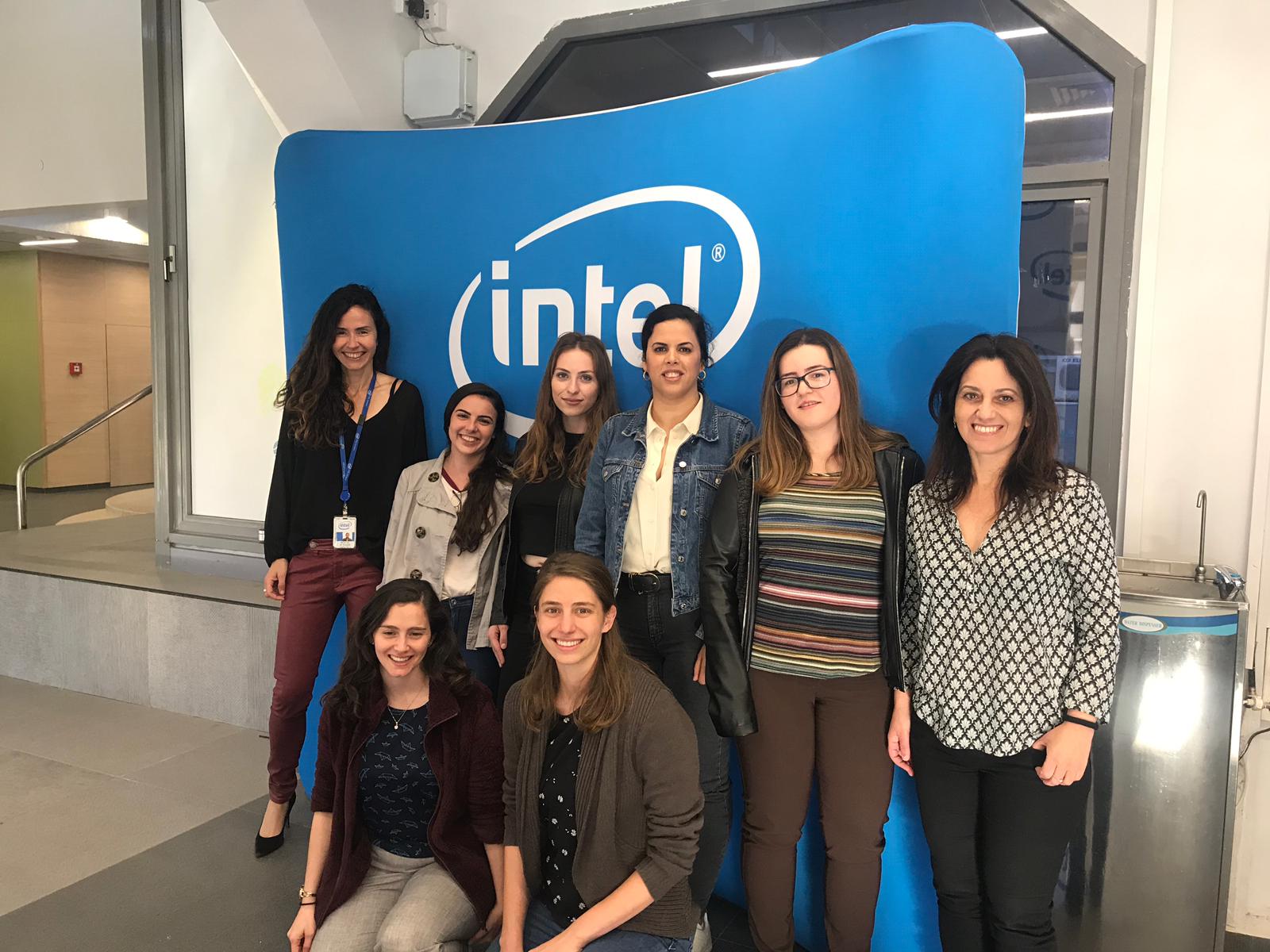
מפגש "נשים מדברות קריירה" התקיים החודש יחד עם הסטודנטיות והסטודנטים בפקולטה להנדסה אוניברסיטת תל אביב ומלגאיות של אינטל ישראל.


​מדובר ביוזמה של המלגאיות של אינטל: טל לבנה, הילה פרח, איזבלה בבינסקי וקלי כץ, שמטרתה להעניק לסטודנטיות ולסטודנטים בפקולטה כלים פרקטיים לניהול קריירה בשלביה השונים (הכנת קורות חיים - גם כשאין הרבה ניסיון, בניית נטוורקינג וחיפוש עבודה, הכנה לראיון עבודה, התמודדות עם שאלות מקצועיות בראיונות עבודה ועוד).

בנוסף, חלק מהסדנאות התקיימו כשיחה אינטימית עם מהנדסות ותיקות שסיפרו על התפקידים השונים שמילאו בהמלך הקריירה, ועל האופן שבו התמודדו עם חסמים חיצוניים (ופנימיים) במהלך שנותיהן בתעשייה.


"היה מרגש לראות היענות גדולה למפגש, ולשמוע פידבקים על הסדנאות והפאנלים שנערכו עם המהנדסות" כך מספרת שלי יצחקי, משאבי אנוש אינטל.

וחשיפה לעולם האקדמיה

29 אפריל 2019
תיכוניסטים מקבלים הצצה לעולם ההנדסה

כמידי כמה חודשים פותחת הפקולטה להנדסה אוניברסיטת תל אביב את שעריה ומארחת תיכוניסטים ממהמרכז הארץ ומהפריפריה במטרה להנגיש את תחום ההנדסה לדור הצעיר ולחשוף אותם לאופציות השונות של למידה. את הפרוייקט הייחודי יזמה ד"ר דנה אשכנזי מבית הספר להנדסה מכנית.


החודש שמחנו לארח קבוצה של כ-25 תיכוניסטים יוצאי אתיופיה מתיכון ברנקו וייס בבית שמש, לשם חשיפה לעולם האקדמיה באוניברסיטה וסיור בחוגים השונים.


התלמידים קבלו הצצה לבית המלאכה של הפקולטה להנדסה ושמעו איך מתכננים ומפתחים מתקנים ואבי טיפוס ייחודיים, מידול באמצעות תוכנת תכנון ממוחשבת והדפסת תלת-מימד. בנוסף ביקרו במעבדה לאלקטרו-אופטיקה - מעבדת המחקר של פרופ' אבישי אייל, ושמעו הרצאה בנושא: חיישנים מסיבים אופטיים.

בתמונה: ד"ר רחל שמואל מבית המלאכה של הפקולטה להנדסה מסבירה לתלמידים על תכנון ופיתוח של מתקנים ואבי טיפוס ייחודיים

רשימות 100 מצטייני ההוראה ומצטייני הרקטור לתשע"ח

28 אפריל 2019
הסטודנטים שלנו בחרו את מצטייני ההוראה

ברכות לד"ר בריאן רוזן מהמחלקה למדע והנדסה של החומרים, ופרופ' אריה ירדאור, מבית הספר להנדסת חשמל, על שנבחרו למצטייני הוראה לשנת תשע"ח.


רשימת 100 המרצים מהסגל הבכיר ו-100 המרצים מהסגל הזוטר המצטיינים בהוראה לפי סקר הערכת ההוראה של הסטודנטים, ומתוכם – רשימת המרצים והמתרגלים מצטייני הרקטור.


לרשימה המלאה: https://bit.ly/2IWzzJP


סמינר המחלקה להנדסה ביו רפואית 19.05.19 - מפי דוקטורנטית המחלקה אפרת לאופולד

19 במאי 2019, 14:00 
הבניין הרב תחומי , חדר 315  
ללא עלות
סמינר המחלקה להנדסה ביו רפואית 19.05.19 - מפי דוקטורנטית המחלקה אפרת לאופולד

Prediction of the Wingate anaerobic mechanical power outputs from a incremental exercise stress tests based on a computational model

Efrat Leopold

The Wingate Anaerobic Test (WAnT) is a short-term maximal intensity cycle ergometer test, which provides anaerobic mechanical power output variables. Despite the physiological significance of the variables extracted from the WAnT, the test is very intense, and generally applies for athletes. Our goal was to develop a new automatic approach to predict the anaerobic mechanical power outputs using incremental exercise stress tests. We hypothesized that incremental exercise stress tests hold hidden information about the anaerobic components, which can be directly translated into mechanical power outputs. We therefore designed a computational model that included aerobic variables (features), and used a new computational \ predictive algorithm, which enabled the prediction of the anaerobic mechanical power outputs. Analysis of the predicted features suggest that the most relevant ones are maximal VO2 , respiratory frequency, as well as predicted VO2. The rational behind the chosen features can be explained, for example, subjects with higher VO2max are more likely to engages in regular aerobic exercise, and therefore the cardiovascular system adapts to that exercise. These adaptations then transfer into greater performance during high-intensity exercise. The newly predictive model allows the accurate prediction of the anaerobic mechanical power outputs at high accuracy. The assessment of additional tests is desired for the development of a robust application for athletes, older individuals, and/or non-healthy populations.


אוניברסיטת תל אביב עושה כל מאמץ לכבד זכויות יוצרים. אם בבעלותך זכויות יוצרים בתכנים שנמצאים פה ו/או השימוש שנעשה בתכנים אלה לדעתך מפר זכויות
שנעשה בתכנים אלה לדעתך מפר זכויות נא לפנות בהקדם לכתובת שכאן >>