Department of Bio Medical Engineering seminar 26.01.20

26 בינואר 2020, 14:00 
הבניין הרב תחומי , חדר 315  
ללא עלות
Department of Bio Medical Engineering seminar 26.01.20

Human navigation and spatial memory: from behavior and neural representations to assistive and rehabilitation tools

 Dr. shachar maidenbaum

Orienting ourselves, knowing where things are and how to get to them are critical parts of our lives. To perform these tasks we must generate and maintain internal representations of our surroundings, constantly updating them based on our perception. In my talk I will first review human spatial behavior and its underlying neural basis, and then focus on two specific representations that I recently found using intracranial recordings in humans while they performed spatial memory tasks in virtual reality. The first of these representations is a population signal for the human grid network which correlates with human spatial memory, and the second is a representation for heading direction. I will present theories for these signals’ underlying basis, their relation to other levels of neural representation, and their implications for navigation and designing environments. I will then demonstrate how these signals, and associated behavior, are modulated by external perceptual input (e.g. navigating with different levels of fog) and by internal idiothetic input (e.g. navigating in the real world with Augmented Reality). Next, I will turn to discussing more generally the potential of Augmented Reality for the field of rehabilitation, and demonstrate its advantages for creating tools for both practical rehabilitation of perceptual and spatial skills and for supporting and augmenting smart environments. Finally, I will conclude with a broader view of human spatial perception and interaction, and its variance across different populations and clinical conditions. 

הזמנה למפגש סיום והצגת פתרון הנדסי לבעיית קיימות וסביבה של סטודנטים בקורס הנדסת סביבה

בשיתוף מתחברים פלוס המאפשרים לסטודנטים לתואר ראשון בקורס אקדמי לשלב עשייה חברתית במהלך התואר שלהם

20 בינואר 2020, 17:00 - 19:00 
אולם רוזנבלט - הפקולטה להנדסה אוניברסיטת תל-אביב  
חינם
מפגש קורס הנדסת סביבה

החודש יציגו הסטודנטים והסטודנטיות הלומדים בקרוס "מבוא להנדסת סביבה"בהנחיית פרופ' הדס ממן, ראשת התכנית להנדסת סביבה לתואר שני, את הפתרון ההנדסי לבעיית קיימות וסביבה בה בחרו להתמקד.


במהלך הקורס עצמו הסטודנטים מובילים תהליך של פיתוח פתרונות הנדסיים לאתגרים סביבתיים תוך שיתוף פעולה עם ארגונים העוסקים בתחום הקיימות - טיפול במים, שפכים, פסולת, פליטת חומרים רעילים ועוד. כל צוות סטודנטים מקבל מהארגון - שותף אתגר אמיתי ורלוונטי איתו הארגון מתמודד בימים אלה, ופתרון הבעיה יביא לשיפור הקיימות ואיכות הסביבה. בתהליך הפיתוח הסטודנטים לומדים להכיר ולהבין את הבעיה, בדיקת אלטרנטיבות, העלאת רעיונות, בדיקת היתכנות, גיבוש מודל של הפתרון, תכנון הנדסי של הפיתרון המיטבי, הצגת הרעיון בפרזנטציה אל מול הארגון-שותף ואורחים נוספים. 


מוזמנים לבוא והתרשם מהפתרונות יוצאי הדופן של הסטודנטים להנדסה מכנית ומדעי כדור הארץ.

לאחר קבלת כל תוצאות סקר ההוראה אנו שמחים להכריז על רשימת המצטיינים בהוראה של הפקולטה להנדסה

13 ינואר 2020
רשימת מורים מצטיינים בהוראה

מצטייני רקטור  בהוראה:


סגל בכיר

ד"ר יובל בק – בית הספר להנדסת חשמל

ד"ר דן ימין – המחלקה להנדסת תעשייה

פרופ' מיקי שיינוביץ – המחלקה להנדסה ביו-רפואית


סגל זוטר

גב' שיר בהירי אליצור - המחלקה להנדסה ביו-רפואית

מר יוסי דדוש - בית הספר להנדסת חשמל

מר רותם סופר – ביה"ס להנדסה מכנית

מר נעם תור – המחלקה להנדסת תעשייה


מצטייני דקאן  בהוראה:

ביה"ס להנדסת חשמל


סגל בכיר

*מורה מצטיין:

פרופ' אבישי וול


*ציון לשבח:

פרופ' בני אפלבאום

ד"ר יקיר חדד

פרופ' ג'ורג' וייס

פרופ' אריה ירדאור

פרופ' דנה רון גולדרייך


סגל זוטר

*מתרגל מצטיין:

מר טל אלעזר


*ציון לשבח:

מר טל אלעזר

מר תומר ברג

מר קונסטנטין ברסטיז'בסקי

גב' טלי דותן

מר אייל נאור

מר בן פישמן

מר אביב רגב


ביה"ס להנדסה מכנית


סגל בכיר

*מורה מצטיין:

פרופ' יורם רייך


*ציון לשבח:

ד"ר  בוריס אלברג ז"ל

פרופ' אבי קריבוס

ד"ר  אבינעם רבינוביץ


סגל זוטר

*מתרגל מצטיין:

מר עדי מוראני  


*ציון לשבח:

מר עומר לוריא

מר אדם פרשטמן


המחלקה להנדסה ביו רפואית


סגל בכיר

*מורה מצטיין:

ד"ר פבל ליידרמן


*ציון לשבח:

ד"ר צבי שנער


סגל זוטר

*מתרגלת מצטיינת:

גב' נגה נסים


*ציון לשבח:

גב' לריסה פיין


סגל בכיר

*מורה מצטיין:

גב' ענת שדה


*ציון לשבח:

מר אוהד אייזנהנדלר


המחלקה להנדסת תעשייה 


סגל זוטר

*מתרגל מצטיין:

מר רועי לוטן  


*ציון לשבח: 

מר עידו ענפי


המחלקה מדע והנדסה של חומרים


סגל בכיר

*מורה מצטיין:

פרופ' עמית כהן


סגל זוטר

*מתרגל מצטיין:

גב' נתנאלה כהן


קורסי שירות ומורים מן החוץ

*מורים מצטיינים:

מר אורן אברם                 - ביה"ס למדעי המחשב

ד"ר עומר ברומברג           - ביה"ס לפיזיקה ואסטרונומיה

מר מאיר זיליג הס             - ביה"ס לפיזיקה ואסטרונומיה

מר אלכסנדר מינקין          - ביה"ס למתמטיקה

פרופ' דליה פישלוב           - ביה"ס למתמטיקה


*מתרגלים מצטיינים:

מר אמיתי אלדר            - ביה"ס למתמטיקה

מר רועי גומל                - ביה"ס לפיזיקה ואסטרונומיה

מר שחר סגל               - ביה"ס למדעי המחשב

גב' לימור פרידמן          - ביה"ס למתמטיקה

מר גבי פרייגר              - ביה"ס למתמטיקה

גב' ליאור שלום             - ביה"ס למתמטיקה

הכירו את הוועד המייעץ החדש של פקולטה להנדסה אוניברסיטת תל אביב

13 ינואר 2020
הוועד המייעץ

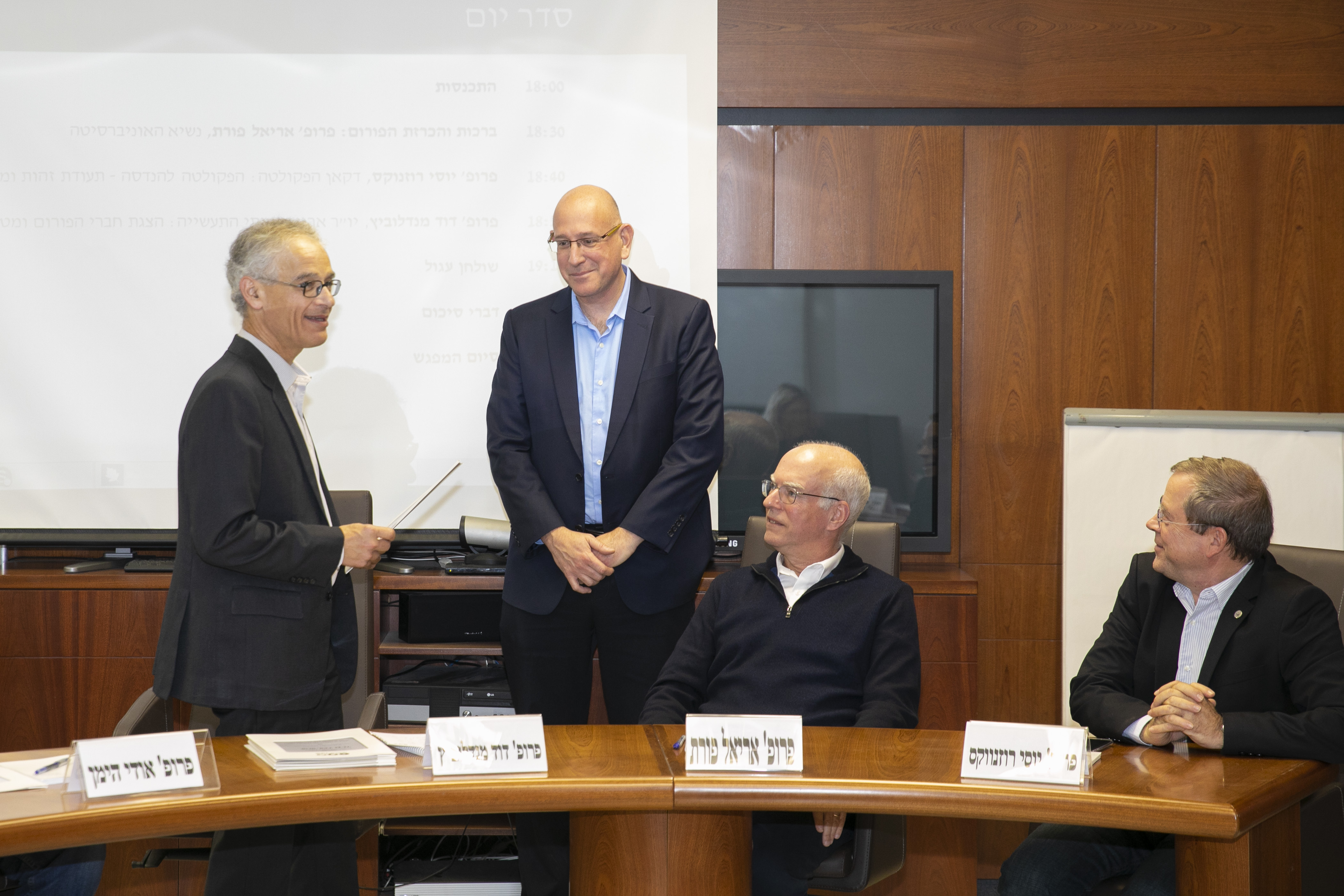
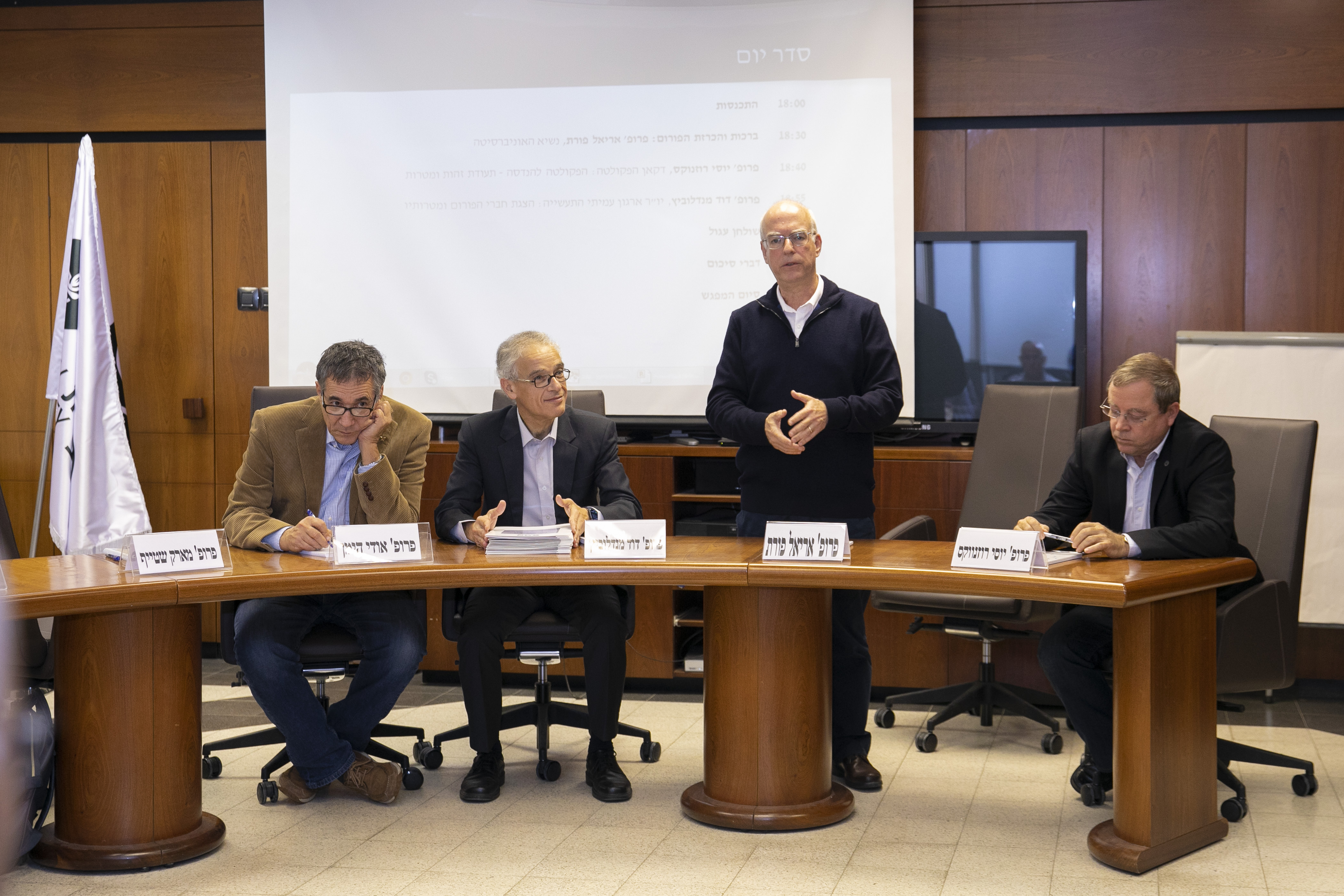
את שנת 2020 פתחנו באופן מרגש במיוחד עם הקמת פורום ראשון מסוגו באקדמיה:"הוועד המייעץ לפקולטה להנדסה".


באנלוגיה לחבר הנאמנים של אוניברסיטת תל אביב התורם ומטפח אותה, פרופ' דוד מנדלוביץ סגן דקאן למחקר ודקאן הפקולטה להנדסה פרופ' יוסי רוזנוקס יזמו את הקמתו של הוועד המייעץ המורכב מ 15 נציגי חברות טכנולוגיות מובילות, יזמים ויזמיות פורצי דרך, בכירים ובכירות מהמשק הישראלי, שהסכימו לשמש כנאמני הפקולטה ולסייע בפיתוח וקידומה.


קשריה של הפקולטה להנדסה אוניברסיטת תל אביב עם התעשייה וגורמים טכנולוגיים אחרים, ממשלתיים וציבוריים, התרחבו מאד בשנים האחרונות. רצונה המתמיד של הפקולטה להנדסה להיות יותר רלוונטית לתעשייה הטכנולוגית האיצו את פיתוח קשריה עם העולם החיצון.


מטרות הוועד המייעץ

הפקולטה להנדסה נחשבת כגדולה בקמפוס אוניברסיטת תל אביב ומורכבת מדיסציפלינות רבות שמשתנות תדיר. הדינמיות של תחומי הפעילות בפקולטה זרזו את הצורך להקמתו של הוועד המייעץ ואנו רואים בו נדבך חשוב להשגת המטרות הבאות:

  • סיוע בפיתוח הפקולטה להנדסה בהקשר לצרכי עולם ההייטק העתידיים
  • ייעוץ בכל הנוגע לנושאי מחקר, תוכניות לימוד חדשות, ממשקים משותפים עם התעשייה ובנושאים פנים פקולטיים בעשור הבא
  • קידום המצוינות בפקולטה, וכן קידום החדשנות והאופי היזמי של בוגרי וחברי הסגל שלה
  • סיוע באיתור מועמדים לקבלת תואר "עמית כבוד" של הפקולטה
  • קידום נראות הפקולטה והרלוונטיות שלה לעולם העשייה בהייטק הישראלי והבינלאומי.


הדיון הראשון שהתקיים בראשית החודש הוכיח עד כמה הוועד המייעץ רלוונטי וחשוב לעתיד הפקולטה. לשם משל, לצד ויכוח ער לגבי עבודת סטודנטים בתעשייה במהלך לימודי התואר הראשון, התפתח דיון בעניין הקמת תשתיות מחשוב מרכזיות בפקולטה. קולה של התעשייה נשמע והדיאלוג המעניין שהתפתח בין נציגי הפקולטה לחברי הוועד העמיק וחידד את הציפיות שיש מהפקולטה.


"אין ספק שבשורה זו התגשמה במלואה במהלך המפגש הראשון. אך קל היה להתרשם שבנוסף המפגש היה מפגן עוצמה יוצא דופן של הפקולטה. מסביב לשולחן העגול טרחו והגיעו אנשי שם האמונים על גופי הטכנולוגיה, המחקר והרפואה הבולטים בארץ וכולם היו שם בשביל לתרום מנסיונם וממירצם לפקולטה. אנו כמובן אסירי תודה לחברי הוועד המייעץ ומקווים שאכן תרומתם תעניק לפקולטה הישגים רבים" סיכם פרופ' מנדלוביץ.


חברי הוועד המייעץ

KLA  נשיא

אורי תדמור

Western Digital מנכ"ל

שחר בר אור

מנהלת המרכז הרפואי אסף הרופא

ד"ר אסנת לבציון-קורח

Apple מנכ"ל

רוני פרידמן

Intel סגן נשיא אינטל העולמית

אלקנה בן סיני

Mellanox נשיא ומנכ"ל

איל וולדמן

Broadcom סגן נשיא ברודקום העולמית

ד"ר שלמה מרקל

מועצת הרשות לחדשנות

חיים רוסו

מנהלת אגף מחשוב ומערכות מידע עיריית ת"א

ליאורה שכטר

Innoviz מנכ"ל

עומר כילף

מנכ"ל אלקטרה

עמי כהן

IATI מנכ"לית ונשיאה

קרין מאיר רובינשטיין

TAU

פרופ' יוסי קלפטר

TAU

פרופ' יוסי רוזנוקס

TAU

פרופ' דוד מנדלוביץ

TAU

פרופ' עירד בן גל

TAU

פרופ' אודי היימן

TAU

פרופ' סלבה קרילוב

קישור לתמונות נוספות

מטרות התכנית ויעדיה

לתכנית המוצעת מספר מטרות. מטרה מידית היא הכשרת אנשי מקצוע בתחום הנדסת מערכות שישתלבו בתעשייה, במגזר הפרטי והציבורי בתפקידים הנדסיים, תוך יכולת לחשיבה מחקרית מחוץ לקופסה. האתגרים העומדים בפני התעשייה מורכבים ומשתנים ומחייבים יצירתיות וחדשנות וכן פיתוח ושימוש בכלי הנדסת מערכות חדשים. 

המטרה השניה, החשובה ביותר והיחודית לתוכנית המוצעת היא להכשיר חוקרים צעירים בתחום הנדסת המערכות שיוכלו להמשיך לתואר שלישי, ללא השלמות כולל במסלול ישיר, ולהוות את שדירת החוקרים ואנשי הסגל בתחום הליבה של הנדסת מערכות בשנים הבאות.

בהתאם לכך, תוכנית הלימודים מתמקדת בנושאים הבאים:

  • פיתוח יכולות מחקר מגוונות בתחום הנדסת מערכות
  • הקניית גרעין של ידע כולל הכרות עם חזית המחקר בתחום
  • הוראת קורסים מתקדמים ומגוונים בתחומים רבים המשיקים לתחום

תנאי קבלה, מעבר משנה לשנה וסיום הלימודים

1.         תנאי קבלה מפורטים לתכנית הלימודים.

  • ממוצע משוקלל של ציוני תואר הראשון בתוכנית בהנדסה של "טוב מאוד" (85) לפחות.
  •  3 שנות ניסיון בעבודה הנדסית או פיתוח מערכות.
  • ראיון קבלה (לוודא שהמועמד עומד בדרישות התוכנית).
  • בוגרי תואר ראשון שבסיס לימודיהם אינו תואם את התוכנית (כגון מדעים מדויקים או פקולטות הנדסיות שלא מאוניברסיטת תל אביב) ידרשו ללמוד בין 2 ל- 4 קורסי השלמה ע"פ החלטת ראש התוכנית.
  • בוגרי תוכניות לימודים אחרות יחויבו בקורסי קדם והשלמה לפחות בהיקף הנ"ל כמקובל בפקולטה להנדסה בכל תוכניות התואר השני. לכל תלמיד תורכב תוכנית אישית בהתאם לרקע שלו.
  • לימודי הקדם וההשלמה לא יכללו במניין נקודות הזכות הנצברות.

2         תנאי המעבר משנה לשנה בתכנית.

           ציון ממוצע 80 לפחות.

3         תנאי סיום הלימודים בתכנית, כולל הדרישות לצורך קבלת זכאות לתואר.

           ציון ממוצע 80 לפחות.


תכנית הלימודים

התוכנית מציעה מסלול לימוד אחד לתואר שני "מוסמך אוניברסיטה בהנדסת מערכות" (M.Sc.).

1.       מסלול לימודים עם עבודת גמר (תזה)

הדרישות לקבלת התואר במסלול זה:

- סיום קורסים בהיקף 24 נ"ז לפחות, בהתאם לתוכנית הלימודים, בציון ממוצע 80 לפחות.

- השתתפות בסמינרים פקולטיים.

- כתיבת עבודת גמר (תזה) בהתאם לתקנון לתארים מתקדמים של הפקולטה.

2.       מסלול לימודים ללא עבודת גמר (ללא תזה).

- סיום קורסים בהיקף 36 נ"ז לפחות, בציון ממוצע 80 לפחות.

- השתתפות בסמינרים פקולטיים.

- כתיבת עבודת פרויקט בהתאם לתקנון לתארים מתקדמים של הפקולטה.


קורסי החובה


שם הקורס

נ"ז

שעות

סמינר (מכל הפקולטה)

-

-

סמינר מדע המערכות

-

2

מבוא להנדסת מערכות

3

3

אופטימיזציה מרובת מטרות

3

3

תכן הנדסי: תיאוריה ושיטות מתקדמות

3

3

הנדסת מערכות מונחית מודלים וסימולציה

3

3

שיטות מחקר באינטראקציית אדם מחשב

2

2

אימות, תיקוף ובדיקת מערכות הנדסיות

3

3

סיבוכיות ומערכת של מערכות

3

3


קורסי בחירה בתוכנית יהיו קורסים מהפקולטה להנדסה וחוץ פקולטיים


פרופ' גדעון צבי שגב

EE Seminar: Semi-Supervised Monaural Singing Voice Separation With a Masking Network Trained on Synthetic Mixtures

27 בינואר 2020, 15:30 
room 011, Kitot Building  


Speaker: Michael Michelashvili

M.Sc. student under the supervision of Prof. Lior Wolf


Monday, January 27th 2020 at 15:30

Room 011, Kitot Bldg., Faculty of Engineering


Semi-Supervised Monaural Singing Voice Separation With a Masking Network Trained on Synthetic Mixtures


Abstract


We study the problem of semi-supervised singing voice separation, in which the training data contains a set of samples of mixed music (singing and instrumental) and an unmatched set of instrumental music. Our solution employs a single mapping function g, which, applied to a mixed sample, recovers the underlying instrumental music, and, applied to an instrumental sample, returns the same sample. The network g is trained using purely instrumental samples, as well as on synthetic mixed samples that are created by mixing reconstructed singing voices with random instrumental samples. Our results indicate that we are on a par with or better than fully supervised methods, which are also provided with training samples of unmixed singing voices, and are better than other recent semi-supervised methods.


Department of Bio Medical Engineering seminar

14 בינואר 2020, 15:00 
הבניין הרב תחומי חדר 315  
Department of Bio Medical Engineering seminar

Regulation of cerebral blood flow and metabolism


מרצה אורח

דר' מיכאל נ. דירינג'ר

Dr Michael N Diringer


The brain is a highly metabolic organ.  Oxidative metabolism of 2-carbon fragments in mitochondria is the primary source of energy using derived from oxygen and glucose.  The brain stores no substrates; glucose is actively transported by carrier-mediated facilitated diffusion, whereas oxygen passively diffuses down its concentration gradient.  While glucose supply is abundant, the brain utilizes 30-50% of delivered oxygen.  Cerebral oxygen delivery is the product of cerebral blood flow (CBF) and blood oxygen content (CaO2).

CBF is tightly coupled to metabolic demand. Regulatory factors include oxygen, potassium, adenosine, lactic acid.  CBF is also strongly influenced by CO2 and perfusion pressure.  It is the complex interplay all these factors that ultimately determines CBF.

The initial response to a fall in perfusion pressure is vasodilation in order to maintain stable CBF (pressure autoregulation).  If flow falls further brain oxygen extraction rises approaching 100%.


Dr. Michael N. Diringer is a Professor of Neurology, Neurological Surgery, Anesthesiology, and Occupational Therapy at Washington University School of Medicine, St. Louis, Missouri. He is also the Chair of the Board of Directors at Mid-American Transplant and the Editor-in-Chief of Neurocritical Care. Dr. Diringer is the author or 200 peer-reviewed papers and over 50 book chapters and invited publications.

School of Mechanical Engineering: Dr. Ouaknin Gaddiel

29 בינואר 2020, 14:00 - 15:00 
חדר 206  
0
School of Mechanical Engineering: Dr. Ouaknin Gaddiel

~~

SCHOOL OF MECHANICAL ENGINEERING SEMINAR
Wednesday, January 29, 2020 at 14:00
Wolfson Building of Mechanical Engineering, Room 206

Shape structure coupling of inhomogeneous  polymers

 Dr Gaddiel Ouaknin
Stanford University


Polymeric materials have tunable engineering properties that can be applied to a myriad of applications from nano-lithography to drug delivery. The flexibility to architect polymer chains enables to design complex materials with desired properties. Polymer field theory is a mathematically rich and physically deep framework to model the self-assembly of inhomogeneous polymers at equilibrium. Translated into a computational tool, it is able to predict and compute the equilibrium structure of polymeric materials. Given only the polymer chain architecture, the interaction between its components, polymer field theory decouples the chain-chain interactions through a self-consistent field and is able to predict elastic, optical and electrical properties of the self-assembled material. Most of the studies have been focused on either periodic domains or prescribed shapes. However, where the enveloping shape of the polymeric material is also a degree of freedom, the shape and the phase are coupled. This coupling, can be leveraged to formulate direct and inverse problems. In this talk, we will discuss, the theoretical and computational challenges and especially how to efficiently embed the level set formalism within polymer field theory.  We will discuss as well future research avenues and potential applications. We will then briefly discuss, opportunities to embed deep learning and reinforcement learning into shape optimization within a level set framework in the context of soft robot navigation.

Biosketch: Dr Ouaknin is a young researcher whose research interests are at the intersection of computational sciences, soft matter and fluid mechanics. He did his PhD under the supervision of Professor Gibou at the University of California Santa Barbara, where he researched the interplay between shape and structure in nano polymers. He is currently a research engineer at Stanford University working on high performance computing and deep learning with applications to fluid mechanics.

EE Seminar: Reliability, Equity, and Reproducibility in Modern Machine Learning

15 בינואר 2020, 15:00 
Room 011, Kitot Building  

(The talk will be given in English)


Speaker:     Dr. Yaniv Romano
                     Department of Statistics at Stanford University


Wednesday, January 15th, 2020
15:00 - 16:00

Room 011, Kitot Bldg., Faculty of Engineering


Reliability, Equity, and Reproducibility in Modern Machine Learning 

Abstract

Modern machine learning algorithms have achieved remarkable performance in a myriad of applications, and are increasingly used to make impactful decisions in the hiring process, criminal sentencing, healthcare diagnostics and even to make new scientific discoveries. The use of data-driven algorithms in high-stakes applications is exciting yet alarming: these methods are extremely complex, often brittle, notoriously hard to analyze and interpret. Naturally, concerns have raised about the reliability, fairness, and reproducibility of the output of such algorithms. This talk introduces statistical tools that can be wrapped around any “black-box" algorithm to provide valid inferential results while taking advantage of their impressive performance. We present novel developments in conformal prediction and quantile regression, which rigorously guarantee the reliability of complex predictive models, and show how these methodologies can be used to treat individuals equitably. Next, we focus on reproducibility and introduce an operational selective inference tool that builds upon the knockoff framework and leverages recent progress in deep generative models. This methodology allows for reliable identification of a subset of important features that is likely to explain a phenomenon under-study in a challenging setting where the data distribution is unknown, e.g., mutations that are truly linked to changes in drug resistance.

Short Bio
Yaniv Romano is a postdoctoral scholar in the Department of Statistics at Stanford University, advised by Prof. Emmanuel Candes. He earned his Ph.D. and M.Sc. degrees in 2017 from the Department of Electrical Engineering at the Technion—Israel Institute of Technology, under the supervision of Prof. Michael Elad. Before that, in 2012, Yaniv received his B.Sc. from the same department. His research spans the theory and practice of selective inference, sparse approximation, machine learning, data science, and signal and image modeling. His goal is to advance the theory and practice of modern machine learning, as well as to develop statistical tools that can be wrapped around any data-driven algorithm to provide valid inferential results. Yaniv is also interested in image recovery problems: the super-resolution technology he invented together with Dr. Peyman Milanfar is being used in Google's flagship products (Pixel 2/XL Phones, Google Clips, Google+, and Motion Stills), increasing the quality of billions of images and bringing significant bandwidth savings. In 2017, he constructed with Prof. Michael Elad a Massive Open Online Course (MOOC) on the theory and practice of sparse representations, under the edX platform. Yaniv is a recipient of the 2015 Zeff Fellowship, the 2017 Andrew and Erna Finci Viterbi Fellowship, the 2017 Irwin and Joan Jacobs Fellowship, the 2018–2020 Zuckerman Postdoctoral Fellowship, the 2018–2020 ISEF Postdoctoral Fellowship, the 2018–2020 Viterbi Fellowship for nurturing future faculty members, Technion, and the 2019–2020 Koret Postdoctoral Scholarship, Stanford University.

עמודים

אוניברסיטת תל אביב עושה כל מאמץ לכבד זכויות יוצרים. אם בבעלותך זכויות יוצרים בתכנים שנמצאים פה ו/או השימוש שנעשה בתכנים אלה לדעתך מפר זכויות
שנעשה בתכנים אלה לדעתך מפר זכויות נא לפנות בהקדם לכתובת שכאן >>