נבחרת אוניברסיטת תל אביב זכתה בפרס התוכנה הטובה ביותר בתחרות IGEM העולמית. הפרס ניתן על פיתוח אלגוריתמים לבחירת גן חיוני, כדי לקשור אותו לגן חדש

02 פברואר 2020
IGEM נבחרת

לאחר התמודדות מאתגרת מול מאות קבוצות מאוניברסיטאות מובילות בעולם, זכתה נבחרת אוניברסיטת תל אביב בפרס התוכנה הטובה ביותר בתחרות עולמית בתחום הביולוגיה הסינתטית.


אייג'ם (IGEM) זו תחרות עולמית בתחום הביולוגיה הסינתטית או במילים אחרות הנדסה תוך תאית. מתחרות בה מאות קבוצות מרחבי העולם כולל האוניברסיטאות המובילות בעולם. כל צוות הוגה רעיון ומממש אותו בדומה להקמת חברת הזנק. 


הנבחרת שלנו

הנבחרת כוללת 12 סטודנטים תחת הנחייתו של פרופ' תמיר טולר הלומדים בפקולטות שונות באוניברסיטה (הנדסה, ביולוגיה, רפואה ומדעים מדויקים) מתוכם 5 סטודנטים מהפקולטה להנדסה. 

  • קרין סיונוב, תואר ראשון בהנדסה ביו-רפואית (סיימה שנה ד') - קפטנית הנבחרת
  • ניב עמיתי, סטודנט לתואר שני בהנדסת חשמל (שנה שניה).
  • הדר בן שושן, סטודנטית במסלול הישיר לתואר שני בהנדסה ביו-רפואית (שנה ד')  
  • נועה קרייצר, סטודנטית במסלול הישיר לתואר שני בהנדסה ביו-רפואית (שנה ד')  
  • בר גליקשטיין, סטודנטית במסלול הישיר לתואר שני בהנדסה ביו-רפואית (שנה ד')
  • איתמר מנוחין, סטודנט לתואר שני במתמטיקה שימושית, שנה ראשונה. 
  • מתן ארבל, סטודנט לתואר שני בגנטיקה
  • דורון נאקי, סטודנט במסלול הישיר לדוקטורט במיקרוביולוגיה (שנה רביעית).
  • עומר אדגר, סטודנט לרפואה (שנה שלישית).
  • איתי קציר, סטודנט לתואר שני בביולוגיה מולקולרית (שנה ראשונה). 
  • דויד קניגסברגר, סטודנט לתואר שני בביולוגיה (שנה ראשונה). 
  • עינב סעדיה, סטודנטית לתואר ראשון בביולוגיה (שנה ג').
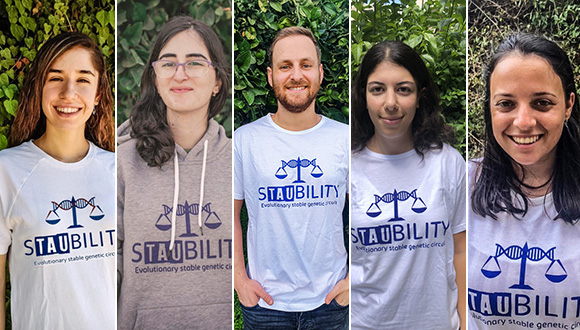
בתמונה מימין לשמאל: נועה קרייצר, בר גליקשטיין, ניב עמיתי, קרין סיונוב (קפטנית הנבחרת), ובן שושן


מציאת היציבות בהעברת גנים מיצור ליצור

ההנדסה הגנטית מבוססת על היכולת להכניס גנים מיצור אחד ליצור אחר. האתגר בתהליך הזה הוא חוסר היציבות של גנים כאלה, שבדרך כלל "נמחקים" די מהר. מטרת צוות IGEM שלנו השנה הייתה למצוא פתרון לבעיה האקוטית הזו. בגדול הרעיון היה לקשור את הגן החדש שאנחנו רוצים להוסיף לאורגניזם כלשהו (המאכסן) לגן אחר שחיוני לשרידות של האורגניזם, כך שבעצם האורגניזם הופך להיות "מכור" ותלוי בגן שהוספנו ולא יכול "להיפטר" ממנו.


מבעיה לפתרון מהפכני

הצוות פיתח פתרון שכלל בין השאר:

  • פיתוח שיטה ניסיונית חדשה לבחירה של הגן החיוני שאליו כדאי לקשור את הגן החדש.
  • אלגוריתמים לתכנון של שני הגנים האלה כך שהם "יעבדו" במאכסן בצורה יעילה.
  • תוכנה ידידותית שמאפשר תכנון ואיפטום (שיפור וייעול תהליכים וביצועים) של שני הגנים האלה.


פרופ' טולר והנבחרת השיגו בקשת פטנט על השיטה וגם חברת התרופות לונזה השוויצרית, שאחד ממרכזי המו"פ שלה נמצא בחיפה, מעוניינת לתמוך בפרויקט וכבר תרמה תקציב.  


חבר השופטים וקריטריונים לזכייה

חבר השופטים מורכב בדרך כלל ממדענים, פרופסורים וחוקרים עם הרבה ניסיון בתחום. חלק גדול השתתף בעבר בתחרות או שהוא מנחה של קבוצה בתחרות. רשימת הקריטריונים לזכייה בתחרות מתועד באתר של התחרות https://2020.igem.org/Main_Page.

השופטים יחליטו על הזוכים על סמך הקריטריונים הבאים:

  • אתר: תיעוד כל קבוצה באתר שלה. לכל קבוצה קיים אתר המכיל את כל פרטי הפרויקט שלו.
  • סרטון המסביר על הפרויקט.
  • פוסטר
  • ראיון: שופטים מהתחרות יראיינו את הנבחרת וישאלו אותם שאלות במשך לפחות 20 דקות. גם הקהל יוכל להצטרף ולשאול שאלות.

EE Seminar: Anti concentration in most directions

09 במרץ 2020, 15:00 
Room 011, Kitot Building  

 (The talk will be given in English)


Speaker:     Prof. Amir Yehudayoff
                     Department of Mathematics, Technion

Monday, March 9th, 2020
15:00 - 16:00

Room 011, Kitot Bldg., Faculty of Engineering


Anti concentration in most directions 
 

Abstract


We shall discuss anti concentration properties of the inner product between two independent random vectors in Euclidean space. Based on work with Anup Rao.   


(EE Seminar: Percentile based cache decay prediction in LLC (last-level-cache

12 בפברואר 2020, 15:30 
room 011, Kitot Building  

Speaker: Yuval Shekel

M.Sc. student under the supervision of Prof. Shlomo Weiss


Wednesday, February 12th 2020 at 15:30

Room 011, Kitot Bldg., Faculty of Engineering


Percentile based cache decay prediction in LLC (last-level-cache)


Abstract


Power dissipation is a highly limiting factor in CPUs ranging from low power to high-performance cores, limited to the cooling ability of the system.

Lower power dissipation can be directly translated to better battery life for low power devices or better performance at lower cost in the case of high performance cores.

Nowadays, leakage power is a bigger concern than ever due to decreasing transistor size and increasing cache sizes. Therefore, it makes sense to target cache leakage to achieve reduction in total dissipated power.

Typically, cache lines are brought to the cache, used several times then reside in ‘dead’ state, meaning they are not reused until evicted.

We propose an adaptive technique for early invalidation of last-level-cache (LLC) lines, not likely to be reused. The idea is to sample a small portion of the cache lines and generalize the program behavior for the entire cache. Compared to other methods, this one is more suited to large caches where per-cache-line behavior is too much overhead. The method is based on estimation of cache behavior statistics. In addition, it allows users to tune those statistics to trade-off performance to power depending on the application.

Our proposed adaptive technique is reducing 35% of the memory hierarchy power, on average, with negligible performance degradation.

EE Seminar: SPIRAP – A Multiple Access Protocol Using Spinal Codes For Mobile Wireless Channels

08 במרץ 2020, 15:30 
Room 011, Kitot Building  

Speaker: Snir Nisim

M.Sc. student under the supervision of Dr. Dan Raphaeli


Sunday, March.8th, 2020 at 15:30

Room 011, Kitot Bldg., Faculty of Engineering

SPIRAP – A Multiple Access Protocol Using Spinal Codes For Mobile Wireless Channels

Abstract

We presents SPIRAP - Spinal rapid access protocol, a new method for multiuser detection over fading channel.

SPIRAP combines sequential decoding with the rateless Spinal code.

SPIRAP appears to be an efficient protocol for transmitting small packets in a minimally controlled network, and can be attractive for the Internet of Things (IOT) applications.

We show that SPIRAP may achieve higher rate than TDMA and ALOHA without the need for users synchronization.

EE Seminar: MonSter - Awakening the Mono in Stereo

19 בפברואר 2020, 15:00 
Room 011, Kitot Building  

Speaker: Yotam Gil

M.Sc. student under the supervision of Prof. Raja Giryes


Wednesday, February 19th, 2020 at 15:00

Room 011, Kitot Bldg., Faculty of Engineering


MonSter - Awakening the Mono in Stereo

Abstract

A novel stereo imaging system is presented, achieving enhanced performance over traditional stereo cameras, as well as self calibration abilities.

Stereo imaging is the most common passive method for producing reliable depth maps, however it suffers from two cardinal issues: limited depth range due to disparity resolution and sensitivity to extrinsic calibration. In this thesis, we offer a framework to overcome these limitations with the help of previously ignored information from each of the stereo images. First, we show how a stereo depth-map can be improved by equipping one of the stereo cameras with a phase-coded mask tuned for a range of depths in which the stereo struggles; in these ranges we use the monocular depth map as another source of depth information. This leads to a depth map fusion method that improves the original stereo depth map accuracy by 10%. Second, we present a novel online self-calibration approach, which makes use of both the stereo and monocular depth maps to find the transformation required for calibration by enforcing consistency between both maps. an extrinsic calibration is a crucial step for every stereo based system; despite all the advancements in the field, most calibrations are still done by the same tedious method of a checkerboard target. Monocular based depth estimation methods do not require extrinsic calibration but generally achieve inferior depth accuracy. The proposed method works in a closed-loop and exploits the pre-trained networks' global context, and thus avoids feature matching and outliers issues. In addition to presenting our method using an image-based monocular depth estimation method, which can be implemented in most systems without additional changes, we also show that having a phase-coded aperture mask leads to even better and faster convergence. We demonstrate our method on road scenes from the KITTI vision benchmark and real-world scenes using our prototype camera.


עמודים

אוניברסיטת תל אביב עושה כל מאמץ לכבד זכויות יוצרים. אם בבעלותך זכויות יוצרים בתכנים שנמצאים פה ו/או השימוש שנעשה בתכנים אלה לדעתך מפר זכויות
שנעשה בתכנים אלה לדעתך מפר זכויות נא לפנות בהקדם לכתובת שכאן >>
