EE Seminar: Dr. Tali Kaufman, CS, BIU

~~ (The talk will be given in English)

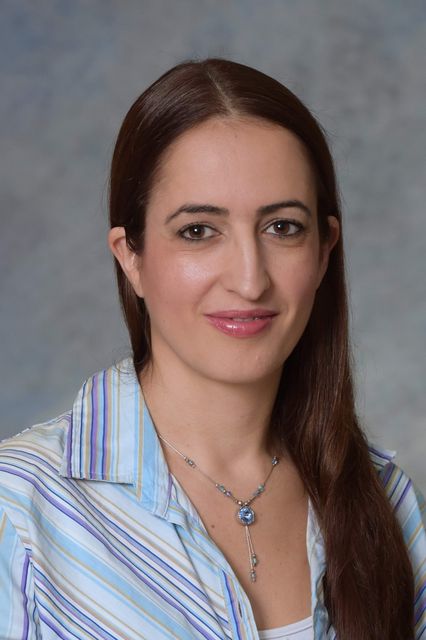
Speaker: Dr. Tali Kaufman,
Bar-Ilan University, Dept. of Computer Science

Monday, December 1st, 2014
15:00 - 16:00
Room 011, Kitot Bldg., Faculty of Engineering

High Dimensional Expanders
Abstract
Expander graphs have been intensively studied in the last four decades.
In recent years a high dimensional theory of expanders has emerged. In this talk I will introduce the notion of high dimensional expanders and some of the motivations for studying them. As opposed to (1-dimensional) expanders, where a random bounded degree graph is an expander; a probabilistic construction of a bounded degree high dimensional expander is not known. A major open problem, formulated by Gromov, is whether *bounded degree* high dimensional expanders could exist for dimension $d \geq 2$. I will discuss a recent construction of explicit bounded degree 2-dimensional expanders, that answer Gromov question in the affirmative.
joint work with David Kazhdan and Alexander Lubotzky

Bio: Tali Kaufman has completed her PHD in Tel-Aviv University. She then spent few years as a postdoc at MIT and at the Institute for Advanced Study (IAS) in Princeton.
Currently she is a faculty member at the computer science department of Bar-Ilan university.

01 בדצמבר 2014, 15:00 
חדר 011, בניין כיתות-חשמל  
EE Seminar: Dr. Tali Kaufman, CS, BIU

סמינר

סמינר מחלקתי Hadas Maman

08 בדצמבר 2014, 15:00 
וולפסון 206  
0
סמינר מחלקתי Hadas Maman


סמינר מחלקתי Wygnanski

19 בינואר 2015, 15:00 
וולפסון 206  
0
סמינר מחלקתי Wygnanski


School of Mechanical Engineering Seminar
Monday, January 19, 2015 at 15:00
Wolfson Building of Mechanical Engineering, Room 206


ACTIVE FLOW CONTROL AS A FLUIDIC FENCE PREVENTING TIP STALL ON SWEPT BACK WINGS


Israel J. Wygnanski


Th is limited by flow separation. Although some principles of active separation control in two-dimensional flow are well known, their application to aircraft has not been realized partly because of wing sweep-back and partly because of the weight and complexity of the systems providing the flow control. Sweeping jet actuators overcame many of the objections stated above because they do not possess moving parts and if used in small numbers they require little mass flow and energy to operate. This is the case on swept back, high aspect ratio wings where the spanwise boundary layer flow has to be reduced in order to avoid tip stall. This observation is rooted in the application of boundary layer theory to yawed airfoils of infinite span. The concept that is commonly referred to as the “Independence Principle” was considered inapplicable to turbulent flows for more than sixty years, and it cannot be rigorously applied to finite, tapered wings. Nevertheless the precept is sufficiently robust to be reduced to practice as it broadly suggests that the spanwise flow contributes to separation although its dominance is not an indicator of stall. Experimental results at multiple scales supporting these observations will be presented and discussed.e size and complexity of an airplane wing is determined by the maximum lift that it can generate, mostly for takeoff and landing purposes, and this


סמינר מחלקתי Tsevi Beatus

12 בינואר 2015, 15:00 
וולפסון 206  
סמינר

סמינר מחלקתי Avi Kribus

05 בינואר 2015, 15:00 
וולפסון 206  
0
סמינר מחלקתי  Avi Kribus


School of Mechanical Engineering Seminar
January, May 5, 2014 at 15:00
Wolfson Building of Mechanical Engineering, Room 206


Solar electricity with photon-enhanced thermionic emission (PETE)


Prof. Abraham Kribus

School of Mechanical Engineering, Faculty of Engineering

Tel Aviv University, Israel


The efficiencies of photovoltaic and thermal conversion of solar energy are both limited by thermodynamics, and by the complexity required in real conversion devices. A novel third alternative of photon-enhanced thermionic emission (PETE) offers an intriguing synergy of direct photonic conversion together with thermal conversion, and theoretically may reach efficiency exceeding 70%. However, realizing this conversion path requires a major multi-disciplinary effort in semiconductor physics, surface science, thermal science, and systems engineering.
A PETE converter consists of a semiconductor cathode with a bandgap that is matched to the solar spectrum, and an anode separated by a vacuum gap. Illuminating the cathode with concentrated solar radiation increases the conduction band electron population and reduces the energy barrier to electron emission by two mechanisms: increasing temperature due to heating by thermalization, and photo-generation that increases the electron concentration above its equilibrium level. Coating the cathode with a material that lowers the electron affinity can further reduce the barrier to emission. Hence, PETE devices utilize both photonic and thermal processes for energy conversion. The anode receives electrons from the cathode, and is heated by thermalization of these electrons. This waste heat is removed from the anode by an external heat exchanger. It is possible to use this heat to drive a secondary thermal cycle (e.g., heat engine or thermoelectric converter) to generate additional electricity and increase the overall device efficiency. A theoretical analysis of the ideal performance limits shows that under 1,000 suns, efficiency of the two-stage PETE and thermal conversion can exceed 70%, higher than ideal PV cells and higher than ideal thermal conversion. Practical implementation, however, is not easy. Several major challenges related to materials and device engineering will be discussed. Much further research, as well as engineering ingenuity, are needed to resolve both the materials issues and the device level design challenges, on the path to realize the promise of PETE conversion. 


EE Seminar: Liron Allerhand, Stuttgart University

~~(The talk will be given in English)

Liron Allerhand
Post-doc fellow at the Simtech institute at Stuttgart university
Monday, December 22, 2014
15:00 - 16:00
Room 011, Kitot Bldg., Faculty of Engineering

Robust Switching-based Fault Tolerant Control
Abstract
A new method for fault tolerant control is presented. The fault is considered as switching in the system  dynamics and a switching based approach is thus adopted for the fault tolerant control of the system. This approach can be used to model multiplicative faults, such as actuator and sensor faults, as well as component faults. It is applied to passive fault tolerant control where the fault is never detected, and to active fault tolerant control where the fault is detected and isolated within a given time limit. The fault may not be known accurately and some uncertainty in the fault can be considered as an uncertainty in the systems dynamics after the fault has occurred.
A controller that stabilizes the system, and achieves guaranteed performance is obtained by solving linear matrix inequalities.
An illustrative example of aircraft control is given.

Bio: Liron Allerhand completed his Ph.D. at Tel-Aviv university in 2014 (the Ph.D> work is still under review).
He is currently a post-doc fellow at the Simtech institute at Stuttgart university.

22 בדצמבר 2014, 15:00 
חדר 011, בניין כיתות-חשמל  
EE Seminar: Liron Allerhand, Stuttgart University

ברכות חמות לד"ר בני אפלבאום ולד"ר עופר שייביץ על זכייתם במענקי מחקר לחוקרים צעירים של מועצת המחקר האירופית ERC. זהו המענק הגדול והיוקרתי ביותר שניתן באופן אישי לחוקר על ידי האיחוד האירופי.

20 נובמבר 2014

קריפטוגרפיה בסיבוכיות נמוכה (בני אפלבאום).

הפרויקט עוסק בסיבוכיות החישובית של קריפטוגרפיה במטרה להבין מהם המשאבים החישוביים המינימליים (כגון זמן חישוב, כמות זיכרון, רכיבי חומרה) המספיקים כדי לבצע משימות קריפטוגרפיות שונות (כגון הצפנה). זו סוגיה יסודית בעלת חשיבות תיאורטית ופרקטית כאחד. תיאורטית, חשוב להבין מהי העלות החישובית הנדרשת כדי להשיג בטיחות גבוהה. פרקטית, פונקציות קריפטוגרפיות מהירות נחוצות ליישומים שונים. באופן כללי יותר, לקריפטוגרפיה בסיבוכיות נמוכה יש השלכות רחבות לתחומים כגון סיבוכיות חישובית, אופטימיזציה קומבינטורית, ולמידה חישובית. במחקר זה נתכנן פונקציות קריפטוגרפיות מהירות וזולות לחישוב. נעסוק בשאלות יסודיות (קושי חישובי של פונקציות דלילות), בתכנון כלים יסודיים (אלגוריתמי הצפנה), ובתכנון וניתוח של כלים מתקדמים (מעגלים מוצפנים). 


תורת האינפורמציה במודלים אינטראקטיביים מוגבלי סיבוכיות (עופר שייביץ).

המחקר בוחן את הגבולות התיאורטיים של יעילות מערכות תקשורת אינטראקטיביות דלות סיבוכיות בערוצים רועשים. בניגוד לגישה האינפורמציונית הקלאסית בה דנים לרוב במגבלות ביצועי תקשורת "חד כיווניים" ללא מגבלת סיבוכיות מקודד ומפענח, כאן נבחן את ביצועי המערכת תחת אילוץ סיבוכיות מחמיר על יכולת העיבוד של כל טרמינל כאשר התקשורת בין הטרמינלים מתבצעת באופן של "שיחה" הלוך וחזור על גבי הערוץ, וזאת במטרה להבין את התרומה של המימד האינטראקטיבי ליכולת להוריד משמעותית את סיבוכיות הסכימה עם פגיעה מינימלית בביצועים, וכן בכוונה לאפיין טכניקות תקשורת אינטראקטיביות מעשיות. במהלך הפרוייקט נבחן קשת רחבה של ערוצי תקשורת שתכלול ערוצים עם משוב רועש, ערוצים רבי משתמשים, וכן גבול של רשתות תקשורת הומוגניות גדולות. בנוסף, הפרדיגמה האינטראקטיבית תוביל לבחינה של מגוון שאלות ואתגרים חדשים הקשורים לדיסציפלינות מחוץ לתחום התקשורת, במיוחד בהקשר של גבולות יכולת ההסקה וזרימת המידע במערכות אינטראקטיביות רועשות מוגבלות משאבים.

חברת טלפוניקה ישראל, הממוקמת ברעננה, מחפשת איש/אשת NOC.

סטודנט/ית בתחום הטכני, עדיפות למדעי המחשב/ הנדסה/ סטטיסטיקה
-
ניסיון כ-NOC - יתרון
-
רקע טכני - יתרון
-
ידע ב-SQL, VOIP - יתרון
-
אנגלית ברמה גבוהה
-
ספרדית - יתרון
-
יכולת לעבוד הן בצוות והן באופן עצמאי, יכולות אנליטיות, שירותיות מול לקוחות פנימיים וחיצוניים, יכולת מולטי טאסקינג.


*במסגרת מדיניות האוניברסיטה לעידוד גיוון תעסוקתי, ניתנת עדיפות למועמדים העונים על דרישות התפקיד ומשתייכים לאוכלוסיות אלו: חברה ערבית, חרדים, יוצאי העדה האתיופית ומועמדים עם מוגבלות. רק פניות מתאימות תענינה. في إطار سياسة الجامعة لتشجيع التنوّع التوظيفيّ، تُعطى أولويّة للمرشّحين الذين يستوفون متطلّبات الوظيفة وينتمون إلى إحدى المجموعات التالية: المجتمع العربيّ، الحريديم، أبناء الطائفة الأثيوبيّة والمرشّحين أصحاب الإعاقات.

כנס יזמות

במסגרת שבוע המועדון העולמי שילובים מארחת כנס יזמות 19.11.14

19 בנובמבר 2014, 16:00 
אולם רוזנבלט, הפקולטה להנדסה, אוניברסיטת תל אביב  

עמודים

אוניברסיטת תל אביב עושה כל מאמץ לכבד זכויות יוצרים. אם בבעלותך זכויות יוצרים בתכנים שנמצאים פה ו/או השימוש שנעשה בתכנים אלה לדעתך מפר זכויות
שנעשה בתכנים אלה לדעתך מפר זכויות נא לפנות בהקדם לכתובת שכאן >>