EE Seminar: Learned Convolutional Sparse Coding

30 בדצמבר 2018, 15:00 
חדר 011, בניין כיתות-חשמל  


Speaker:  Hillel Sreter

M.Sc. student under the supervision of Dr. Raja Giryes


Sunday, December 30th, 2018 at 15:00

Room 011, Kitot Bldg., Faculty of Engineering


Learned Convolutional Sparse Coding
 

Abstract


    We propose a convolutional recurrent sparse auto-encoder model. The model consists of a sparse encoder, which is a convolutional extension of the learned ISTA (LISTA) method, and a linear convolutional decoder.


    Our strategy offers a simple method for learning a task-driven sparse convolutional dictionary (CD) and producing an approximate convolutional sparse code (CSC) over the learned dictionary.


    We trained the model to minimize reconstruction loss via gradient decent

with back-propagation and have achieved competitive results to KSVD image denoising and to leading CSC methods in image inpainting requiring only a small fraction of their run-time.


EE Seminar: Estimating the Information Flow in Deep Neural Networks

23 בדצמבר 2018, 15:00 
חדר 011, בניין כיתות-חשמל  

(The talk will be given in English)


Speaker:     Dr. Ziv Goldfeld

Laboratory for Information and Decision Systems (LIDS) at MIT


SUNDAY, December 23rd, 2018
15:00 - 16:00

Room 011, Kitot Bldg., Faculty of Engineering


Estimating the Information Flow in Deep Neural Networks


Abstract

This talk will discuss the flow of information and the evolution of internal representations during deep neural network (DNN) training, aiming to demystify the compression aspect of the Information Bottleneck theory. The theory suggests that DNN training comprises a rapid fitting phase followed by a slower compression phase, in which the mutual information I(X;T) between the input X and internal representations T decreases. Several papers observe compression of estimated mutual information on different DNN models, but the true I(X;T) over these networks is provably either constant (discrete X) or infinite (continuous X). We will explain this discrepancy between theory and experiments, and clarify what the estimated mutual information curves from past works were actually tracking.


To this end, an auxiliary (noisy) DNN framework will be introduced, in which I(X;T) is a meaningful quantity that depends on the network's parameters. We will show that this noisy framework is a good proxy for the original (deterministic) system both in terms of performance and the learned representations. To accurately track I(X;T) over noisy DNNs, a differential entropy estimator tailored to exploit the DNN's layered structure will be proposed and theoretical guarantees on the associated minimax risk will be provided. Using this estimator along with a certain analogy to an information-theoretic communication problem, we will unveil the geometric mechanism that drives compression of I(X;T) in noisy DNNs. Based on these findings, we will circle back to deterministic networks and demonstrate that the past observations of compression were in fact tracking the same geometric phenomenon. Future research directions inspired by this study aiming to facilitate a comprehensive information-theoretic understanding of deep learning will also be discussed. 


Bio:

Dr. Ziv Goldfeld is currently a postdoctoral fellow at the Laboratory for Information and Decision Systems (LIDS) at MIT. He graduated with a B.Sc. summa cum laude, an M.Sc. summa cum laude and a Ph.D. in Electrical and Computer Engineering from Ben-Gurion University, Israel, in 2012, 2014 and 2017, respectively. His research interest include theoretical machine learning, information theory, complex systems, high-dimensional and nonparametric statistics and applied probability. Honors include the Rothschild postdoctoral fellowship, the Feder Award, a best student paper award in the IEEE 28th Convention of Electrical and Electronics Engineers in Israel, B.Sc. and M.Sc. Dean's Honors, the Basor fellowship, the Lev-Zion fellowship and the Minerva Short-Term Research Grant (MRG).

מתניעים את הקריירה שלכם

23 דצמבר 2018
יריד תעסוקה למהנדסי ביו-רפואה

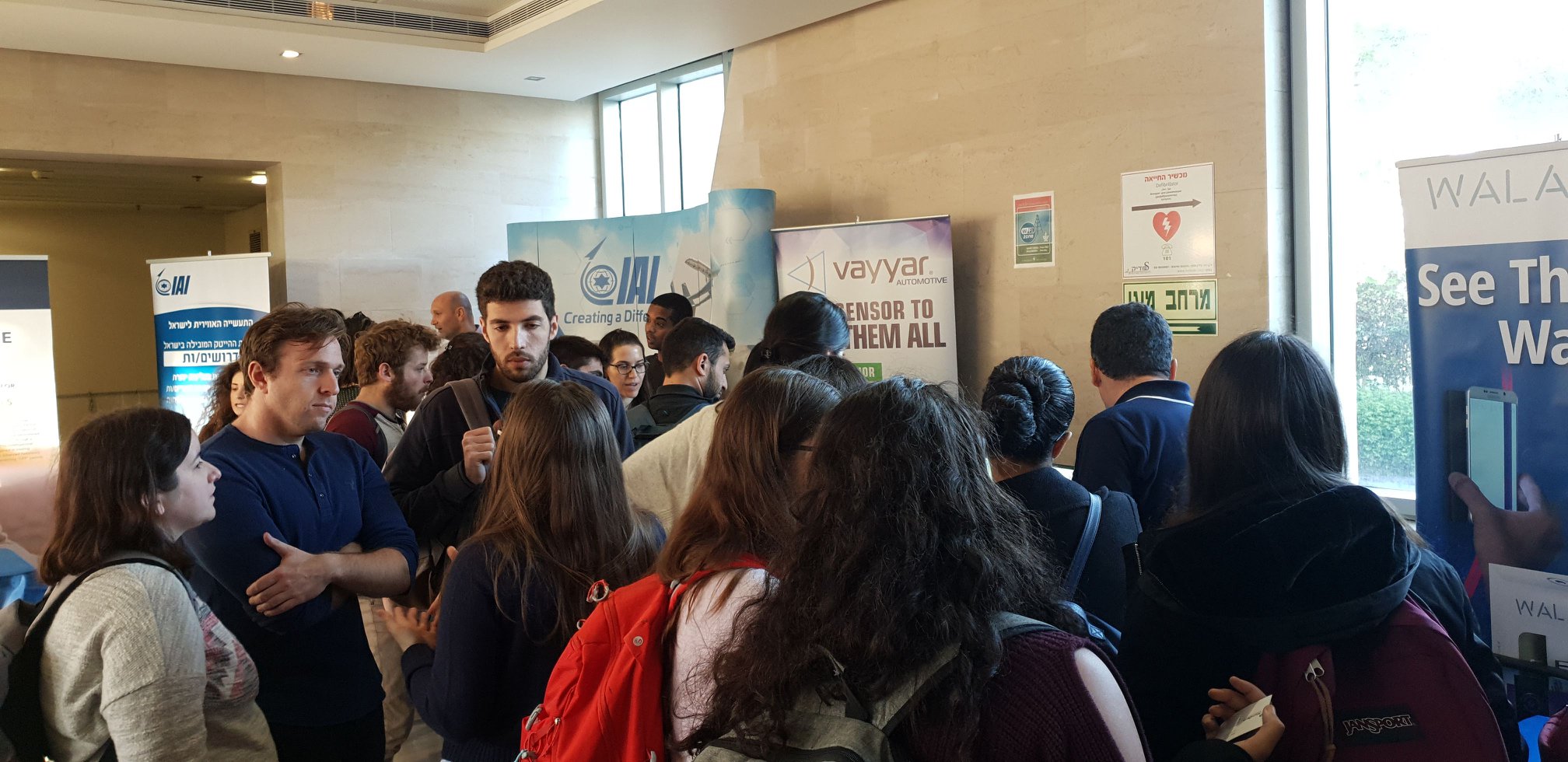
בתאריך ה 18.12.2018 התקיים זו בפעם השנייה יריד תעסוקה עבור סטודנטים ובוגרים של המחלקה להנדסה ביו-רפואית. היריד אורגן ע"י ארגון עמיתי התעשייה של הפקולטה להנדסה השוקדים במשך שנים על הידוק הקשרים בין אקדמיה לתעשייה.


ביריד ארחנו את נציגי החברות הבאות:

applied materials

תעשיה אווירית

Mellanox

Vayyar

Neuroderm

Q Core Medical

ContinUse Biometrics

eHealth


רצינו להודות לכם שותפים יקרים, שלקחתם חלק ביריד ופתחתם דלת לעולם העסקי עבור הסטודנטים והבוגרים שלנו. 

סמינר מחלקתי אלקטרוניקה פיזיקאלית : Niv Shapira

27 בדצמבר 2018, 15:00 
פקולטה להנדסה, ביניין כיתות, חדר 011  
סמינר מחלקתי אלקטרוניקה פיזיקאלית : Niv Shapira

Niv Seminar

You are invited to attend a department seminar on


Multi-lobe superoscillations and Structured illumination microscopy

:By

Niv Shapira

MSc student under the supervision of Prof. Ady Arie


Abstract


Superoscillation is a phenomenon of growing interest, describing a wave interference between frequency components of a band-limited function, that is locally oscillating faster than its highest Fourier component. In this work we study and implement methods to generate multi-lobe optical superoscillating beams, and their potential application for super-resolution structured illumination microscopy. Whereas many previous works concentrated on generating a single super-oscillating lobe, here we study methods to generate a multi-lobe function with nearly constant intensity and constant local frequency. Generating such periodic superoscillations is a challenging task, but may open the door for interesting applications which require its periodicity. We generated superoscillation patterns having 3 to 11 sub-wavelength lobes, with frequency of 20 to 40 percent above the system cut-off frequency. These patterns may be useful for structured illumination microscopy, enabling more than two-fold improvement in resolution with respect to the classical diffraction limit.


On Thursday, December 27, 2018, 15:00

Room 011, EE-Class Building

במטרה לשפר את איכות החיים של אנשים בגיל השלישי

20 דצמבר 2018
מקלנועית סטנדרטית לאוטונומית

השבוע, מחלקת הפרוייקטים של בית הספר להנדסה מכנית התחדש בקלנועית סטנדרטית במטרה שהסטודנטים שלנו יהפכו אותה לאוטונומית. את הקלנועית קבלנו בתרומה נדיבה של חברת - קלנועית זה אפיקים


הצוות

הצוות של פרויקט הקלנועית, בהנחייתו של אחראי האקדמי פרופ'. יורם רייך, משלב סטודנטים מבית הספר להנדסה מכנית, סטודנטים מבית הספר להנדסת חשמל והמחלקה למדע והנדסת חומרים. בנוסף עובדים בצוות סטודנטים מבית הספר למדעי המחשב של אוניברסיטת תל אביב וסטודנטים הלומדים לתואר הנדסאי  בממכללת אורט יד סינגלובסקי וממכללת אורט כפר סבא.


על הפרוייקט

התכנון להפוך את הקלנועית הסטנדרטית לאוטונומית שתאפשר נסיעה במסלול מוגדר מראש ע"י מציינים (קונוסים). "הרעיון להפוך את הקלנועית לאוטונומית בעקבות שאנו עובדים גם על פרויקט פורמולה אוטונומי והקלנועית היא אבן דרך למימוש התוכנית כפלטפורמה" כך מסביר

ברוך מאירוביץ, רכז פרויקטי מערכת. הקלנועית יכולה לשמש בסיס לפיתוח מוצרים נוספים שיתרמו לאיכות החיים של אנשים בגיל השלישי או אנשים עם מוגבלויות למשל כיסא גלגלים אוטונומי או מיטה אוטונומית לחולים בבתי חולים.

הפרוייקט אף יתרום להרחבת הפעילות הלימודית באוניברסיטה ע"י שיתוף סטודנטים מחוץ לאוניברסיטה לדוגמא סטודנטים טכניים לתואר הנדסאי.


לסרטון

EE Seminar: Learning to Sample

30 בדצמבר 2018, 15:30 
חדר 011, בניין כיתות-חשמל  

Speaker: Oren Dovrat

M.Sc. student under the supervision of Prof. Shai Avidan


Sunday, December .30th, 2018 at 15:30

Room 011, Kitot Bldg., Faculty of Engineering


Learning to Sample


Abstract

Processing large point clouds is a challenging task. Therefore, the data is often sampled to a size that can be processed more easily. The question is how to sample the data? A popular sampling technique is Farthest Point Sampling (FPS). However, FPS is agnostic to a downstream application (classification, retrieval, etc.). The underlying assumption seems to be that minimizing the farthest point distance, as done by FPS, is a good proxy to other objective functions. We show that it is better to learn how to sample. To do that, we propose a deep network to simplify 3D point clouds. The network, termed S-NET, takes a point cloud and produces a smaller point cloud that is optimized for a particular task. The simplified point cloud is not guaranteed to be a subset of the original point cloud. Therefore, we match it to a subset of the original points in a post-processing step. We contrast our approach with FPS by experimenting on two standard data sets and show significantly better results for a variety of applications.

EE Seminar: Optimal Sampling of a Noisy Multiple Output Channel

21 בינואר 2019, 15:00 
חדר 011, בניין כיתות-חשמל  

Speaker: Gaston Solodky

M.Sc. student under the supervision of Prof. Meir Feder


Monday, January 21th, 2019 at 15:00

Room 011, Kitot Bldg., Faculty of Engineering


Optimal Sampling of a Noisy Multiple Output Channel


Abstract

This thesis deals with an extension of Papoulis’ generalized sampling expansion (GSE) to a case where noise is added before sampling and the total sampling rate may be higher than the Nyquist rate. We look for the best sampling scheme that maximizes the capacity or minimizes the mean-square error (MSE) of the sampled channel between the input signal and the  sampled outputs signals, where the channels are composed of all-pass linear time-invariant (LTI) systems with additive Gaussian white noise. For the case where the total rate is between  and M times the Nyquist rate, the optimal scheme samples  outputs at Nyquist rate and the last output at the remaining rate. When  the optimal performance can also be attained by an equally sampled scheme under some condition on the LTI systems. Surprisingly, equal sampling is suboptimal in general. Nevertheless, for some total sampling rates where there is an integer relation between the number of channels and the total normalized rate, equal sampling achieves the optimal performance. When the total rate is between  to  times the Nyquist rate and the number of channels is greater than , we conjecture that the best scheme samples  outputs at Nyquist rate, one output at the remaining rate, and the last output is not sampled at all, similar to the best scheme when the total sampling rate is larger than  times the Nyquist rate. Finally, we proposed a reconstruction scheme and discuss the relation between maximizing the capacity and minimizing the MSE.
 

האם ניתן לנטר התנהגות באמצעות חיישן נייד ולנבא הופעת מחלה? האם ניתן לבנות מיקרוסקופ שיזהה אילו תאים בריאים ואילו נגועים, מבלי להזיק להם או 'לצבוע' אותם? כיצד מספקים מכשיריMRI  תמונה של המוח באופן לא פולשני, ולמה לתמונה הזו יש מגבלות? איך מבצעים עריכה גנטית? האם ביצוע של עריכה גנטית בעוברים באמת יפתור את כל המחלות הגנטיות? מה הסיכונים בכך?


אלה דוגמאות ספורות למהפכות שעולם הרפואה חווה בתחומי המניעה, האיבחון, הטיפול וניהול החיים במהלך מחלה. מהפכות אלה הן כולן תוצאה של טכנולוגיות הנדסיות. האיבחון והטיפול עושים כיום שימוש באמצעי דימות וניטור, בשיטות ממוחשבות, ובאמצעים לריצוף של נתונים אישיים של כל חולה ולהבנת השונות בין חולה לחולה. כל אלה לא היו זמינים אך לפני עשור והם מאפשרים זיהוי מוקדם וטיפול אישי המותאם לחולה ולהפרעה המדוייקת ממנה הוא סובל. למרות כל אלה, קיים עדיין פער רב מדי בין הרצון האנושי הבסיסי לאריכות ימים בבריאות, לבין מידת הסבל ממחלות שונות ומידת יכולתנו לפתור ולנהל מחלות אקוטיות או כרוניות. ההנדסה הביו-רפואית עוסקת במחקר ובפיתוח שיטות טכנולוגיות שמטרתן צמצום פער זה.   


הלימודים והמחקר בהנדסה מיוחדים בכך שהם מספקים שילוב מרתק ויישומי המבוסס על התנסות והבנה עמוקה הן של חוקי הטבע הבסיסיים (מתמטיקה, פיזיקה, כימיה, ביולוגיה ופיזיולוגיה) והן של השיטות הטכנולוגיות העומדות בבסיסן של המצאות ביו-רפואיות. שילוב ייחודי זה של העמקה בתחומים המשיקים לעולם הרפואי, תוך הבנה מלאה של כל העקרונות הפיזיקליים, ההנדסיים והתיאורטיים הוא הבסיס ללימודים בהנדסה הביו-רפואית.


מטרת הלימודים

מטרת תכנית הלימודים היא להכשיר מהנדסים ביו-רפואיים למשימות מחקר ופיתוח לתעשיית ההיי טק הביו-רפואית (תעשיית הביו-מד) ולמחקר אקדמי. המהנדסים המוכשרים יידעו להתמודד עם בעיות סבוכות הדורשות הבנה של מערכות ביולוגיות לצד הבנה עמוקה בתחומי ההנדסה השונים.

בוגרינו הופכים ליזמים בתחומים הביו-רפואיים ומשמשים בתפקידים בכירים בתעשיות ההיי טק והביו-מד בתפקידי מחקר ופיתוח, רגולציה וניהול. חלק מבוגרינו מתקדם למחקר בתארים מתקדמים, מאסטר ודוקטורט, באוניברסיטת ת"א או במרכזי מחקר, בתי חולים ומוסדות אקדמיים אחרים בארץ ובעולם.


לדף הפייסבוק של המחלקה


עמודים

אוניברסיטת תל אביב עושה כל מאמץ לכבד זכויות יוצרים. אם בבעלותך זכויות יוצרים בתכנים שנמצאים פה ו/או השימוש שנעשה בתכנים אלה לדעתך מפר זכויות
שנעשה בתכנים אלה לדעתך מפר זכויות נא לפנות בהקדם לכתובת שכאן >>