יום פתוח לתואר ראשון - מדעים דיגיטליים להיי-טק

בואו לשאול את השאלות הנכונות ביום הפתוח לתואר ראשון BSc

23 בפברואר 2024, 9:00 
אוניברסיטת תל אביב  
יום פתוח לתואר ראשון - מדעים דיגיטליים להיי-טק

אנו מזמינים אותך ליום הפתוח ללימודי תואר ראשון בתוכנית מדעים דיגיטליים להיי-טק, בפקולטה להנדסה באוניברסיטת תל אביב. 

זאת ההזדמנות שלך לפגוש את המרצות והמרצים המעולים שלנו, לשאול את השאלות שהכי מעניינות אותך, לשמוע על התוכנית מהסטודנטים ומהסטודנטיות, ולהתרשם מהקמפוס.
 

אז איפה נפגשים?

ניפגש בבניין כיתות, חדר 011
 

ומה בתוכנית?


שעת  ההרצאה   שם ההרצאה  מרצה
10:30-10:00 היכרות עם מדעים דיגיטליים להיי-טק פרופ' רן גלעד-בכרך, ראש התוכנית
10:45-10:30 מעבר על תנאי קבלה הילה כהנוביץ', רכזת התוכנית
10:55-10:45 היי-טק פלוס מדע המדינה נציג ביה"ס למדע המדינה, ממשל ויחסים בינלאומיים
11:05-10:55 היי-טק פלוס ניהול פרופ' נועם שמיר, ראש החוג לניהול
11:35-11:05 היכרות עם מדעים דיגיטליים להיי-טק פרופ' רן גלעד-בכרך, ראש התוכנית
11:45-11:35 מעבר על תנאי קבלה הילה כהנוביץ', רכזת התוכנית
12:00-11:45 שאלות ותשובות עם סגל התוכנית סגל התוכנית
12:10-12:00 היי-טק פלוס כלכלה פרופ' ניל גנדל, ביה"ס לכלכלה
12:20-12:10 היי-טק פלוס מדע המדינה נציג ביה"ס למדע המדינה, ממשל ויחסים בינלאומיים

 
בנוסף, יתקיים שיח חופשי בחוץ עם סטודנטיות.ים, בוגרות.ים והסגל לאורך היום.

אנחנו נחכה לך כאן כדי לענות על כל השאלות בנוגע ללימודים, וגם לספר לך איך זה באמת ללמוד באוניברסיטת תל אביב.


הירשמו כאן כדי לקבל מאתנו את כל העדכונים על האירוע. 
 

נתראה בקמפוס!

Shir Barzel- SEL-CIE: Knowledge Guided Self Supervised Learning Framework For CIE-XYZ Reconstruction From Non-Linear sRGB Images

סמינר מחלקת מערכות - EE Systems Seminar

21 בפברואר 2024, 15:00 
זום  
Shir Barzel- SEL-CIE: Knowledge Guided Self Supervised Learning Framework For CIE-XYZ Reconstruction From Non-Linear sRGB Images

Electrical Engineering Systems Zoom Seminar

Join Zoom Meeting
https://us04web.zoom.us/j/74301435498?pwd=3KKa8pOfAmAvmY19DtfSeYcW1jJPaZ.1
Meeting ID: 743 0143 5498
Passcode: 5ZHLZj

Speaker: Shir Barzel

M.Sc. student under the supervision of Prof. Amir Averbuch and Dr. Ofir Lindenbaum


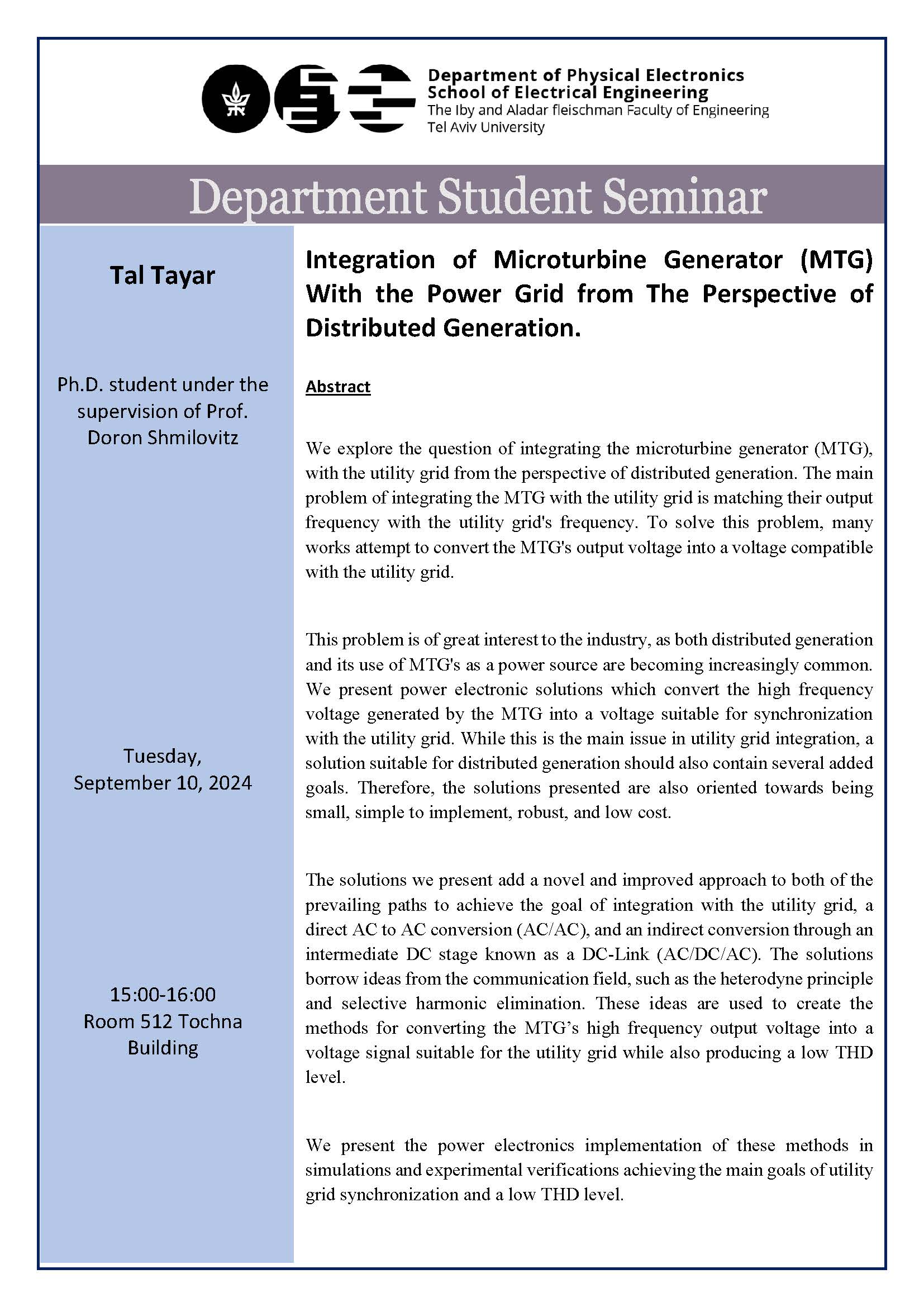
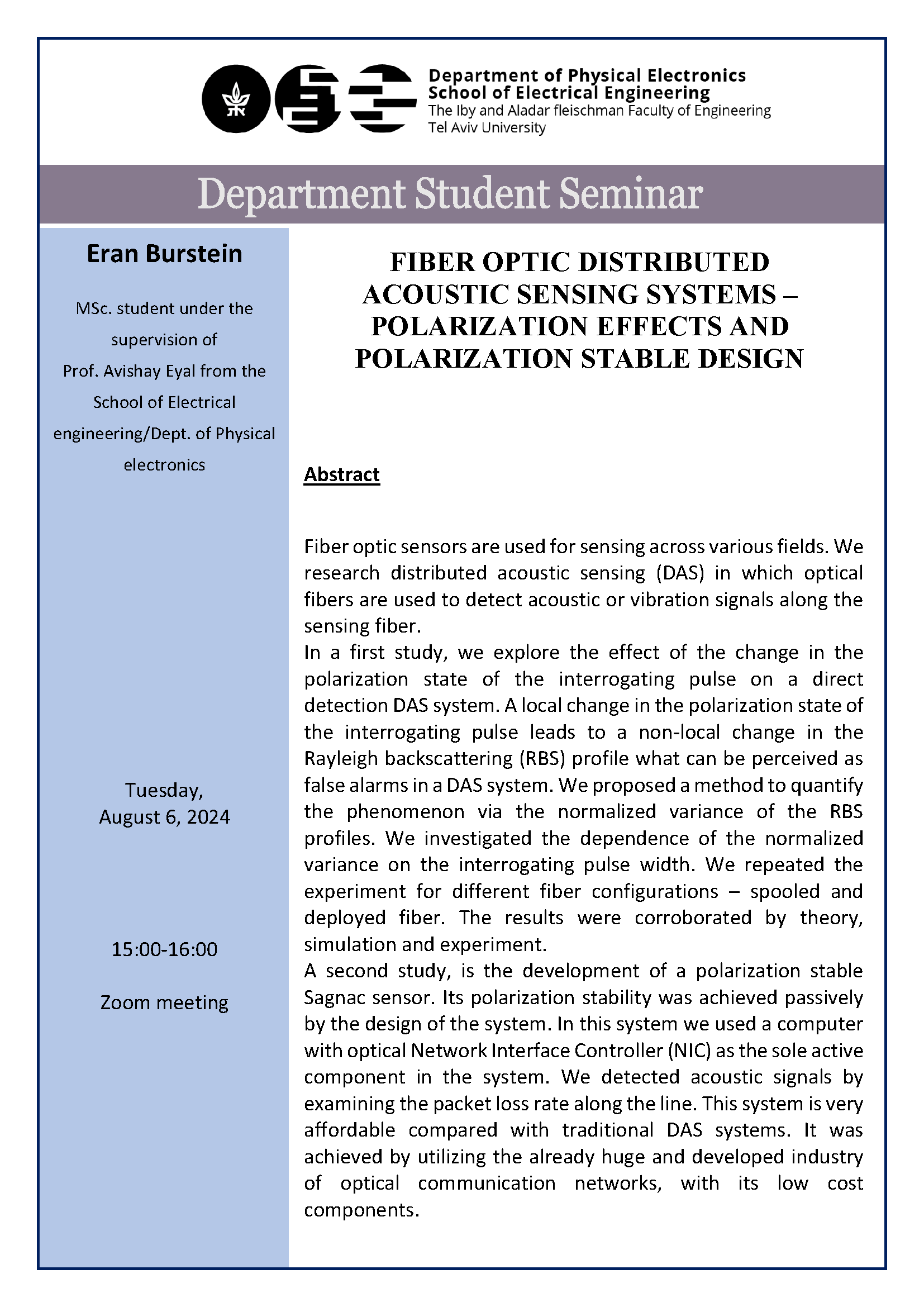
Wednesday, February 21st, 2024, at 15:00

SEL-CIE: Knowledge Guided Self Supervised Learning Framework For CIE-XYZ Reconstruction From Non-Linear sRGB Images


Abstract

Modern cameras typically offer two types of image states: a minimally processed linear raw RGB image representing the raw sensor data, and a highly-processed non-linear image state, such as the sRGB state. The CIE-XYZ color space is a device-independent linear space used as part of the camera pipeline and can be helpful for computer vision tasks, such as image deblurring, dehazing, and color recognition tasks in medical applications, where color accuracy is important. However, images are usually saved in non-linear states, and achieving CIE-XYZ color images using conventional methods is not always possible. To tackle this issue, classical methodologies have been developed that focus on reversing the acquisition pipeline. More recently, supervised learning has been employed, using paired CIE-XYZ and sRGB representations of identical images. However, obtaining a large-scale dataset of CIE-XYZ and sRGB pairs can be challenging. To overcome this limitation and mitigate the reliance on large amounts of paired data, self-supervised learning (SSL) can be utilized as a substitute for relying solely on paired data. This work proposes a framework for using SSL methods alongside paired data to reconstruct CIE-XYZ images and re-render sRGB images, outperforming existing approaches.


השתתפות בסמינר תיתן קרדיט שמיעה = עפ"י רישום בצ'אט של שם מלא + מספר ת.ז.

Roi Solomon-Optimal Strategies for Winning Log-Loss Competitions

סמינר מחלקת מערכות - EE Systems Seminar

18 בפברואר 2024, 15:00 
Electrical Engineering-Kitot Building 011 Hall  
Roi Solomon-Optimal Strategies for Winning Log-Loss Competitions

Electrical Engineering Systems Seminar

Speaker: Roi Solomon

M.Sc. student under the supervision of Prof. Meir Feder and Dr. Amichai Painsky

Sunday, 18th February 2024, at 15:00

Room 011, Kitot Building, Faculty of Engineering

Optimal Strategies for Winning Log-Loss Competitions


Abstract

Log-loss is a standard approach for evaluating quality of predictions of binary outcomes, such as sports prediction competitions. It is well known that predicting the true (oracle) outcome probability for each match is optimal for this goal, in the sense that it minimizes the expected log-loss of predictions. However, the goal of participants in prediction competitions (such as those on Kaggle) is often not to optimize the expected score of their submission, but to maximize the probability of winning the competition - that is, attaining lower log-loss than all other competitors. We justify approximating this goal as surpassing the loss of a noisy oracle by a calculable quantity c.
For this goal, we show that the theory of competitive optimality supplies a Markov-inequality bound on the probability of success, and prove that this bound is attainable with simple policies under pretty general conditions. Hence, we can formulate the optimal policy for maximizing win probability, which amounts to selecting an appropriate subset of games and switching their predictions to be zero or one. We demonstrate in simulations and reanalysis of previous competitions that this is an effective practical policy to maximize win probability.


השתתפות בסמינר תיתן קרדיט שמיעה = עפ"י רישום שם מלא + מספר ת.ז. בדף הנוכחות שיועבר באולם במהלך הסמינר


יום זרקור און ליין חברת NVIDIA

15 בפברואר 2024, 15:00 - 16:00 
און ליין  
יום זרקור און ליין חברת NVIDIA

מוזמנים.ות להירשם! 


הנכם.ן מוזמנים.ות ליום זרקור וירטואלי של חברת אנבידיה

חברת אנבידיה באירוע ייחודי לכל אלו שלא יכולים.ות להגיע ליום הזרקור הפרונטלי

סטודנטים.ות יקירים ויקרות חברת אנבידיה ארגנה יום זרקור און ליין לטובת כל אלו שנבצר מהם להגיע ליום זרקור הפרונטלי.


מתי? 15.02.24 החל מהשעה 14:00

איפה? און ליין 

מה בתוכנית? פאנל של מיטב ומגוון עובדי.ות החברה שיענה על כל השאלות ויסבירו על ההתפתחויות והתפקידים שאליהם.ן תוכלו להתמיין.

האירוע בהרשמה בלבד- כל מי שיירשם יקבל לינק להשתתפות

מהרו להירשם! 


הטקס השנתי של הקרן לאלקטרואופטיקה ע"ש פרופ' עמנואל מרום

28 בפברואר 2024, 9:00 
Electrical Engineering-Kitot Building 011 Hall  
הטקס השנתי של הקרן לאלקטרואופטיקה ע"ש פרופ' עמנואל מרום


ביום רביעי 28.2.2024 , יתקיים הטקס השנתי של הקרן לאלקטרואופטיקה ע"ש פרופ' עמנואל מרום, אשר יזם את הקמת הקרן וניהל אותה במשך שנים רבות.

הרצאת אורח פרופ' דוד סעד מאוניברסיטת אסטון  הזוכים בתחרות הסטודנטים הם:

מר יהודה באום, סטודנט לתואר שלישי בהנחייתו של פרופ' קובי שויער

Meta-holograms under incoherent illumination: image properties and spackle pattern.

גב' ענבר הורביץ, סטודנטית לתואר שלישי בהנחייתו של פרופ' עדי אריה

"Controlling and shaping quantum light for quantum information applications "

מר יונתן גרשוני, סטודנט לתואר שלישי בהנחייתו ד"ר איתי אפשטיין

In-plane Exciton Polaritons vs Plasmon Polaritons: Nonlocal corrections, confinement and loss.

הטקס יתקיים ב 28.2.2024- בשעות 09:00-10:30 בחדר 011 , בנין הנדסת חשמל -כיתות

כיבוד קל יוגש לפני תחילת הטקס

יום זרקור חברת NVIDIA

07 בפברואר 2024, 12:00 - 14:00 
הספרייה ע"ש ניימן של הפקולטה למדעים מדוייקים ולהנדסה  
יום זרקור N

מוזמנים.ות להירשם! 

חברת אנבידיה מגיעה לפגוש אתכם.ן בקמפוס

סטודנטים.ות יקירים ויקרות חברת אנבידיה מגיעה לקמפוס לפגוש אתכם ואתכן במפגש פתוח ומזמין.

מתי? 07.02.24 החל מהשעה 12:00

איפה? לובי הספרייה של הפקולטה למדעים מדוייקים ולהנדסה.

מה בתוכנית? לאירוע יגיעו מיטב הצוותים של החברה, מהנדסים וגיוס, מוזמנים להגיע ולבנות לכם את מסלול הקריירה הבא בחברה.

החל מהשעה 12.30 תערך הרצאה מפי אנטון רוזן- דירקטור בקבוצת VLSI בחברה בשל מספר מקומות מוגבל להרצאה יש להירשם מראש בלינק המצורף 

נתראה!


PhD Research Intern

What you’ll be doing:

  • Explore circuit approaches to optimizing processor computation and interconnect performance and power

  • Design and implement circuit approaches in prototype systems

  • Collaborate with other team members, both in research and product roles

  • Transfer technology to product groups


What we need to see: 

Image Processing Algorithm Student

About The Position

Samsung R&D Center is looking for Image Processing Algorithm Student to join our team.

Shmuel Saadi-Blind equalization of moving average channels over Galois fields

סמינר מחלקת מערכות - EE Systems Seminar

11 בפברואר 2024, 15:00 
Electrical Engineering-Kitot Building 011 Hall  
Shmuel Saadi-Blind equalization of moving average channels over Galois fields

Electrical Engineering Systems Seminar


Speaker: Shmuel Saadi

M.Sc. student under the supervision of Prof. Arie Yeredor


Sunday, 11th February 2024, at 15:00

Room 011, Kitot Building, Faculty of Engineering


Blind equalization of moving average channels over Galois fields


Abstract

This work presents three different approaches for the estimation (or equalization) of the blind moving average (MA) channel over finite fields. In this framework, the channel's input signal, output signal, and coefficients all belong to a Galois (finite) field of prime order, and all the arithmetics (additions and multiplications) are calculated modulo the field's order.

The source signal is assumed to be a sequence of independent and identically distributed (iid) samples with an unknown distribution. The goal is to estimate the channel's coefficients from the output signal alone.

In the first approach, we try to maximize the source's implied probability vector's norm (with respect to the channel's coefficients) and based on new theories and insight that we present in this work, we show that this maximization process yields a consistent estimate of the channel's coefficients that define the MA channel (and thus solve the equalization problem).

The second approach attempts to factorize the empirical characteristic tensor of the output, where the factors are the unknown characteristic vectors of the channel's source at different indices, which depend on the channel's coefficients. Applying a logarithmic operator, we obtain a set of linear equations that leads us to solve a least-squares (LS) problem, whose solution is an implied estimate of the second characteristic vector of the channel's source that yields the minimum squared error (MSE) for a specific hypothesized set of channel coefficients.

Repeating this process for every possible set of channel coefficients (out of a finite number of possibilities) leads us to the true set as explained in detail in this work.

The last approach is based on a sequential identification of the polynomial factors of the channel's associated polynomial (the Z-transform of its impulse response). By using this sequential approach, we "break" the problem into smaller problems (with smaller channel orders) that are easier to solve. Once we identify all the factors, we can easily compose the original associated polynomial and extract the channel's coefficients.

For each approach, we explain the advantages and disadvantages, demonstrate their performance by simulations with different parameter settings, and compare them to each other. Note that since, to the best of our knowledge, this work is the first attempt to solve this problem, there are no other known approaches to compare to.

השתתפות בסמינר תיתן קרדיט שמיעה = עפ"י רישום שם מלא + מספר ת.ז. בדף הנוכחות שיועבר באולם במהלך הסמינר


עמודים

אוניברסיטת תל אביב עושה כל מאמץ לכבד זכויות יוצרים. אם בבעלותך זכויות יוצרים בתכנים שנמצאים פה ו/או השימוש שנעשה בתכנים אלה לדעתך מפר זכויות
שנעשה בתכנים אלה לדעתך מפר זכויות נא לפנות בהקדם לכתובת שכאן >>