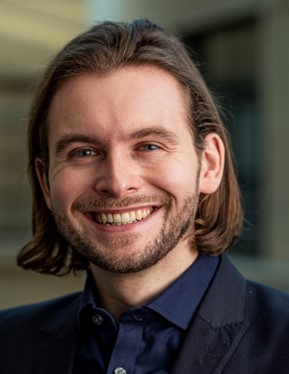
סמינר מחלקה של מעיין פוסטי - בקרה אקטיבית על ניתוק זרימה מקומי המושפע מאזור צומת הכנף-מנוע-כנפון קדמי

23 בנובמבר 2022, 14:00 - 15:00 
פקולטה להנדסה  
0
סמינר מחלקה של מעיין פוסטי - בקרה אקטיבית על ניתוק זרימה מקומי המושפע מאזור צומת הכנף-מנוע-כנפון קדמי


School of Mechanical Engineering Seminar
Wednesday, November 23, 2022 at 14:00
Wolfson Building of Mechanical Engineering, Room 206

Active control of Wing-Engine-Slat cut-out Region flow separation 

Maayan Possti

 MSc. of Avi Seifert


Fossil fuel is the most common energy source used to power aircraft and as a result, its engines emit polluting gases that also contribute to global warming. One possible remedy is increasing the bypass ratio and lowering the fan pressure ratio of turbofan aircraft engine, reducing the fuel consumption for the same thrust. Ultra-High Bypass Ratio (UHBR) engines are very effective from the fuel consumption aspect and therefore have great potential in civil aviation. On the other hand, the engine's very large diameter leads to a challenging integration with the aircraft wing. This assembly requires a slat-cut-out in the area where the engine is connected. This in turn causes local boundary layer flow separation. This study is focused on establishing the baseline flow of the small scaled model based on the DLR-F15 airfoil. Also, to apply active flow control (AFC) method in a form of steady suction in order to enhance lift and increase stall angle. The first part of the study includes the complex design and manufacturing of the small-scale model constructed out of the main element wing, two parts-slat, flap and an engine. The second part deals with investigating the baseline flow of the small-scale model and finding if it corresponds well to CFD simulations performed under the same conditions. This part was conducted at the TAU closed-loop low-speed wind-tunnel (WT), combining surface pressures and near-wake measurements. The last and final part of this study was the application of steady suction from two rows of suction holes located in the separation prone region. Testing was conducted at low Reynolds numbers with different configurations of the suction holes and suction magnitudes. All of the WT experiments were performed at a free-stream velocity of 25m/s correspond to Reynolds number of 640k, based on an average chord (including flap and slat) is 430 mm. It was found that applying steady suction leads to a significant improvement in terms of the lift coefficient.


Join Zoom Meeting

https://tau-ac-il.zoom.us/j/4962025174?pwd=bVJUeElXRUUya3BERisyNllLOE9EZz09


AVV Engineer (intern)

Job Responsibilities
Programming and scripting languages – Python,C language and automation oriented platforms
Lab debugging and testing of devices in the development stages(pre Silicon and Post Silicon) 
Working  in Wireless Systems and Wi-Fi/BT environments
A focal point for the hardware and software teams 

Analog Field Application Engineer (intern)

Job Responsibilities
Responsible for providing system solutions to strategic customers of TI Israel, in the development stage of high-volume opportunities, incorporating the company Power and Signal Chain products. 
Provide technical support to selected customers by identifying the customer technical needs, to improve strategic product positioning.
Enlarge TI share within our customers Hardware designs, by exposing them to TI latest and greatest technologies, leveraging Big Data tools.

Analog Field Application Engineer

Role Description: 
Responsible for providing system solutions to strategic customers of Texas-Instruments Israel, in the development stage of high-volume opportunities, incorporating the company Analog products. 
Provide technical support to selected customers by identifying the customer technical needs, to improve strategic product positioning.
Enlarge TI share within our customers Hardware designs, by exposing them to TI latest and greatest technologies, leveraging Big Data tools.

Application Eng Student

What’s in it for you?
•    Working in a multidisciplinary role with complex electronic systems, be part of R&D activities, affect the product development and growth
•    Creating value for our customers by understanding their need & maximizing tool capabilities


סמינר מחלקה של עומרי דלין - "תנאי מספיק ל- k-contraction שאיננו דורש חישוב של k-compound"

21 בנובמבר 2022, 14:00 - 15:00 
פקולטה להנדסה  
0
סמינר מחלקה של עומרי דלין - "תנאי מספיק ל- k-contraction שאיננו דורש חישוב של k-compound"


School of Mechanical Engineering Seminar

Monday, November 21, 2022 at 14:00
Wolfson Building of Mechanical Engineering, Room 206

"Verifying k-contraction without computing k-compounds"


Omri Dalin

MSc of Lea Belkin

A dynamical system is called contractive if any two solutions approach one another at
an exponential rate. More precisely, the dynamics contracts lines at an exponential rate.
This property implies highly ordered asymptotic behavior including entrainment to time-
varying periodic vector fields and, in particular, global asymptotic stability of the equilib-
rium for time-invariant vector fields.

A dynamical system is called k-contractive if the dynamics contracts k-parallelotopes
at an exponential rate. A sufficient condition for k-contraction is that a matrix measure
(also called logarithmic norm) of the k-additive compound of the Jacobian of the vector
field is uniformly negative. However, this may be difficult to check in practice because
the k-additive compound of an
n × n matrix has dimensions nk×nk.

For an n×n matrix A, we prove a duality relation between the k and (n−k) compounds
of A. We use this duality relation to derive a sufficient condition for k-contraction that does
not require the computation of any k-compounds. We demonstrate our results by deriving
a sufficient condition for k-contraction of an n-dimensional Hopfield network that does
not require to compute any compounds. In particular, for k = 2 this sufficient condition
implies that the network is 2-contracting and this implies a strong asymptotic property:
every bounded solution of the network converges to an equilibrium point, that may not be
unique. This is relevant, for example, when using the Hopfield network as an associative
memory that stores patterns as equilibrium points of the dynamics.


Join Zoom Meetin https://us02web.zoom.us/j/82108132163?pwd=Z2h4UzNzUS9mbXplT0lMU1pZenFEQT09


סמינר מחלקה של דר' ירון שנאפ - קופפודים

24 באוקטובר 2022, 14:00 - 15:00 
פקולטה להנדסה  
0
סמינר מחלקה של דר' ירון שנאפ - קופפודים


School of Mechanical Engineering Seminar
Monday, October 24, 2022 at 15:00
Wolfson Building of Mechanical Engineering, Room 206


Copepods counter dispersion to maintain high mating-encounter rates


Dr. Ron Shnapp

experimental researcher of fluid mechanics


Copepods are planktonic crustaceans, roughly 1 mm in size, that form the most abundant animal group in the ocean. These animals reproduce sexually, so they must carry out mating encounters to reproduce. Yet, finding mating partners in the ocean can be a challenging task for copepods, because the ocean is vast and turbulent, and their swimming and sensing abilities are limited. Therefore, the probability of locating a mate assuming simple random motion leads to low mating encounter rates. What explains the copepods' great abundance is that their distributions are not homogeneous; in fact, plankton have patchy distributions over multiple scales - from thousands of kilometers down to the millimeter scale [1]. Of relevance to mating is patchiness at small scales (on the order of the animal's size) which increases the probability of encounters, as seen in ship transect observations [2]. However, how such clusters form in the dispersive ocean environment is not understood. The random swimming patterns that copepods must carry out to feed and locate mating partners acts to disperse high-density patches. Therefore, the existence of mating clusters requires a detailed balance between diffusion and pair interactions, yet this was not examined in the past.

In this seminar, we will examine how copepods maintain the detailed equilibrium between diffusion and pair interactions. For that, we will utilize a numerical model we have recently formulated [3] which allows studying copepod patch formation. The model shows that pair interactions can lead to patches of numerous particles, similar to the field observations. Exploring the model's parameter space will reveal what is required for patchiness to be sustained. Furthermore, we will compare the model's results with two laboratory measurements of copepod trajectories [3, 4], since a good quantitative agreement was found between the model and the experiment. These results support the hypothesis that small-scale patchiness is driven by animal behavior and


explain the details of how zooplankton achieve high mating encounter rates in their complex environment.

[1] B. Pinel-Alloul and A. Ghadouani (2007). Spatial heterogeneity of planktonic microorganisms in aquatic systems, 203-310, Springer Netherlands, Dordrecht.

[2] C. S. Davis, S. M. Gallager and A. R. Solow (1992). Science 257, 230-232.

[3] R. Shnapp, F. -G., Michalec, and Holzner, M. (2022). arXiv preprint arXiv:2205.08927.

[4] F.-G. Michalec et al. (2017). Proc. Natl. Acad. Sci. U.S.A. 114.52, E11199-E11207 ; F.-G. Michalec et al. (2020). eLife 9, e62014.


Short Bio

Dr. Ron Shnap

19/10/2022

Dr. Ron Shnapp is an experimental researcher of fluid mechanics. He conducted his BSc studies in the School of Mechanical Engineering at Tel Aviv University and graduated with honors. He then continued to study in the school's graduate program on the direct track. In his PhD thesis, he studied Lagrangian transport characteristics of canopy flows and of isotropic turbulence, supervised by Prof. Alex Liberzon. Following that, he joined the Weizmann institute of science as a postdoctoral fellow in the group of Prof. Victor Steinberg, where he studied viscoelastic fluid flow instabilities. His research focused on the transition to elastic turbulence in the linearly stable viscoelastic channel flow and revealed a novel mechanism for the growth of perturbations in this flow. In 2021, he won the Rothschild Postdoctoral Fellowship, with which he joined the Environmental Fluid Mechanics Group of Prof. Markus Holzner at the Swiss Federal Research Institute WSL and ETH Zurich where he currently resides. His study focuses on fluid-mechanical problems related to living organisms in fluids.


Join Zoom Meeting

https://tau-ac-il.zoom.us/j/4962025174?pwd=bVJUeElXRUUya3BERisyNllLOE9EZz09

(FAST Rotation Program – Technical Sales Engineer (NCG

Requirements
Bachelors in Electrical Engineering, Computer Engineering, Electrical and Computer Engineering or related field
fluent in English and hebrew

Real Time Embedded מהנדס.ת תוכנה

מה אנחנו מחפשים?
תואר  BSc בהנדסת תוכנה/מחשבים/אלקטרוניקה או מדעי המחשב
לפחות 3 שנות ניסיון מוכח בפיתוח מערכות מורכבות בשפתC /C++  
לפחות 5 שנות ניסיון מוכח בפיתוח תוכנה מעל מ"ה Real Tim,ניסיון ב - Multithreading
רקע נרחב בתוכנה OOP, מערכות זמן אמת
תקשורת  -TCP/IPיתרון 
ניסיון ב- RTI-DDS- יתרון
ניסיון בתכן תוכנה בעזרת כלי מידול - יתרון
 

סמינר מחלקה של דר' יואב גרין - ננו-נוזליות: משטחים, ממשקים ותנאי גבול - יצירת מופת

16 בינואר 2023, 14:00 - 15:00 
פקולטה להנדסה  
0
סמינר מחלקה של דר' יואב גרין - ננו-נוזליות: משטחים, ממשקים ותנאי גבול - יצירת מופת

God made the bulk; the surface was invented by the devil.” Wolfgang Pauli’s quote epitomizes the field of nanofluidics. In such small systems, the relatively large surface-area to volume ratio leads to surface phenomena dominating the overall response of such systems. The multiple scales (length and time) inherent to these systems, as well as the expected breakdown of the continuum mechanics framework, continue to frustrate the advancement of our fundamental understanding of this field.


This talk focuses on the particularly challenging and interdisciplinary sub-field of ion transport through highly charged nanopores. The electrical response of these systems is determined by an interplay of bulk phenomena (diffusion, electromigration, and advection), with surface mechanisms (surface charges and their regulation and hydrodynamic slip lengths) and the effects of various interfaces manifested by a wide range of boundary conditions.


I will delineate the contribution of each phenomenon separately as well as the response of their collective interplay. I will demonstrate that only after accounting for the full array of surface phenomena can theoretical analysis rationalize experimental measurements of the electrical conductance of nanopores. Finally, I will briefly review the future directions my lab is taking.


Qr code

Description automatically generated Yoav Green joined the Department of Mechanical Engineering at Ben-Gurion University in 2019 as a Senior Lecturer. Yoav heads the Fluid Mechanics Laboratory, where his current research focus is nanofluidics and electrokinetics. In particular, Yoav’s r

MECHANICAL ENGINEERING SEMINAR

Monday, Dec. 5 2022 at 14:30, D. Dan and Betty Kahn Building, Auditorium 1


Nanofluidics: surfaces, interfaces, and boundary conditions – a devil’s masterpiece

Dr. Yoav Green

Senior Lecturer of Mechanical Engineering

Ben-Gurion University

Email: yoavgreen@bgu.ac.il; Website: https://fluidmechlab.com/

Hosted by: Prof. Moran Bercovici


MECHANICAL ENGINEERING SEMINAR

Monday, Dec. 5 2022 at 14:30, D. Dan and Betty Kahn Building, Auditorium 1


Nanofluidics: surfaces, interfaces, and boundary conditions – a devil’s masterpiece

Dr. Yoav Green

Senior Lecturer of Mechanical Engineering

Ben-Gurion University

Email: yoavgreen@bgu.ac.il; Website: https://fluidmechlab.com/

Hosted by: Prof. Moran Bercovici


“God made the bulk; the surface was invented by the devil.” Wolfgang Pauli’s quote epitomizes the field of nanofluidics. In such small systems, the relatively large surface-area to volume ratio leads to surface phenomena dominating the overall response of such systems. The multiple scales (length and time) inherent to these systems, as well as the expected breakdown of the continuum mechanics framework, continue to frustrate the advancement of our fundamental understanding of this field.


This talk focuses on the particularly challenging and interdisciplinary sub-field of ion transport through highly charged nanopores. The electrical response of these systems is determined by an interplay of bulk phenomena (diffusion, electromigration, and advection), with surface mechanisms (surface charges and their regulation and hydrodynamic slip lengths) and the effects of various interfaces manifested by a wide range of boundary conditions.


I will delineate the contribution of each phenomenon separately as well as the response of their collective interplay. I will demonstrate that only after accounting for the full array of surface phenomena can theoretical analysis rationalize experimental measurements of the electrical conductance of nanopores. Finally, I will briefly review the future directions my lab is taking.


Qr code

Description automatically generated Yoav Green joined the Department of Mechanical Engineering at Ben-Gurion University in 2019 as a Senior Lecturer. Yoav heads the Fluid Mechanics Laboratory, where his current research focus is nanofluidics and electrokinetics. In particular, Yoav’s research group utilizes a combination of theoretical modeling, numerical simulations, and experiments to investigate the electrical response of nanochannel systems.

עמודים

אוניברסיטת תל אביב עושה כל מאמץ לכבד זכויות יוצרים. אם בבעלותך זכויות יוצרים בתכנים שנמצאים פה ו/או השימוש שנעשה בתכנים אלה לדעתך מפר זכויות
שנעשה בתכנים אלה לדעתך מפר זכויות נא לפנות בהקדם לכתובת שכאן >>