School of Mechanical Engineering Prof. Alexander Korobkin

27 בדצמבר 2017, 14:00 - 15:00 
 
0
School of Mechanical Engineering Prof. Alexander Korobkin


School of Mechanical Engineering Seminar
Wednesday, December 27, 2017 at 14:00
Wolfson Building of Mechanical Engineering, Room 206


Hydroelastic waves and their interaction with structures


Prof. Alexander Korobkin

(University of East Anglia, UK)

Co-author: S. Malenica (BV), T. Khabakhpasheva (Lavrentyev Institute of Hydrodynamics)


Linear problems of hydroelastic wave diffraction by structures with vertical walls are studied for a circular cylinder frozen in ice cover of constant thickness and infinite extent. The water depth is constant. The ice plate is modelled by a thin elastic plate clamped to the surface of the cylinder. The cylinder is mounted at the sea bottom. One-dimensional incident hydroelastic wave of small amplitude propagates towards the cylinder and is diffracted on the cylinder.  Deflection of the ice plate and the bending stresses in it are determined by two methods: (a) using the integral Weber transform in radial direction, (b) using the vertical modes for the fluid of constant depth with the rigid bottom and elastic upper boundary. The solution by the second method is straightforward but we cannot prove that the solution is complete because the properties of the vertical modes are not known. The solution by the Weber transform is more complicated but this solution is unique. We will show that these two solutions are identical. This result justifies the method of the vertical modes in the hydroelastic wave diffraction problems. For a circular cylinder the vertical-mode solution can be also justified by substitution. Different conditions at the contact line between the cylinder and the ice sheet are considered. The wave diffraction problem for broken ice is also considered. It is shown how the problem can be generalised to non-circular cylinders and interaction of several cylinders in ice.


School of Mechanical Engineering Prof. L. Doctors

20 בדצמבר 2017, 14:00 - 15:00 
 
0
School of Mechanical Engineering Prof. L. Doctors

School of Mechanical Engineering Prof. Zohar Yosibash

27 בנובמבר 2017, 14:00 - 15:00 
 
0
School of Mechanical Engineering Prof. Zohar Yosibash


School of Mechanical Engineering Seminar
Monday, November 27, 2017 at 14:00
Wolfson Building of Mechanical Engineering, Room 206


An afternoon talk on femurs, arteries and high order finite element methods

Prof. Zohar Yosibash

School of Mechanical Engineering, Tel Aviv University

Predicting the mechanical response of human femurs and arteries is of major clinical importanceare for diagnostic purposes as well as for patient-specific treatment. Such prediction capabilities are being described which involve the combination of high order finite element (FE) methods, medical imaging and experimental observations.

Our research on human femurs will first be addressed, where we use quantitative computerized tomography (qCT scans) that enables a computer realization of subject-specific bone models. Combining qCT scans with high order FE simulations and a large set of experiments provide the opportunity to accurately simulate patient-specific femur’s response, allowing orthopedic surgeons to plan a proper patient specific treatment. Examples of the use of our methods in clinical practice for treatment of metastatic bone tumors will be provided.

If time allows, experimental and numerical methods for the analysis of human arteries will be addressed. Arteries are complex anisotropic structures undergoing large deformations and strains and are subject to active response due to contraction of smooth muscle cells. Attempts to properly describe their response will be described.

About the Lecturer

Prof. Yosibash received his B.Sc. in Aeronautical Engineering from the Technion (87), his M.Sc. in Applied Mathematics from Tel-Aviv Unviersity (92) and D.Sc. in Mechanical Engineering from Washington University, St. Louis, USA (94). He joined Ben-Gurion University in 1995 and since 2008 he is a full professor of mechanical engineering. He has been a visiting professor at Brown Univ from 2002-2007, and at the Technical Univ of Munich during 2010-2011. He received the Toronto prize for excellence in research at BGU in 2009. Prof. Yosibash was a Hans Fischer Senior Fellow at the Institute for Advanced Study at the Technical University of Munich (2009-2012) and serves as the scientific ambassador since 2013.  Prof. Yosibash joined the School of Mechanical Engineering at TAU in Oct 2017. He is the head of the lab for computational mechanics and experimental biomechanics at TAU and since 2015 serves as the president of the Israel Association for Computational Methods in Mechanics.

של בוגרי הפקולטה ומוסמכיה

טקסי הענקת תארים של בוגרי הפקולטה ומוסמכיה

טקסי הענקת תארים של בוגרי הפקולטה ומוסמכיה, לשנת הלימודים תש"ף יערכו במועדים הבאים:


15.6.2020 – טקס הענקת תארים לבוגרי ומוסמכי ביה"ס להנדסת חשמל


16.6.2020 – טקס העקת תארים לבוגרי ומוסמכי ביה"ס להנדסה מכנית, התכנית להנדסת סביבה, המחלקה להנדסה ביו-רפואית, המחלקה להנדסת תעשייה, המחלקה למדע והנדסה של חומרים


בטקסים אלה יהיו זכאים לקבל את התואר תלמידים אשר סיימו את לימודיהם ועמדו בכל החובות בשנה החולפת או שיסיימו את לימודיהם במהלך סמסטר א' תש"ף.


תלמיד המבקש להשתתף בטקס הענקת תארים זה, חייב לסיים את כל חובותיו ולהיות זכאי לתואר לא יאוחר מה-10.3.2020

לאחר תאריך זה נסגרת רשימת מקבלי התארים לשנה זו

.

סמינר מחלקתי אלקטרוניקה פיזיקאלית : Nuno Borges Carvalho

16 בנובמבר 2017, 15:00 - 16:00 
פקולטה להנדסה, ביניין כיתות, חדר 011  
סמינר מחלקתי אלקטרוניקה פיזיקאלית : Nuno Borges Carvalho

You are invited to attend a lecture

Higher Order Modulation Backscatter Combined with WPT as a Solution for IoT Development

:By

Nuno Borges Carvalho

Professor Catedrático, Dep. Electronica, Telecomunicacoes e Informatica

Instituto de Telecomunicacoes, Universidade de Aveiro

Aveiro,  Portugal


Abstract

The Internet-of-Things (IoT) vision calls for thousands interconnected devices in wearables, vehicles, buildings, using a multitude of sensors to provide us with useful information.

Backscatter communication provides an enabling technology to address the needs of IoT, due to the simplicity of the tag circuit and the ability to minimize the usage of batteries or even completely eliminate them taking advantage of wireless power transmission as well as energy harvesting. This talk presents the latest advances in backscatter communication technology, covering a wide range of topics, focusing on the combination of modulation constellation diagrams with the Smith chart.


On Thursday, November 16, 2017, 15:00

Room 011, Kitot building

סמינר מחלקתי בהנדסה ביו רפואית

12 בנובמבר 2017, 14:00 
הבניין הרב תחומי חדר 315  
ללא תשלום
סמינר מחלקתי בהנדסה ביו רפואית

יבגני בל
תלמיד המחלקה להנדסה ביו רפואית לתואר שני ירצה בנושא:

Automatic Liver Volume Segmentation and Fibrosis Classification

In this work, we present an automatic method for liver segmentation and fibrosis classification in liver computed-tomography (CT) portal phase scans. The input is a full abdomen CT scan and the output is a liver volume segmentation mask and a fibrosis grade. A multi-stage analysis scheme is applied to each scan, including: volume segmentation, texture features extraction and SVM based classification. Three analysis methods are used: The first approach examines a peripheral band of 11 central slices, since fibrosis is associated with external surface nodularity. A second approach examines the entire liver volume, since large nodules separated by wider scars are irregularly distributed throughout the liver. The features are extracted from every slice and concatenated into a feature vector and subsequently into a feature matrix. The Third approach area of interest is a dilated contour along the segmented liver border, stretching outside and inside the liver area. This approach is targeted to capture contour deformities, as it tends to be lobulated and irregular in fibrosis.
Our data contains portal phase CT examinations from 80 patients, taken with different scanners at Sheba Medical Center. Each examination has a matching Fibroscan grade. The dataset was subdivided into two groups: first group contains healthy cases and mild fibrosis, second group contains moderate fibrosis, severe fibrosis and cirrhosis. Using our automated algorithm, we achieved an average dice index of 0.93±0.05 for segmentation and an average recall of 0.87 for classification. To the best of our knowledge, this is a first end to end automatic framework for liver fibrosis classification; an approach that, once validated, can have potential value in the clinic.

The presented work is joint with Sheba CT Abdomen unit.

העבודה נעשתה בהנחיית פרופ' חיית גרינשפן המחלקה להנדסה ביו-רפואית, אוניברסיטת תל-אביב
ההרצאה תתקיים ביום ראשון 12.11.17, בשעה 14:00
בחדר 315, הבניין הרב תחומי, אוניברסיטת תל אביב

מסיבת תחילת שנה בחסות אפלייד מטריאלס ישראל

07 נובמבר 2017
מסיבת תחילת שנה בחסות אפלייד מטריאלס ישראל

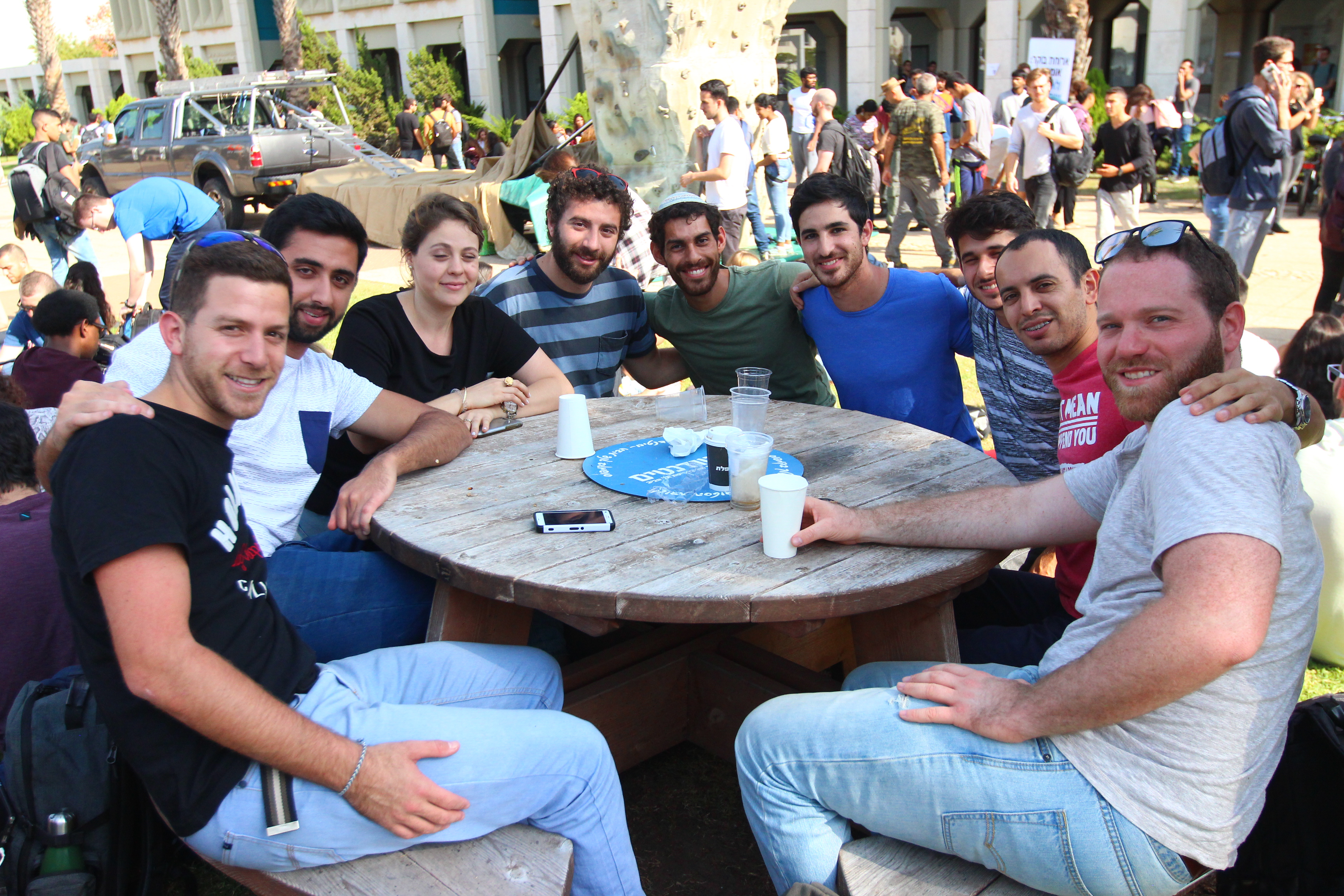
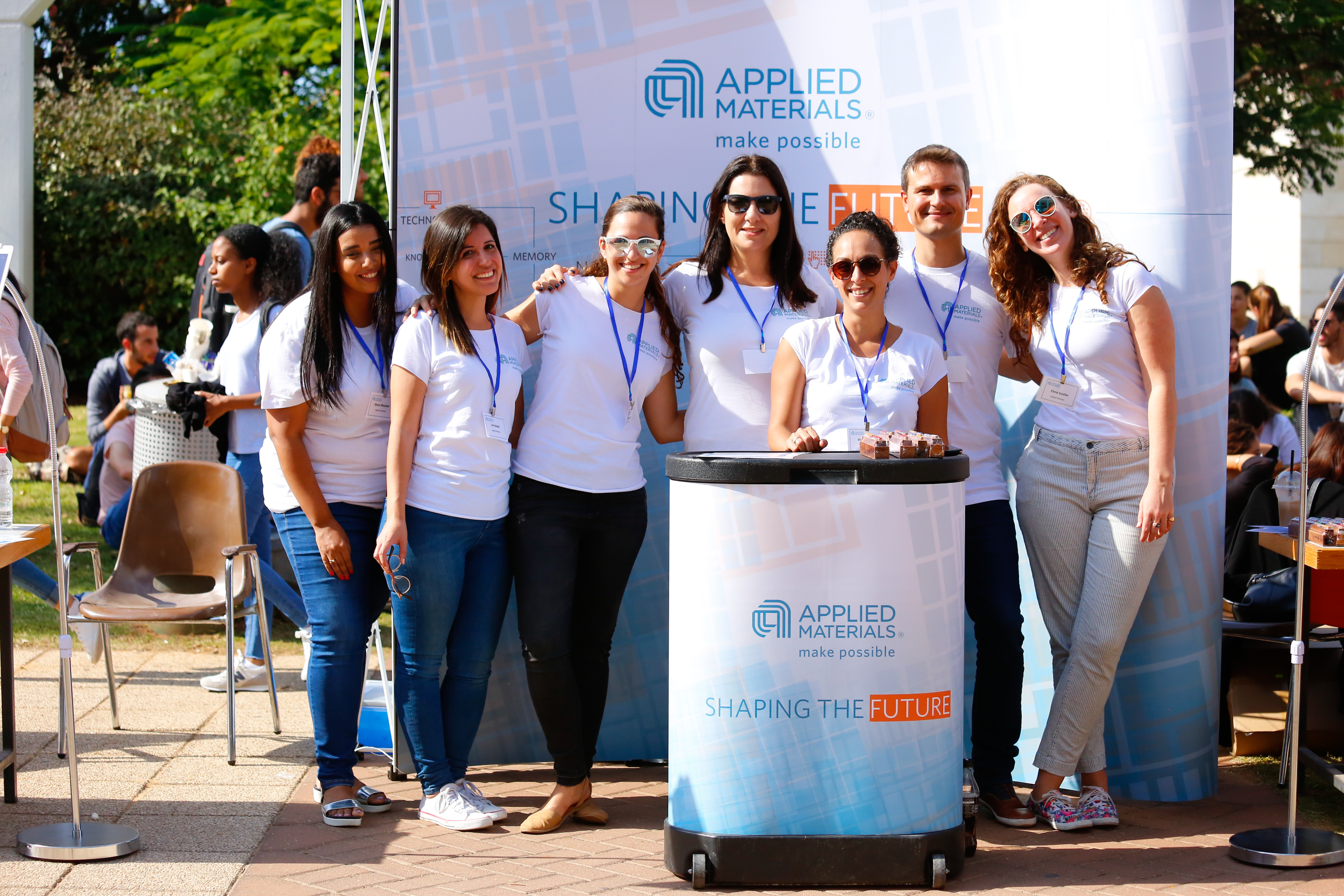
מאות סטודנטים מהפקולטה להנדסה פקדו את שדרת הדקלים ללהשתתף ב"מסיבת תחילת השנה" בחסות  אפלייד מטיריאלס. המסיבה כללה פעילויות אקסטרים כגון קיר טיפוס ואומגה, אוכל טוב, מוסיקה מקפיצה, שתייה קלה מתנות מפנקות ועוד.


הסטודנטים שלנו לא רק חגגו אלא ניתנה להם ההזדמנות להגיש קו"ח עבור משרות אטרקטיביות בחברה. צוות משאבי אנוש של אפלייד מטיריאלס הציב עמדות טאבלטים להגשת קו"ח בכמה פעולות קצרות.


על ארגון המסיבה היו אמונים ועד הנדסה וארגון עמיתי התעשיה של הפקולטה להנדסה אשר הציבו רף חדש למקצועיות. הפקולטה להנדסה מעריכה מאוד את הקשר ההדוק והממשיך להתפתח לכיוונים מעניינים עם חברת אפליד מטיריאלס. תודה על שבאתם לחגוג איתנו את תחילת שנת הלימודים, על ההשקעה, השירותיות, החשיבה מחוץ לקופסא והיחס החם לסטודנטים שלנו. כל זאת ועוד מוכיח עד כמה חשוב הקשר בין האקדמיה לתעשיה, ועד כמה מהותי לשמר ולהדק אותו יום-יום. 

לתמונות מהמסיבה

EE Seminar: Control over noisy communication media

27 בנובמבר 2017, 15:00 
חדר 011, בניין כיתות-חשמל  

 (The talk will be given in English)


Speaker:     Dr. Anatoly Khina
                   Department of Electrical Engineering at the California Institute of Technology, Pasadena


Monday, November 27th, 2017
15:00 - 16:00

Room 011, Kitot Bldg., Faculty of Engineering


Control over noisy communication media


Abstract

In the past decades, control theory has been successfully applied to well-crafted closed engineering systems (e.g., automotive and aerospace industries). However, in the current technological era of ubiquitous wireless connectivity and IoT applications, the demand for control over (noisy) wireless media is rapidly growing, opening the door to numerous new challenges and opportunities. Among these is how best to communicate the time-sensitive sensing and control signals which are required to satisfy the control objective.


I will start the talk by presenting the conventional solution which breaks down the communications task into separate compression and channel coding. For control systems, stricter notions of compression and channel coding are needed: a quantizer that optimally tracks the state of the system, and a causal channel code whose error probability decays exponentially with time. I will show how to accommodate both of these demands using our newly developed efficient techniques. I will then take a more holistic approach by avoiding the digital domain altogether and using analog mappings instead. These schemes improve both the computational complexity and control performance. I will argue that these analog coding schemes are a primary example of a more general joint control-communication concept where the transmitter enjoys implicit feedback, via the control-system loop.


BIO
Anatoly Khina was born in Moscow, U.S.S.R., in 1984. He received the B.Sc. (summa cum laude), M.Sc. (summa cum laude) and Ph.D. degrees from Tel Aviv University, Tel-Aviv, Israel in 2006, 2010 and 2016, respectively, all in Electrical Engineering. He is currently a Postdoctoral Scholar in the Department of Electrical Engineering at the California Institute of Technology, Pasadena, CA, USA. His research interests include information theory, control theory, signal processing and matrix analysis.

In parallel to his studies, Dr. Khina worked as an engineer in various algorithm, software and hardware R&D positions. He is a recipient of the Simons-Berkeley and Qualcomm Research Fellowships, Fulbright, Rothschild and Marie Skłodowska-Curie Postdoctoral Fellowships, Clore Scholarship, Trotsky Award, Weinstein Prize in signal processing, Intel award for Ph.D. research, and the Feder Family Award for outstanding research work in the field of communication technologies (first prize).

EE Seminar: Deterministic Random Matrices

20 בנובמבר 2017, 15:00 
חדר 011, בניין כיתות-חשמל  

(The talk will be given in English)


Speaker:     Dr. Ilya Soloveychik
                   School of Engineering and Applied Sciences, Harvard University


Monday, November 20th, 2017
15:00 - 16:00

Room 011, Kitot Bldg., Faculty of Engineering


Deterministic Random Matrices


Abstract

Random matrices have become a very active area of research in the recent years and have found enormous applications in modern mathematics, physics, engineering, biological modeling, and other fields. In this work, we focus on symmetric sign (+/-1) matrices (SSMs) that were originally utilized by Wigner to model the nuclei of heavy atoms in mid-50s. Assuming the entries of the upper triangular part to be independent +/-1 with equal probabilities, Wigner showed in his pioneering works that when the sizes of matrices grow, their empirical spectra converge to a non-random measure having a semicircular shape. Later, this fundamental result was improved and largely extended to more general families of matrices and finer spectral properties. In many physical phenomena, however, the entries of matrices exhibit significant correlations. At the same time, almost all available analytical tools heavily rely on the independence condition making the study of matrices with structure (dependencies) very challenging. The few existing works in this direction consider very specific setups and are limited by particular techniques, lacking a unified framework and tight information-theoretic bounds that would quantify the exact amount of structure that matrices may possess without affecting the limiting semicircular form of their spectra.


From a different perspective, in many applications one needs to simulate random objects. Generation of large random matrices requires very powerful sources of randomness due to the independence condition, the experiments are impossible to reproduce, and atypical or non-random looking outcomes may appear with positive probability. Reliable deterministic construction of SSMs with random-looking spectra and low algorithmic and computational complexity is of particular interest due to the natural correspondence of SSMs and undirected graphs, since the latter are extensively used in combinatorial and CS applications e.g. for the purposes of derandomization. Unfortunately, most of the existing constructions of pseudo-random graphs focus on the extreme eigenvalues and do not provide guarantees on the whole spectrum. In this work, using binary Golomb sequences, we propose a simple completely deterministic construction of circulant SSMs with spectra converging to the semicircular law with the same rate as in the original Wigner ensemble. We show that this construction has close to lowest possible algorithmic complexity and is very explicit. Essentially, the algorithm requires at most 2log(n) bits implying that the real amount of randomness conveyed by the semicircular property is quite small.


עמודים

אוניברסיטת תל אביב עושה כל מאמץ לכבד זכויות יוצרים. אם בבעלותך זכויות יוצרים בתכנים שנמצאים פה ו/או השימוש שנעשה בתכנים אלה לדעתך מפר זכויות
שנעשה בתכנים אלה לדעתך מפר זכויות נא לפנות בהקדם לכתובת שכאן >>