סמינר מחלקה של דר' ירון שנאפ - קופפודים

24 באוקטובר 2022, 14:00 - 15:00 
פקולטה להנדסה  
0
סמינר מחלקה של דר' ירון שנאפ - קופפודים


School of Mechanical Engineering Seminar
Monday, October 24, 2022 at 15:00
Wolfson Building of Mechanical Engineering, Room 206


Copepods counter dispersion to maintain high mating-encounter rates


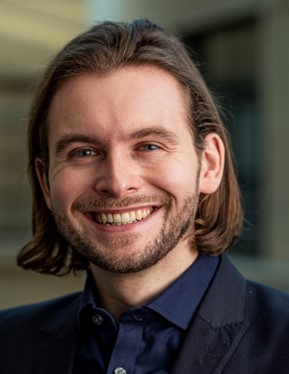
Dr. Ron Shnapp

experimental researcher of fluid mechanics


Copepods are planktonic crustaceans, roughly 1 mm in size, that form the most abundant animal group in the ocean. These animals reproduce sexually, so they must carry out mating encounters to reproduce. Yet, finding mating partners in the ocean can be a challenging task for copepods, because the ocean is vast and turbulent, and their swimming and sensing abilities are limited. Therefore, the probability of locating a mate assuming simple random motion leads to low mating encounter rates. What explains the copepods' great abundance is that their distributions are not homogeneous; in fact, plankton have patchy distributions over multiple scales - from thousands of kilometers down to the millimeter scale [1]. Of relevance to mating is patchiness at small scales (on the order of the animal's size) which increases the probability of encounters, as seen in ship transect observations [2]. However, how such clusters form in the dispersive ocean environment is not understood. The random swimming patterns that copepods must carry out to feed and locate mating partners acts to disperse high-density patches. Therefore, the existence of mating clusters requires a detailed balance between diffusion and pair interactions, yet this was not examined in the past.

In this seminar, we will examine how copepods maintain the detailed equilibrium between diffusion and pair interactions. For that, we will utilize a numerical model we have recently formulated [3] which allows studying copepod patch formation. The model shows that pair interactions can lead to patches of numerous particles, similar to the field observations. Exploring the model's parameter space will reveal what is required for patchiness to be sustained. Furthermore, we will compare the model's results with two laboratory measurements of copepod trajectories [3, 4], since a good quantitative agreement was found between the model and the experiment. These results support the hypothesis that small-scale patchiness is driven by animal behavior and


explain the details of how zooplankton achieve high mating encounter rates in their complex environment.

[1] B. Pinel-Alloul and A. Ghadouani (2007). Spatial heterogeneity of planktonic microorganisms in aquatic systems, 203-310, Springer Netherlands, Dordrecht.

[2] C. S. Davis, S. M. Gallager and A. R. Solow (1992). Science 257, 230-232.

[3] R. Shnapp, F. -G., Michalec, and Holzner, M. (2022). arXiv preprint arXiv:2205.08927.

[4] F.-G. Michalec et al. (2017). Proc. Natl. Acad. Sci. U.S.A. 114.52, E11199-E11207 ; F.-G. Michalec et al. (2020). eLife 9, e62014.


Short Bio

Dr. Ron Shnap

19/10/2022

Dr. Ron Shnapp is an experimental researcher of fluid mechanics. He conducted his BSc studies in the School of Mechanical Engineering at Tel Aviv University and graduated with honors. He then continued to study in the school's graduate program on the direct track. In his PhD thesis, he studied Lagrangian transport characteristics of canopy flows and of isotropic turbulence, supervised by Prof. Alex Liberzon. Following that, he joined the Weizmann institute of science as a postdoctoral fellow in the group of Prof. Victor Steinberg, where he studied viscoelastic fluid flow instabilities. His research focused on the transition to elastic turbulence in the linearly stable viscoelastic channel flow and revealed a novel mechanism for the growth of perturbations in this flow. In 2021, he won the Rothschild Postdoctoral Fellowship, with which he joined the Environmental Fluid Mechanics Group of Prof. Markus Holzner at the Swiss Federal Research Institute WSL and ETH Zurich where he currently resides. His study focuses on fluid-mechanical problems related to living organisms in fluids.


Join Zoom Meeting

https://tau-ac-il.zoom.us/j/4962025174?pwd=bVJUeElXRUUya3BERisyNllLOE9EZz09

(FAST Rotation Program – Technical Sales Engineer (NCG

Requirements
Bachelors in Electrical Engineering, Computer Engineering, Electrical and Computer Engineering or related field
fluent in English and hebrew

Real Time Embedded מהנדס.ת תוכנה

מה אנחנו מחפשים?
תואר  BSc בהנדסת תוכנה/מחשבים/אלקטרוניקה או מדעי המחשב
לפחות 3 שנות ניסיון מוכח בפיתוח מערכות מורכבות בשפתC /C++  
לפחות 5 שנות ניסיון מוכח בפיתוח תוכנה מעל מ"ה Real Tim,ניסיון ב - Multithreading
רקע נרחב בתוכנה OOP, מערכות זמן אמת
תקשורת  -TCP/IPיתרון 
ניסיון ב- RTI-DDS- יתרון
ניסיון בתכן תוכנה בעזרת כלי מידול - יתרון
 

סמינר מחלקה של דר' יואב גרין - ננו-נוזליות: משטחים, ממשקים ותנאי גבול - יצירת מופת

16 בינואר 2023, 14:00 - 15:00 
פקולטה להנדסה  
0
סמינר מחלקה של דר' יואב גרין - ננו-נוזליות: משטחים, ממשקים ותנאי גבול - יצירת מופת

God made the bulk; the surface was invented by the devil.” Wolfgang Pauli’s quote epitomizes the field of nanofluidics. In such small systems, the relatively large surface-area to volume ratio leads to surface phenomena dominating the overall response of such systems. The multiple scales (length and time) inherent to these systems, as well as the expected breakdown of the continuum mechanics framework, continue to frustrate the advancement of our fundamental understanding of this field.


This talk focuses on the particularly challenging and interdisciplinary sub-field of ion transport through highly charged nanopores. The electrical response of these systems is determined by an interplay of bulk phenomena (diffusion, electromigration, and advection), with surface mechanisms (surface charges and their regulation and hydrodynamic slip lengths) and the effects of various interfaces manifested by a wide range of boundary conditions.


I will delineate the contribution of each phenomenon separately as well as the response of their collective interplay. I will demonstrate that only after accounting for the full array of surface phenomena can theoretical analysis rationalize experimental measurements of the electrical conductance of nanopores. Finally, I will briefly review the future directions my lab is taking.


Qr code

Description automatically generated Yoav Green joined the Department of Mechanical Engineering at Ben-Gurion University in 2019 as a Senior Lecturer. Yoav heads the Fluid Mechanics Laboratory, where his current research focus is nanofluidics and electrokinetics. In particular, Yoav’s r

MECHANICAL ENGINEERING SEMINAR

Monday, Dec. 5 2022 at 14:30, D. Dan and Betty Kahn Building, Auditorium 1


Nanofluidics: surfaces, interfaces, and boundary conditions – a devil’s masterpiece

Dr. Yoav Green

Senior Lecturer of Mechanical Engineering

Ben-Gurion University

Email: yoavgreen@bgu.ac.il; Website: https://fluidmechlab.com/

Hosted by: Prof. Moran Bercovici


MECHANICAL ENGINEERING SEMINAR

Monday, Dec. 5 2022 at 14:30, D. Dan and Betty Kahn Building, Auditorium 1


Nanofluidics: surfaces, interfaces, and boundary conditions – a devil’s masterpiece

Dr. Yoav Green

Senior Lecturer of Mechanical Engineering

Ben-Gurion University

Email: yoavgreen@bgu.ac.il; Website: https://fluidmechlab.com/

Hosted by: Prof. Moran Bercovici


“God made the bulk; the surface was invented by the devil.” Wolfgang Pauli’s quote epitomizes the field of nanofluidics. In such small systems, the relatively large surface-area to volume ratio leads to surface phenomena dominating the overall response of such systems. The multiple scales (length and time) inherent to these systems, as well as the expected breakdown of the continuum mechanics framework, continue to frustrate the advancement of our fundamental understanding of this field.


This talk focuses on the particularly challenging and interdisciplinary sub-field of ion transport through highly charged nanopores. The electrical response of these systems is determined by an interplay of bulk phenomena (diffusion, electromigration, and advection), with surface mechanisms (surface charges and their regulation and hydrodynamic slip lengths) and the effects of various interfaces manifested by a wide range of boundary conditions.


I will delineate the contribution of each phenomenon separately as well as the response of their collective interplay. I will demonstrate that only after accounting for the full array of surface phenomena can theoretical analysis rationalize experimental measurements of the electrical conductance of nanopores. Finally, I will briefly review the future directions my lab is taking.


Qr code

Description automatically generated Yoav Green joined the Department of Mechanical Engineering at Ben-Gurion University in 2019 as a Senior Lecturer. Yoav heads the Fluid Mechanics Laboratory, where his current research focus is nanofluidics and electrokinetics. In particular, Yoav’s research group utilizes a combination of theoretical modeling, numerical simulations, and experiments to investigate the electrical response of nanochannel systems.

סמינר מחלקה של דר' רם אדר - תיאוריית ג'ל פעיל להגירה רב תאית

07 בנובמבר 2022, 14:00 - 15:00 
פקולטה להנדסה  
0
סמינר מחלקה של דר' רם אדר - תיאוריית ג'ל פעיל להגירה רב תאית


School of Mechanical Engineering Seminar
Monday, November 7, 2022 at 15:00
Wolfson Building of Mechanical Engineering, Room 206


Active-gel Theory for Multicellular Migration

Dr. Ram Adar

   Institut Curie & College de France

Active materials are driven out of equilibrium by a constant consumption of energy at the microscopic level, which is converted into forces and motion. These include biological objects at different scales, ranging from active molecular motors to groups of animals. The physical theory that I will present is motivated by multicellular migration in tissues, which plays a key role in development, wound healing, and metastasis. We propose to describe it as permeation of an active, polar solvent in a viscoelastic environment. We formulate an active-gel theory that provides a simple description of the dynamic reciprocity between migrating cells and their environment in terms of distinct relative forces and alignment mechanisms. We make new predictions regarding multicellular migration modes based on these mechanisms. Namely, cellular alignment to elastic strains is expected to drive phase-separation in the cellular concentration and orientation for sufficiently extensile collections of cells. Our theory can serve as basis for the analysis of multicellular migration modes and cancer-cell invasion from tumors into connective tissues.

Short bio:

For the last three years, Dr. Adar has been a Rothschild Postdoc Fellow and a Fellow of the French Medical Research Foundation (FRM).

   Institut Curie & College de France, Paris, under Prof. Jean-François Joanny, examining Soft active matter & Biophysics. His current focus is on Cell-environment feedback at different scales. Before that he was a PhD Student at Tel Aviv University, School of Physics and Astronomy, under Prof. David Andelman dealing with Statistical mechanics of ionic fluids. There he studied the Effects beyond the Poisson-Boltzmann framework.


Join Zoom Meeting

https://tau-ac-il.zoom.us/j/4962025174?pwd=bVJUeElXRUUya3BERisyNllLOE9EZz09

מענקי מחקר
חוקר ראשי פקולטה נושא
ד"ר אריאל ללוש ביה"ס לסביבה ולמדעי כדור הארץ Urban Traffic Monitoring using Fiber-Optic Sensing and Machine Learning
ד"ר איל רונן וד"ר מחמוד שריף ביה"ס למדעי המחשב A Deep Dive Into the Transferability of Adversarial Examples
ד"ר דן רביב הנדסת חשמל Term2Vis – Thermal to Visible Converter algorithm
מלגות
שם תואר/מחלקה מנחה נושא
אלון בלוך שלישי
הנדסת
תעשיה
ד"ר מור כספי Operation of Double Elevator Shuttle-based Automated Parking Systems
אביטל שמיר שלישי
הנדסת
תעשיה
ד"ר מור כספי A Reinforcement Learning Approach for Lead Vehicle Routing in a
Semi-Autonomous Last-Mile Transportation System
גבריאל ד'זה שלישי
הנדסת
תעשיה
פרופ' מיכל צור
פרופ' טל רביב
Parcel Delivery in a Hyperconnected Service Network
גולן בן דור שלישי
מדעי הסביבה
וגיאוגרפיה
פרופ' יצחק בננסון
פרופ' ערן בן אליא
Dynamic Metropolitan Simulation of Shared Automated
Vehiclesin a Multimodal Transportation System
גל נריה שלישי
הנדסת
תעשיה
פרופ' מיכל צור A Novel Solution Framework to solve Stochastic Dynamic Vehicle Routing
Problems using Operations Research and Reinforcement Learning
חן כהן שני
הנדסת
חשמל
ד"ר אריאל ללוש Urban Traffic Monitoring using Fiber-Optic Sensing and Machine Learning
ד"ר דן רביב Term2Vis – Thermal to Visible Converter algorithm
יהונתן תבורי שלישי
מדעי
המחשב
פרופ חנוך לוי Modeling, Analysis and Efficient Mitigation of Sybil Attacks
on Vehicular Traffic Networks
ישי שפירא שני
הנדסת
תעשיה
ד"ר מור כספי Public Transit Enhanced Robotic Delivery Services
צביקה גפט שלישי
מדעי
המחשב
פרופ' דני הלפרין Scaling Up Smart Mobility through Enhanced Motion
Coordination along Fixed Paths
צופית שועה שני
מדעי
המחשב
ד"ר מחמוד שריף Designing Artifacts for Enhanced Adversarial Robustness
רתם זהר שני ישיר
הנדסת
תעשיה
ד"ר מור כספי Dynamic parcel delivery with autonomous robots and trucks
רותם אייזק שלישי
מדעי
הסביבה
ד"ר ורד בלס 
פרופ' צ'ציק
Modelling and Analysis of Heterogeneous Consumers Choice Among Alternative
Passenger Vehicles Transportation: exploring the effect of the tendency to adopt
new technologies and use of various transportation mediums
שחר אייזן שני
הנדסת
תעשיה
פרופ' מיכל צור
פרופ' טל רביב
Dynamic parcel routing in hyper-connected networks

הטקס השנתי של הקרן לאלקטרואופטיקה ע"ש פרופ' עמנואל מרום

03 בנובמבר 2022, 16:00 
הפקולטה להנדסה אוניברסיטת תל אביב,בניין כיתות,אולם 011  
הטקס השנתי של הקרן לאלקטרואופטיקה ע"ש פרופ' עמנואל מרום

ביום חמישי, 3.11.2022, יתקיים הטקס השנתי של הקרן לאלקטרואופטיקה ע"ש פרופ' עמנואל מרום. פרופ' עמנואל מרום ז"ל, יזם את הקמת הקרן וניהל אותה במשך שנים רבות.


הזוכים בתחרות הסטודנטים הם:

מר אופיר ישרים, סטודנט לתואר שלישי בהנחיית של פרופ' עדי אריה.

    Observation of the all-optical Stern Gerlach effect in nonlinear optics


גב' קרן צלנצ'וק, סטודנטית לתואר שלישי בהנחייתו של פרופ' אלון באב"ד

Optical Archimedes Screw Along Arbitrary Trajectories


מר תומר עיני, סטודנט לתואר ראשון בהנחיית ד"ר איתי אפשטיין

"Valley-Polarized Hyperbolic-Exciton-Polaritons in Multilayer 2D Semiconductors at Visible Frequencies


הרצאת אורח 

פרופ' אוריאל לוי מהאוניברסיטה העברית


Title: From diffractive optics to meta optics

תערוכת פרויקטי גמר

31 באוקטובר 2022, 10:00 - 14:00 
בניין כיתות  
תערוכת פרויקטי גמר

10:00 התכנסות + כיבוד ( לובי בניין כיתות)


10:15 דברי פתיחה


10:30 הצגת הפוסטרים ע"י הסטודנטים


13:00 הרצאה

מר אבי סלמון - מנהל מחלקת החדשנות באינטל

"כמה שבבים אפשר לייצר?" (בכיתה 011 בניין כיתות)


13:40 דברי סיכום

הענקת פרסים והכרזת פוסטר מצטיין


הזמנה לתערוכה

SVE embedded SW Student

Education requirements: 
•    Computer Science and/or Electrical Engineering student


סמינר מחלקה של נועם נחום

23 בנובמבר 2022, 14:00 - 15:00 
פקולטה להנדסה  
0
סמינר מחלקה של נועם נחום

פרטים יפורסמו בהמשך

עמודים

אוניברסיטת תל אביב עושה כל מאמץ לכבד זכויות יוצרים. אם בבעלותך זכויות יוצרים בתכנים שנמצאים פה ו/או השימוש שנעשה בתכנים אלה לדעתך מפר זכויות
שנעשה בתכנים אלה לדעתך מפר זכויות נא לפנות בהקדם לכתובת שכאן >>