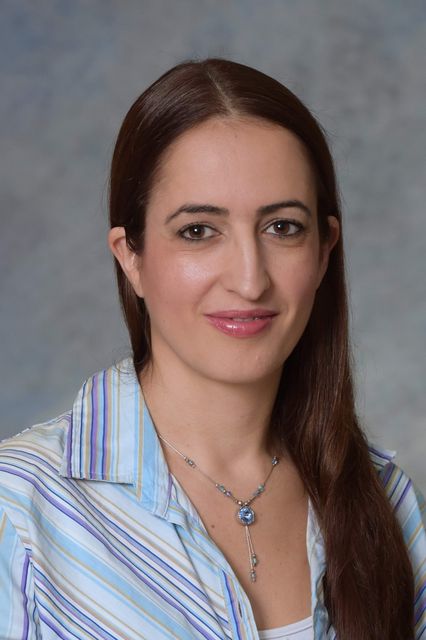
סמינר מחלקתי Meytal Gershkovich and Dr. Tali Bar-Kohany הסמינר של מיטל יתקיים בשעה 14.30

31 בדצמבר 2014, 15:00 
וולפסון 206  
0
סמינר מחלקתי    Meytal  Gershkovich and Dr. Tali Bar-Kohany  הסמינר של מיטל יתקיים בשעה 14.30


SCHOOL OF MECHANICAL ENGINEERING SEMINAR
Wednesday, December 31, 2015 at 15:00
Wolfson Building of Mechanical Engineering, Room 206


Combustion of Methane Hydrates


Dr. Tali Bar-Kohany

NRCN


Gas-hydrates are ice-like crystalline solids, consisting of non-stoichiometric compounds of water cavities and guest gas molecules. At high pressures and low temperatures, different gases fill the cavities within the ice preventing hydrogen-bond strain and breakage.

Deep-ocean gas-hydrates, mainly methane, occur naturally along the edge of continental shelves, represent an enormous and tempting repository of fuel which might compare with or exceed the available energy from more conventional fossil fuels. Moreover, methane hydrates, is free of hazardous pollutants such as sulfur that may be found at conventional fossil fuels. Thus, utilizing this kind of energy is tempting, especially, if this could be done, in-situ. For example, if burning these gas-hydrates in high-pressure, following by sequestering the carbon-dioxide in the deep-ocean environment, could be done.

In the present seminar, a solution for the transient vaporization and quasi-steady combustion of methane-hydrate in a diffusion-controlled spherically symmetric, three-phase particle will be presented. A single, isolated particle is an ideal representation of the physical processes that the particle undergoes in a dilute region of a spray or any bulk.


Short Bio

Tali Bar-Kohany received her mechanical engineering degrees from the University of Ben-Gurion (Ph.D. 2004, A study of the mechanism of sprays formation by bi-component liquid flashing). She won the WOLF award for outstanding Master achievements in 2000 and the Kazir scholarship by the ministry of defense in 2004, and since then she is employed at the nuclear research center of the Negev. In 2010 she received an honorary fellowship from the Australian institute of high energetic materials. During 2013-2014 she spent a Sabbatical at the University of California, Irvine, working with Professors W.A. Sirignano and D.Dunn-Rankin on the subject of combustion of methane-hydrates, which will be the topic of her talk.


School of Mechanical Engineering Seminar
Wednesday, December 31, 2014 at 15:00
Wolfson Building of Mechanical Engineering, Room 206


Semi-Active Shape Control of a Hydraulic Micro Catheter

using Electrostatic Actuators


Meytal Gershkovich


MSc Student of Dr. Gabor Kosa and Prof. Slava Krylov


There is a significant interest in developing small, at the scale of several microns up to several millimeters, flexible catheter-type actuators able to perform complex spatial motions in a controllable way. This interest is motivated primarily by medical applications such as endoscopy, minimally invasive surgery and micro robotics. Existing tools are mechanically actuated by cables and are characterized by small number of degrees of freedom while an ability of their further miniaturization probably reached its limit.  Although several devices were reported based on shape memory alloys or electroactive polymers, actuation remains probably the main challenge in these types of systems mainly due to small forces developed by micro actuators which are typically not sufficient for direct shape control of the tool. Hydraulic/pneumatic actuation distinguished by relatively high forces represents an attractive alternative. However, shape control of hydraulic actuators is difficult and requires multiple pressure channels to be delivered to the tool.

In this seminar we present the new operational principle, modeling and design of a simple large stroke high force hydraulic actuator, which is able to perform complex spatial motions while operated by only one pressure channel. The approach is based on the active changing of the structure’s bending stiffness by varying the effective properties of the catheter’s section. The device is built as a flexible tube with a pressurized internal volume. Flexible cantilever-type electrodes made of a material much stiffer than that of the tube are located on the outer surface of the tube. The electrodes can be in two digital states ON and OFF. In an initial unactuated OFF state the electrodes are detached from the tube and do not contribute to its effective bending stiffness.  By means of electrostatic actuation the cantilevers are selectively attached to the tube’s surface resulting in an increase of its effective bending stiffness in a desired non-symmetric way.  The combination of the mentioned effect with the inner pressure inside the tube creates the bending of the actuator. By strategically actuating the electrodes at different locations on the tube, complex three dimensional curves of the catheter can be achieved. We present the electromechanical model of the devices, demonstrate its functionality using the model and evaluate possible design parameters and expected performance of the tool.  We find the possible combinations of the electrodes which should be actuated to provide a required shape of the catheter. Finally we demonstrate how the actuator can follow a path of an arbitrary function.

Dr. Yachin Ivry, MIT - Towards the Onset of Collectiveness in Nano-Functional Materials

09 בדצמבר 2014, 16:00 - 17:00 
חדר 206, בניין וולפסון להנדסה מכנית  

Towards the Onset of Collectiveness in Nano-Functional Materials

Dr. Yachin Ivry, MIT


סמינר מחלקתי

04 בדצמבר 2014, 12:00 
ההרצאה תתקיים ביום חמישי 4/12/14, בשעה 12:00 בחדר 206, בנין וולפסון הנדסה, הפקולטה להנדסה, אוניברסיט  


THE DESIGN AND OPERATION OF Flexible Job-Shop FOR MAKESPAN MINIMIZATION

M.Sc. student - Oshrat Lalush Yechiel

Abstract

Nowadays, firms are facing competitive and dynamic environments, where it is required to customize products while providing high service level and utilization of resources. Flexibility is an important tool to achieve those goals, as operations can be routed to multiple machines that were configured to perform various tasks. As a result, machine utilization is improved and jobs completion times might be shortened. In this talk, we address the problem of simultaneously determining the machine flexibility and job scheduling in a job-shop environment. The problem is combined of two inter-related well studied problems which so far were examined separately. The first involves selecting a process flexibility configuration, while the second consists of assigning and scheduling job operations to machines, given the chosen flexibility. The solution to each of these problems has a major impact on the other, therefore it is important to examine them simultaneously. Our work first investigates the symmetric case, for which an optimal analytical solution with an interesting structure is detected. When generalizing the problem to asymmetric cases, we show that some of them can still be solved to optimality by the same procedure, while others are shown to be NP-Hard. For an important class of asymmetric cases, a heuristic is developed, which is shown to perform very well.


This work was performed under the supervision of Prof. Yossi Bukchin and Prof. Michal Tzur.

ההרצאה תתקיים ביום חמישי 4/12/14, בשעה 12:00 בחדר 206, בנין וולפסון הנדסה, הפקולטה להנדסה, אוניברסיטת תל-אביב.

מועצת הפקולטה


  • מועצת פקולטה 24.5.2010

 
  • מועצת פקולטה בתאריך: 11/5/2009


סמינר מחלקתי Prof. Victoria Timchenko

24 בדצמבר 2014, 15:00 
וולפסון 206  
0
סמינר מחלקתי Prof. Victoria Timchenko


School of Mechanical Engineering Seminar
Wednesday, December 24, 2014 at 15:00
Wolfson Building of Mechanical Engineering, Room 206


Natural Convection in Non-Uniformly Heated Open-Ended Channels


Prof. Victoria Timchenko

MSc/PhD Student of Prof. Supervisor

School of Mechanical and Manufacturing Engineering,

  University of New South Wales, Sydney, Australia.


To improve understanding of the flow and heat transfer phenomena in narrow, open-ended, channel formed by the double skin façade numerical and experimental investigations have been undertaken. Non-uniform heating configurations in which heat sources alternated with unheated zones on both walls were studied to simulate opaque PV arrays and glazed panes/windows of the building. Heat transfer and flow measurements were obtained for periodicity 1/15 of heated/unheated zones and heat input, 220 W/m2 as well as large-eddy simulation has been utilized to capture the flow behaviour and possible transition to turbulence in similar non-uniform heating configuration. Several kinds of flow structures have been identified both experimentally and numerically. Intermittent flow structures are observed disrupting the thermal boundary layer allowing to increase heat transfer and to induce high levels of mixing. Vortices in corners of the channel promote horizontal heat transfer from the panels to the lateral walls. Recirculation zone caused by unheated area at the channel entrance contributes to the periodicity of flow within the channel and lower average temperatures. It has been shown that disturbances introduced at the system inlet improve mixing and heat transfer. In comparison to uniformly heating configuration, non-uniformly heating configuration enhances both convective heat transfer and chimney effect. This enhancement may reach 34% in the heat transfer and 12% in mass flow rate. Concerning the physical mechanisms involved, the results show that the flow does not necessarily undergo transition to turbulence but two walls non-uniformly heated arrangement induces better mixing and higher turbulence production in the channel.


EE Seminar: Amit Boyarski

~~Electrical Engineering-Systems Department

*** SEMINAR ***

Amit Boyarski
M.Sc. student under the supervision of Prof. Alex Bronstein

on the subject:

Optimization on Distance Maps with Applications to Deformable Shape Processing

Distance maps arise in a variety of engineering fields ranging from geometry processing to geophysical sciences. In these fields, it is common to encounter an optimization problem involving distances between points lying on a Riemannian manifold. The distance between sets of points on the manifold depends on both the source and the destination points, as well as on the metric of the manifold. These quantities can be used to encode geometric information about an object. In order to optimize over them, for example, using first order optimization methods, a fast computation of the sub-gradient is required. In this work, we propose a fast way to compute sub-gradients of the distance map with respect to the source points and the Riemannian metric tensor, and explore problems in geometry processing and medical imaging that require optimization on distance maps.

24 בדצמבר 2014, 15:00 
חדר 011, בניין כיתות-חשמל  
EE Seminar: Amit Boyarski

EE Seminar: Dr. Maxim Kristalny, Technion

~~(The talk will be given in English)

Dr. Maxim Kristalny
Technion, Faculty of Mechanical Engineering
Monday, January 19, 2015
15:00 - 16:00
Room 011, Kitot Bldg., Faculty of Engineering

Optimal control of bilateral teleoperation systems with delays
Abstract
Teleoperation systems are used to expand an operator’s ability to unreachable places in such areas as nuclear power, space and deep sea exploration, medical surgery, etc. Due to the very nature of teleoperation,  time delays associated with communication between the local and the remote sites are ofter inevitable and can not be neglected. Handling the delays is especially problematic in the case of bilateral teleoperation, where the measurements are communicated in both directions to allow haptic feedback. In this case, both "master" and "slave" devices should be considered as dynamical systems. The need to coordinate their behavior falls into a category of challenging control problems with information constraints. In this talk, I will demonstrate how recent theoretical developments in the areas of distributed control and delayed systems may lead to a novel method for the synthesis of teleoperation controllers. The proposed approach reveals a convenient structure possessed by all stabilizing controllers and allows derivation of explicit sate-space formulae for the H2 optimal solution in spite of the distributed nature of the considered problem. Possible extensions of the proposed approach for cooperative teleoperation systems and shared virtual environment will be discussed.

19 בינואר 2015, 15:00 
חדר 011, בניין כיתות-חשמל  

EE Seminar: Noam Erez, TAU

~~Noam Erez, 
M.Sc. student under the supervision of Prof. Avishai Wool

Wednesday, December 10, 2014  at  15:00
Room 011, Kitot Bldg., Faculty of Engineering

Control Variable Classification, Modeling and Anomaly Detection in Modbus/TCP SCADA Networks
Abstract
The seminar describes our work on a novel domain-aware anomaly detection system which detects irregular changes in SCADA control registers' values. Through inspection of Modbus traffic, we were able to identify several general classes of registers: Sensor registers, Counter registers and Constant registers. We developed an automatic classifier that identifies these classes. We also developed parameterized behavior models for each class. In its learning phase, our system instantiates the model for each register, and detects deviations from the model during the enforcement phase. We evaluated our system on 131 hours of traffic from a production SCADA system. Our classifier had a True-Positive classification of 93%. For the correctly classified registers, the enforcement phase achieved a 0.86% false-alarm rate.

10 בדצמבר 2014, 15:00 
חדר 011, בניין כיתות-חשמל  

EE Seminar: Dr. Tali Kaufman, CS, BIU

~~ (The talk will be given in English)

Speaker: Dr. Tali Kaufman,
Bar-Ilan University, Dept. of Computer Science

Monday, December 1st, 2014
15:00 - 16:00
Room 011, Kitot Bldg., Faculty of Engineering

High Dimensional Expanders
Abstract
Expander graphs have been intensively studied in the last four decades.
In recent years a high dimensional theory of expanders has emerged. In this talk I will introduce the notion of high dimensional expanders and some of the motivations for studying them. As opposed to (1-dimensional) expanders, where a random bounded degree graph is an expander; a probabilistic construction of a bounded degree high dimensional expander is not known. A major open problem, formulated by Gromov, is whether *bounded degree* high dimensional expanders could exist for dimension $d \geq 2$. I will discuss a recent construction of explicit bounded degree 2-dimensional expanders, that answer Gromov question in the affirmative.
joint work with David Kazhdan and Alexander Lubotzky

Bio: Tali Kaufman has completed her PHD in Tel-Aviv University. She then spent few years as a postdoc at MIT and at the Institute for Advanced Study (IAS) in Princeton.
Currently she is a faculty member at the computer science department of Bar-Ilan university.

01 בדצמבר 2014, 15:00 
חדר 011, בניין כיתות-חשמל  
EE Seminar: Dr. Tali Kaufman, CS, BIU

סמינר

סמינר מחלקתי Hadas Maman

08 בדצמבר 2014, 15:00 
וולפסון 206  
0
סמינר מחלקתי Hadas Maman


עמודים

אוניברסיטת תל אביב עושה כל מאמץ לכבד זכויות יוצרים. אם בבעלותך זכויות יוצרים בתכנים שנמצאים פה ו/או השימוש שנעשה בתכנים אלה לדעתך מפר זכויות
שנעשה בתכנים אלה לדעתך מפר זכויות נא לפנות בהקדם לכתובת שכאן >>