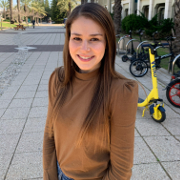
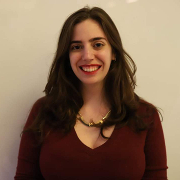
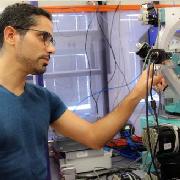
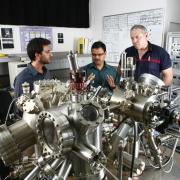
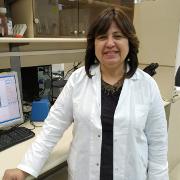
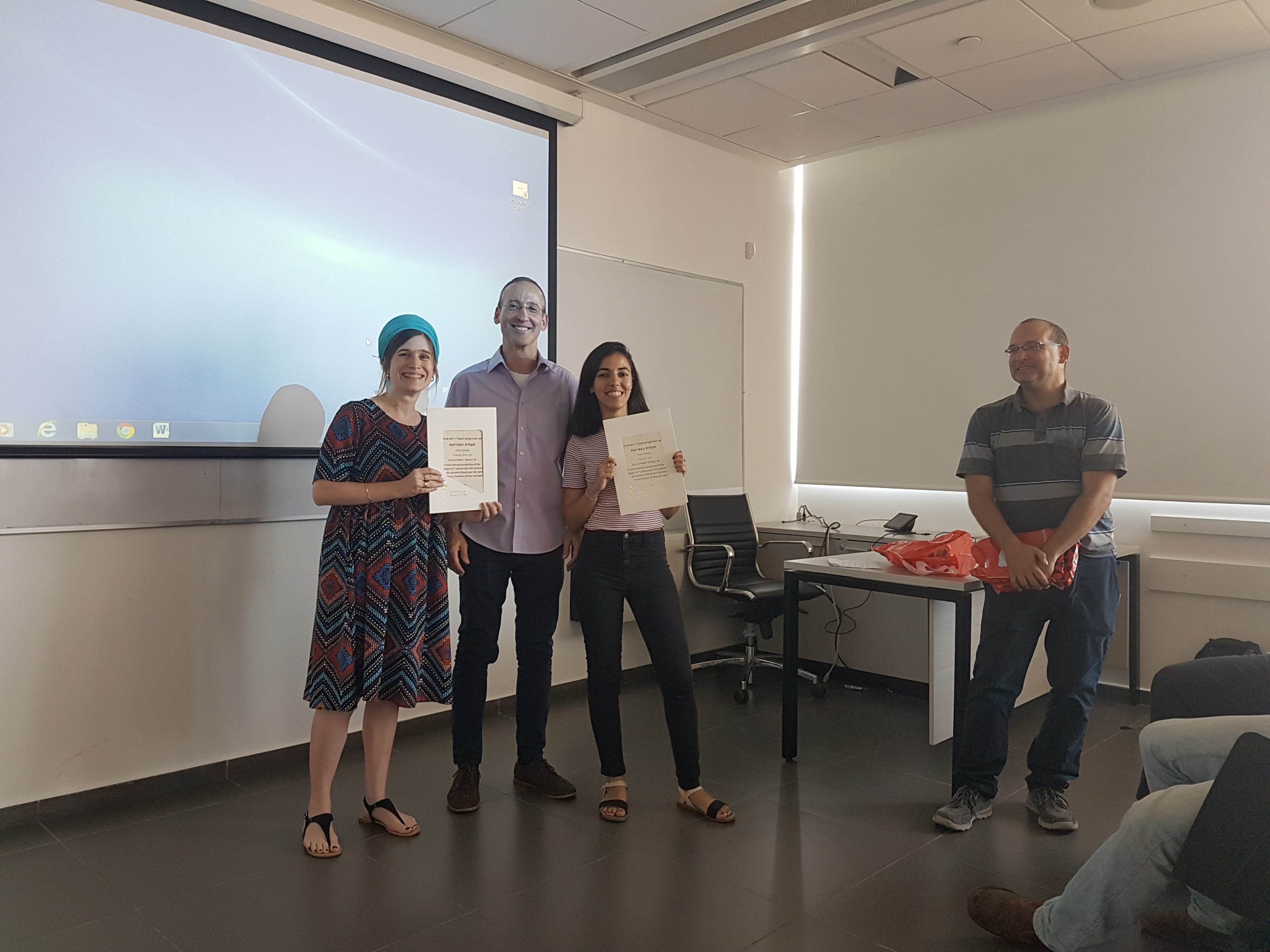
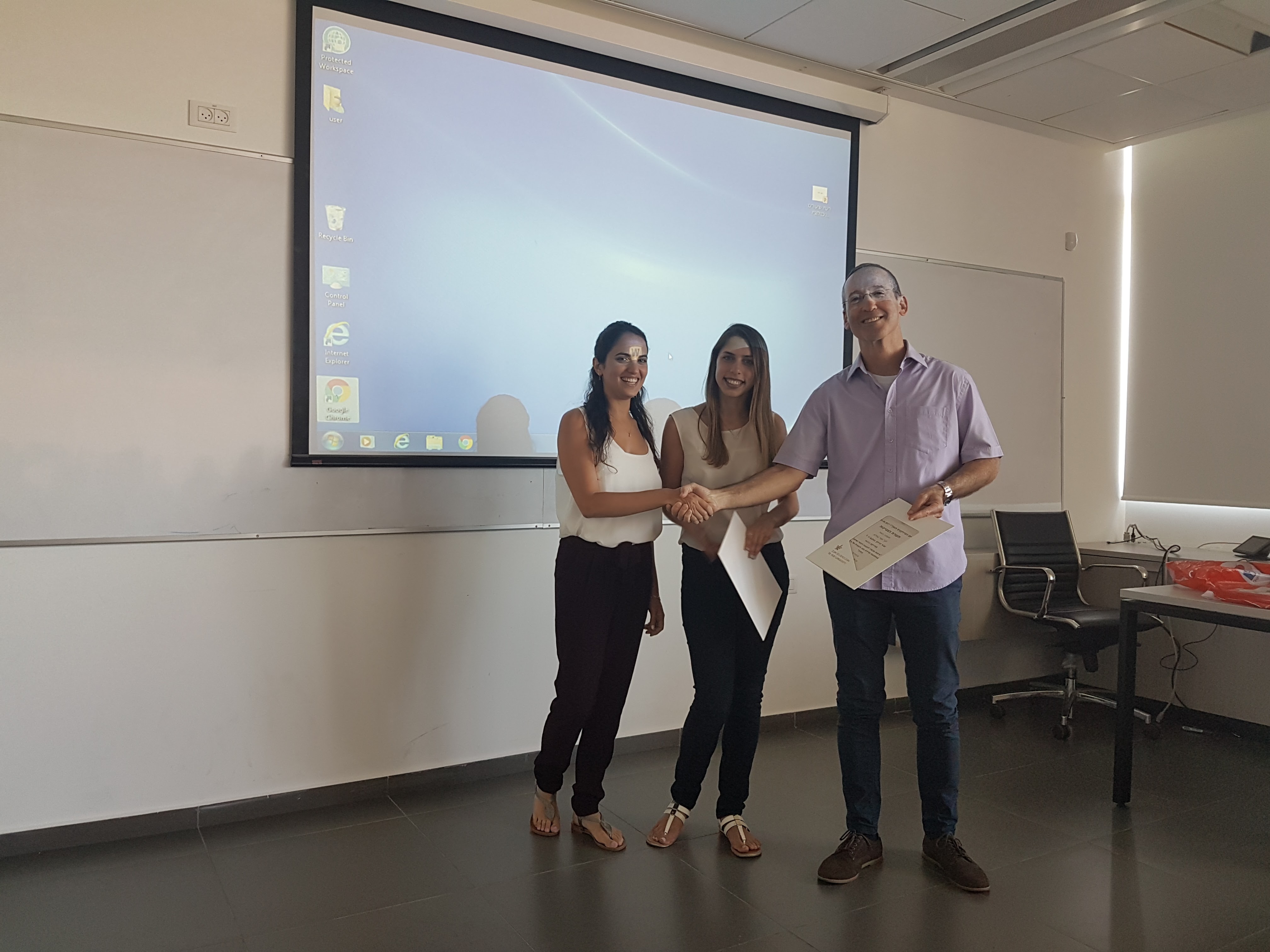
סמינר מחלקתי ביה"ס להנדסה מכאנית Roee Finkelshtain and Slava Burkin

05 באפריל 2017, 14:00 
וולפסון 206  
0
סמינר מחלקתי ביה"ס להנדסה מכאנית Roee Finkelshtain and Slava Burkin


School of Mechanical Engineering Seminar
Thursday, April 5, 2017 at 14:00
Wolfson Building of Mechanical Engineering, Room 206


Application of diffusive interface method to thermocapillary - driven flow of two immiscible fluids.


Viacheslav Burkin

M.Sc. Student of Prof. Alexander Gelfgat


A diffusive interface method was used to solve a problem of flow of two immiscible fluids driven by a thermocapillary force in a closed rectangular cavity. The traditional approach to this problem considers boundary conditions along the interface between two fluids, similar to those applied at physical boundaries of the volume: continuity of the viscous stresses and the heat flux.

Since boundaries between two liquids are usually curved, an accurate calculation of normal and tangent derivatives, needed for a straight-forward implementation of the boundary conditions, becomes a very complicated task. An alternative approach, that noticeably simplifies numerical model, is the volumetric approximation of the thermocapillary force. This approach assumes that fluids properties across the liquid-liquid interface change as a smoothed Heaviside function, while thermocapillary force is defined by a smeared delta-function. In current work we provide further enhancement of this method, by comparing different Heaviside functions by their accuracy relative to the known analytical solution, and adopt this method for computation of steady flow and analysis of their stability.


School of Mechanical Engineering Seminar
Wednesday, April 5, 2017 at 14:00
Wolfson Building of Mechanical Engineering, Room 206


Ultrasonic yield assessment


Roee Finkelshtain

G. Kósa1, Y. Yovel2, A. Bechar3

Israel

1School of Mechanical Engineering, Tel Aviv University (TAU), Israel

2Faculty of Life Sciences, TAU, Israel

3Institute of Agricultural Engineering, Agricultural Research Organization (ARO),


The spectrum of an ultrasonic return echo from plants has shown to contain information about them. This research focuses on developing an ultrasonic robotic sensing system, analyzing the ultrasonic classification features that would ultimately be used as the basis for a yield estimation robotic system, and developing an algorithm for prediction of fruit mass per plant based on the ultrasonic echoes returned from a plant. The ultrasonic sensor system was tested in a lab and pepper greenhouse environments and on single pepper plants, single leaves and fruit. The ultrasonic sensor system was integrated to a robotic platform and field experiments were conducted in a research pepper greenhouse. The results showed the potential of ultrasonic sensors for such a robot in classifying plants and greenhouse infrastructures, the ability to detect hidden plant rows and fruits as well as making an estimation of the fruit mass in single plants. A developed multi linear regression model for estimating the energy level was found to be highly significant with  of  and  for to  and  to  ranges respectively. The estimation accuracy is improved by mounting the sensing system on a monitoring robot and acquiring large plant-orientation sampling sets. 

EE Seminar: Modeling and Learning Similarity of Shapes, Images and Signals


Speaker: Roee Litman

Ph.D. student under the supervision of Prof. Alex Bronstein


Monday, March 27th, 2017 at 15:00
Room 011, Kitot Bldg., Faculty of Engineering


Modeling and Learning Similarity of Shapes, Images and Signals


Abstract


More than a decade ago, a major part of computer vision research was dedicated to engineering and designing the best way to capture meaningful features in images. So was the case in geometry processing and shape analysis. With time, the size of annotated datasets grew, also becoming more realistic and challenging. Together with the increase of low-cost computational power, this turned the focus of research more and more towards learning those features from the data themselves. While problem modeling is still a crucial part of research, learning-based methods are particularly successful whenever noise-invariance is harder to model, especially when the data are deviating from theory.


I will present several new methods and advances for the problem of measuring similarity and establishing correspondence between shapes, images and signals. The topics covered here progress from `designed' to `learned' in a gradual manner. First, there are some cases where the `right' model can solve the problem in a manner close to optimal, as shown for the problem of shape correspondence. Next, a model can be designed such that some small parts are allowed to adjust according to examples in order to improve performance, as shown in the case of shape descriptors. Finally, in some cases the model makes very mild assumptions and is almost completely learned from examples, as in the case of task specific sparse models.


27 במרץ 2017, 15:00 
חדר 011, בניין כיתות-חשמל  

Biomedical seminar

26 במרץ 2017, 14:30 


מרב קטלוניה

תלמידת המחלקה להנדסה ביו רפואית לתואר שלישי תרצה בנושא:


Effect of Peripheral Electrical Stimulations on Glycemic Control Loop in Diabetes Patients


The epidemic nature of type 2 diabetes mellitus (T2DM), along with the downsides of current treatments, has raised the need for therapeutic alternatives. In this research we evaluated the effect of noninvasive peripheral electrical stimulation (PES) on glucose regulation in preclinical, and clinical pilot studies.

In a preclinical model, we studied normo-glycemic and high-fat diet (HFD), induced insulin-resistant rats for 3 weeks. In addition, the effect of an acute PES treatment on metabolic rates of glucose appearance and turnover was measured by using the hyperinsulinemic–euglycemic clamp test. This study demonstrates that a noninvasive PES treatment of very short duration in rats is sufficiently potent to stimulate glucose utilization, improve hepatic insulin sensitivity, and have a beneficial effect on body weight.


Then, a clinical study was designed to evaluate safety, tolerability, and the glucose-lowering effect of PES treatment in T2DM patients. Twelve patients were recruited for an open label, interventional, randomized trial, and underwent, in a crossover design, an active, and a no-intervention control trial periods. During the active period, the patients received a daily lower extremity PES treatment for 14 days. Endpoints were analyzed based on continuous glucose meter readings, and laboratory evaluation. The study results indicate that repeated PES treatment may suppress hepatic glucose production, and thus, act to maintain basal overnight and fasting glucose concentrations. This effect may be mediated, at least in part, by hypothalamic-pituitary-adrenal axis modulation.


Using mathematical model analysis of systemic glycemic control during nocturnal sleep, we explored possible neuroendocrine mechanisms involved in this therapeutic strategy.


Future studies, including larger populations, and longer follow up periods, are needed to gain better understating of these methods. Once proven over a larger cohort of patients, PES may provide an additional potential treatment strategy for the current solutions available for T2DM patients.


העבודה נעשתה בהנחיית ד"ר אורי נבו מהמחלקה להנדסה ביו-רפואית,

ופרופ' אשל בן-יעקב ז"ל מביה"ס לפיסיקה ואסטרונומיה, אוניברסיטת תל אביב


ההרצאה תתקיים ביום ראשון 26.03.17, בשעה 14:30

בחדר 315, הבניין הרב תחומי, אוניברסיטת תל אביב

Biomedical seminar

26 במרץ 2017, 15:00 


Reverse Engineering Insect Flight

Dr. Gal Ribak

Department of Zoology, Faculty of Life Sciences, Tel Aviv University, Israel

Insect flight is the least understood type of aerial locomotion from both the biological and the physical perspectives. The high flapping frequency and relatively low Reynolds number lead to unique unsteady flow phenomena that insects have evolved to exploit during 350 million years of evolution.  In my talk I will describe previous and current work carried out at my laboratory on insect flight biomechanics. By studying flight on all spatial, temporal and ecological levels we aim to reverse engineer insect flight, thus getting a true understanding of how nature’s miniature flyers work. The talk will touch on topics related to visual flight control, control of flight muscles, mechanical implications of body miniaturization and effect of wing flexural stiffness on flight performance and aerodynamics.


ההרצאה תתקיים ביום ראשון 26.03.17, בשעה 15:00

בחדר 315, הבניין הרב תחומי, אוניברסיטת תל אביב

סמינר מחלקתי- אלקטרוניקה פיזיקאלית ויטלי קוזלוב

20 במרץ 2017, 11:00 
פקולטה להנדסה ביניין תוכנה קומה 5 חדר 512  
סמינר מחלקתי- אלקטרוניקה פיזיקאלית ויטלי קוזלוב

~~You are invited to attend a lecture

ELECTROMAGNETIC SCATTERING GOVERNED BY MOVING SCATTERERS AND MAGNETO-ELECTRIC COUPLING
By:
Vitali Kozlov
M.Sc student under supervision of Dr. Pavel Ginzburg

Abstract
Contemporary commercial numerical tools, such as CST, Lumerical and COMSOL are commonly used to solve various electromagnetic, thermal and mechanical problems, to name a few. The above solutions are mostly designed for static problems – yet our world is not static. Scatterers move all the time, they may break into smaller pieces, collide to form bigger ones or otherwise change their shape or other scattering properties in time. To formulate the equations of EM scattering from such dynamic objects, velocities and accelerations must be included alongside the geometry of the objects when applying the boundary conditions of Maxwell’s equations.
This seminar deals with two topics, the first is the micro-Doppler shifts generated by a rotating wire. The wire is effectively a 1D object which makes it relatively simple to solve analytically, allowing physical insight into the phenomena. Intuitively one might expect that since various parts of the wire move at different speeds, the scattered field would have continuous Doppler shifts. Detailed analysis as well as experiments show that the scattered field has discrete frequencies only, forming a micro Doppler comb where the separation between the peaks is an integer multiple of the rotational frequency. The second part of the seminar is related to metamaterials, which have effective characteristics that are interesting for numerous applications in optics and RF, spanning from cloaking, solar cells, optical diodes and more. A hybrid magneto electric meta-atom is presented, made out of a straight wire and a split ring resonator with a unique property of asymmetric backscattering. This means that the meta-atom scatters radiation backwards differently depending on the direction of the incident field. Meta-atoms are the building blocks of metamaterials and it is expected that such meta-atoms could form new and exciting metamaterials with interesting properties.

On Monday, March 20, 2017, 11:00
Room 512, floor 5, Tohna building

EE Seminar: Active Nearest-Neighbor Learning in Metric Spaces

(The talk will be given in English)


Speaker:     Dr. Sivan Sabato
                   Department of Computer Science, Ben Gurion University


Monday, May 22nd, 2017
15:00 - 16:00

Room 011, Kitot Bldg., Faculty of Engineering


Active Nearest-Neighbor Learning in Metric Spaces


Abstract


In this talk I address the challenges of active learning, an interactive machine learning paradigm that allows using data sources more effectively when data is expensive.
I will present an approach for active learning in general metric spaces, that does not require any input parameters, and obtains a competitive accuracy, compared to the accuracy of a non-interactive algorithm which gets all the data for free.
We prove that the proposed active algorithm can reduce the data costs significantly, and that this type of reduction cannot be achieved using simple subsampling.

Based on joint work with Aryeh Kontorovich and Ruth Urner


22 במאי 2017, 15:00 
חדר 011, בניין כיתות-חשמל  

EE Seminar: Decoding Linear Codes With Deep Learning


Speaker: Eliya Nachmani,

M.Sc. student under the supervision of Profs. David Burshtein and Yair Be'ery


Wednesday, April 26th, 2017 at 15:00

Room 011, Kitot Bldg., Faculty of Engineering


Decoding Linear Codes With Deep Learning


Abstract


Designing a practical, low complexity, close to optimal, channel decoder for powerful algebraic codes with short to moderate block length is an open research problem. A novel deep learning method for improving the belief propagation algorithm is proposed with feed-forward neural network. The method generalizes the standard belief propagation algorithm by assigning weights to the edges of the Tanner graph. These edges are then trained using deep learning techniques. A well-known property of the belief propagation algorithm is the independence of the performance on the transmitted codeword. A crucial property of our new method is that our decoder preserved this property. Furthermore, this property allows us to learn only a single codeword instead of exponential number of code-words. Improvements over the belief propagation algorithm are demonstrated for various high density parity check codes.

We also introduce a recurrent neural network architecture for decoding linear block codes. Our method shows comparable bit error rate results compared to the feed-forward neural network with significantly less parameters. We demonstrate improved performance over belief propagation on sparser Tanner graph representations of the codes. Furthermore, we demonstrate that the RNN decoder can be used to improve the performance or alternatively reduce the computational complexity of the mRRD algorithm for low complexity, close to optimal, decoding of short BCH codes.


26 באפריל 2017, 15:00 
חדר 011, בניין כיתות-חשמל  

School of Mechanical Engineering Ittai Shamir and Lior Shig

10 במאי 2017, 14:00 - 15:00 
בניין וולפסון חדר 206  
ללא תשלום
   School of Mechanical Engineering Ittai Shamir and Lior Shig


School of Mechanical Engineering Seminar
Wednesday, May 10, 2017 at 14:00
Wolfson Building of Mechanical Engineering, Room 206


Investigating the morphometry of cortical layers
in the human brain


Ittai Shamir

MSc. Student of Professor Yaniv Assaf

and Professor Yair Shokef


Several Magnetic Resonance Imaging (MRI) approaches were demonstrated in recent years for visualization of the layer arrangement in the cortex either by using high resolution at high magnetic field or by investigating contrast mechanisms that separate the layers. Still, despite these technological achievements, accurate estimation of whole brain layer composition remains limited due to partial volume effects, since some of the layers are far beyond the image resolution.

In this study, we use a low resolution EPI inversion recovery (IR) scan protocol that provides fast acquisition (~12 minutes) and enables extraction of multiple T1 relaxation time components per voxel. These T1 components are assigned to brain tissue types and the assignment is utilized to extract the sub voxel composition of each of the cortical layers. Spatial analysis is conducted using our unique algorithm, based on sampling a network of spherical volumes dispersed throughout the entire cortical space.

Our suggested protocol offers a simple and accurate method for analysis of cortical layer composition, resolving partial volume effects. While direct visualization of the layers is not possible using our approach, it does offer a robust and powerful tool for investigating the layers and their role in cognition. Using this methodology, studies on the role of cortical thickness in brain function and behavior can be expanded to the cortical layer level, thus providing a new level of detail regarding cortical structure.


School of Mechanical Engineering Seminar
Wednesday, May 10, 2017 at 14:00
Wolfson Building of Mechanical Engineering, Room 206


Active Flow Control of Submerged 3D Air Inlet

Lior Shig

MSc Student of Prof. Avi Seifert


Air ingesting propulsion systems that utilize the oxygen of the atmosphere for combustion require that the air transition with minimum pressure losses from the free stream to the engine's entrance. Small losses in internal flow given the large quantities of air required by jet engines cause serious decrease in the thrust and increase in fuel consumption.


Submerged inlets, are widely used in aircraft and cars as a low drag source of external flow for air conditioning, ventilation and cooling systems. The design criteria of these intakes was established during the 1940’s and 50’s. However due to boundary layer ingestion and distortion are not currently used for critical systems.


Flow analysis and boundary layer control methods were applied to a given submerged inlet design that is efficient from the external aerodynamic point of view. The approach for studying the effectiveness of active flow control methods on this kind of inlet was to significantly shorten the original inlet length, which caused internal flow separations and significant engine face distortions. For simplicity, and as an enabling step, low Reynolds number and low Mach number experiments were performed. The preliminary stages of this study included analysis of the baseline flow features of the chosen original inlet design and shortened version. Passive and active flow control techniques were applied to the short inlet in various locations in order to test the sensitivity of the flow to actuation and try to improve the Aerodynamic Interface Plane flow characteristics. Performance parameters such as volumetric flow rate, pressure recovery and flow distortion were defined and calculated in order to evaluate and quantify the level of success. For each of the applied techniques, the effects on the internal flow and integral parameters were measured and analyzed.


בחסות הפקולטה להנדסה אוניברסיטת תל-אביב

14 מרץ 2017
פרופ' יוסי רוזנוקס בהרצאה מרתקת "להיות הדבר הבא"

תחרות האקיתון בין תלמידי י"ב מנצרת בחסות הפקולטה להנדסה אוניברסיטת תל-אביב

סוף שבוע שלם הוקדש בנצרת עם צעירים יצירתיים בעלי רעיונות טכנולוגיים מבריקים.

תלמידי התיכון השתתפו בסדנת עיצוב, תכנות ופרזנטציות במטרה להביא לפתרונות יצירתיים לבעיות בהם אנו נתקלים ביומיום וכל זה בעזרת מנטורים מהתעשייה.


EE Seminar: Signal Modeling: From Convolutional Sparse Coding to Convolutional Neural Networks

 (The talk will be given in English)


Speakers:   Vardan Papyan & Yaniv Romano
                   Computer Sciences Faculty, Technion


Monday, April 3rd, 2017
15:00 - 16:00

Room 011, Kitot Bldg., Faculty of Engineering


Signal Modeling: From Convolutional Sparse Coding to Convolutional Neural Networks


Abstract


Within the wide field of sparse approximation, convolutional sparse coding (CSC) has gained increasing attention in recent years. This model assumes a structured-dictionary built as a union of banded Circulant matrices. Most attention has been devoted to the practical side of CSC, proposing efficient algorithms for the pursuit problem, and identifying applications that benefit from this model. Interestingly, a systematic theoretical understanding of CSC seems to have been left aside, with the assumption that the existing classical results are sufficient.


In this talk we start by presenting a novel analysis of the CSC model and its associated pursuit. Our study is based on the observation that while being global, this model can be characterized and analyzed locally. We show that uniqueness of the representation, its stability with respect to noise, and successful greedy or convex recovery are all guaranteed assuming that the underlying representation is locally sparse. These new results are much stronger and informative, compared to those obtained by deploying the classical sparse theory.


Armed with these new insights, we proceed by proposing a multi-layer extension of this model, ML-CSC, in which signals are assumed to emerge from a cascade of CSC layers. This, in turn, is shown to be tightly connected to Convolutional Neural Networks (CNN), so much so that the forward-pass of the CNN is in fact the Thresholding pursuit serving the ML-CSC model. This connection brings a fresh view to CNN, as we are able to attribute to this architecture theoretical claims such as uniqueness of the representations throughout the network, and their stable estimation, all guaranteed under simple local sparsity conditions. Lastly, identifying the weaknesses in the above scheme, we propose an alternative to the forward-pass algorithm, which is both tightly connected to deconvolutional and recurrent neural networks, and has better theoretical guarantees.


03 באפריל 2017, 15:00 
חדר 011, בניין כיתות-חשמל  

עמודים

אוניברסיטת תל אביב עושה כל מאמץ לכבד זכויות יוצרים. אם בבעלותך זכויות יוצרים בתכנים שנמצאים פה ו/או השימוש שנעשה בתכנים אלה לדעתך מפר זכויות
שנעשה בתכנים אלה לדעתך מפר זכויות נא לפנות בהקדם לכתובת שכאן >>