School of Mechanical Engineering: Prof. Vakakis

18 במרץ 2020, 14:00 - 15:00 
בניין וולפסון 206  
0
School of Mechanical Engineering: Prof. Vakakis

~~

SCHOOL OF MECHANICAL ENGINEERING SEMINAR
Wednesday, March 18, 2020 at 14:00 
Wolfson Building of Mechanical Engineering, Room 206

Beneficial Utilization of Strong Nonlinearity in Dynamics and Acoustics

Alexander F. Vakakis
University of Illinois at Urbana - Champaign, USA
avakakis@illinois.edu

In this lecture we discuss certain examples of beneficial utilization of intentional strong nonlinearity in dynamical and acoustical systems across different scales. Central to this concept is the inducement of irreversible nonlinear energy transfers from large-to-small scales that induce effects such as passive break reciprocity in controlled and predictable ways or broadband / narrowband energy redirection in preferential paths/modes in structures and metamaterials. These non-reciprocal energy transfers mimic analogous energy cascades that occur often in Nature (e.g., in turbulent flows or granular media), and, as such, benefit from the well-known robust and enhanced dissipative features exhibited by these natural phenomena. Our approach dictates advanced theoretical modeling and analysis, but also nonlinear system identification and reduced-order modeling to characterize the experimental realizations that validate the theoretical predictions. In the presented applications, we’ll discuss new approaches for designing, analyzing, characterizing and experimentally testing passive blast mitigation systems, non-reciprocal lattice metamaterials, and fluid control in flow-structure interaction problems. The aim is to translate these methods to new technologies and devices that exploit and showcase intentional strong nonlinearity.
This work is funded in part by National Science Foundation Emerging Frontiers Research Initiative Grant 1741565. Any opinion, findings, conclusions or recommendations expressed are those of the presenter and do not necessarily reflect the views of the National Science Foundation.
Short Bio: Alexander F. Vakakis received his Ph.D. from Caltech (1990), M.Sc. from Imperial College, London (1985), and Diploma in Mechanical Engineering from the University of Patras, Greece (1984). He is the Donald Biggar Willett Professor of the College of Engineering of the University of Illinois where he co-directs the Linear and Nonlinear Dynamics and Vibrations Laboratory (http://lndvl.mechse.illinois.edu/), and currently the Edmond J. Safra Visiting Professor at Technion. Among other awards, he is the recipient of an Alexander von Humboldt Research Award (2019), the ASME Thomas K. Caughey Award in nonlinear dynamics (2014), and since 2015 acts as a National High-End Foreign Expert in China. He has published over 300 archival publications, holds two patents, and has authored or edited 6 technical texts and monographs. His research interests center on nonlinear dynamics, vibrations and acoustics.

כנס המתמקד במחקר בממשקי משתמש ובאופן בו ניתן להבין ולשפר את האינטראקציה בין בני אדם לבין מחשבים, רובוטים, וטכנולוגיה

05 מרץ 2020
כנס IsraHCI

כמידי שנה נערך כנס ה IsraHCI - הכנס המוביל בישראל למחקר בתכנון ממשקי משתמש והאינטראקציות בין בני אדם לבין מחשבים ורובוטים. השנה הפקולטה להנדסה אוניברסיטת תל אביב אירחה את הכנס בתאריך ה 27 לפברואר ואותו פקדו אותו מעל 200 משתתפים מכל האוניברסיטאות בארץ ומחברות היי-טק. ראשי הכנס כללו את ד״ר ערן טוך מהמחלקה להנדסת תעשייה באוניברסיטת תל אביב, יואל לניר מאוניברסיטת חיפה ומיכל רינות משנקר.

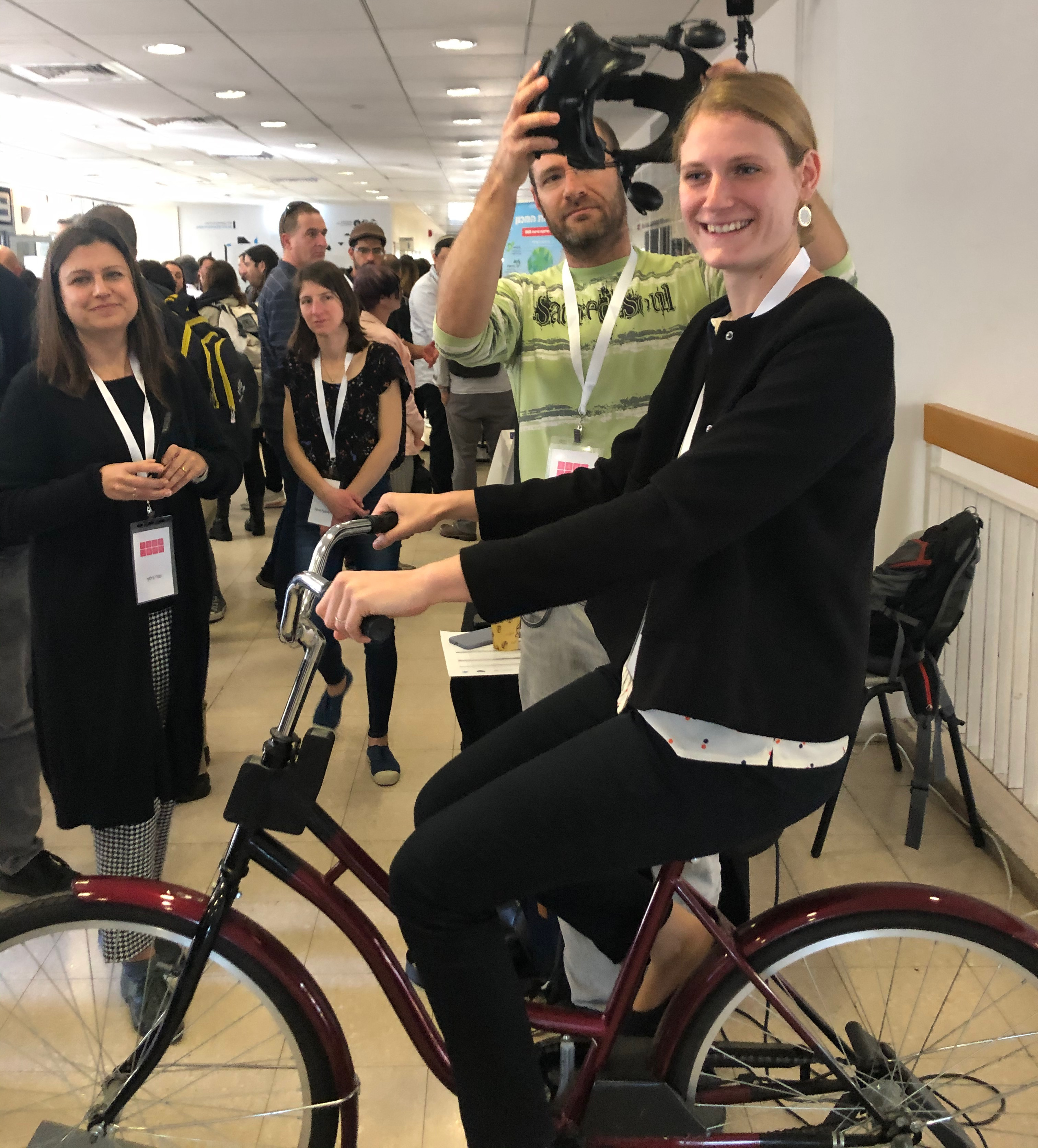
משתתפי הכנס מתנסים ב-FlyCycle משנקר - שילוב בין נסיעה באופניים לבין קסדת מציאות וירטואלית


כנס IsraHCI 

הכנס מביא יחד אקדמאיים ובעלי מקצוע המתעניינים באופן בו מערכות מחשוב אינטראקטיביות, רובוטים, ומערכות של בינה מלאכותית מתקשרות עם בני אדם, במטרה לעצב ולשפר ממשקי משתמש ההופכים את המערכות לידידותיות, מובנות, ושמישות יותר. 


מה היה?

בכנס הוצגו כ 26 מחקרים והדגמות של טכנולוגיות חדשות. לאחר דברי הברכה של דקאן הפקולטה להנדסה פרופ' יוסי רוזנוקס, הרצאת הפתיחה ניתנה על ידי פרופ׳ יבון רוג׳רס מאוניברסיטת University College London שהציגה רעיונות אינטראקציה חדשים וממשקים פיזיים המתווכים למשתמשים מידע ערים חכמות. בהמשך נתנו פרסים עבור:

פרס המחקר הטוב ביותר ניתן לזהר גלעד, עפרה עמיר, וליאט לבונטין מהטכניון על מחקר שבדק את ההשפעות של ה״חמימות״ של האלגוריתם על האמון שמשתמשים נותנים בו.

פרס ההדגמה הטובה ביותר ניתנה להדס אשכנזי מהאוניברסיטה העברית ובצלאל על ממשק משתמש המאפשר לכל אחד להכין את תבשיל הקארי המושלם.


לסיום התקיים פאנל בנושא החינוך לאינטראקציית אדם-מחשב בישראל, לאחר שנפתחו כ-3 תוכניות חדשות בנושא בישראל ב-2019.


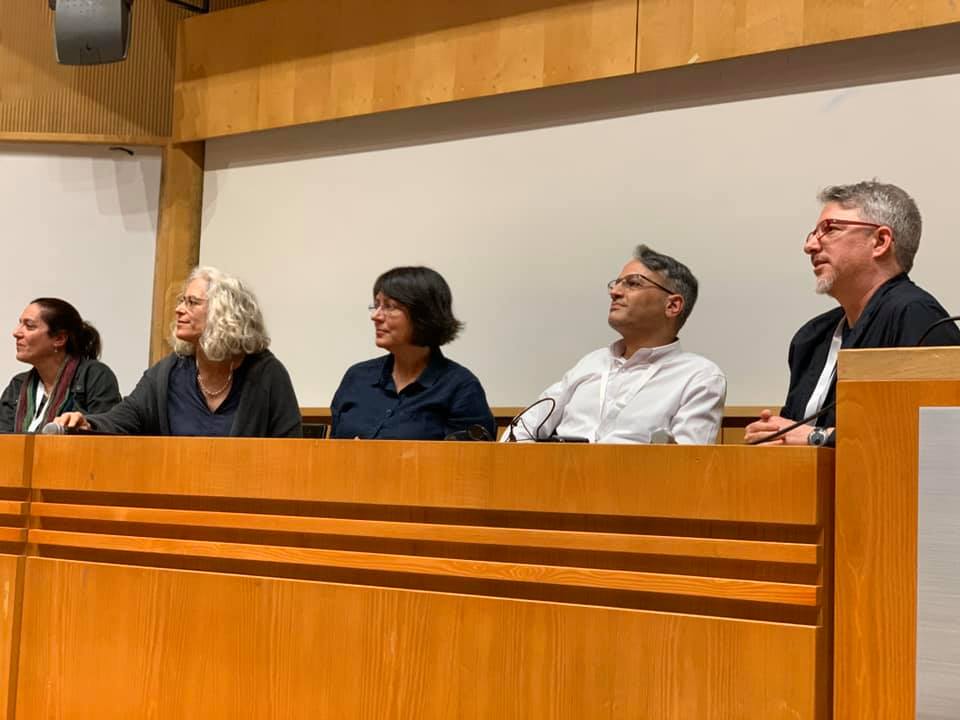
פאנל הסגירה לגבי המצב הנוכחי והעתידי של תוכניות HCI בישראל

הזמנה: מקבלי תעודות הערכה מטעם הרקטור

בית הספר להנדסת חשמל

01 באפריל 2020, 17:00 
אוניברסיטת תל אביב  
מצטייני רקטור

Hind-Wing Flexibility in the Scarab Beetles: Dr. Yonatan Messerman Ph.D

04 במאי 2020, 14:00 - 15:00 
בניין וולפסון 206  
0
Hind-Wing Flexibility in the Scarab Beetles: Dr. Yonatan Messerman  Ph.D

PhD "ZOOM" SEMINAR

Monday May 6

Hind-Wing Flexibility in the Scarab Beetles

Yonatan Meresman


Animal locomotion is strongly linked to their ecology. Flying species that hover or land precisely on top of flowers (e.g., for feeding) require higher maneuverability and control than those flying merely to reach distant areas. The flight style is affected by the wing shape. While birds and bats control the wing shape using muscles and joints within the wing itself, insects have more restricted control. Their wings lack intrinsic muscles. Instead, they are composed of a thin membrane reinforced by stiffer veins. These veins elastically deform during flight as a result of inertial and aerodynamic loads. In turn, these deformations affect the aerodynamic forces acting on the wings.
The flexibility of insect wings might have been under natural selection to match various flight demands. One way by which wing elasticity can change in the course of evolution is by adjusting the wing veins. Indeed, insects vary in the size number and arrangement of their wing veins, resulting in changes in the wings' structural stiffness. However, despite a growing interest in flexible wing aerodynamics in biological and engineering disciplines, empirical data, acquired from free-flying animals, are scarce, and the interpretation of these data is complex due to structural, energetic, and aerodynamic trade-offs in the adaptation of wings for specific flight styles.
In the upcoming talk, I will discuss how the wing flexibility affects elastic wing deformation in scarab beetles, its function in free-flying beetles, and the divergence of wing structure to match various flight styles. I will present results from our studies showing that elastic wing deformations are adjusted to conserve a favorable wing shape during flight within a species. During aerial maneuvers, the flexibility augments the torque generated by each wing but attenuates the asymmetry between the left and right wings, thus contributing to stabilization and, finally, how morphological diversification has led to inter-specific variation in elastic wing deformation during flight in scarab beetles.
Our multidisciplinary, comparative approach allows an in-depth look at the mechanisms of flight by flexible wings. It unveils evolutionary links between wing form and function and provides a deeper understanding of the evolution of insect wings, flight biomechanics, and mechanisms for flight control.
 

School of Mechanical Engineering: Prof. Sanjay Govindjee

25 במרץ 2020, 14:00 - 15:00 
בניין וולפסון 206  
0
School of Mechanical Engineering: Prof. Sanjay Govindjee

עמודים

אוניברסיטת תל אביב עושה כל מאמץ לכבד זכויות יוצרים. אם בבעלותך זכויות יוצרים בתכנים שנמצאים פה ו/או השימוש שנעשה בתכנים אלה לדעתך מפר זכויות
שנעשה בתכנים אלה לדעתך מפר זכויות נא לפנות בהקדם לכתובת שכאן >>