יחידות אקדמיות

בתי ספר ומחלקות
הנדסה ביו-רפואית הנדסה ביו-רפואית הנדסה ביו-רפואית תואר ראשון, תארים מתקדמים, תוכניות רב-תחומיות ומיוחדות
הנדסת מכנית הנדסה מכנית הנדסה מכנית תואר ראשון, תארים מתקדמים, תוכניות רב-תחומיות ומיוחדות
הנדסת חשמל הנדסת חשמל תואר ראשון, תארים מתקדמים, תוכניות רב-תחומיות ומיוחדות
הנדסת תעשייה הנדסת תעשייה הנדסת תעשייה תואר ראשון, תארים מתקדמים, תוכניות רב-תחומיות ומיוחדות
מדע והנדסה של חומרים מדע והנדסה של חומרים מדע והנדסה של חומרים תואר ראשון, תארים מתקדמים, תוכניות רב-תחומיות ומיוחדות
תוכניות לימוד
הנדסה ביו-רפואית הנדסה ביו-רפואית תואר ראשון
הנדסה ביו-רפואית תואר שני הנדסה ביו-רפואית תואר שני הנדסה ביו-רפואית תארים מתקדמים
הנדסה ורוח הנדסה ורוח תוכניות רב-תחומיות ומיוחדות תואר ראשון, תוכניות רב-תחומיות ומיוחדות
הנדסה מכנית הנדסה מכנית הנדסה מכנית תואר ראשון
הנדסה מכנית - תואר שני הנדסה מכנית - תואר שני הנדסה מכנית תארים מתקדמים
הנדסה מכנית וחטיבה בביומכניקה הנדסה מכנית וחטיבה בביומכניקה הנדסה מכנית תואר ראשון
הנדסה מכנית ומדעי כדור הארץ עם הדגש בלימודי סביבה הנדסה מכנית ומדעי כדור הארץ עם הדגש בלימודי סביבה הנדסה מכנית תואר ראשון, תוכניות רב-תחומיות ומיוחדות
הנדסת חשמל הנדסת חשמל הנדסת חשמל תואר ראשון
הנדסת חשמל  - תואר שני הנדסת חשמל - תואר שני הנדסת חשמל תארים מתקדמים
הנדסת חשמל ומדעי המחשב הנדסת חשמל ומדעי המחשב הנדסת חשמל תואר ראשון, תוכניות רב-תחומיות ומיוחדות
הנדסת חשמל ופיזיקה (תואר משולב) הנדסת חשמל ופיזיקה תואר משולב הנדסת חשמל תואר ראשון, תוכניות רב-תחומיות ומיוחדות
הנדסת מערכות תואר שני הנדסת מערכות תואר שני הנדסה מכנית תארים מתקדמים
הנדסת סביבה - תואר שני הנדסת סביבה - תואר שני הנדסה מכנית תארים מתקדמים
הנדסת תעשייה וניהול הנדסת תעשייה וניהול הנדסת תעשייה תואר ראשון
הנדסת תעשייה וניהול -תארים מתקדמים הנדסת תעשייה וניהול -תארים מתקדמים הנדסת תעשייה תארים מתקדמים
מדע והנדסת חומרים - חד חוגי מדע והנדסה של חומרים - חד חוגי מדע והנדסה של חומרים תואר ראשון
מדע והנדסת חומרים - תואר שני מדע והנדסה של חומרים - תואר שני מדע והנדסה של חומרים תארים מתקדמים
מדע והנדסת חומרים וכימיה - תואר כפול מדע והנדסה של חומרים וכימיה - תואר כפול מדע והנדסה של חומרים תואר ראשון, תוכניות רב-תחומיות ומיוחדות
מדעי הנתונים מדעי הנתונים- ביה"ס למדעי המתמטיקה הנדסת תעשייה תואר ראשון
מדעים דיגיטליים להיי-טק מדעים דיגיטליים להיי-טק תוכניות רב-תחומיות ומיוחדות תואר ראשון, תוכניות רב-תחומיות ומיוחדות
תואר כפול בהנדסה ביו-רפואית וביולוגיה עם דגש במדעי המוח תואר כפול בהנדסה ביו-רפואית וביולוגיה עם דגש במדעי המוח הנדסה ביו-רפואית תואר ראשון, תוכניות רב-תחומיות ומיוחדות
תוכנית המצטיינים והמצטיינות תוכנית המצטיינים והמצטיינות תוכניות רב-תחומיות ומיוחדות תואר ראשון, תוכניות רב-תחומיות ומיוחדות

EE Seminar: Universal Loss and Gaussian Learning Bounds

25 בדצמבר 2017, 15:00 
חדר 011, בניין כיתות חשמל  

(The talk will be given in English)


Speaker:     Dr. Amichai Paisky
                   Massachusetts Institute of Technology


Monday, December 25th, 2017
15:00 - 16:00

Room 011, Kitot Bldg., Faculty of Engineering


Universal Loss and Gaussian Learning Bounds


Abstract

In this talk I address two fundamental predictive modeling problems: choosing a universal loss function, and how to approach non-linear learning problems with linear means.

A loss function quantifies the difference between the true values and the estimated fits, for a given instance of data. Different loss functions correspond to a variety of merits, and the choice of a "correct" loss could sometimes be questionable. Here, I show that for binary classification problems, the Bernoulli log-likelihood loss (log-loss) is universal with respect to practical alternatives. In other words, I show that by minimizing the log-loss we minimize an upper bound to any smooth, convex and unbiased binary loss function. This property justifies the broad use of log-loss in regression, in decision trees, as an InfoMax criterion (cross-entropy minimization) and in many other applications.

I then address a Gaussian representation problem which utilizes the log-loss. In this problem we look for an embedding of an arbitrary data which maximizes its "Gaussian part" while preserving the original dependence between the variables and the target. This embedding provides an efficient (and practical) representation as it allows us to consider the favorable properties of a Gaussian distribution. I introduce different methods and show that the optimal Gaussian embedding is governed by the non-linear canonical correlations of the data. This result provides a primary limit for our ability to Gaussianize arbitrary data-sets and solve complex problems by linear means.


Bio
Amichai Painsky is a Post-Doctoral Fellow, co-affiliated with the Israeli Center for Research Excellence in Algorithms (I-CORE ALGO) at the Hebrew University, and the Signals, Information and Algorithms (SIA) Laboratory at MIT. Amichai received his B.Sc. in Electrical Engineering from Tel Aviv University (2007), his M.Eng. in Electrical Engineering from Princeton University (2009) and his Ph.D. in Statistics from Tel Aviv University (2016). He is a recipient an outstanding Ph.D. students award from the school of Mathematical Sciences, the Weinstein Institute of Signal Processing and the Marejn Foundation. Previously, he received a Brain Return Ph.D. Scholarship from the Israeli Center for Returning Scientists.


EE Seminar: Dynamic graph matching and related problems

24 בדצמבר 2017, 15:00 
חדר 011, בניין כיתות חשמל  

(The talk will be given in English)


Speaker:     Dr. Shay Solomon
                   Computer Sciences Department, Ben Gurion University


Sunday, December 24th, 2017
15:00 - 16:00

Room 011, Kitot Bldg., Faculty of Engineering


Dynamic graph matching and related problems


Abstract

Graph matching is one of the most well-studied problems in combinatorial optimization, with applications ranging from scheduling and object recognition to numerical analysis and computational chemistry.
Nevertheless, until recently very little was unknown about this problem in real-life **dynamic networks**, which aim to model the constantly changing physical world.
In the first part of the talk we'll discuss our work on dynamic graph matching, and in the second part we'll highlight our work on a few related problems.


Bio
Shay Solomon is currently a Herman Goldstine Postdoctoral Fellow at IBM T. J. Watson Research Center.
Prior to joining IBM, he was a Rothschild and Fulbright Postdoctoral Fellow at Stanford University, hosted by Prof. Moses Charikar and Prof. Virginia Vassilevska Williams.
Solomon received a Ph.D. degree in Computer Science from the Ben-Gurion University under the guidance of Prof. Michael Elkin.
Solomon's Ph.D. dissertation investigates several longstanding graph compression problems, and has received numerous awards, including a best student paper award for his single-authored SODA'11 paper.
His postdoctoral work focuses on fundamental computational challenges that arise when dealing with dynamic networks.

EE Seminar: Overcoming Intractability in Learning

20 בדצמבר 2017, 15:00 
חדר 011, בניין כיתות-חשמל  

(The talk will be given in English)


Speaker:     Dr. Roi Livni
                   Department of Computer Science, Princeton University


Wednesday, December 20th, 2017
15:00 - 16:00

Room 011, Kitot Bldg., Faculty of Engineering


Overcoming Intractability in Learning

Abstract

Machine learning has recently been revolutionized by the introduction of Deep Neural Networks. However, from a theoretical viewpoint these methods are still poorly understood. Indeed the key challenge in Machine Learning today is to derive rigorous results for optimization and generalization in deep learning. In this talk I will present several tractable approaches to training neural networks. At the second part I will discuss a new sequential algorithm for decision making that can take into account metric structure in the action space and avoids erratic behavior which often makes MAB algorithm impractical.

I will present our work that provides some of the first positive results and yield new, provably efficient, and practical algorithms for training certain types of neural networks. In a second work I will present a new online algorithm that learns by sequentially sampling random networks and asymptotically converges, in performance, to the optimal network. Our approach improves on previous random features based learning in terms of sample/computational complexity, and expressiveness. In a more recent work we take a different perspective on this problem. I will provide sufficient conditions that guarantee tractable learning, using the notion of refutation complexity. I will then discuss how this new idea can lead to new interesting generalization bounds that can potentially explain generalization in settings that are not always captured by classical theory.

In the setting of reinforcement learning I will present a recently developed new algorithm for decision making in a metrical action space. As an application, we consider a dynamic pricing problem in which a seller is faced with a stream of patient buyers. Existing MAB algorithms often ignore the structure in the action space, and they are led to an erratic behavior that leads to sub-optimal regret in face of a strategic environment. Our algorithm achieves an optimal regret, and improves on previously known regret bound.

Bio
Roi Livni is a research instructor at the computer science department in Princeton University. He is a recipient of the Eric and Wendy Schmidt fellowship for strategic innovation, and a Yad Hanadiv fellow for postdoctoral position.
He completed his PhD at the Hebrew University, during which he was a recipient of a Google Europe fellowship in learning theory. He also served, during his graduate studies, as a long term intern at Microsoft Research. His graduate work won a Best paper award in ICML'13, and a best student paper award in COLT'13.

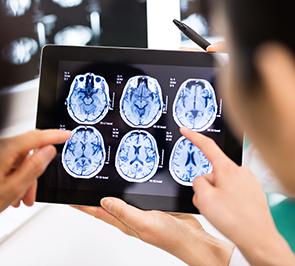
סמינר המחלקה להנדסה ביו רפואית הרצאת אורח של ד"ר בן מעוז

24 בדצמבר 2017, 14:00 
 
ללא תשלום
סמינר המחלקה להנדסה ביו רפואית הרצאת אורח של ד"ר בן מעוז

Organs-On-a-Chip: A New Tool for the Study of Human Physiology
Ben M. Maoz
Wyss Fellow – Harvard University

Micro-engineered cell culture models, termed Organs-on-Chips, have emerged as a new tool to
recapitulate human physiology and drug responses. Multiple studies and research programs have shown that Organs-on-Chips can capture the multicellular architectures, vascular-parenchymal tissue interfaces, chemical gradients, mechanical cues, and vascular perfusion of the body. Accordingly, these models can reproduce tissue and organ functionality and mimic human disease states to an extent thus far unattainable with conventional 2D or 3D culture systems. Here we exploit the micro-engineering technology in a novel system-level approach to decompose the integrated functions of the neurovascular unit into individual cellular compartments, while retaining their paracellular metabolic coupling. Using individual, fluidically-connected chip units, we have created a system that models influx and efflux functions of the brain vasculature and the metabolic interaction with the brain parenchyma. Results of proteomic and metabolic assays indicate that this system mimics the effect of intravascular administration of the psychoactive drug methamphetamine observed in vivo. Moreover, this model reveals a previously unknown role of the brain endothelium in neural cell metabolism: In addition to its well-established functions in metabolic transport, the brain endothelium secretes metabolites that are directly utilized by neurons. This discovery would have been impossible to achieve using conventional in vitro or in vivo
measurements.


ההרצאה תתקיים ביום ראשון 24.12.17, בשעה 14:00
בחדר 315, הבניין הרב תחומי, אוניברסיטת תל אביב

School of Mechanical Engineering Prof. Pavel Bedrikovetsky

08 בינואר 2018, 14:00 - 15:00 
 
0
School of Mechanical Engineering Prof. Pavel Bedrikovetsky


School of Mechanical Engineering Seminar
Monday, January 8, 2018 at 14:00
Wolfson Building of Mechanical Engineering, Room 206


Suspension-Colloidal Transport in Porous Media: Petroleum and Environmental Applications


Prof. Pavel Bedrikovetsky

Australian School of Petroleum

University of Adelaide


Flow of suspensions and colloids in porous media with particle capture, detachment and consequent permeability alteration occurs in aquifers and subterranean basins during exploitation of artesian wells, disposal of industrial wastes in aquifers and consequent contamination, fresh and hot water storage in aquifers and geothermal reservoirs, ocean water invasion into aquifers, industrial filtering, as well as exploitation of oil and gas production and injection wells.

We discuss the particulate transport in rocks with fines attachment and detachment accounting for particle- and pore size distributions. The basic equations form a stochastic population-balance system. The system can be upscaled in the cases of mono-sized particles and of small-concentrations. 1D linear and axi-symmetric problems for suspension injection or detachment of natural reservoir fines allow for exact solutions. The solutions allow analysing the propagation of concentration waves of injected colloids or lifted suspensions, its effects on well injectivity and productivity. The exact solutions allow also for downscaling, i.e. restauration of the micro-scale behaviour. Another application of the exact solutions is regularisation of inverse problems, allowing interpreting laboratory experiments and tuning the model parameters. We show simple lab and field devices for complete characterisation of suspension-colloidal system and lab-based reservoir-scale predictions.

The talk is completed by exploration of random-walk and Boltzmann’s models, and of two-phase suspension-colloidal transport.

Bio: Pavel is a Professor of Petroleum Engineering at the University of Adelaide. His research covers suspension and multiphase transport in porous media, including exact integration, upscaling, inverse problems, and technologies of enhanced gas and oil recovery. He authors a seminal book on reservoir engineering and 230 papers in academic journals and Society of Petroleum Engineers (SPE). He is 2008-2009 and 2016-2017 SPE Distinguished Lecturer.

ד"ר אסיה ברקאי מאינטל בהרצאה על תהליך ההכנה של מעבדים אלקטרוניים

14 דצמבר 2017
אסיה ברקאי

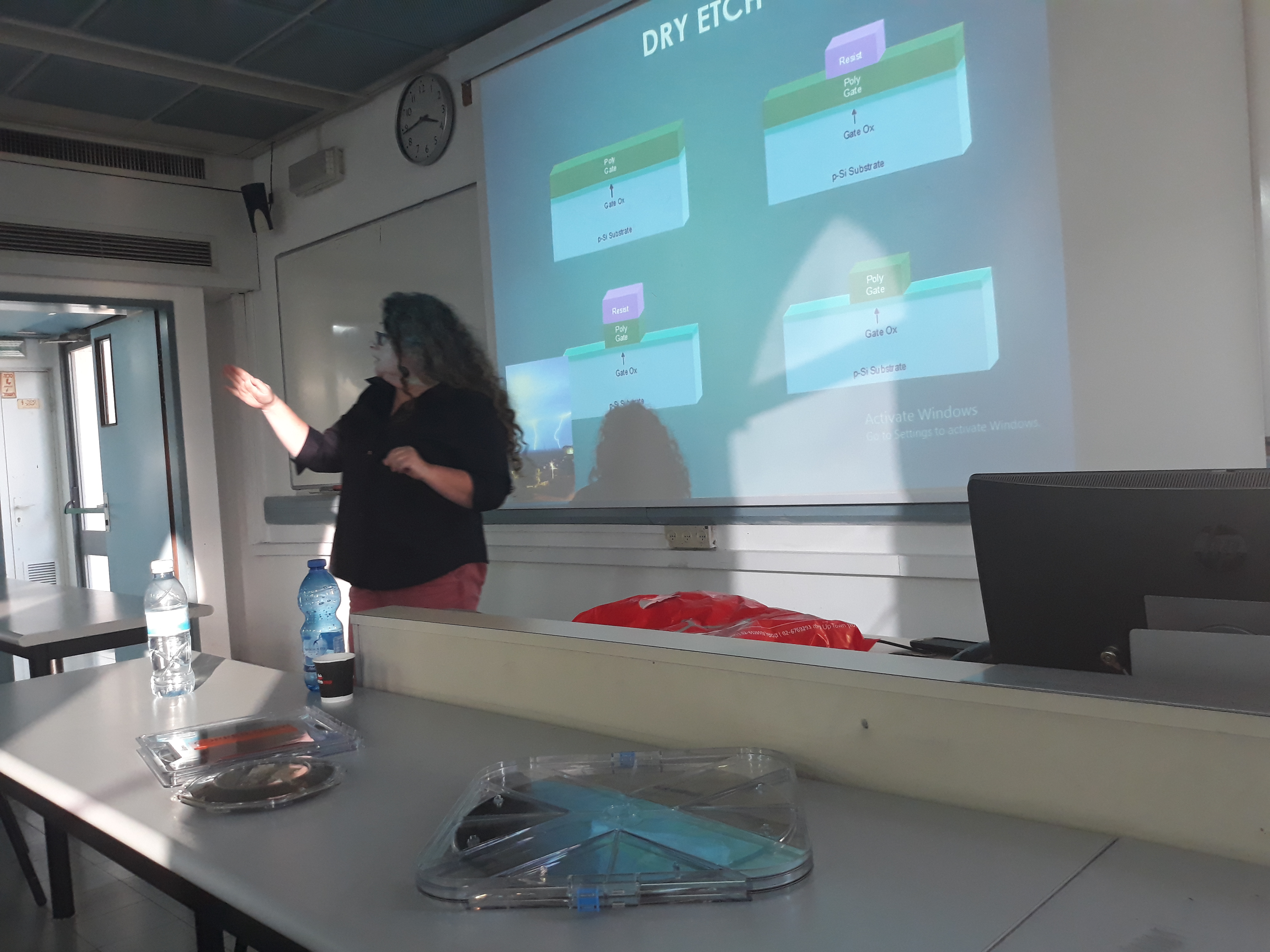
בקורס "אופקים למדע והנדסה של חומרים", שניתן לתלמידי שנה א' במסלול, מתקיימות הרצאות אורח בנות שעה אקדמית ע"י נציגי תעשיות וארגונים ביטחוניים בעלי עניין בתחום החומרים, המציגים את תחום פעילותם וזיקתו למדע החומרים.


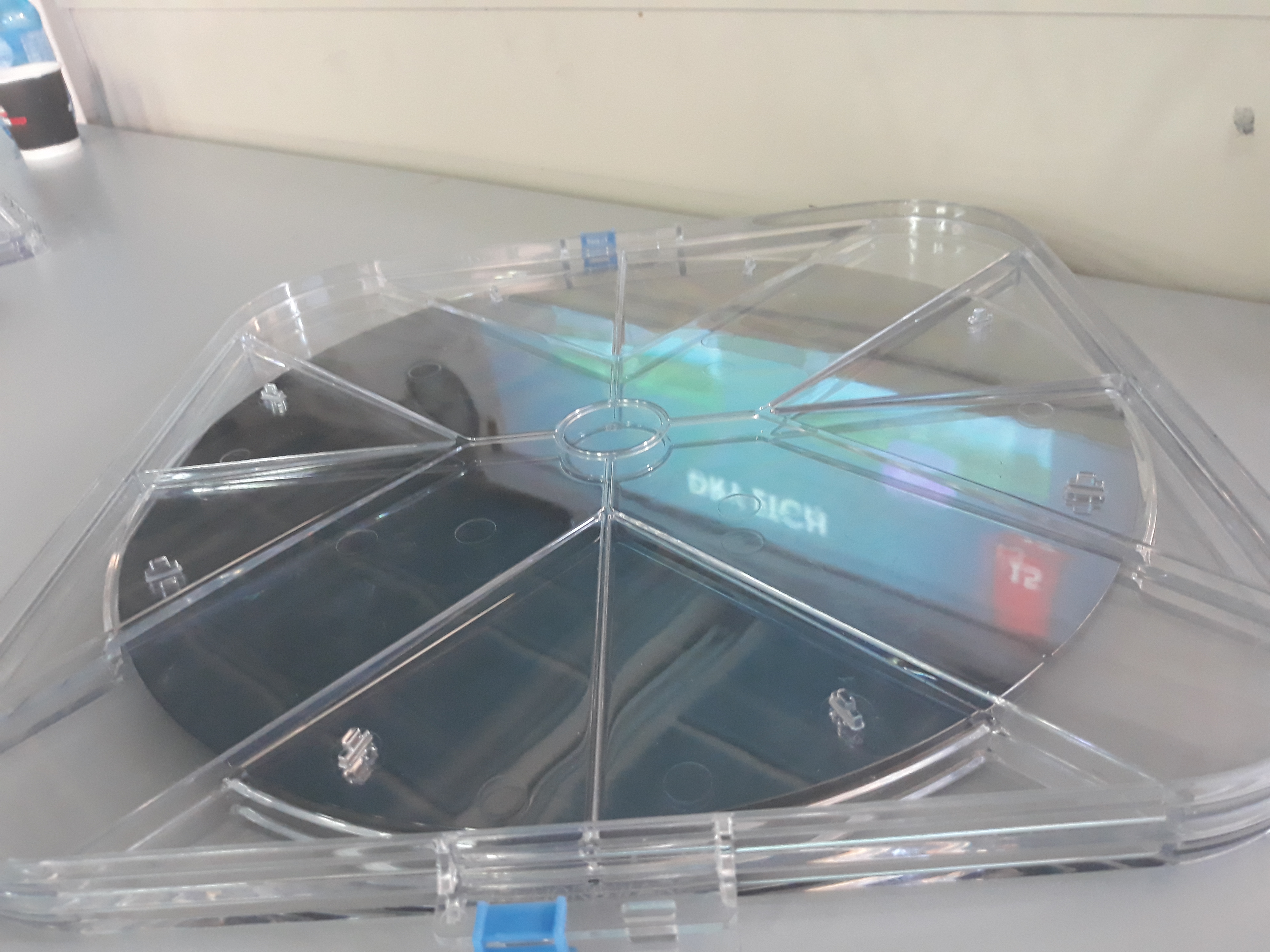
החודש ד"ר אסיה ברקאי התארחה כנציגת "אינטל" בקורס ונתנה הרצאה מרתקת לסטודנטים על תהליך ההכנה של מעבדים אלקטרוניים, שמשמשים למעשה כ"מוח החושב" של המחשב . ד"ר ברקאי הביאה איתה להדגמה את לוחות הסיליקון עליהם מודפסים המעבדים, כדי שנוכל לראות מה יש לנו בתוך המחשב, ולמה צריך להבין בהנדסת חומרים כדי ליצור כזה.

למצטייני הפקולטה להנדסה בהוראה לשנת תשע"ז

10 דצמבר 2017
"רשימות המאה"

ברכות חמות למצטייני הפקולטה להנדסה בהוראה המהווים חלק מ"רשימות המאה" של המרצים והמתרגלים שדורגו גבוה בסקרי שביעות הרצון מההוראה שמילאו הסטודנטים בשנת הלימודים תשע"ז. 

סגל בכיר

  • דנה רון
  • אבישי וול
  • שי אבידן
  • שחר ריכטר
  • בועז פת-שמיר
  • בני אפלבאום
  • דן ימין
  • יאיר שוקף
  • אורי נבו
  • עופר  ברנע

סגל זוטר 

  • אסף בן נריה
  •  אוהד איזנהנדלר
  • מעיין מלכי 
  • יצחק נניקשוילי
  • מעין לוסטיג
  • איתי שפאץ
  • רועי לוטן
  • יניב אליעזר
  • לירון דוד
  • קונסטנטין ברסטיזבסקי
  • יוסי דדוש
  • רון חצקלביץ
  • יונתן אוסטרומצקי 
  • דמיטרי גולדנברג
  • איל נאור

EE Seminar: Meeting the challenges of massive networks and systems

18 בדצמבר 2017, 15:00 
חדר 011, בניין כיתות חשמל  

(The talk will be given in English)


Speaker:     Dr. Shai Vardi
                   Caltech, USA


Monday, December 18th, 2017
15:00 - 16:00

Room 011, Kitot Bldg., Faculty of Engineering


Meeting the challenges of massive networks and systems


Abstract

Massive systems and networks have become ubiquitous. While there is a remarkable amount of work on analyzing and designing algorithms for smaller systems, the vast majority of it simply does not scale: an algorithm that takes seconds to run on a system with thousands of nodes might take weeks on a system with billions. New ideas are required if we hope to have the same success with massive systems as we do with smaller ones. The field of Local computation algorithms (LCAs), which I founded together with Ronitt Rubinfeld, Gil Tamir and Ning Xie, provides a rigorous framework for solving problems on huge systems. I will present one technique for designing LCAs: a reduction to online algorithms, and show how it can be used to design fast and robust distributed solvers for linear and convex programs. I will also describe how we can use insights from this technique to design approximate solvers for linear programs that have hitherto been unsolvable due to their size.


Bio
Shai Vardi is a Linde Postdoctoral Fellow at the Social and Information Sciences Laboratory at the California Institute of Technology, hosted by Adam Wierman. He spent the Fall semester of 2016-2017 at the Simons Institute for the Theory of Computation, and was previously a postdoc in the Weizmann Institute of Science, advised by Uri Feige. He received his MSc and PhD in Computer Science from Tel Aviv University, advised by Ronitt Rubinfeld and Yishay Mansour respectively. Shai received the Google European Fellowship for Game Theory for 2012-2015, and the iCORE Algorithms Postdoctoral Scholarship in 2015. He also has a diploma in jazz performance from the Rimon School of Jazz and Contemporary Music


School of Mechanical Engineering Prof. Usuma Kadri

25 בדצמבר 2017, 14:00 - 15:00 
 
0
School of Mechanical Engineering Prof. Usuma Kadri


School of Mechanical Engineering Seminar
Monday, December 25, 2017 at 14:00
Wolfson Building of Mechanical Engineering, Room 206


Acoustic-gravity waves, theory & applications


Prof. Usuma Kadri

  Univ. UK           


Abstract: Acoustic–gravity waves (AGWs) are compression-type waves generated as a response to a sudden change in the water pressure, e.g. due to nonlinear interaction of surface waves, submarine earthquakes, landslides, falling meteorites and objects impacting the sea surface. AGWs can travel at near the speed of sound in water (ca. 1500 m/s), but can also penetrate through the sea-floor surface amplifying their speed, which turns them into excellent precursors. “Acoustic–gravity waves”

is an emerging field that is rapidly gaining popularity among the scientific community, as it finds broad utility in physical oceanography, marine biology, geophysics, water engineering, and quantum analogues. This talk is an overview on AGWs, with emphasis on recent developments, current challenges, and future directions.


אוניברסיטת תל אביב עושה כל מאמץ לכבד זכויות יוצרים. אם בבעלותך זכויות יוצרים בתכנים שנמצאים פה ו/או השימוש שנעשה בתכנים אלה לדעתך מפר זכויות
שנעשה בתכנים אלה לדעתך מפר זכויות נא לפנות בהקדם לכתובת שכאן >>