הרצאת אורח - DR. DOUG ARENT - 20.6

20 ביוני 2017, 16:00 - 18:30 
Zeev Segal Hall (003), Naftali Building, Faculty of Social Sciences, Tel-Aviv University  
הרצאת אורח - DR. DOUG ARENT  - 20.6

Tuesday, June 20th, 16:00-18:30

Zeev Segal Hall (003), Naftali Building, Faculty of Social Sciences, Tel-Aviv University


Dr. Doug Arent is Executive Director of the Joint Institute for Strategic Energy Analysis at the National Renewable Energy Laboratory (NREL). In addition to his NREL responsibilities, Dr. Arent is a Sr. Visiting Fellow at the Center for Strategic and International Studies, serves on the American Academy of Arts and Sciences Steering Committee on Social Science and the Alternative Energy Future, is a member of the National Research Council Committee to Advise to U.S. Global Change Research Program (USGCRP), and is a Member of the Keystone Energy Board. He is the Editor in Chief for Renewable Energy Focus and is Associate Editor for the journal Renewable and Sustainable Energy Reviews. Dr. Arent serves on the World Economic Forum Future of Electricity Working Group, and is a member of the International Advisory Board for the journal Energy Policy and for Energy Academy Europe.

Dr. Arent was a Coordinating Lead Author for the 5th Assessment Report of the Intergovernmental Panel on Climate Change (IPCC). He has been a member of Policy Subcommittee of the National Petroleum Council Study on Prudent Development of North America Natural Gas and Oil Resources, served from 2008 to 2010 on the National Academy of Sciences Panel on Limiting the Magnitude of Future Climate Change, and also served on the Executive Council of the U.S. Association of Energy Economists.

His research interests are centered in energy and sustainability, where he has been active for more than 30 years. He has published extensively on topics of clean energy, renewable energy, power systems, natural gas, and the intersection of science and public policy. Arent has a Ph.D. from Princeton University, an MBA from Regis University, and a bachelor's of science from Harvey Mudd College in California.

סמינר המחלקה להנדסה ביורפואית- הרצאת אורח של פרופ' אילנה ניסקי

11 ביוני 2017, 15:00 
 
ללא תשלום
סמינר המחלקה להנדסה ביורפואית- הרצאת אורח של פרופ' אילנה ניסקי

Prof. Ilana Nisky

Head, Biomedical Robotics Lab

Ben Gurion University of the Negev

Beer Sheva, Israel


During everyday interaction with the external world our brain graciously deals with the challenging task of closed-loop control of movement and contact forces with outdated (delayed) information. Sensory signals are characterized by different transmission delays, and movement planning and execution require processing time, and hence, our brain “lives in the past” and continuously deals with delayed feedback. In addition, delayed feedback is significant in teleoperation devices that are widely used in our tech-savvy world.

I will discuss our findings about the effects of delay in force feedback on perception, action, and adaptation. Delay in force feedback appears to be represented in the brain using current and delayed motion primitives, and different combinations of these primitives are used for perception of mechanical properties of objects, for the control of grip force during object manipulation, and in force field adaptation. I will conclude my talk with a glimpse on the implications for the design of teleoperation systems.


Ilana Nisky received all her academic degrees in Biomedical Engineering from Ben-Gurion University. After a Marie Curie postdoctoral fellowship in Stanford University, she returned to BGU, and established the Biomedical Robotics Lab. She received the Alon fellowship for young faculty and Toronto award for excellence in research. Her research interests include human motor control, haptics, robotics, human and machine learning, teleoperation, and robot-assisted surgery. She authored more than 40 scientific publications in peer-reviewed journals and conference proceedings, and received several Best Paper and Best Poster awards. She is an executive committee member of the EuroHaptics Society and a board member of the Israeli Society for Medical and Biological Engineering.

ההרצאה תתקיים ביום ראשון 11.06.17, בשעה 15:00

בחדר 315, הבניין הרב תחומי, אוניברסיטת תל אביב

מהנדסי הפקולטה להנדסה מהתכנית הבינלאומית הגיעו למקום השני בתחרות האקתון בלוקצ'יין הבינלאומי

07 יוני 2017
תחרות האקתון בלוקצ'יין הבינלאומי
זוכי תחרות האקתון בלוקצ'יין הבינלאומי - מהנדסי הפקולטה להנדסה הגיעו למקום שני

כל הכבוד!

ברכות חמות לקבוצת הסטודנטים מהתכנית הבינלאומית של אוניברסיטת תל-אביב, לקראת תואר ראשון בהנדסת חשמל, אשר זכתה בפרס השני בבלוקצ'יין הבינלאומי, שהתקיים בבורסה לניירות ערך בתל-אביב ב-29-30 במארס 2017, בשיתוף עם אינטל, הבורסה לניירות ערך וחממת הפינטק  The Floor ובתמיכתם של HSBC של HSBC, Intesa Sanpaolo, Deutsche Bank, CTBC, Accenture וKPMG. 


מה זה בלוקצ'יין?

בלוקצ'יין הינו אחד מתחומי הטכנולוגיה החמים והמעניינים בשוק ובעל פוטנציאל גדול לחידושים במגוון תעשיות ובהפיכתם של  תהליכים למאובטחים, שקופים ויעילים יותרשימוש בטכנולוגיית בלוקצ'יין בנוייה בצורה כזאת שהיא יכולה לשמור היסטוריה על בעלות על נכס מבלי שניתן יהיה לזייף את שרשרת הבעלות בגלל היותה מושתת על רשומון מבוזר.


התחרות

בתחרות התחרו 18 צוותים של סטארטאפיסטים ומפתחים. הצוותים נבחנו מקרוב ע"י בכירים מהחברות שהפועלו למציאת פתרונות בלוקצ'יין.

האקתון חולק ל-2 קטגוריות מרכזיות: סטודנטים וחברות סטארט-אפ. הקבוצה של מהנדסי הפקולטה להנדסה התחרו בסטודנטים מאוניברסיטאות אחרות וגם התחרו מול קבוצות מאינטל ואמדוקס.

לאחר 36 שעות עבודה ללא מנוחה, 3 מצגות, 4 שעות שינה והרבה קפה החברה שלנו עשו זאת ובגדול.


קצת על המוצר

הסטודנטים פתחו גרסה לסטארטאפ בנושא ניהול צי לאופניים. המוצר מבוסס על טכנולוגיית בלוקצ'יין, לניהול צי אופניים בת"א. הם גילו שניתן להשתמש במערכת שפיתחו גם לניהול נכסים אחרים, כאשר הנכס יכול להשתנות אם זה מאופניים, לרכבים, לבית או הלוואות. מכיוון שהרכב השופטים היה מבנקאים הם הצלחו להראות לבנקאים איך הם יכולים לתת הלוואות כמעט על כל דבר מפני שלא ניתן יהיה לזייף את שרשרת הבעלות בגלל היותה מושתת על רשומון מבוזר.


שמות הסטודנטים הזוכים

פטריק מרציאנו - סטודנט שנה שנייה - חשמל

גבריאל גודלי - סטודנט שנה שנייה - חשמל

אשטוש טקליקר- סטודנט שנה שנייה - חשמל

אקש ג'וג – סטודנט שנה שלישית - חשמל

רייה תומאס – סטודנטית שנה ראשונה - חשמל


קישור לסרטון:https://youtu.be/VY9-y2J-NzQ

באדיבות אתר The Floor

עבור חוקרים מהפקולטה להנדסה לשנת 2017

07 יוני 2017
 BSF-NSF
מענקי מחקר מהקרן הדו לאומית למדע ישראל - ארה"ב BSF-NSF

ברכות לזוכי ה BSF  של הפקולטה להנדסה

ד"ר פבל גינזבורג   STARTUP 
ד"ר בריאן רוזן  STARTUP 
ד"ר אבינעם רבינוביץ  STARTUP
ד"ר גורן גורדון STARTUP
פרופ' יעקב שויער  


ברכות לזוכי ה BSF - NSF  של הפקולטה להנדסה

  • פרופ' אבישי וול
  • פרופ' וגיא אבן 

EE Seminar: Reducing Guesswork via an Unreliable Oracle

18 ביוני 2017, 15:00 
חדר 011, בניין כיתות-חשמל  

Speaker: Amir Burin

M.Sc. student under the supervision of Dr. Ofer Shayevitz


Sunday, June 18th, 2017 at 15:00

Room 011, Kitot Bldg., Faculty of Engineering


Reducing Guesswork via an Unreliable Oracle


The problem of guessing random variables has many different implications in coding theory, information theory, cryptography and discrete searching and sorting algorithms. Usually, one is interested in the minimal expected number of guesses required to correctly guess a realization of a random variable. In this work, we consider the case where prior to guessing, the guesser has access to an all-knowing but possibly malicious oracle that allows him to ask a binary question of his choosing. We are interested in the most useful question the guesser can ask in terms of reducing his expected number of guesses, as well as in the associated reduction in guesswork.


Specifically, we consider the following setup. Alice holds an r.v. X, and Bob is trying to guess its value by asking questions of the form ``is X=x?''. Alice answers truthfully and the game terminates once Bob guesses correctly. Before the game begins, Bob is allowed to reach out to an oracle, Carole, and ask her any yes/no question, i.e., a question of the form ``is X in A?''. Carole is known to lie with a given probability 0≤p≤1/2. What should Bob ask Carole if he would like to minimize his expected guessing time?


When Carole is truthful (p=0), it is easy to show that Bob should order the symbol probabilities in descending order, and ask Carole whether the index of X w.r.t. this order is even or odd. We show that this strategy is almost optimal for any lying probability p, up to a small additive constant upper bounded by a 1/4. 

EE Seminar: Ultrasonic data transmission through the human skull for implanted devices

09 באוגוסט 2017, 15:00 
חדר 011, בניין כיתות-חשמל  

Speaker: Shimi Elmalem,

M.Sc. student under the supervision of Dr. Ofer amrani


Wednesday, August 9th, 2017 at 15:00

Room 011, Kitot Bldg., Faculty of Engineering


Ultrasonic data transmission through the human skull for implanted devices


Abstract


The transmission of neural data has gained wide interest in several clinical applications such as deep brain stimulation (DBS), closed loop DBS (CLDBS), epileptic treatments, and human brain machine interface (HBMI).

High data rate, wireless low-power transmission, combined with safety for human use is envisioned as the enablers for effective neural data collection and precise stimulation. Such properties can be employed for improving DBS treatment and may facilitate meaningful breakthrough in the study and\or treatment of CLDBS, HBMI and a diversity of mental disorders.

As an example, high data rates can be exploited for improving the monitoring (time-domain) resolution of existing electrodes whose aim is to monitor random disorder behaviour (in the form of short electrical spikes), or otherwise to increase the number of electrodes so as to allow wider coverage of the brain area and/or improved special resolution.

We propose to use ultrasonic data transmission through a human skull for an implanted device (UDTID). The UDTID will consist of two elements: internal (in-vivo implant) and external. The internal device, referred to as hub, will be a miniature, ultra low-power device that will undertake the following main tasks: high bit-rate ultrasound communications with the external device, control of the implanted electrodes. The external device, which can be battery operated, will be in charge of tasks that compliment those of the implanted device.

School of Mechanical Engineering Oz Habibi

14 ביוני 2017, 14:00 - 15:00 
 
ללא תשלום
School of Mechanical Engineering Oz Habibi


School of Mechanical Engineering Seminar
Wednesday, June 14, 2017 at 14:00
Tokhna Building, Room 101


Macro algae yield enhancement by flashing light


Oz Habiby

MSc Student of Prof. Alex Liberzon Alex and Dr. Alex Golberg


The growing population of the world demands more sources of food, energy and chemicals. As the arable area of the planet is being used widely the marine hold an unfulfilled potential. Marine biomass does not require potable water and does not compete the traditional agriculture on and land use and resources. One of the major bottle necks for this vision to fulfill is the biomass productivity per installed unit area. To create a cost effective industry, the product yield must be enhanced. One of many approaches to address the problem is to increase biomass production efficiency. However, to date there has been a lack of controlled laboratory studies of macro algae growth in physiological conditions relevant to the offshore cultivation.

To fill this gap, a laboratory scale macro algae photo bioreactor (M-PBR) was designed, assembled and operated in order to examine physiological parameters such as illumination influence. The illumination is being controlled separately to each reactor and enables to test different light related parameters, such as intensity or flashing light effect.

The algae growing in the M-PBR has performed 30% daily growth rate with efficiency of 1.11% (PAR spectrum|) in transformation of photons to biomass. Using the flashing light effect enables us to grow the algae with efficiency 5.68%.

 The effect of growth under flashing light can be used for sharing sunlight energy between several depth layers of algae by periodic exposure. This concept could in principle enhance the yield per installed area up to 5 times in a future offshore cultivation.


סיור מרתק יצא לדרך בחברת אינטל חיפה

01 יוני 2017
סיור במעבדות אינטל חיפה

ארגון עמיתי התעשיה האמון לקדם ולחזק את הקשרים בין הפקולטה להנדסה לתעשיה בארץ ובעולם עושה זאת בהצלחה פעם נוספת עם חברת אינטל.

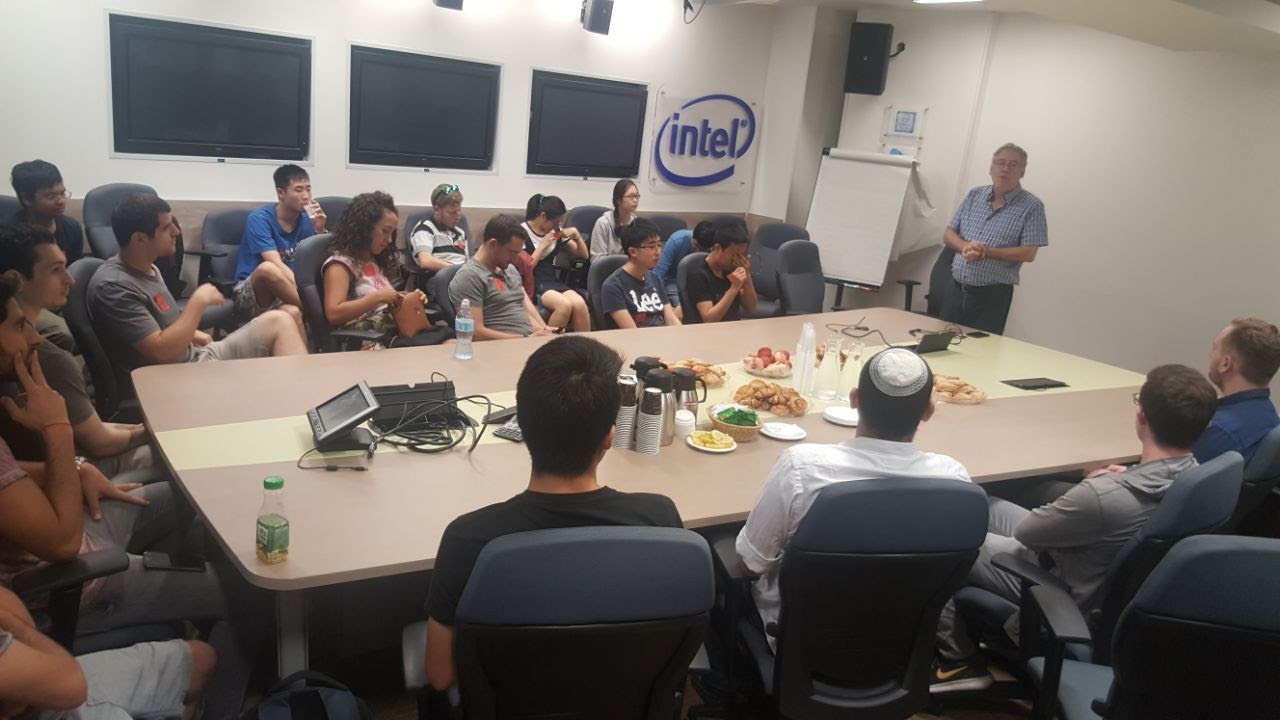
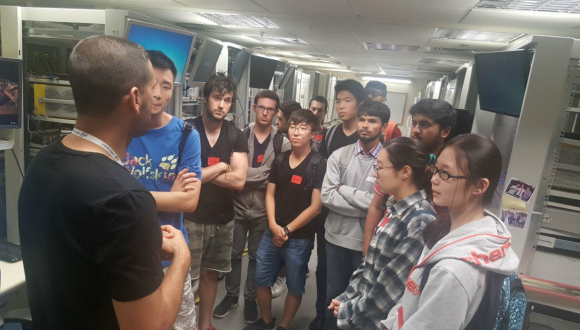
בתאריך 29.5 פתחה אינטל שעריה לסטודנטים שלנו וערכה להם סיור מרתק באתר שלה בעיר חיפה. 

בביקור לקחו חלק 28 סטודנטים שלומדים בתואר ראשון בהנדסת חשמל, חלקם מהתוכנית הישראלית וחלקם מהתוכנית הבינלאומית.


היום החל בהרצאה כללית של אהרון בלאו. אהרון אחראי על הקשר בין אינטל לאקדמיה. בהרצאתו סקר אהרון מידע אודות חברת אינטל בארץ ובעולם, ובהחלט גרם לסטודנטים רצון עז להשתלב בחברה בעתיד.

משם המשיכו הסטודנטים להרצאה טכנולוגית שהועברה ע"י שרון זגורי, העובד כ - 19 שנה בחברת אינטל כמהנדס אנלוגי ו RF. לאחר הרצאה מרתקת היה סיור בשתי מעבדות אשר עוסקות בתחום עיסוקו של שרון.

לתמונות נוספות

אירוע סוף שנה הרצאה על הקשר בין הנדסת מזון לתרבות האכילה הישראלית

28 ביוני 2017, 18:30 
 
אירוע סוף שנה הרצאה על הקשר בין הנדסת מזון לתרבות האכילה הישראלית

על הקשר בין הנדסת מזון לתרבות האכילה הישראלית

מדוע ילדים אוהבים כל-כך לאכול במבה? מה סוד קסמו של השניצל הביתי? 

איזה אלגוריתם יעיל להכנת שיפודי פרגית? מה הקשר בין גודל הצלחת למחיר המנה במסעדה?

 הרצאתו של ד"ר יחיל צבן

 יום רביעי 28.06.17

18:30-20:30

 יש להרשם מראש על מנת להבטיח מקומך

EE Seminar: Statistical Signal Processing of Extreme Attenuation Measurements Taken by Commercial Microwave Links for Rain Monitoring

12 ביוני 2017, 15:00 
חדר 011, בניין כיתות-חשמל  

Speaker: Jonatan Ostrometzky

Ph.D. student under the supervision of Prof. Hagit Messer-Yaron


Monday, June 12th, 2017 at 15:00
Room 011, Kitot Bldg., Faculty of Engineering


Statistical Signal Processing of Extreme Attenuation Measurements Taken by Commercial Microwave Links for Rain Monitoring


Abstract


This research deals with the case where parameter estimation is required, but only observations of extreme values (i.e., the minimum observed value and/or the maximum observed value per interval) are available. Such estimation problem characterizes rain estimation from measurements logged by network managements systems, implemented on commercial microwave links in the backhaul of cellular networks.


Based on a novel analytical approach which we developed in order to approximate the cumbersome expressions of the relevant Fisher information matrices and to produce simple, practical, and solvable forms, a fully applicable workflow of rain estimation will be presented. This new rain estimation workflow uses the available quantized version of the minimum and the maximum measured signal levels (reported at 15-minute intervals) which are produced by commercial microwave links of cellular networks. A demonstration of the established workflow using actual cellular data is presented, and is shown to produce accurate rain estimates, potentially in real time, with no need for training, prior, or side information.

עמודים

אוניברסיטת תל אביב עושה כל מאמץ לכבד זכויות יוצרים. אם בבעלותך זכויות יוצרים בתכנים שנמצאים פה ו/או השימוש שנעשה בתכנים אלה לדעתך מפר זכויות
שנעשה בתכנים אלה לדעתך מפר זכויות נא לפנות בהקדם לכתובת שכאן >>