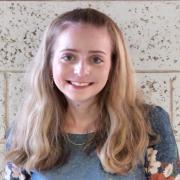
School of Mechanical Engineering Ittai Shamir and Lior Shig

10 במאי 2017, 14:00 - 15:00 
בניין וולפסון חדר 206  
ללא תשלום
   School of Mechanical Engineering Ittai Shamir and Lior Shig


School of Mechanical Engineering Seminar
Wednesday, May 10, 2017 at 14:00
Wolfson Building of Mechanical Engineering, Room 206


Investigating the morphometry of cortical layers
in the human brain


Ittai Shamir

MSc. Student of Professor Yaniv Assaf

and Professor Yair Shokef


Several Magnetic Resonance Imaging (MRI) approaches were demonstrated in recent years for visualization of the layer arrangement in the cortex either by using high resolution at high magnetic field or by investigating contrast mechanisms that separate the layers. Still, despite these technological achievements, accurate estimation of whole brain layer composition remains limited due to partial volume effects, since some of the layers are far beyond the image resolution.

In this study, we use a low resolution EPI inversion recovery (IR) scan protocol that provides fast acquisition (~12 minutes) and enables extraction of multiple T1 relaxation time components per voxel. These T1 components are assigned to brain tissue types and the assignment is utilized to extract the sub voxel composition of each of the cortical layers. Spatial analysis is conducted using our unique algorithm, based on sampling a network of spherical volumes dispersed throughout the entire cortical space.

Our suggested protocol offers a simple and accurate method for analysis of cortical layer composition, resolving partial volume effects. While direct visualization of the layers is not possible using our approach, it does offer a robust and powerful tool for investigating the layers and their role in cognition. Using this methodology, studies on the role of cortical thickness in brain function and behavior can be expanded to the cortical layer level, thus providing a new level of detail regarding cortical structure.


School of Mechanical Engineering Seminar
Wednesday, May 10, 2017 at 14:00
Wolfson Building of Mechanical Engineering, Room 206


Active Flow Control of Submerged 3D Air Inlet

Lior Shig

MSc Student of Prof. Avi Seifert


Air ingesting propulsion systems that utilize the oxygen of the atmosphere for combustion require that the air transition with minimum pressure losses from the free stream to the engine's entrance. Small losses in internal flow given the large quantities of air required by jet engines cause serious decrease in the thrust and increase in fuel consumption.


Submerged inlets, are widely used in aircraft and cars as a low drag source of external flow for air conditioning, ventilation and cooling systems. The design criteria of these intakes was established during the 1940’s and 50’s. However due to boundary layer ingestion and distortion are not currently used for critical systems.


Flow analysis and boundary layer control methods were applied to a given submerged inlet design that is efficient from the external aerodynamic point of view. The approach for studying the effectiveness of active flow control methods on this kind of inlet was to significantly shorten the original inlet length, which caused internal flow separations and significant engine face distortions. For simplicity, and as an enabling step, low Reynolds number and low Mach number experiments were performed. The preliminary stages of this study included analysis of the baseline flow features of the chosen original inlet design and shortened version. Passive and active flow control techniques were applied to the short inlet in various locations in order to test the sensitivity of the flow to actuation and try to improve the Aerodynamic Interface Plane flow characteristics. Performance parameters such as volumetric flow rate, pressure recovery and flow distortion were defined and calculated in order to evaluate and quantify the level of success. For each of the applied techniques, the effects on the internal flow and integral parameters were measured and analyzed.



בחסות הפקולטה להנדסה אוניברסיטת תל-אביב

14 מרץ 2017
פרופ' יוסי רוזנוקס בהרצאה מרתקת "להיות הדבר הבא"

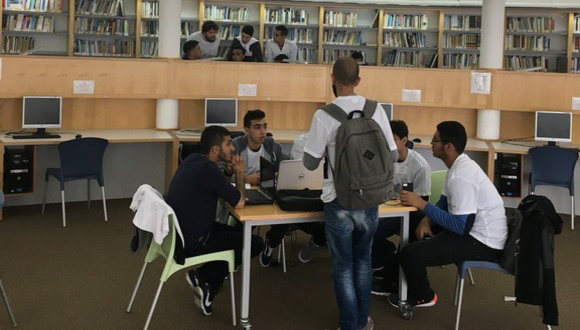
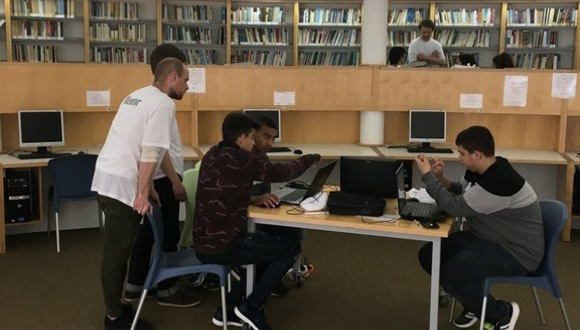
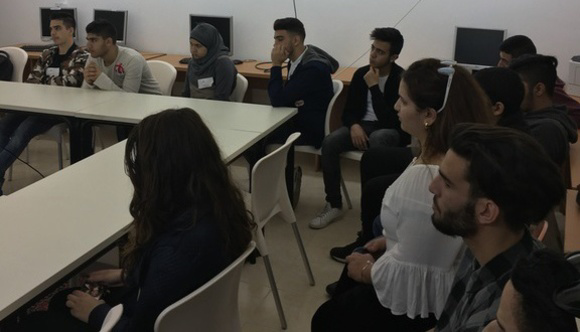
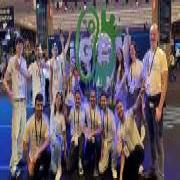
תחרות האקיתון בין תלמידי י"ב מנצרת בחסות הפקולטה להנדסה אוניברסיטת תל-אביב

סוף שבוע שלם הוקדש בנצרת עם צעירים יצירתיים בעלי רעיונות טכנולוגיים מבריקים.

תלמידי התיכון השתתפו בסדנת עיצוב, תכנות ופרזנטציות במטרה להביא לפתרונות יצירתיים לבעיות בהם אנו נתקלים ביומיום וכל זה בעזרת מנטורים מהתעשייה.


EE Seminar: Signal Modeling: From Convolutional Sparse Coding to Convolutional Neural Networks

 (The talk will be given in English)


Speakers:   Vardan Papyan & Yaniv Romano
                   Computer Sciences Faculty, Technion


Monday, April 3rd, 2017
15:00 - 16:00

Room 011, Kitot Bldg., Faculty of Engineering


Signal Modeling: From Convolutional Sparse Coding to Convolutional Neural Networks


Abstract


Within the wide field of sparse approximation, convolutional sparse coding (CSC) has gained increasing attention in recent years. This model assumes a structured-dictionary built as a union of banded Circulant matrices. Most attention has been devoted to the practical side of CSC, proposing efficient algorithms for the pursuit problem, and identifying applications that benefit from this model. Interestingly, a systematic theoretical understanding of CSC seems to have been left aside, with the assumption that the existing classical results are sufficient.


In this talk we start by presenting a novel analysis of the CSC model and its associated pursuit. Our study is based on the observation that while being global, this model can be characterized and analyzed locally. We show that uniqueness of the representation, its stability with respect to noise, and successful greedy or convex recovery are all guaranteed assuming that the underlying representation is locally sparse. These new results are much stronger and informative, compared to those obtained by deploying the classical sparse theory.


Armed with these new insights, we proceed by proposing a multi-layer extension of this model, ML-CSC, in which signals are assumed to emerge from a cascade of CSC layers. This, in turn, is shown to be tightly connected to Convolutional Neural Networks (CNN), so much so that the forward-pass of the CNN is in fact the Thresholding pursuit serving the ML-CSC model. This connection brings a fresh view to CNN, as we are able to attribute to this architecture theoretical claims such as uniqueness of the representations throughout the network, and their stable estimation, all guaranteed under simple local sparsity conditions. Lastly, identifying the weaknesses in the above scheme, we propose an alternative to the forward-pass algorithm, which is both tightly connected to deconvolutional and recurrent neural networks, and has better theoretical guarantees.


03 באפריל 2017, 15:00 
חדר 011, בניין כיתות-חשמל  

לנועה מתוקי, שסיימה לאחרונה דוקטורט

14 מרץ 2017
מלגת הנשיא לפוסט דוקטורנטית לנועה מתוקי, שסיימה לאחרונה דוקטורט

נועה מתוקי, שסיימה לאחרונה דוקטורט בהנחייה משותפת של פרופ' נעם אליעז מהמחלקה למדע והנדסה של חומרים ושל פרופ' דניאל מנדלר מהמחלקה לכימיה באוניברסיטה העברית, נמנית עם 5 הזוכות באוניברסיטת תל אביב במלגת הנשיא לפוסט דוקטורנטיות בוגרות האוניברסיטה לשנת 2017. בסוף החודש נועה תעזוב לאוניברסיטת נורת'ווסטרן היוקרתית (אילינוי, ארה"ב), שם תבצע בתר-דוקטורט בהנחיית פרופ' Derk Joester מהמחלקה למדע והנדסה של חומרים. נושא בתר הדוקטורט:

"Preventing tooth wear and caries - understanding the role of intergranular phases in teeth"

נועה: כל הכבוד! ברכות חמות מכולנו.

Biomedical Engineering department seminar

19 במרץ 2017, 14:30 


Speaker: Ariel Birenbaum,

School of Electrical Engineering


Multi-View Longitudinal CNN for Multiple Sclerosis Lesion Segmentation


Abstract


This work presents a deep-learning based automated method for Multiple Sclerosis (MS) lesion segmentation. Automatic segmentation of MS lesions is a challenging task due to their variability in shape, size, location and texture in brain Magnetic Resonance (MR) images.

In the proposed scheme, MR intensities and White Matter priors are used to extract candidate lesion voxels, following which Convolutional Neural Networks are utilized for false positive reduction and to obtain the final segmentation result.

The proposed networks use longitudinal data, a novel contribution in the domain of MS lesion analysis.

The method obtained state-of-the-art results on the 2015 Longitudinal MS Lesion Segmentation Challenge dataset, and achieved a performance level equivalent to a trained human rater. Automatic segmentation methods, such as the one proposed, once proven in accuracy and robustness, can help diagnosis and patient follow-up while reducing the time consuming need of manual segmentation.


העבודה נעשתה בהנחיית פרופ' חיית גרינשפן מהמחלקה להנדסה ביו-רפואית,

 אוניברסיטת תל-אביב

ההרצאה תתקיים ביום ראשון 19.03.17, בשעה 14:30

בחדר 315, הבניין הרב תחומי, אוניברסיטת תל אביב

EE Seminar: Multi-objective Topology and Weight Evolution of Neuro-controllers and its Application for Robot Navigation


Speaker: Omer Abramovich

M.Sc. student under the supervision of Prof. Emilia Friedman & Dr. Amiram Moshaiov


Wednesday, March 22nd 2017 at 15:30

Room 011, Kitot Bldg., Faculty of Engineering


Multi-objective Topology and Weight Evolution of Neuro-controllers and its Application for Robot Navigation


Abstract


In the last decades, there has been a substantial increase of interest in the field of evolutionary neural networks with an emphasis on evolutionary robotics. Neuroevolution combines the adaptation power of neural networks with the advantages of evolutionary search to find networks capable of solving highly complex tasks.

Evolving neuro-controllers for robot applications might be a hard challenge for standard evolutionary search techniques. Neuroevolution aims to provide some tailored algorithms to such problems. One example is NEAT, which is an evolutionary algorithm to find not only the optimal connection weights, but also the optimal topology of a network. However, such TWEANN (Topology and Weight Evolution of Artificial Neural-Networks) algorithms are commonly restricted to single objective evolution, and their adjustment for multi-objective problems is in its infancy stage.

In this thesis, we propose a novel fully automated approach to evolve topologies and weights of neuro-controllers for multi-objective problems and in particular for navigation application. The suggested approach dismisses any prerequisites of expert knowledge regarding the network topology and enables to achieve better performances than expert designed neuro-controllers. A key component of this study is the proposed modification to NEAT, which results in an innovative generic multi-objective TWEANN algorithm. The suggested algorithm is proven to outperform state-of-the-art multi-objective TWEANNs in the tested cases of this study.

22 במרץ 2017, 15:30 
חדר 011, בניין כיתות-חשמל  
עודכן: 13.03.2017

אנו מבקשים להביא לידיעתכם את תקנון הסמינרים העדכני.


להלן התקנון:


  • סמינר מחלקתי


התלמידים חייבים להשתתף בסמינרים של בית הספר/המחלקה בהיקף של 14 סמינרים לתלמידים במסלול מחקרי ו-8 סמינרים במסלול עם פרויקט.


ניתן להשתתף בסמינרים של מחלקות אחרות ופקולטות אחרות בנושאים הרלוונטיים לתחום המחקר של הסטודנט, בהיקף של 50% מחובת הסמינרים בתכנית הלימודים, עד 7 סמינרים בנתיב המחקרי (מתוך 14 סמינרים) ועד 4 סמינרים בנתיב פרויקט (מתוך 8 סמינרים).(1) השתתפות בסמינרים של מחלקות/פקולטות אחרות תתקבל בתנאי שנוכחות בסמינרים כאמור תתועד ותאושר מראש על ידי רכז הסמינרים של יחידת הלימוד והמנחה.


כנס מדעי- במקרה של השתתפות בכנס מדעי, יגיש התלמיד בקשה מראש לאחראי על הסמינרים והמנחה לזיכוי משעות סמינר. המנחה ורכז הסמינרים יחליטו על היקף שעות הסמינר בהן יזוכה התלמיד כל מקרה יישקל  לגופו.


תלמידים בתכנית להנדסת חשמל חייבים לשמוע 14 סמינרים בנתיב תזה ו – 8 סמינרים בנתיב פרויקט. כנס מדעי לא נותן קרדיט לחישוב שעות סמינר.


חובת השתתפות בסמינרים במחלקה למדע והנדסה של חומרים

על הסטודנט מוטלת חובת השתתפות בסמינרים בתחום מדע והנדסה של חומרים המאורגנים ע"י המחלקה או ע"י יחידות אקדמיות אחרות באוניברסיטת תל-אביב. במהלך התואר יש להשתתף ב-14 סמינרים – תלמידים בנתיב פרוייקט, ו-8 סמינרים – לתלמידים בנתיב תיזה. באחריות הסטודנט למלא טופס השתתפות בסמינרים (הורד אותו כאן)[1] ולהחתים בתום כל סמינר את האחראי האקדמי או חבר סגל אקדמי אחר הנוכח בסמינר. השתתפות, כמרצה או כמציג פוסטר, בכנס מדעי בתחום החומרים שנמשך לפחות יום אחד תזכה את הסטודנט ב-4 שעות סמינר. במהלך התואר ניתן לקבל קרדיט זה פעם אחת בלבד. על התלמיד להגיש בקשה למרכז הסמינרים המחלקתי. לבקשה יש לצרף את המלצת המנחה הקבוע, תוכנית הכנס עם סימון ההצגה של התלמיד, ואסמכתא להשתתפות בכנס. עם השלמת חובת ההשתתפות בסמינרים הסטודנט יגיש אותו למזכירות סטודנטים, והוא יתויק בתיקו האישי ויהווה אחד התנאים לסגירת התואר.


 (1) קורסים של מכון גורדון לאנרגיה יוכרו כקורסים מרוכזים לצורך חובת השתתפות בסמינרים, על פי אישור מראש מהרכז האקדמי של הסמינרים בבית הספר/המחלקה המעניק/ה את התואר.


לוח אירועים פקולטי      - סמינרים מחלקתיים מפורסמים בלוח האירועים הפקולטי


3.4.   שלבי הלימודים


ככלל, לימודי התואר השני בפקולטה להנדסה כוללים שני שלבים: הראשון – "לימודי צבירה" והשני - לימודים "מן המניין". תלמידים ב"זמן מלא" יתקבלו ישירות לשלב "מן המניין". מועמדים לתואר שני הנדרשים ללימודי השלמה – ראו סעיף 4 ד'.


3.4.1. שלב לימודי הצבירה

השלב הראשון ללימודים  (לתלמידים שאינם ב"זמן מלא") הוא שלב לימודי הצבירה שבמהלכו יצבור התלמיד נ.ז. לתואר שני. תוכניות הלימודים השנתיות יאושרו בשלב זה על ידי מנחה זמני או מנחה מלווה.


תלמיד המעוניין בנתיב לימודים מחקרי יכול להתקשר עם מנחה לעבודת התזה כבר בשלב הצבירה, ולהתקדם בעבודת המחקר בעודו בשלב הצבירה.


יש לסיים את הלימודים בשלב הצבירה במהלך שלוש שנים אקדמיות לכל היותר. בכל שנה במהלך לימודי הצבירה יש ללמוד לפחות 3 קורסים הנדסיים ולסיים לפחות שניים מהם בהצלחה. חרג התלמיד ממכסת הזמן התקנית ללימודים בשלב הצבירה או למד פחות מ- 3 קורסים בשנה, יופסקו לימודיו כאמור בסעיף 6.1.


תלמיד בשלב לימודי הצבירה חייב לסיים בהצלחה את קורסי החובה של בית הספר/המחלקה (לרבות רישום חוזר לאחר כשלון - אם נדרש) לא יאוחר מתום הסמסטר הרביעי ללימודיו. מומלץ לכן להירשם לכל קורסי החובה במהלך השנה הראשונה ללימודים, כך שניתן יהיה לתקן כשלון, במידה ויהיה כזה, עד תום השנה השנייה ללימודים.


התנאים למעבר לשלב "מן המניין":


  • התקשרות עם מנחה קבוע או הודעה על בחירת נתיב  לימודים פרויקט גמר (ללא תיזה).
  • צבירת לפחות 12 נ.ז. ולכל היותר 18 נ.ז. בקורסים הנדסיים.


הערה: הקורסים הנצברים יהיו בציון ממוצע של 70 לפחות, וציון 80 לתלמידים המתכוונים ללמוד ב"זמן מלא", וכן נדרש לסיים בהצלחה את כל קורסי החובה של בית הספר/המחלקה.


תלמיד בשלב לימודי הצבירה העובר ללימודים ב"זמן מלא" יעבור למעמד "מן המניין".


בכל נתיב לימודים על התלמיד ללמוד לפחות 25% מתוכנית הלימודים, קורסים הנדסיים במעמד "מן המניין".


בשלב ה"צבירה" ישלם התלמיד שכר לימוד לפי מספר השעות הנלמדות בפועל, שיחויבו על פי התעריף הנהוג באוניברסיטה בלימודי התואר שני ללא דרישת מינימום 50% שכר לימוד לשנה וחיוב בגרירה. עם המעבר למסלול הלימודים "מן המניין", יוכרו לתלמיד כל הקורסים שלמד בלימודי הצבירה וכן ייזקף לזכותו תשלום שכר הלימוד ששילם בגינם.


בסיום לימודי הצבירה בהצלחה, על התלמיד לפנות למזכירות תארים מתקדמים בפקולטה בבקשה לעבור למעמד "מן המניין" באחר מנתיבי הלימודים - נתיב מחקרי או פרויקט גמר.


לא פנה התלמיד מיוזמתו כאמור, והוא זכאי לעבור למעמד "מן המניין", יועבר למעמד "מן המניין" בנתיב פרויקט גמר (כברירת מחדל). אם אינו זכאי (קרי, בוגר פקולטה שאינה הנדסית ולא התקשר עם מנחה), יופסקו לימודיו.


זכיה בפרס

13 מרץ 2017
פרסי דוקטורנט מצטיין של האיגוד להנדסה רפואית וביולוגית (ISMBE).


אנו שמחים לברך את אלון דיאמנט-כרמל (בהנחיית תמיר טולר) ועודד פנקס (בהנחיית מיטל זילברמן) על זכייתם בפרסי דוקטורנט מצטיין של האיגוד להנדסה רפואית וביולוגית (ISMBE).

יום האשה הבינלאומי

14 במרץ 2017, 10:00 
בניין גילמן  
יום האשה הבינלאומי

הנכם מוזמנים ומוזמנות לאירוע הממלא את כולנו גאווה גדולה על היותה של האוניברסיטה

מוסד שבו חוקרות נמצאות על הבמה הבינלאומית בעבודתן המדעית.

נוכחותן הבולטת של החוקרות בכל תחומי המדע- מעיד לא רק על יכולתן האישית אלא גם

על רוחה ומהותה של האוניברסיטה כמרחב צמיחה שוויוני, מעודד ומטפח.


עמודים

אוניברסיטת תל אביב עושה כל מאמץ לכבד זכויות יוצרים. אם בבעלותך זכויות יוצרים בתכנים שנמצאים פה ו/או השימוש שנעשה בתכנים אלה לדעתך מפר זכויות
שנעשה בתכנים אלה לדעתך מפר זכויות נא לפנות בהקדם לכתובת שכאן >>