פיתוח מדריך לאפליקציית וואטסאפ במגוון שפות בעל התאמה לצרכים למגזר השלישי

26 אפריל 2020
פיתוח מדריך לאפליקצית וואטסאפ במגוון שפות בעל התאמה לצרכים למגזר השלישי

משבר הקורונה הוביל את אזרחי העולם לבידוד ביתי וריחוק משפחתי וחברתי, מה שהביא לעלייה בשימוש הכלים הדיגיטליים כגון zoom ו - WhatsApp אך ישנו ציבור שלם במגזר הגיל השלישי שהמעבר לזירה הטכנולוגית לא בא לו בקלות. הפקולטה להנדסה התגייסה למציאת פתרון שיתן מענה לצרכי הגיל השלישי ותחושת חיבור לחברה.


סגל הפקולטה להנדסה באוניברסיטת תל אביב בשיתוף סטודנטים וסטודנטיות מבית הספר להנדסה מכנית והמחלקה להנדסה ביו- רפואית החליטו לנסות למצוא פתרון יצרתי כדי להקל על האוכלוסייה הקשישה אשר נמצאת בקשיים מאוד חזקים עקב משבר הקורונה: "מדריך לאפליקצית וואטסאפ במגוון שפות". מדריך קליל זה נבחן ע״י גורמים שונים תוך התייעצות עם הסגל לפסיכלוגיה קלינית באוניברסיטת תל אביב במטרה להבטיח התאמה לצרכי המבוגרים. "הגענו למסקנה שצריך ליצור את תחושת הביחד אצל אוכלוסיית הקשישים, שמרגישה מאוד בודדה" מסביר אור בנסון, סטודנט להנדסה מכנית.

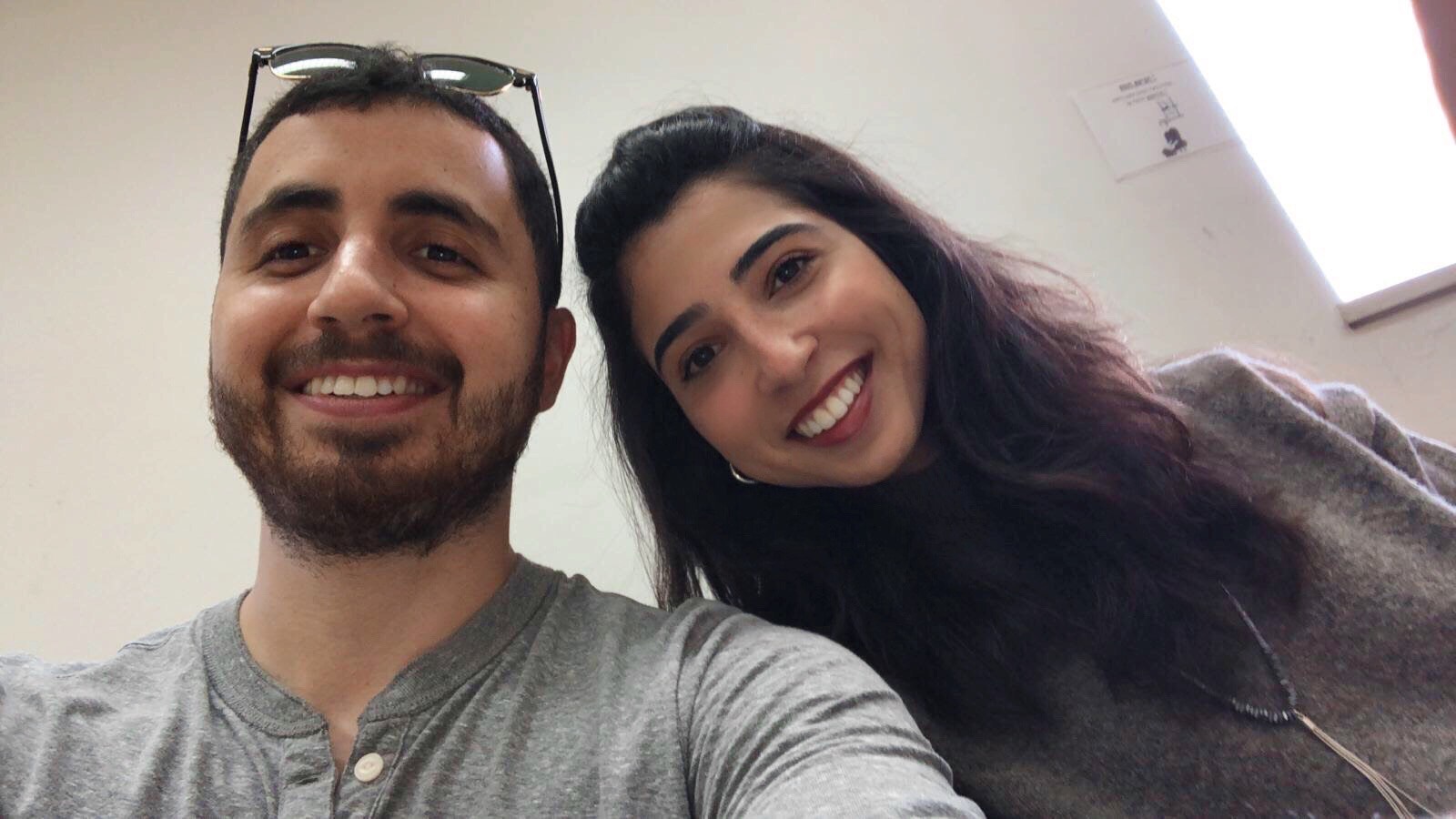
בתמונה מימין לשמאל: בל קריגר, סטודנטית שנה שלישית להנדסה ביו-רפואית ואור בנסון, סטודנט שנה שלישית להנדסה מכנית


מה ניתן למצוא במדריך?

בהדרכה רוכזו את כל הנושאים הכי רלוונטיים כדי ליצור הבנה מיטבית אצל אוכלוסייה זו, שלפעמים בחלקה מתקשה מאוד בטכנולוגיה. ניתן למצוא בחוברת ההדרכה הסברים פשוטים כגון:

  • איך מורידים את אפליקציית ה - WhatsApp 
  • איך לפתוח קבוצה עם המשפחה או חבריהם 
  • כיצד לקיים שיחות ווידיאו
  • מה המשמעות של כל כפתור המופיע באפליקציה
  • כיצד להגדיל את הכתב ועוד כמה פיצ'רים נחמדים.


המצגות תורגמו למספר שפות: אנגלית, רוסית, ערבית וצפרתית. כאשר לכולם יש גישה נוחה.


הצוות היזמי

  • אור בנסון - סטודנט שנה שלישית להנדסה מכנית
  • בל קריגר - סטודנטית שנה שלישית להנדסה ביו-רפואית 
  • שירה אברמוביץ- הנדסה ביו-רפואית סטודנטית שנה שלישית
  • פרופ' רן גלעד-בכרך - הנדסה ביו-רפואית.
  • פרופ' ראמי חג'-עלי - ראש בית הספר להנדסה מכנית
  • פרופ' גל שפס - בית הספר למדעי הפסיכולוגיה


תודה לכל השותפים הנוספים שעזרו בפרויקט:

  • הודיה אביטבול- הנדסה ביו-רפואית סטודנטית שנה שלישית

  • ג'ואנה גולדנברג- הנדסה מכנית סטודנטית  שנה שלישית

  • רבקה טובמן - מדעי המחשב 

  • איליה ברסלבסקי הנדסה ביו-רפואית סטודנט שנה שלישית

  • ד"ר דלית קן-דרור פלדמן - מנחה משפטית, הקליניקה למשפט לטכנולוגיה ולסייבר - הפקולטה למשפטים, אוניברסיטת חיפה


לינק למדריך

https://www.whatsapptutorial.com/

למעוניינים להתנדב לפרויקט ניתן ליצור קשר עם אור בנסון במייל: orbenson@gmail.com

Microknot optical resonators and their applications

24 ביוני 2020, 14:00 - 15:00 
בניין וולפסון 206  
Microknot optical resonators and their applications

~~

PhD "ZOOM" SEMINAR
Wednesday, June 24, 2020 at 14:00
Microknot optical resonators and their applications
Alexandra Blank
PhD of Dr. Yoav Linzon
Resonating microstructures defined locally on optical fiber tapers are an attractive venue for researchers in the recent years. These engineered microstructures find use in various applications, including photonic filters, lasers, optomechanical light-matter interaction devices, and various sensing elements mimicking human smell and taste sensing system (gas and liquids sensors), known as electronic noses and electronic tongues.
The presented work is devoted to experimental and numerical investigations of the behaviour of microknot resonators (MKRs) defined locally on optical fiber tapers as a promising platform for gas and liquid sensing applications. We demonstrate the two-probe localized heating technique for MKR fusing intended for improving its optical performance and mechanical stability in size and circular profile. We show that an above-threefold dynamical range enhancement has been consistently achieved. The fused MKRs are found to maintain phase stability, as opposed to the unfused knots exhibiting a random phase drift. We prove that e-fusing improves the mechanical strength in the MKR, providing it with transferability that is of importance in sensing applications.
We investigate fused MKRs’ characteristics for in-liquid sensing both local, where the analyte is delivered to the packaged device and the remote sensing. We have suggested and demonstrated two deployment schemes, namely, folded configuration intended for remote sensing, and straight configuration on either hydrophilic or hydrophobic substrate intended for packaged integration of photonic sensors. We found that in folded configuration reversibility remained sustainable over approximately 50 cycles of operation, whereas in most cases of the straight configuration on glass substrate transmission drops to the noise level after a few dewetting cycles. We show that a hydrophobic PDMS substrate can be advantageous relating to surface chemistry as compared to a typical hydrophilic glass substrate. For all those configurations we demonstrated their persistent sensing capabilities and defined unique recognition plots in principle components space specific to pure and diluted volatile liquids tested.
We demonstrate a durable and simple humidity sensing approach based on index-sensitive interference spectroscopy of surface stress birefringence and incorporating tapered microfibers on a silicon substrate coated with an active polymer layer. We show theoretically that the transmission spectrum of coated tapers possess interference patterns induced by the stress applied to the taper due to the coating weight load. The coated device demonstrated persistent detection capability in humid environment and a linear response to calibrated analytes. For each volatile organic analyte tested we defined a calibration plot in principal component space.
Microstructured tapers, when untreated, amenable to low performance in terms of resonance depth (dynamical range), Q and mechanical fragility. In this work we performed a novel comprehensive numerical study of the photonic transmission in manually prepared microknot resonators with different contact coupling area geometries and refractive index variations. Using selective modifications of the MKR coupling area and index profile, the transmission characteristics were studied, and a recipe for the experimental realization of high quality-factor resonators is prescribed.
We present results of the numerical study of the photonic transmission in 3D resonating microstructures defined on optical tapered fibers as functions of both radius and doping and deduce their sensitivities to localized refractive index variations in terms of resonance shifts. Based on the analysis of the transmission characteristics of polymer-coated microstructures, we demonstrated a linear response to the refractive index gradient in NIR wavelength range.
We envision that simple and robust devices with improved optical and mechanical characteristics will be harbored in next generation sensors, as well as optomechanical applications incorporating microfiber-based resonating structures.
Join Zoom Meeting
https://zoom.us/j/4962025174
The meeting will be recorded and made available on the School’s site.


Graph Theoretical and Geometrical Investigation of Kinematics and Singularity of 3D Parallel Mechanisms: Michael Slavutin

06 במאי 2020, 14:00 - 15:00 
בניין וולפסון 206  
0
Graph Theoretical and Geometrical Investigation of Kinematics and Singularity of 3D Parallel Mechanisms: Michael Slavutin

~~

SCHOOL OF MECHANICAL ENGINEERING SEMINAR
Monday, March 23, 2020 at 14:00 
Wolfson Building of Mechanical Engineering, Room 206
Graph Theoretical and Geometrical Investigation of Kinematics and Singularity of 3D Parallel Mechanisms

Michael Slavutin
PhD Yoram Reich

This work presents geometrical and graph theoretical methods for analysis of mechanisms in three dimensions. In particular, the singularity analysis by geometric methods of parallel mechanisms is presented. The singularity of the most common three-dimensional mechanism, the 6/6 Stewart platform is fully analyzed. The Aronhold-Kennedy theorem is used for this analysis. This analysis is based on the properties of the reciprocal product of two screws, which depends only on the relative position of the two screws. First, the singularity criterion is developed assuming that there exist two lines that cross four of the six legs of the platform. The instantaneous screw axis and the forces in the legs are found. Next, the above assumption is relaxed and the singularity criterion is developed in a most general configuration. For this purpose, the two degrees-of-freedom mechanism obtained by removal of two legs of the platform is analyzed. The line that is a locus of all possible instantaneous screw axes of such mechanism is found. It is proved that the mechanism is singular if three loci of the instantaneous screw axes of three such sub-mechanisms share a common perpendicular. This criterion is expanded to a general parallel mechanism. Examples of analyzing complex mechanisms with this criterion are shown.
The analysis of singularity of a multi-platform parallel mechanism is performed by building an equivalent simpler mechanism using the reciprocality relation. The two-platform and single- and two-circuit three-platform mechanisms are reduced to a single-platform mechanism. It is shown that the three-circuit three-platform mechanisms are irreducible except for certain cases. This method is shown to be applicable to even more complex mechanisms.
The method used for analysis of the singularity of the multi-platform mechanisms is developed formally into a graph-theoretical duality that is used for kinematic and static investigation of a mechanical system. In this duality, a node of the dual graph that corresponds to a platform of a dual mechanism is placed in a face of a graph of the original mechanism. Edges of the dual graph that correspond to the constraints of the dual mechanism cross the edges of the primal graph and are built so that the dual edge is reciprocal to any primal edge crossed by it. The algorithms for determining the geometry of the dual edges are developed in the first part of this work. Since these graphs are multigraphs, there are various possibilities of building the dual graph. Therefore, the building of dual to a dual graph results in a graph that may be different from the original one. This allows simplification of the original mechanism by successful application of the dual operation, preserving the kinematic and static properties of the original systems.

Removal of acid dyes from concentrated synthetic and real dye effluent using biochar as sustainable adsorbent: Elizaveta Sterenzon

27 באפריל 2020, 14:00 - 15:00 
בניין וולפסון 206  
0
Removal of acid dyes from concentrated synthetic and real dye effluent using biochar as sustainable adsorbent: Elizaveta Sterenzon

~~

SCHOOL OF MECHANICAL ENGINEERING SEMINAR
Monday, April 27, 2020 at 14:00 
Wolfson Building of Mechanical Engineering, Room 206

Removal of acid dyes from concentrated synthetic and real dye effluent using biochar as sustainable adsorbent

Elizaveta Sterenzon
M.Sc. student of Prof. Hadas Mamane

Wastewater from the textile dyeing industry is a growing problem. It is often rich in color and dye residues, toxic compounds, chemicals, high BOD concentration and much harder degradation materials. The extended use of synthetic dyes, rather than the natural ones, makes the treatment of these textile effluents, much more difficult due to their high stability and low biodegradability. Different textile wastewater treatment technologies already exist in the market. However, in many cases, especially with household dyeing units, the textile wastewater is not treated and discharged directly into nearby water sources. There is a growing demand for low-cost, effective and sustainable alternatives for treatment methods, and adsorption occupies a prominent place as a method for dye removal. This study focused on the removal of acid dyes from synthetic and real dye effluent. For the synthetic effluent, Acid Violet 17 solution was prepared, and the real acid dye effluent was taken from dyer houses from Sirumugai, South India. Pine tree biochar was chosen as a low-cost, sustainable and innovative material for the adsorption. Due to its high porosity and large surface area, biochar is gaining a lot of interest in the field of water treatment, as a low-cost contamination adsorbent. Various parameters were tested to investigate the dye removal ability and the best adsorption conditions, as temperature, solution pH and biochar dosage. Kinetic and thermodynamic studies also have been conducted. The results showed an increased dye adsorption at lower pH and at higher temperatures, which indicates an endothermic reaction. According to the kinetic studies, the governing model for the adsorption is the pseudo second order and the Langmuir isotherm fitted significantly better than Freundlich. Regeneration of the biochar was found to be very effective with absolute ethanol. After 5 regeneration cycles the adsorption ability reduced by only 3% from the initial dye removal, and it was almost no biochar mass loss observed. The real textile effluent demonstrated high adsorption affinity to the biochar as well, with almost 100% dye removal after 60 min of treatment.


Seminar EE - ZOOM = Tuning the Phase and Amplitude Response of Plasmonic Metasurface Etalons

22 באפריל 2020, 14:00 
 

סמינר זה יחשב כסמינר שמיעה לתלמידי תואר שני, למי שמתחבר לסמינר דרך הזום.


You are invited to attend a lecture on Wednesday, Apr 22, 2020 14:00


Join Zoom Meeting

https://zoom.us/j/255986744


Tuning the Phase and Amplitude Response of Plasmonic Metasurface Etalons

By:

Danielle Ben Haim

M.Sc. student under the supervision of Prof. Tal Ellenbogen


Abstract


The research in the field of metasurfaces over the past years has shown their ability to control and manipulate light and thus form unique and novel electro-optical elements. These surfaces consist of arrays of subwavelength particles that exhibit a collective response which is governed by the particles properties, such as their material, shape and size. Understanding the physical behaviour of the particles in the subwavelength regime is what enables to control the overall effective properties of the element.

In this work we study the optical response of plasmonic metasurface etalons in reflection. The etalons consist of a metallic mirror and a plasmonic metasurface separated by wavelength-scale dielectric spacer. We explore the underlying physical mechanisms involved in their electromagnetic response and show that tuning the localized surface plasmon resonance and spacer thickness can be used to achieve both enhanced reflectivity and perfect absorption, in addition to full range phase control, and tunable regions of normal and anomalous dispersion. We characterize the spectral reflection and phase response of metasurface etalons consisting aluminum nanodisks of different radii separated from an aluminum reflector by a SiO2 spacer. We use this approach to demonstrate a simple Hermite-Gaussian (HG) wavelength selective beam-shaping reflective mask and discuss the potential of this concept to be further extended by using multilayers to obtain multi-functional elements.


תשאלו אותנו

לא מצאתם תשובה לשאלות שלכם באתר? למה שלא תשאלו אותנו?

To prevent automated spam submissions leave this field empty.
CAPTCHA
This question is for testing whether or not you are a human visitor and to prevent automated spam submissions.

EE ZOOM Seminar: Bidirectional One-Shot Unsupervised Domain Mapping

26 באפריל 2020, 14:00 
ZOOM  

השתתפות בסמינר תיתן קרדיט שמיעה = עפ"י רישום שם מלא + מספר ת.ז.  בצ'אט

Join Zoom Meeting
https://zoom.us/j/282415583

Speaker: Tomer Cohen

M.Sc. student under the supervision of Prof. Lior Wolf


Sunday, April 26th, 2020 at 14:00

     Zoom


Bidirectional One-Shot Unsupervised Domain Mapping

Abstract

We study the problem of mapping between a domain A, in which there is a single training sample and a domain B, for which we have a richer training set. The method we present is able to perform this mapping in both directions. For example, we can transfer all MNIST images to the visual domain captured by a single SVHN image and transform the SVHN image to the domain of the MNIST images. Our method is based on employing one encoder and one decoder for each domain, without utilizing weight sharing. The autoencoder of the single sample domain is trained to match both this sample and the latent space of domain B. Our results demonstrate convincing mapping between domains, where either the source or the target domain are defined by a single sample, far surpassing existing solutions.

EE ZOOM Seminar: Neural Alignment for Face De-pixelization

22 באפריל 2020, 14:00 
ZOOM  

השתתפות בסמינר תיתן קרדיט שמיעה = עפ"י רישום שם מלא + מספר ת.ז.  בצ'אט

Join Zoom Meeting
https://us04web.zoom.us/j/6207215556


Speaker: Maayan Shuvi

M.Sc. student under the supervision of Prof. Daniel Cohen-Or


Wednesday, April 22nd, 2020 at 14:00

     ZOOM


Neural Alignment for Face De-pixelization

Abstract

We present a method to reconstruct a high-resolution video from a face-video, where a person’s identity was obscured by pixelization. This hiding method is popular because the viewer can still perceive a human face figure and the overall head motion. However, we show in our experiments how a fairly good approximation of the original video is reconstructed so that anonymity is compromised.

Our system exploits the simultaneous similarity and small disparity between close-by video frames depicting a human face, and employs a spatial transformation component that learns the alignment between the pixelated frames.

Each frame, supported by its aligned surrounding frames, is first encoded, then decoded to a higher resolution. Reconstruction and perceptual losses promote adherence to the ground-truth, and an adversarial loss assists in maintaining domain faithfulness. There is no need for explicit temporal coherency loss as it is maintained implicitly by the alignment of neighboring frames and reconstruction. 

Our work shows that given the specific prior of a human face, which is well structured, and using multiple aligned frames, there is enough information in a pixelated video stream to reconstruct a high-quality approximation of the original signal.


פרופ' נתן שקד מהמחלקה להנדסה ביו-רפואית, פיתח יחד עם המסטרנט יואב נייגט ושאר צוות החוקרים שלו רשת נוירונים ממוחשבת ללימוד עמוק אשר יודעת לבצע צביעה וירטואלית של תאים ביולוגיים, בלי צורך בצביעה כימית אמיתית שלהם.

  • תגיות:

החוקר.ת מאחורי המחקר

החודש התפרסם מאמרו של פרופ' שקד במגזין היוקרתי PNAS, הנחשב לאחד העיתונים המדעיים הטובים והוותיקים בעולם. במאמר הצליחו פרופ' שקד וקבוצתו להציג גישה חדשה של למידה עמוקה הנקראת HoloStain, אשר ממירה תמונות של תאים ביולוגיים מבודדים, שנרכשו ללא צביעה כימית על ידי מיקרוסקופיה הולוגרפית, לתמונותיהם הצבועות דיגיטלית, עם יכולת לראות אברונים (חלקים מהתא בעלי תפקידים ספציפיים) בתוך התאים, כאילו שמדובר בתאים צבועים באמת.


תאים ביולוגיים בצלוחית המצולמים במיקרוסקופ אור הם ברובם שקופים ולא ניתן לראות את התוכן שלהם. צביעת תאים היא טכניקה המקלה ומשפרת את הצפייה בתאים אלו ונמצאת בשימוש רחב בביולוגיה וברפואה, למשל כדי לאבחן מחלות או לבצע בדיקות מעבדה סטנדרטיות. פעולתה העיקרית היא שיפור ניגודיות הצבעים המאפשרת לראות את המבנה הפנימי של התאים למרות שקיפותם. הצביעה נעשית באמצעות קשירה כימית בין מולקולת הצבען (חומר הצביעה) לבין המולקולה הספציפית לה בתא, וכך אפשר לראות את האברונים הפנימיים בתוך התא ולאבחן את מבנהו.


הולוגרפיה קלינית

פרופ' שקד וקבוצתו פיתחו דרך לדימות טופוגרפי כמותי של תאים ללא צביעה המבוססת על הולוגרפיה קלינית, אשר מקליטה עד כמה האור התעכב במעבר דרך התאים, מה שמניב מפות גובה כמותיות של התאים. את זה ניתן לעשות מהר מאוד, אפילו תוך כדי זרימה של התאים. המערכות הללו היו עד לא מזמן מסובכות ויקרות מידי לשימוש קליני, אך הדבר נפתר בעזרת המצאותיה האחרונות של הקבוצה - מודולים הולוגרפים קטנים שמתממשקים ליציאה של מיקרוסקופי אור קליניים רגילים ויכולים להניב הולוגרפיה איכותית בתנאים קליניים.


מבעיה לפתרון

למרות שהתמונות של ההולוגרפיה הן כמותיות ולא דורשות צביעה כימית, קלינאים מתקשים להשתמש בהן, כי הן לא נראות כמו תמונות של תאים צבועים, ששם רואים בבירור את האברונים הפנימיים של התא. לצורך פתרון בעיה זו, קבוצת המחקר בנתה רשת נוירונים ממוחשבת ללימוד עמוק אשר יודעת, לאחר אימון מתאים, לקחת את תמונות ההולוגרפיה ולהציג אותן כאילו הן צבועות, בזמן אמת (במהירות רבה).


שיטות לבניית רשתות לימוד עמוק התפתחו רק לאחרונה עקב הצורך בכוח חישוב רב בזמן האימון שלהן.  


היתרונות לצביעה וירטואלית של תאים ביולוגיים

צביעה וירטואלית של תאים ביולוגיים חשובה לבדיקות מעבדה שגרתיות רבות שבהן צובעים תאים כדי לאפיין ולמיין אותם (למשל בדיקת דם). כעת, כבר לא חייבים לצבוע את התאים בצורה כימית לצורך אבחנה מבנית שלהם, וזה עתיד לחסוך כסף וזמן. בנוסף, יש משימות רפואיות שבהן צביעה כימית לא אפשרית בגלל שהיא הורסת את התא (למשל בחירת זרעונים להפריה חוץ גופית), או בגלל שהצבענים המתאימים לא קיימים לסוג התאים הנבחן. מעבר לכך, התמונות שמייצרת הרשת הלומדת נקיות יותר, וגם ניתן לקחת תאים שנרכשו שלא בפוקוס ולהכניס אותם לפוקוס בצורה אוטומטית במחשב, מכיוון שהרכישה היא הולוגרפית (כלומר של כל חזית הגל של האור). זה מגדיל את האפשרות לעבד יותר תאים בזמן נתון (כי אם עוברים שני תאים - אחד בפוקוס והשני לא בפוקוס במכשיר שמזרים תאים - ניתן לרכוש את שניהם מבלי לאבד זמן).
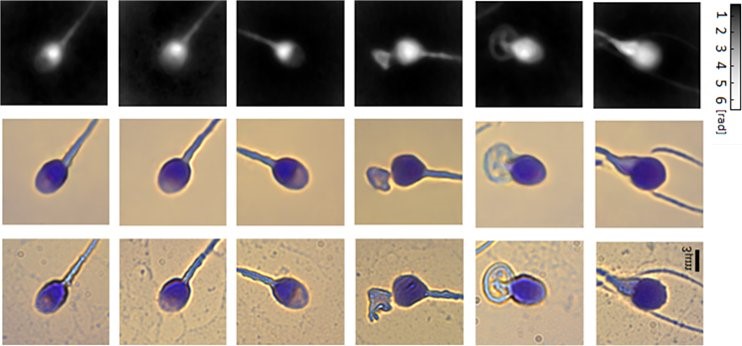
שורה ראשונה - מפות טופוגרפיות כמותיות של תאי זרע שהושגו על ידי הולוגרפיה ללא צביעה. 

שורה שניה - תמונות של תאי זרע צבועים וירטואלית (ללא צביעה אמיתית) - זוהי תוצאת רשת הנוירונים לאחר עיבוד המפות הטופוגרפיות שמוצגות בשורה הראשונה.

שורה שלישית - אותם תאים שצבועים באמת, על ידי צביעה כימית, להשוואה.

שלוש העמודות השמאליות מציגות תאים בעלי מורפולוגיה תקינה. שלוש העמודות הימניות מציגות תאים בעלי מורפולוגיה שאינה תקינה. כעת, אפשר לבצע צביעה וירטואלית של תאי הזרע במהלך הפריה חוץ גופית ולאבחן את התאים כאילו הם נצבעו כימית אמיתית.


* מחקר זה זכה לאחרונה בגרנט של האיחוד האירופי Horizon2020 ERC Proof of Concept

*לינק לקבוצת המחקר של פרופ' נתן שקד

*לינק למאמר במגזין PNAS

סגל הפקולטה להנדסה באוניברסיטת תל אביב בשיתוף סטודנטיות וסטודנטים מהנדסה, מדעים מדויקים ופיזיקה החליטו להתנדב ולסייע להגדלת כמות מסכות המגן ע"י הדפסתן במדפסות תלת מימד במהירות שיא

19 אפריל 2020
מחלקת יולדות אסף הרופא

בבתי החולים בישראל, יש ביקוש גדול מאוד למסכות מגן בימים אלה, לצד היצע נמוך. ברחבי העולם ובמיוחד במדינות סין, יפן ודרום קוריאה, השימוש במסכות הפך להיות חלק בלתי נפרד מהשגרה, בשעה שבישראל מסתמן מחסור בהן.


הפקולטה להנדסה באוניברסיטת תל אביב התגייסה למציאת פתרון מהיר ואפקטיבי והכניסה את המדפסות התלת מימד שלה לעבודה בקצב מואץ וכך ניתן יהיה להגדיל את סך ייצור המסכות בהיקף משמעותי. 


דני ברקו, אחראי הפרויקטים לתואר ראשון בפקולטה להנדסה עומד בראש הפרויקט להדפסת מסכות מגן עבור הצוותים הרפואיים וגייס עשרות מתנדבים ומתנדבות למאמץ הייצור: סטודנטים/יות, בוגרי הנדסה, "מהנדסים ללא גבולות", סגל וסטודנטים מהפקולטה למדעים מדויקים ומבית הספר לפיזיקה בהובלתו של פרופ' ארז עציון, ראש ביה"ס לפיזיקה ולאסטרונומיה, מני רביב משה מנהל מעבדת חלקיקים מבית הספר לפיזיקה ואסטרונומיה וד"ר יואב לחיני, חוקר חומרים מעובים רכים בפיזיקה. "אנחנו רואים את ההירתמות כחובה אזרחית בתקופת משבר הקורונה" מסביר דני ברקו.


המסכה עצמה מורכבת מתושבת שמודפסת בהדפסת תלת מימד. שקף המסכה מחובר אליה בעובי מתאים לפי דרישות שנקבעו מראש.

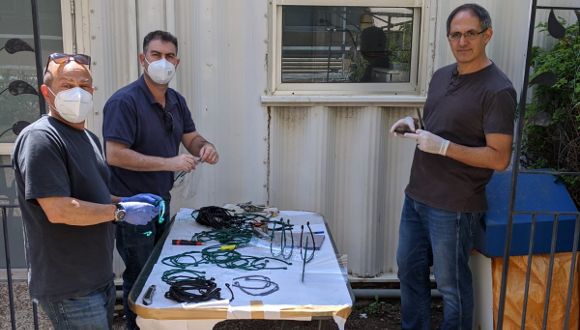
בתמונה מימין לשמאל: ד"ר יואב לחיני, דני ברקו ופרופ' ארז עציון.


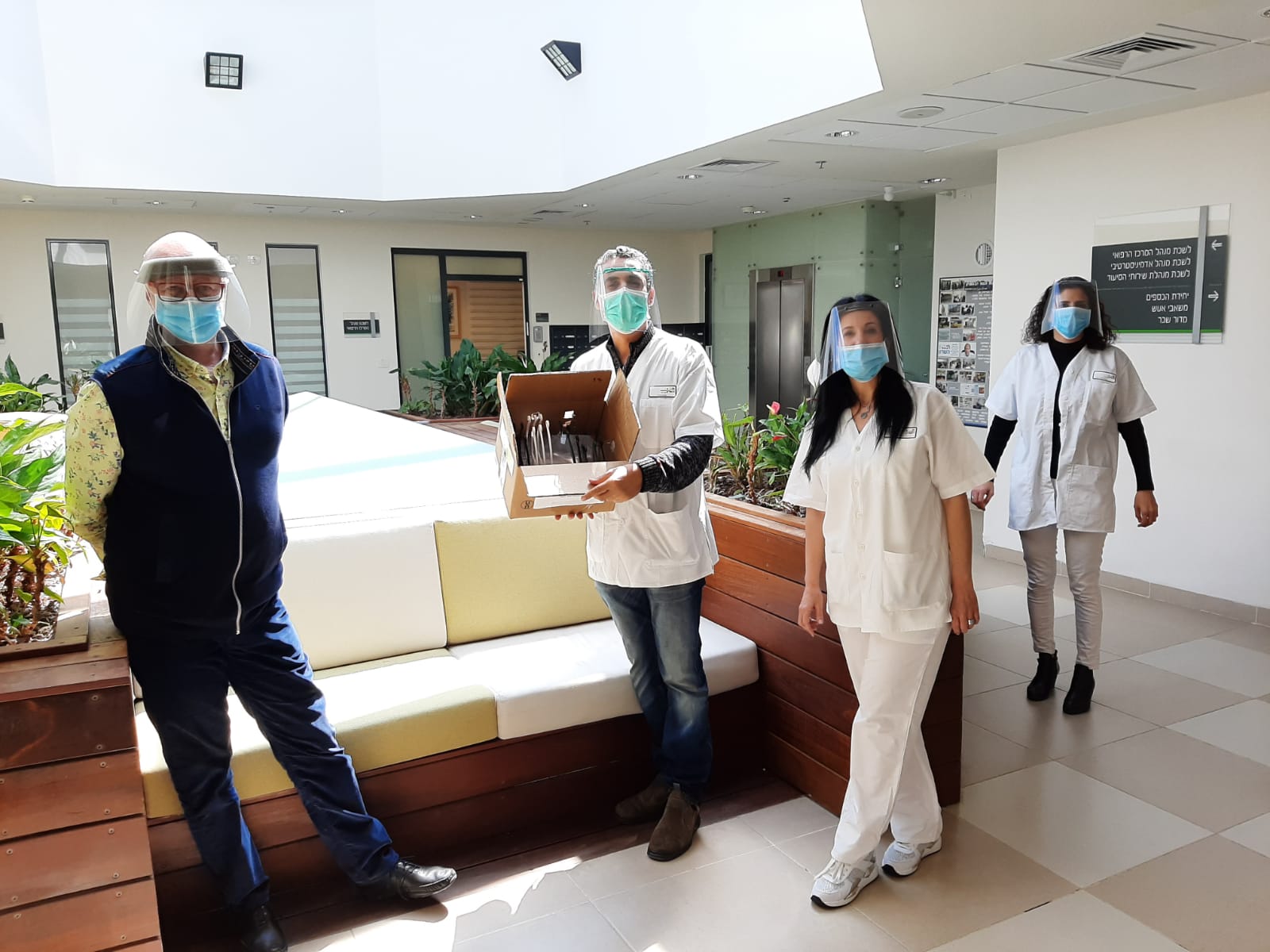
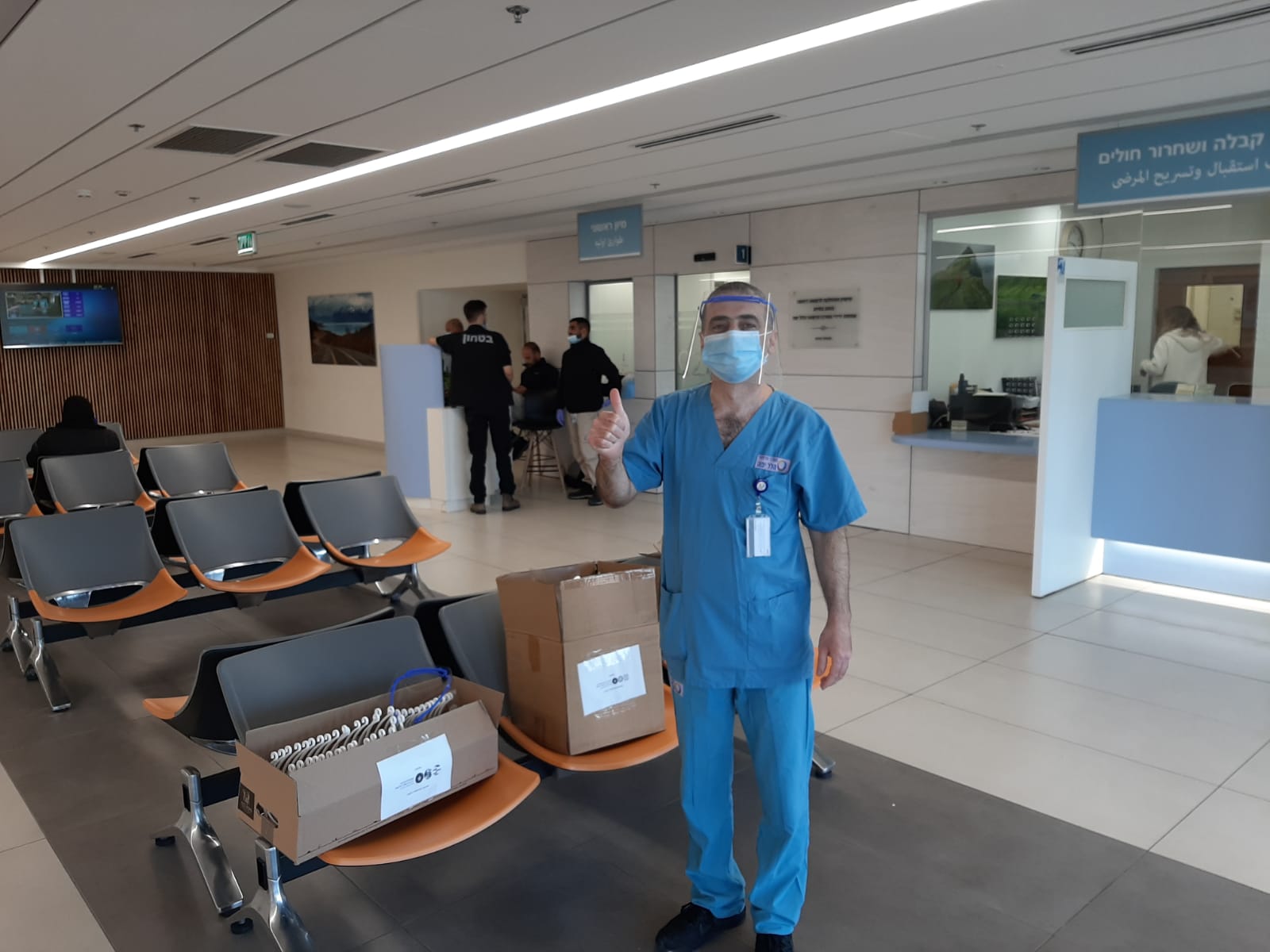
עד כה הודפסו כ 400 מסכות וסופקו לעשרות מוקדים בארץ כגון: המרכז הרפואי הלל יפה, המרכז הרפואי שמיר (אסף הרופא) - מחלקת יולדות, המרכז לבריאות הנפש לב השרון ועוד רבים אחרים.

בתמונה: צוות בית חולים לב השרון בזמן קבלת המסכות

בתמונה: איליה, אח ממיון הלל יפה בזמן קבלת 160 מסכות

עמודים

אוניברסיטת תל אביב עושה כל מאמץ לכבד זכויות יוצרים. אם בבעלותך זכויות יוצרים בתכנים שנמצאים פה ו/או השימוש שנעשה בתכנים אלה לדעתך מפר זכויות
שנעשה בתכנים אלה לדעתך מפר זכויות נא לפנות בהקדם לכתובת שכאן >>