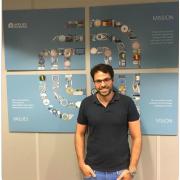
סמינר מחלקה אלקטרוניקה פיזיקאלית : Tomer Badug

02 בדצמבר 2019, 12:30 
פקולטה להנדסה, בניין כיתות, חדר 011  
סמינר מחלקה אלקטרוניקה פיזיקאלית : Tomer Badug

סמינר תומר

You are invited to attend a lecture
Control Issues in Complex Switched Capacitor Converters
By:
Tomer Badug
(M.Sc. student under the joint supervision of Prof. Sigmond Singer and Dr. Yuval Beck of the Faculty of Engineering, TAU)

Abstract
Switched Capacitor (SC) converters are used to convert DC voltage levels by charging the capacitors in a certain topology at the input of the converter and discharging the capacitors at the output in a different topology. This is done without violating the laws of electricity. There are numerous topologies of SC converters, among them, the General Transposed Series-Parallel (GTSP) is a topology based on of performing that transition from input to output by switching from parallel branches of series capacitors at the charging state to series elements of parallel capacitors at the discharging state. This topology was proved to have good voltage regulation capabilities as well as being a modular topology.
In this work control issues in capacitive converters are discussed. The research shows a control scheme in dynamic operation of a multilevel-GTSP based, switched capacitor (SC) converter, and distinguishes between three source types by their voltage-time changing rate. The theory is developed and the control algorithm is presented and verified by a simulation. The thesis suggests design guidelines for designing a more efficient converter based on knowledge of the source and the desired operation method. The presented theory can also be used to classify operation points of existing converters.

 On Monday, Dec 2th, 2019, 12:30
Room 011, Kitot building

יום זרקור עם נציגי חברת TASC

02 בדצמבר 2019, 14:00 
הפקולטה להנדסה אוניברסיטת תל-אביב  
TASC
סטודנטיות וסטודנטים בתואר ראשון ובתארים מתקדמים של הפקולטה להנדסה אוניברסיטת תל-אביב נציגי חברת TASC Consulting & Capital מגיעים לפגוש אתכם ב יום זרקור שווה במיוחד.

נתראה ביום שני, 2.12.19 בין השעות 12:00-14:00 בלובי בניין וולפסון להנדסה מכנית.


EE Seminar: Deep Image Compression using Decoder Side Information

22 בינואר 2020, 15:30 
Room 011, Kitot Building  

Speaker: Sharon Ayzik

M.Sc. student under the supervision of Prof. Shai Avidan


Wednesday, January 22nd 2020 at 15:30

Room 011, Kitot Bldg., Faculty of Engineering


Deep Image Compression using Decoder Side Information


Abstract


We present a Deep Image Compression neural network that relies on side information, which is only available to the decoder. We base our algorithm on the assumption that the image available to the encoder and the image available to the decoder are correlated,  and we let the network learn these correlations in the training phase.

Then, at run time, the encoder side encodes the input image without knowing anything about the decoder side image and sends it to the decoder. The decoder then uses the encoded input image and the side information image to reconstruct the original image.

This problem is known as Distributed Source Coding in Information Theory, and we discuss several use cases for this technology. We compare our algorithm to several image compression algorithms and show that adding decoder-only side information does indeed improve results.


School of Mechanical Engineering: Yarden Amsalem

16 בדצמבר 2019, 14:00 - 15:00 
בניין וולפסון 206  
0
School of Mechanical Engineering: Yarden Amsalem

~~

SCHOOL OF MECHANICAL ENGINEERING SEMINAR
Monday, December 16, 2019 at 14:00
Wolfson Building of Mechanical Engineering, Room 206

Cubic Equations of State and nucleation inception in boiling due to rapid heating
Yarden Amsalem
MSc student of Dr. Tali Bar-Kohany and Prof. Slava Krylov

This study deals with the onset of isobaric boiling for a superheated liquid due to moderate to high heating rates (1.e5.. 1.e9  K/s).
In real liquids, namely liquids that are not specially treated for the removal of possible nucleation sites (such as dissolved gasses, suspended particles etc.), a high level of superheating may be obtained using high heating rates such that the liquid’s nucleation temperature is substantially higher than its saturation temperature; it can reach up to the thermodynamic stability threshold (spinodal).
Prediction of superheat levels and nucleation temperatures under these conditions as a function of temperature change rate has not been possible with analytic tools available today. Despite the fact that the equilibrium boiling temperature (saturation temperature) and the thermodynamic threshold temperature are known for every liquid (although the certainty of the later is less than that of the former) there still lies a difficulty in predicting a liquid’s onset of nucleate boiling (ONB) point within the metastable region.
In the course of this study, 167 data points from relevant (rapid, isobaric) experiments were collected. The experiments were carried out under a pressure of one atmosphere using different liquids: polar (i.e. water, methanol and ethanol) and nonpolar (i.e. heptane and toluene).
A thermodynamic analysis was carried out by using classical thermodynamic potentials while adapting them for use in kinetic processes (quasi-steady). The analysis allowed for the development of a simple correlation which predicts the onset of nucleation boiling conditions for different liquids as a function of their temperature change rate or of the solid interface which heats them. The correlation’s only required inputs are the saturation temperature and the homogenous boiling temperature, both of which are well known quantities.
Owing to its simple mathematical nature, the correlation can be easily applied as a sub-model to any of the existing CFD codes.


EE Seminar: Presurgical brain white matter tractography using multiple MRI sequences

25 בדצמבר 2019, 15:30 
Room 011, Kitot Building  

Speaker: Ilya Nelkenbaum

M.Sc. student under the supervision of Prof. Nahum Kiryati and Dr. Arnaldo Mayer


Wednesday, December 25th, 2019 at 15:30

Room 011, Kitot Bldg., Faculty of Engineering


Presurgical brain white matter tractography using multiple MRI sequences


Abstract


White matter (WM) tractography mapping is a must in neuro-surgical planning and navigation to minimize risks of iatrogenic damages. Clinical tractography pipelines still require time consuming manual operations and significant neuro-anatomical expertise, to accurately seed the tracts and remove tractography outliers.

One of the optional solutions might be automatic seeds segmentation for further tractography. Although it saves the time consuming manual delineation by neuro-anatomy experts, it still requires heavy computations required by standard tractography algorithms as well as manual tractography outliers removal.

A better solution for clinical purposes would be automatic segmentation of white matter tracts using deep neural networks, which will make the whole process fully automatic. However, most of the works in this area use a single brain MRI sequence, whereas neuro-radiologists rely on 2 or more MRI sequences, e.g. T1w and the principal direction of diffusion (PDD), for pre-surgical WM mapping.

In this work, we propose a novel neural architecture for the automatic segmentation of white matter tracts by fusing multiple MRI sequences.  The proposed method is demonstrated and validated on joint T1w and PDD input sequences.  It is shown to compare favorably against state-of-the art methods (Vnet, TractSeg) on the Human Connectome Project (HCP) brain scans dataset for clinically important WM tracts.

זוכי המענק לחדשנות בהוראה ובלמידה מטעם המרכז לחדשנות בלמידה

25 נובמבר 2019
סגל הפקולטה להנדסה מביא חדשנות בלמידה מקוונת

בעולם בו הידע נגיש לכל והאופן שבו הסטודנטים שלנו צורכים מידע שונה לחלוטין מהאופן בו אנחנו צרכנו מידע עולה הצורך בחידוש באופן ההוראה והלמידה. זוהי בעיה עולמית איתה מתמודדות כל האוניברסיטאות המובילות בעולם. המרכז לחדשנות למידה  TAU Online פועל מזה חמש שנים במטרה להוביל לבחינתן ולהטמעתן של דרכי הוראה חדשניות ושילוב טכנולוגיה בלמידה באוניברסיטה. לצד ליווי של מרצים ופקולטות, יזם המרכז קולות קוראים לחדשנות ללמידה, בדומה למודל שקיים באוניברסיטת קולומביה. הקולות הקוראים מעודדים מרצים ומרצות להגביר את מעורבות הסטודנטים/ות בתהליך הלמידה, לקדם למידה פעילה וליצור חווית למידה מעניינת ורלוונטית. ההצעות הזוכות מקבלות מענק בגובה של עד 30,000 ₪ ותמיכה מטעם המרכז לחדשנות בלמידה.


זו השנה השנייה שסגל הפקולטה להנדסה משתתף בקולות הקוראים, כאשר 10 הצעות שהוגשו מטעם הפקולטה זכו למימון ובמסגרתן נערכים חידושים בקורסים. 


על זוכי המענק וההצעות:


  • ממחישים נוסחאות - יוזם ומנהל הפרויקט: מאיר זיליג הס / יועצת וחוקרת ההוראה: פרופ' פאדיה נאסר אבו אלהיג'א/ מפתחת: שיר זאבי. ההצעה נולדה בעקבות פער משמעותי בידע שמקשה על הסטודנטים בפיזיקה. בשנה הראשונה ללימודים, סטודנטים מהנדסת חשמל מחויבים לקחת קורסי פיזיקה, הדורשים ידע מתמטי מתאים. קורסים מתמטיים כגון חדו"א ואלגברה לינארית נלמדים במקביל לפיזיקה, אך אלו מתמקדים בתיאוריה ובהוכחות ולכן נוצר הפער בידע. הקורס החדש מביא המחשות ויזואליות של המושגים והמשוואות באמצעות שימוש במגוון כלים קיימים וחדשים. עבור הקורס פותחו כלים שמאפשרים להדגים משוואות באמצעות "גרפים חיים" כאשר שינוי של נתון במשוואה מוצג מיידית בגרף. 


  • "יישומי בעיבוד אותות ברפואה" - יוזם ומנהל הפרויקט: פרופ׳ אורי נבו ומר' נועם אומר מהמחלקה להנדסה ביו-רפואית. הפיכת קורס תיאורטי (המבוסס על תהליכי מדידת אותות פיזיולוגים ע"י שימוש במערכות דגימה וסינון ולספק כלים אלגוריתמים פרקטיים לחילוץ מידע בעל משמעות קלינית מהאותות המוקלטים) לקורס מעשי. אחת הדרכים היעילות לחבר בין התיאוריה לפרקטיקה היא ע"י פתרון בעיה מעשית. דרך נוספת להפנמת חומר תיאורטי מורכב היא קריאת מאמר מדעי המציג פתרון יישומי לבעיה בתחום. לכן, החידוש המוצע הוא פיתוח אפליקציה לזיהוי הפרעות קצב לב מאות ECG לניתור קצב לב. הפיתוח יעשה בפורמט של פרויקט יישומי בקורס שיבוסס על יישום אלגוריתם חדשני לפתרון בעיה. כחלק מהפרויקט הסטודנטים ינתחו בעצמם אותות פיזיולוגיים ויפיקו מהם מידע דיאגנוסטי תוך שימוש בכלי פיתוח מתקדמים. תוצר הפרויקט יהיה תוכנה "מבצעית" אותה ניתן יהיה להטמיע במכשירים לבישים (wearable devices) קיימים בהם משתמשים בזמן ביצוע פעילות ספורטיבית. 


  • "ננוטכנולוגיה סביבתית" - יוזמת ומנהלת הפרויקט: ד"ר אינס צוקר מביה"ס להנדסה מכנית תחום הננוטכנולוגיה הסביבתית תופס תאוצה בעולם המודרני, בו ניתנת במה בתחומי ידע ועניין מולטידסיפלינרים פורצי דרך. יחד עם זאת, בארץ התחום אינו נלמד כיום באוניברסיטאות ובמכללות, וקיים צורך ממשי לישר קו עם האוניברסיטאות המובילות בעולם בהוראת התחום כמו אוניברסיטת הרווארד, אריזונה, ובאפלו. הקורס עוסק בתחום ידע מולטידסיפלינרי ודורש הכרות והבנה רחבה של תחומים מגוונים כמו כימיה בסיסית, בחירת חומרים, בעיות סביבתית, תודעת ציבור ותעשיה, והטמעת מערכות בשטח. יתר-על-כן, קיימת שונות בין הלומדים בין תחומי הרקע שלהם. מטרת הקורס המשופר היא להנגיש את התכנים לסטודנטים מרקעים שונים, כלומר, להתמודד עם שונות בין לומדים, ולאפשר להם להפנים כי כל רקע הוא רלוונטי ומועיל כשניגשים לתחום חדשני ומתפתח כמו ננוטכנולוגיה סביבתית. הלומדים יתמודדו עם פתרון בעיות אקולוגיות קיימות וידרשו להציע להם פתרונות ננוטכנלוגיים. הלמידה תתבצע בצוותים ותכלול גם משימות שיעברו בין הצוותים. 


  • "קורס משולב פרונטלי/מקוון באתיקה מעשית" - יוזם ומנהל הפרויקט: פרופ' ישראל גנות מהמחלקה להנדסה ביו-רפואית. הקורס מלמד שיטות אנליטיות לניתוח בעיות אתיות  בעידן בו הטכנולוגיה שולטת בכל תחומי החיים. השיטות מתבססות על  מקורות רבים בתחומים שונים ומפתח חשיבה יוצרת ורגישות לזיהויי בעיות אלה ומתן פתרונות. הקורס יבוסס על מודל הכיתה ההפוכה - הקניית החומר התיאורטי יתבצע לפני השיעור באמצעות קריאת טקסט, מילוי שאלונים, שימוש בסימולציות, צפייה וקריאה של חומר עכשווי בעיתונות ובאתרי מידע.  הדיונים שהם חלק מרכזי בלימוד החומר יתבצעו בצורה מקוונת. ופגישה השבועית בכיתה ינותחו תוצאות השאלונים, יוצגו מקרים נוספים הרלוונטיים לנושא שינותחו בהתאם לכלים שנלמדו במהלך השבוע ויוסקו מסקנות. בשליש האחרון של הסמסטר תפוצל הכיתה לקבוצות דיון שתפגשנה ארבע פעמים לדיון מקיף על נושא מרכזי שיהיה במרכז העניין הציבורי באותו הזמן. הפגישות נערכות בתאום פנימי של הקבוצה בזמן והמקום המועדפים על חברי/רות הקבוצה. בפגישה הסופית בכיתה יוצגו עיקרי הדיון והמסקנות. דוגמאות לנושאים מרכזיים לדיון הם אתיקה באינטליגנציה מלאכותית, שיטות מתימטיות בקבלת החלטות, אחריות רשתות חברתיות לחומר המופץ דרכן, שיטות מתקדמות לעריכת גנים. 


  • "מבוא להנדסת סביבה" - יוזמת ומנהלת הפרויקט: פרופ' הדס ממן מביה"ס להנדסה מכנית. כחלק מההתקדמות והחדשנות בלמידה בתחום הנדסת הסביבה, גובר היום השימוש בתוכנות סימולציה ומודל לאנליזת תהליך וחיזוי שמהווה כלי לתמיכה בקבלת החלטות תכנון מערכות. הסטודנטים יחולקו לקבוצות וכל קבוצה תקבל case study של אתר מזוהם אחר שנדרש לטפל במדינה מסוימת ויוציאו נתוני זיהום ואיכות ממאמרים בספרות המקצועית שיקבלו מהמרצה. בעזרת המודל יצטרכו הסטודנטים למצוא את הפתרון האופטימלי הטכנולוגי בהתאם לאיכות המים, השפכים, האוויר, הקרקע הנדרשת, אך יצטרכו גם להכיר את האתר בו הטכנולוגיה תיושם ולשלב גם את המימד האנושי ב adaptation של הטכנולוגיה והצגת המקר בפני כל הכתה וקבלת משוב והחלטה האם מיישמים את התהליך בשטח. 


הכנס ה-2 לחדשנות בלמידה בהובלת TAU Online יתקיים השנה ב-18.2.20. בכנס יוצג גם הקול הקורא ה-3 וצוות המרכז לחדשנות בלמידה ישמח לסייע לחברות וחברי סגל נוספים לערוך שינויים בקורס שלהם ולהגיש הצעות במסגרת הקול הקורא. 

לבירור פרטים נוספים: anatkredi@tauex.tau.ac.il

EE Seminar: Fog classification based on commercial microwave links data

27 בנובמבר 2019, 15:00 
room 011' Kitot Build.  

Speaker: David Tsidkiahu

M.Sc. student under the supervision of Prof. Hagit Messer Yaron


Wednesday, November 27, 2019 at 15:00

Room 011, Kitot Bldg., Faculty of Engineering


Fog classification based on commercial microwave links data

Abstract

There has been major progress in precipitation monitoring using commercial microwave links (CMLs) in the past 10 years, and currently it is considered as a complementary and even preliminary rain monitoring method in certain regions in the world.

While the effect of rain on the received signal level (RSL) in CMLs is distinguishable and the extraction of rain characteristics is relatively easy, fog monitoring is challenging, since fog has less effect on the CML's RSL, often being in the same scale as noise.

This thesis presents a fully detailed description of two algorithms for detecting fog and classifying it into several acceptable metrological levels. The first is a two-stage cascade model-driven method, where the first stage handles detection and the second stage handle the classification task.

The second is a data driven, single-stage fog classification algorithm. I propose a machine learning algorithm, based on a known network called UNET, trained and tested only on synthetic events, which were generated by a simulator. 

Finally, an error analysis was performed, based on real data as well as on simulated data. In the study, quantization noise and the wet antenna attenuation were found to be the most painful problems in the detection and classification task.

יום זרקור עם חברת Cisco

25 בנובמבר 2019, 12:00 
לובי  
יום זרקור

סטודנטיות וסטודנטים של הפקולטה להנדסה אוניברסיטת תל-אביב נציגי חברת Cisco באים לפגוש אתכם בלובי בניין וולפסון להנדסה מכנית.

  • מתי? יום שני / 25.11.19
  • שעה? 12:00
  • מה להביא? קורות חיים

בית הספר להנדסה מכנית עומד להפוך את הפסולת שלכם לגז

20 נובמבר 2019
הופכים פסולת לגז

סטודנטים/יות מבית הספר להנדסה מכנית של הפקולטה להנדסה אוניברסיטת תל אביב שמו להם למטרה למצוא פתרון לבעית הפסולת: ייצור ביוגז מפסולת אורגנית. פתרון אקולוגי שמצד אחד מייצר מקור של אנרגיה מתחדשת זמינה ומצד שני מתמודד עם ההשפעות הסביבתיות הנגרמות מהשלכת פסולת אורגנית.


הפסולת שלנו

גם אם איננו מודעים לכך, רוב הפעולות שלנו בחיי היום-יום כרוכות בייצור פסולת. כל אחד ואחת מאתנו המבשלים במטבח או אוכלים בחוץ מייצרים שאריות אוכל בין אם זה שאריות בצלחת, קליפות פירות וירקות, מזון שהתקלקל או פג תוקף או אריזות האוכל (מיכלים ריקים, עטיפות ועוד). אם נהיה כנים לרגע רובנו לא באמת חושבים מה קורה לאחר שזרקנו את הפסולת לפח, השקית זבל נאטמת טוב ואוטו הזבל חולף לו לפח הבא.


בארץ, מרבית המתקנים לייצור ביוגז הם מתקנים קטנים לשימוש ביתי או מתקנים אשר מטפלים בסוג שונה של פסולת בעיקר פסולת חקלאית. "בפרויקט זה אנו מעוניינים לחקור את האפשרות לבנות מתקן בעל ערך כלכלי וסביבתי אשר יהיה ניתן ליישמו בעתיד באופן רחב יותר ובצורה יעילה יותר" מספרת פרופ' הדס ממן, מנחת הפרויקט וראשת התכנית להנדסת סביבה לתואר שני. ייצור הביוגז נשען על תהליך עיכול אנאירובי, בתהליך זה פסולת אורגנית מומרת באמצעות שרשרת של תהליכים מבוססי חיידקים לתערובת גז שעיקרה פחמן דו חמצני ומתאן, מגז זה ניתן לבסוף להשתמש כגז בישול או כחומר בעירה להפעלת מנוע לייצור חשמל.


אז כמה פסולת אורגנית אנחנו מייצרים?

עפ"י דו”ח הלחץ 2019 הנכתב ע״י צוות אדם טבע ודין תושבי ישראל מייצרים מדי שנה כ-4.5 מיליון טון פסולת, כאשר כל תושב מייצר כ-1.7ק"ג פסולת מדי יום. נתון זה הוא מן הגבוהים בעולם. אם לא די בכך, הרי שהאוכלוסייה בישראל גדלה בקצב גבוה מאד, הן בשל גידול טבעי, כ 6.2%  בשנה (הגבוה ביותר בקרב המדינות המפותחות),  והן בשל הגירה חיובית מתמדת, כ-30,000 עולים חדשים בשנת 2017. השילוב בין תרבות הבזבוז ובין גידול האוכלוסייה מקדם את מדינת ישראל לקראת משבר פסולת. 


מה קורה לאחר שכבר ייצרנו את הפסולת?

נתון מביך ומציאות של עולם שלישי. בעוד שמדינות המערב השכילו לייצר תשתיות מתקדמות של מחזור, מדינת ישראל מדשדשת הרחק מאחור. אצלנו, כ-80% מהפסולת מוטמנים בקרקע ורק כ-20% מועברים למחזור. נתון זה הוא מן הגרועים בעולם המערבי. זריקת פסולת אורגנית לפח הכללי ללא הפרדה במקור יוצרת תשטיפים המאיימים בזיהומי מים ואוויר ובהפצת ריחות. בנוסף, הטמנה באתרי הטמנה כלליים גורמת להיווצרות מתאן - גז חממה שהשפעתו על התחממות כדור הארץ גדולה פי 25 מזו של פחמן דו־חמצני.


מרעיון למציאות

הסטודנטים שלנו החליטו לקחת יוזמה ולהתחיל את השינוי מ"בית". כיום זורקים מאות ק"ג אשפה בשבוע בקפיטריה YOTO של הפקולטה להנדסה, חלקה הגדול מורכב משאריות מזון. לכן כבר מחודש הבא יותקנו פחי מחזור במספר מוקדים בקפיטרה, בשיתוף פעולה מלא על מנהלי הסניף התומכים מאוד בסביבה ירוקה. אתם הסועדים תתבקשו להנות מארוחה טעימה ובסיומה להפריד מהצלחת ולזרוק את הפסולת האורגנית לפחים המסומנים. השלב הבא של הפרויקט יהיה הקמת מערכת להפקת ביו-גז מפסולת אורגנית של הפקולטה להנדסה לבישול בגז, חימום דוד ועוד. "השאיפה שלנו היא לבנות מתקן המייצר ביוגז מהפסולת האורגנית של הקפיטריה בפקולטה להנדסה באוניברסיטת ת"א ולהעריך את התועלת הכלכלית והסביבתית מהמרה של הפסולת לגז בישול או לחשמל" מסביר דור קורניאנסקי, סטודנט להנדסה מכנית ואחד מיוזמי הפרויקט.


צוות הפרויקט

  • פרופ' אבי קריבוס - ראש התוכנית לאנרגיות מתחדשות
  • פרופ' הדס ממן - ראשת התוכנית להנדסת סביבה
  • דני ברקו - רכז פרויקטים, הנדסה מכנית
  • רועי פרץ - דוקטורנט בתוכנית להנדסת סביבה
  • סטודנטים - דור קורניאנסקי, שירה סון, יובל נוימן, אריאל דרמון

מימין לשמאל: דור קורניאנסקי, שירה סון, יובל נוימן, אריאל דרמון

EE Seminar: Exploiting Tasks, Structures, and AI in Digital Communications Receivers

02 בדצמבר 2019, 15:00 
room 011, Kitot Building  

(The talk will be given in English)


Speaker:     Dr. Nir Shlezinger
                     Signal Acquisition Modeling and Processing Lab, Weizmann Institute

Monday, December 2nd, 2019
15:00 - 16:00

Room 011, Kitot Bldg., Faculty of Engineering


Exploiting Tasks, Structures, and AI in Digital Communications Receivers

Abstract

The broad range of demands which next generation communications systems are required to meet, spanning from increased rates to efficient power consumption, cannot be satisfied by conventional architectures. These requirements give rise to a multitude of new challenges in modern communications and signal processing systems. In this talk we focus on two fundamental aspects of digital communications receivers – signal acquisition and symbol detection – discussing methods to improve their performance and reliability. For signal acquisition, we show how analog-to-digital convertors can be designed in light of the overall system task, achieving optimal-approaching performance while utilizing efficient bit-constrained samplers. Then, we discuss how recent advances in machine learning can be exploited for symbol detection, a task which is typically addressed using channel-model-based methods, such as the Viterbi algorithm and interference cancellation methods. We present a new framework for combining artificial intelligence and model-based algorithms, allowing the latter to be implemented in a data-driven manner. The resulting architectures are capable of approaching the established performance of model-based algorithms, while being invariant of the underlying statistical model, and learning it from a small amount of training samples.

Short Bio
I am a postdoctoral researcher in the Signal Acquisition Modeling and Processing Lab, Weizmann Institute of Science. Before that I was a postdoctoral researcher in the Technion, Israel Institute of Technology. I received my B.Sc., M.Sc., and Ph.D. degrees in 2011, 2013, and 2017, respectively, from Ben-Gurion University, Israel, all in Electrical and Computer Engineering, and worked as an R&D engineer at Yitran Communications from 2009 to 2013. My research interests are on the intersection of communications, signal processing, information theory, and machine learning.


עמודים

אוניברסיטת תל אביב עושה כל מאמץ לכבד זכויות יוצרים. אם בבעלותך זכויות יוצרים בתכנים שנמצאים פה ו/או השימוש שנעשה בתכנים אלה לדעתך מפר זכויות
שנעשה בתכנים אלה לדעתך מפר זכויות נא לפנות בהקדם לכתובת שכאן >>