LMI seminar

Multi-modal Single-molecule Imaging with Continuously Controlled Spectral-resolution (CoCoS) Microscopy

04 בנובמבר 2020, 13:00 
 
פגישת זום

Dear All,
 

You are cordially invited to the LMI seminar, that will be broadcasted on, Nov 4, 2020 01:00 PM Jerusalem


The speakers : Jonathan Jeffet, Group of Prof. Yuval Ebenstein - Department of Physical Chemistry  Tel Aviv University


Join Zoom Meeting


Meeting ID: 857 8222 1766


Passcode: 142731


Multi-modal Single-molecule Imaging with Continuously Controlled Spectral-resolution (CoCoS) Microscopy


Jonathan Jeffet, Group of Prof. Yuval Ebenstein


Department of Physical Chemistry
Tel Aviv University

Abstract:

Color is a fundamental contrast mechanism in fluorescence microscopy, providing the basis for numerous imaging and spectroscopy techniques. The ever-growing need to acquire high-throughput, dynamic data from multicolor species is driving the development of optical schemes that optimize the achievable spectral, temporal, and spatial resolution needed in order to follow biological, chemical and physical processes. Here we introduce Continuously Controlled Spectral-resolution (CoCoS) microscopy, an imaging scheme that encodes color into spatial read-out in the image plane, with continuous control over the spectral resolution. The concept enables single-frame acquisition of multiple color channels, allowing simultaneous, single-molecule colocalization for barcoding and Förster resonance energy transfer (FRET) experiments. The simple control over the spectral dispersion allows switching between imaging modalities at a click of a button. We demonstrate the utility of CoCoS for multicolor localization microscopy of microRNA barcodes in clinical samples, single-molecule FRET measurements, and single-molecule spectroscopy. CoCoS may be integrated as a simple add-on to existing microscopes and will find use in applications that aim to record dynamic, multicolor localization events such as in multiplex FRET and tracking of multi-component, interacting complexes. 


EE Seminar: DOA for Dynamic Array Configuration

04 בנובמבר 2020, 15:00 
ZOOM  

https://us02web.zoom.us/j/8394680700?pwd=SHAzL1kwTmcyYm1PdkdzNVNLNUZ6dz09
Meeting ID: 839 468 0700

Passcode: 1


Speaker: Yair Galili

M.Sc. student under the supervision of Prof. Anthony J. Weiss

Wednesday, November 4th, 2020, at 15:00

DOA for Dynamic Array Configuration

Abstract:

            The most common methods for localization of radio frequency transmitters are designed for stationary sensors configuration. In this work we address the problem of direction of arrival estimation and localization using a dynamic sensor array. That is an array whose configuration changes continuously since each antenna element is mounted on a different platform. The proposed algorithms are not limited to specific sensors configuration, and they can handle multiple simultaneous signals at the same frequency. The proposed methods require synchronization of the sensors, which is considered a major engineering challenge. Methods of synchronization are outside the scope of this work and will be treated in future research.

            We study two different scenarios for directions of arrival. The first scenario is sensors, which move slowly with respect to the sampling rate. In this regime, a heat map based algorithm is developed. The second scenario is fast changing configuration, for which iterative methods are proposed. The methods can be utilized for finding azimuth and elevation of multiple transmitters simultaneously. The proposed methods performance is evaluated by Monte-Carlo simulations and compared with the regular and concentrated Cramér Rao Lower Bound. The concentrated Cramér Rao Bound is generalized for observations, which are drawn from non identical distribution.

            Since the DOA algorithms require knowledge of the array configuration we discuss methods for array calibration. We derive a closed form solution for self calibration of closely located sensors. For the case of sensors whose separation is above half wavelength, we provide an integer search method for localization. The case of diversely polarized dynamic array is also considered. We estimate the direction of arrival of an emitter, which emits a polarized signal with an unknown polarization.


השתתפות בסמינר תיתן קרדיט שמיעה = עפ"י רישום שם מלא + מספר ת.ז.  בצ'אט


EE Seminar: On the injectivity and (in)stability of invariant encoding

09 בנובמבר 2020, 15:00 
ZOOM  

https://us02web.zoom.us/j/86785731080?pwd=dk10aVJNM3NXeHE3WFJvZmlUQndadz09
Meeting ID: 867 8573 1080
Passcode: TAUEESYS 

Speaker: Dr.  Nadav Dym

Department of Mathematics of Duke University

Monday, November 9th, 2020, at 15:00

On the injectivity and (in)stability of invariant encoding

Abstract

            Quotient spaces are a natural mathematical tool to describe a variety of algorithmic problems in computer vision and related fields, where different objects are to be compared while their natural symmetries are to be ignored.

 One popular approach for working in quotient spaces is cancelling out symmetries  by finding a  canonical alignment of the objects at hand. This approach typically involves solving a challenging optimization problem over the symmetry group. We will review the tractability of these problems for sets, their intractability for graphs, and recent advances in the complexity of computing these problems for the intermediate case of rigid point clouds.

An alternative approach for working in quotient spaces avoids the computational challenges of alignment by directly mapping objects to features invariant to the object’s symmetries. The challenge with this approach is devising a sufficiently expressive family of invariant features. We will describe constructive methods for mapping quotient spaces injectively to a finite set of invariants, which lead to proofs of universality of networks for sets and rigid point clouds, and to injectivity of linear phaseless measurements in the context of phase retrieval problems. We will then discuss results in the phase retrieval literature that suggest that though injective, mappings to invariant features can be unstable and suffer from the curse of dimensionality. These results indicate that every system of invariants has `blind spots’, which corresponds to `disconnected signals’ in the measurement domain. We will describe work to quantify the stability via measures of connectivity used in spectral graph theory, and in particular show that real phase retrieval is related to the Cheeger constant, while complex phase retrieval relates to the second eigenvalue of the Laplacian.

Short Bio

I am an applied mathematician and computer scientist, interested in the development and analysis of algorithms, typically targeting 3D problems in computer vision and related fields. I am currently working on problems related to global optimization, phase retrieval, and theoretical and geometric deep learning. I am an Assistant Research Professor at the Department of Mathematics of Duke University, hosted by Prof. Ingrid Daubechies at the Information Initiative at Duke (iiD). In 2018 I completed my PhD in the Department of Computer Science and Applied Mathematics at the Weizmann Institute of Science under the supervision of Prof. Yaron Lipman. I have received a BSc and MSc in mathematics from the Hebrew University.

השתתפות בסמינר תיתן קרדיט שמיעה = עפ"י רישום שם מלא + מספר ת.ז.  בצ'אט


הנכם מוזמנים לסמינר של עידו משי -סטודנט לתואר שני

28 בדצמבר 2020, 14:00 - 15:00 
הסמינר יתקיים בזום  
0
הנכם מוזמנים לסמינר של עידו משי -סטודנט לתואר שני

פרטים יפורסמו בהמשך

מאמרה של ד"ר אינס צוקר פורסם לאחרונה בכתב העת היוקרתי ACS Applied Materials and Interfaces


  • תגיות:

החוקר.ת מאחורי המחקר

ד"ר אינס צוקר פרסמה לאחרונה מחקר פורץ דרך בנושא טיפול מבוסס ננו להסרת מזהמים במים בכתב העת היוקרתי ACS Applied Materials and Interfaces.


ד"ר צוקר החלה את מחקרה על שימושים וסיכונים של חומרים ננומטרים דו-מימדיים בהיבט סביבתי במסגרת פוסט הדוקטרט שלה באוניברסיטת ייל. כחוקרת חדשה בבית הספר להנדסה מכנית בפקולטה להנדסה של אוניברסיטת תל אביב, היא מובילה את המעבדה לננוטכנולוגיה סביבתית שבראשותה בפיתוח חומרים מתקדמים לטיפול במים ובחינת הסיכונים הסביבתים הכרוכים בכך הן בשלב ביצור והן לאחר שימוש בהם. 


הסרת זיהומי כספית ממים

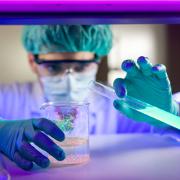
במחקר הנוכחי, צוקר פיתחה שיטות לגידול מוליבדינום גופרתי (MoS2, molybdenum disulfide) על-גבי מצע של סיבי פחמן, ובחנה את יכולת החומר המרוכב להסיר זיהומי כספית ממים. זיהומי כספית (בעיקר ממקורות תעשייתים) מסוכנים לבריאות האדם והאקוססטמה ויש עניין רב בהסרה סלקטיבית ויעילה שלהם. שיטות הגידול שנבחנו אפשרו קבלת ציפויי MoS2 בצורות, מבנים ועומסים שונים על-גבי הסיבים. לאחר בחירה בשיטה שמאפשרת הסרה מהירה ובטוחה של כספית, הציפויים גם עברו מודיפיקציות כדי למקסם את היכולות ספיחת הכספית על-ידי השתלת 'הפרעות' בזמן גידול שכבת ה MoS2. החומר שפותח יכול לשמש להסרת מזהמים ממים במתקני טיפול בסקאלה נרחבת, משום שהוא בטוח ונוח לשימוש בתצורה המעוגנת שלו על גבי מצע סיבי או אחר. ד"ר צוקר הנחתה את הדוקטורנטית קמרין פאזי באוניברסיטת ייל במחקר זה, והשתיים המשיכו את עבודתן בשלט רחוק לאחר חזרתה של צוקר לישראל.


ד"ר צוקר זכתה לאחרונה במימון המשך המחקר במסגרת "ניצוץ קלינטק" של משרד המדע והטכנולוגיה, ויחד עם המסטרנט כפיר שפירא מפתחת כיום מתקן טיפול מולטיפונקציונלי להסרת מזהמים אורגנים ואנאורגנים ממים על בסיס שכבות מוליבדינום דיסולפיד.


לינק למאמר 

לינק לכתבה ב Ynet

לינק לציוץ בנושא המאמר


אלה שמתאהבים בבעיה הם אלה שממציאים לה פתרון

צוות חוקרים מהפקולטה להנדסה אוניברסיטת תל אביב פיתחו כלי תוכנה, עם קוד פתוח למפתחים שיאפשרו לנבא ביצועים של מכונות הנשמה שמחוברות למטופלים במצבים שונים.

  • תגיות:


עם פרוץ מגיפת הקורונה התארגנה קבוצה של חוקרים מהפקולטה להנדסה באוניברסיטת תל אביב במטרה לעזור במאמץ המלחמתי. פרופ' אלכס ליברזון מבית הספר להנדסה מכנית וד"ר גדעון שגב מבית הספר להנדסת חשמל מובילים צוות לפיתוח של כלי תוכנה עם קוד פתוח למפתחים שיאפשרו לנבא ביצועים של מכונות הנשמה שמחוברות למטופלים במצבים שונים. מטרת הפרויקט היא לאפשר לקבוצות שמפתחות מכונות הנשמה "ביתיות" לבדוק כיצד המכונה שלהם תעבוד עם חולים ובנוסף לאפשר פיתוח מהיר של מערכות שליטה ובקרה למכונות הנשמה.


בקרת זרימת האוויר

כיום מדברים הרבה על ייצור של מכונות הנשמה "פשוטות" או ביתיות. הבעיה העיקרית עם מכונות כאלו היא שאין להן את כל מערכות הבקרה המתוחכמות שיש במכונות ההנשמה הרגילות. לדוגמא, במכונות הנשמה יש מספר חיישנים המאפשרים לשלוט בנפח האוויר שנכנס למטופל בכל נשימה ובלחץ האוויר המינימלי והמקסימלי בריאות שלו. עם זאת, העלות של חיישנים למדידת כמות האוויר שנכנס היא גבוהה וגם קשה להשיג כאלו היום. כתוצאה מכך, במכונות ההנשמה הפשוטות שמציעים לבנות היום, קשה לדעת כמה אוויר המטופל מקבל. "כאן הכלים שאנחנו מפתחים נכנסים. התוכנה שאנחנו פיתחנו מדמה את זרימת האוויר במכונה ובמטופל. היא לוקחת בחשבון פרמטרים כמו המצב הרפואי של המטופל ואת מספר הנשימות שלו בדקה והיא מחשבת את זרימת האוויר והלחץ בכל נקודה במכונה ובריאות של המטופל" מספר ד"ר שגב.


מבעיה לפתרון

בעזרת כלי כזה, מפתחים יכולים לתכנן טוב יותר את המערכות שלהם ולהתייחס לבעיות כמו: איך המכונה תעבוד עם מטופלים שונים? כיצד מוודאים שהמכונה מסונכרנת עם הנשימות של המטופל? או האם ניתן להציב חיישנים פשוטים במקומות שונים בשביל להעריך כמה אוויר המטופל מקבל?


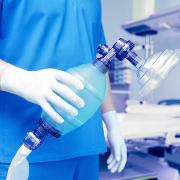
בשלב הראשון, בנינו תוכנה שמדמה את הפעולה של מערכת המנשמה. מערכת הנמצאת בפיתוח ע"י צוות הכולל מהנדס מערכת, רופא, מהנדס חשמל, מתכנת ומתנדבים נוספים שעוזרים בכל הנדרש: מרדכי חלפון, ד"ר אלעד גרוזובסקי, רונן זילברמן, גיל בכר, עברי שפירא, רועי דרנל, סתיו בר-ששת. המנשמה מיועדת להקל על חולים מונשמים שאינם מורדמים. "יחד עם צוות הפיתוח של המנשמה, ערכנו סידרה של ניסויים שאפשרו לנו לכייל את החישובים שלנו ועל ידי כך לאפשר לתוכנה לנבא כיצד המכונה תעבוד עם מטופלים במצבים שונים. השלב הבא יהיה להתאים את החישובים למערכות שמבוססות על מנשם מסוג אמבו (מין בלון שלוחצים עליו כדי להכניס אוויר לריאות). יש הרבה מאוד אנשים בעולם שעובדים על מכונות מהסוג הזה כך שאנחנו חושבים שתוכנה כזו תוכל לעזור להם בצורה משמעותית" מסביר ד"ר שגב


על ה Software

התוכנה שלנו מבוססת על כלי תוכנה סטנדרטיים לתכנון מערכות לזרימת אוויר. היא פותרת את משוואות הזרימה בהינתן המצב של המטופל והפרמטרים של בקרת הנשימה שאנחנו בוחרים. התוצאה של החישוב היא איך הלחץ וזרימת האוויר משתנה  בריאות (או בכל נקודה אחרת במערכת) עם הזמן. ערכנו ניסויים עם ריאה מלאכותית והשווינו את תוצאות הניסוי לחישובים במצבים שונים. היה מאוד יפה לראות שאחת שמכוונים את החישוב, הוא מסוגל לתאר את ביצועי המערכת במגוון רחב של מצבים. מאחר ואנחנו עוסקים רק בחישובי הזרימה, החישוב לא מסוגל לתת מידע על התפתחות המחלה עצמה. עם זאת, חישובים כאלו יאפשרו למפתחים לכוון את מערכות ההנשמה שלהם כך שייצרו את הפרמטרים האופטימאליים עבור כל מטופל ועל ידי כך לשפר את המצב שלו.


"מספר המונשמים בארץ הוא די נמוך בהשוואה למדינות רבות בעולם. על כן, לשמחתנו, נראה שלא יהיה בארץ צורך במכונות הנשמה פשוטות. עם זאת, זה ממש לא המצב במקומות רבים בעולם. יש מדינות רבות בעולם השלישי שבכל המדינה יש פחות מעשר מכונות הנשמה. במדינות כאלו יש חוסר קיצוני במכונות הנשמה גם בימים שבשגרה ועל אחת כמה וכמה עכשיו עם התפרצות מגפת הקורונה. אנחנו מקווים שהפעילות שלנו תוכל לעזור במשהו בכל המקומות האלו" מסכם ד"ר שגב


לינק קישור לתוכנהhttps://osf.io/befqm/


אלה שמתאהבים בבעיה הם אלה שממציאים לה פתרון

עמודים

אוניברסיטת תל אביב עושה כל מאמץ לכבד זכויות יוצרים. אם בבעלותך זכויות יוצרים בתכנים שנמצאים פה ו/או השימוש שנעשה בתכנים אלה לדעתך מפר זכויות
שנעשה בתכנים אלה לדעתך מפר זכויות נא לפנות בהקדם לכתובת שכאן >>